
Matcha tea cultivars are named tea plant selections grown for particular agronomic and product traits. Buyers may hear a cultivar name and assume it guarantees a flavor or shade of green. A sound choice starts with verified plant identity, a clear garden source and side-by-side samples made under comparable conditions. University extension guidance on tea propagation and cultivar trials helps frame those questions, while your intended product sets the final acceptance test.
Contents
- What are matcha tea cultivars?
- How can a supplier verify cultivar identity?
- Why does propagation method matter?
- How does site fit change the choice?
- Which samples make a fair comparison?
- How do shade and harvest affect cultivar results?
- Which processing steps can obscure a cultivar effect?
- What should buyers ask about mixtures?
- How should cultivar claims appear in a specification?
- How do you select a cultivar for a commercial product?
1. What are matcha tea cultivars?
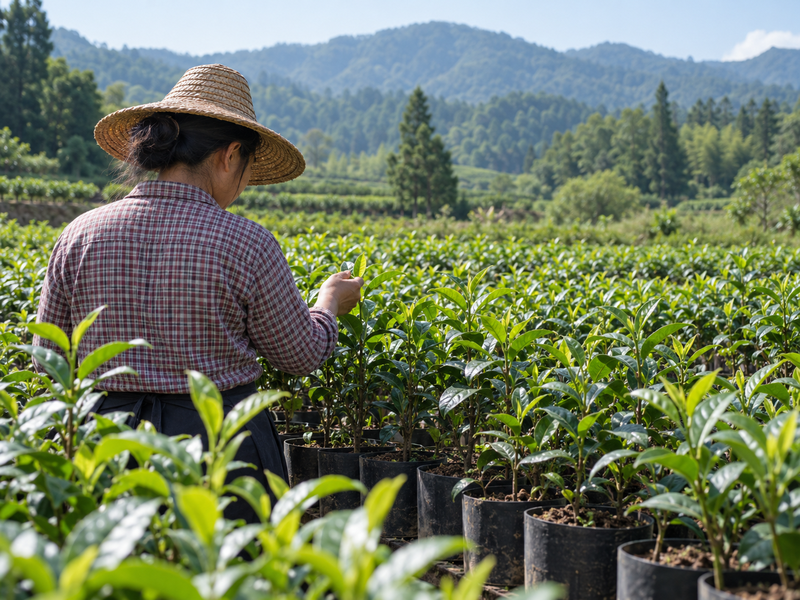
A cultivar is a selected type of Camellia sinensis maintained because growers value its traits. The name may help identify growth habit, budding period, yield pattern or susceptibility under a particular set of conditions. It does not describe a finished powder without more context. Matcha depends on suitable leaf, shading and tencha processing before milling. Japan’s Ministry of Agriculture describes tencha as covered leaf that is steamed and dried without rolling, then ground into matcha. A cultivar name covers only the plant part of that chain.
Define the buyer’s product
Name the application. A ready-to-drink formulation, latte premix and whisked straight tea expose different attributes. Your specification may emphasize color stability, aroma, bitterness, cost or year-round availability. Ask the supplier which cultivar or blend entered the actual sample it sent, rather than asking for a fashionable name in isolation. The Matcha Village plant guide supplies background on the tea plant. For procurement, pair botanical language with a clear lot identity and an application test.
| Buyer term | What it should identify | What it cannot prove alone |
|---|---|---|
| Species | Camellia sinensis | Finished tea style |
| Cultivar | Named selected plant line | Flavor in every garden |
| Block | Physical growing area | Single-cultivar purity |
| Lot | Tracked material quantity | Quality without testing |
2. How can a supplier verify cultivar identity?
Ask for a planting register that links cultivar name, nursery source, block location and planting date. If the supplier inherited an old garden, ask how it verified names during later replanting. A labeled nursery tray can show intent, but labels can move. Field maps, purchase records, mother-plant records and cuttings logs create a stronger chain. Where a supplier has several cultivars in adjacent rows, ask how staff mark boundaries during harvest. An unlabeled mixed delivery weakens a claim that the resulting powder came from one named cultivar.
Check planting and harvest identity
Trace a plant back. Choose a block, identify its source nursery and ask for one propagation record. Then choose a finished lot and trace it forward from that block. The two exercises answer different questions. A cultivar description copied from a catalog cannot establish what was planted in the supplier’s field. Genetic testing may be useful in a dispute or high-value claim, but routine procurement can begin with records and physical separation. Document uncertainty honestly; a supplier may know a planting group without being able to prove every old bush’s genotype.
| Record | What it connects | Practical check |
|---|---|---|
| Nursery purchase or propagation log | Name to young plants | Dates and quantities |
| Field planting map | Plants to rows | Walk boundary markers |
| Replanting register | Changes over time | Compare map revisions |
| Harvest record | Rows to leaf lot | Check mixed-row handling |
3. Why does propagation method matter?
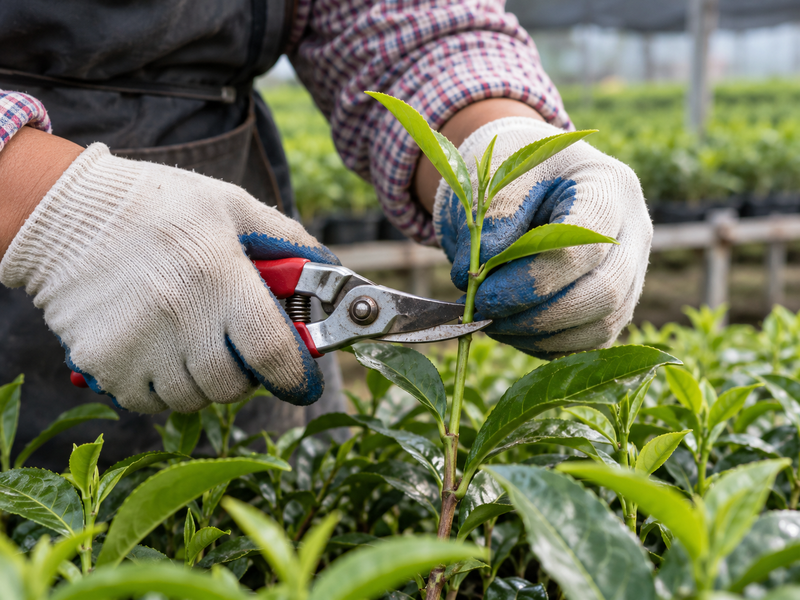
Vegetative cuttings preserve the genetic characteristics of their mother plant more predictably than seed propagation. Washington State University’s tea propagation guide explains that commercial tea plants are commonly propagated by cuttings because seed-grown plants vary. That principle makes a nursery’s mother-plant identification relevant to a cultivar claim. Still, a genetically uniform planting does not guarantee uniform performance. Rooting conditions, plant age, field management and local climate also affect growth.
Follow the mother-plant chain
Ask where cuttings began. A propagation log should identify mother plants, collection period, nursery batch and planting destination. The WSU guide advises selecting healthy mother plants and notes that rooting success depends on light, temperature and plant material condition in its regional system. Buyers need not audit every nursery detail, but they should ask how poor batches or off-type plants are recorded. If a supplier grew tea from seed, request a more cautious description of cultivar identity. Calling a variable seedling population one named clone would overstate the evidence.
4. How does site fit change the choice?
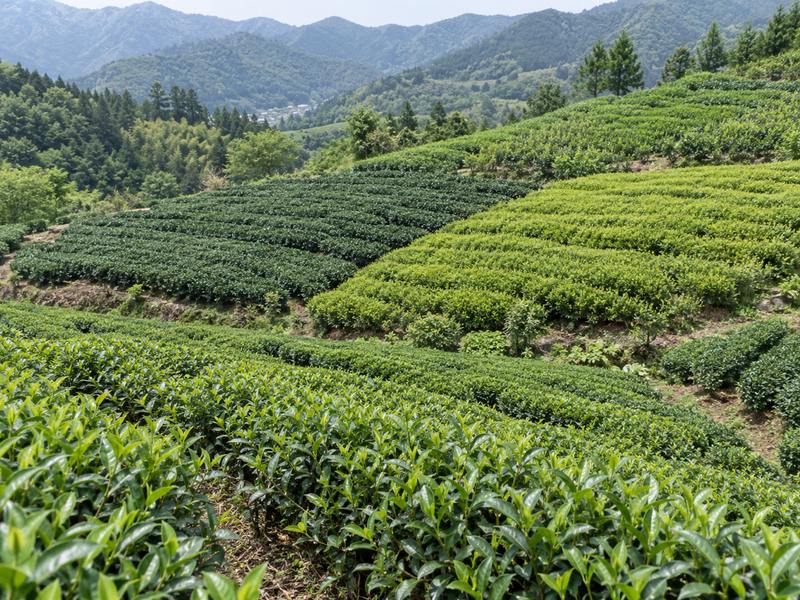
Cultivar performance depends on the place where a supplier grows it. Cold exposure, heat, rainfall, drainage, soil and pest pressure can change plant vigor and harvest timing. North Carolina Extension’s tea profile notes differences between the smaller-leaved sinensis variety and larger-leaved assamica variety, while WSU’s tea overview lists environmental variables that affect tea flavor. These broad categories are useful starting points, not a ranking of cultivars for your supplier’s specific field.
Judge local trial evidence
Compare neighboring blocks carefully. If two cultivars grow on different slopes, their performance cannot be attributed wholly to genetics. Ask for the garden’s trial notes, plant age, soil and management differences. A cultivar that yields well in one block may face more disease pressure or uneven growth elsewhere. University of Hawai‘i’s review of eight Japanese cultivars was designed around a particular regional evaluation. Use its lesson about comparing agronomic traits and harvest timing; do not import its results as a promise for mainland China. Local trial evidence deserves more weight.
| Site factor | Question for grower | Why buyer should care |
|---|---|---|
| Drainage | Where does water linger? | Plant stress may affect supply |
| Harvest timing | When does each block flush? | Availability and season planning |
| Pest pressure | Which blocks need intervention? | Continuity and records |
| Plant age | Are comparisons age-matched? | Avoid misleading yield claims |
5. Which samples make a fair comparison?
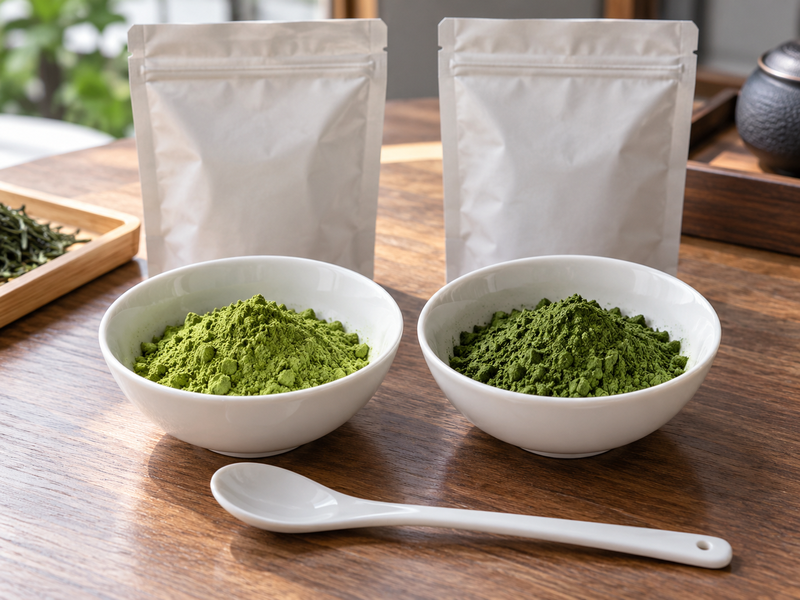
Request samples that isolate the decision you need to make. If comparing cultivars, ask for leaf or tencha from the same harvest window and similar garden management when possible. If the supplier sends finished powder, compare milling date, particle size, packaging and storage conditions. Prepare each candidate using the same dose, water and method or the same commercial recipe. A blind code can reduce expectations attached to a familiar cultivar name. Keep a record of the sample lot and all preparation details so the test can be repeated.
Score samples for their application
Make tradeoffs visible. One candidate may perform well in water but lose color in a baked product. Another may have a pleasing aroma yet limited volume from the available blocks. Score attributes against your application rather than announcing a universal winner. Ask for repeat samples across harvests before building a long-term label claim. A single showcase lot can be informative, but its repeatability remains untested. If you need a stable house blend, a disclosed multi-cultivar approach may serve your product better than one named cultivar with volatile supply.
| Sample control | Hold steady where possible | Record if different |
|---|---|---|
| Harvest window | Same period | Date and season |
| Leaf stage | Comparable pick | Selection rule |
| Shade | Comparable documented method | Duration and coverage |
| Processing | Same tencha and milling route | Facility and dates |
| Application | Same recipe and preparation | Dose and conditions |
6. How do shade and harvest affect cultivar results?
Cultivars respond within a cultivation system. A sample from shaded tender leaf may differ sharply from another cultivar’s open-grown or later-picked material. The Japanese ministry’s Uji tea account distinguishes covered cultivation and explains that harvest period influences tea flavor in that region. These are reasons to request shade and picking records with your samples. They are not evidence that any one cultivar will always taste a particular way or need one universal cover schedule.
Control shade and picking conditions
Check the matched pair. When a supplier claims cultivar A tastes smoother than cultivar B, ask whether both samples had comparable shade conditions, leaf maturity and processing. If they did not, the comparison may still describe two commercial products, but it cannot isolate a cultivar effect. Buyers purchasing a finished ingredient might accept that product-level comparison. Buyers planning a cultivar-specific label should demand a tighter identity chain. Note which question you are asking before you interpret the tasting sheet.
7. Which processing steps can obscure a cultivar effect?
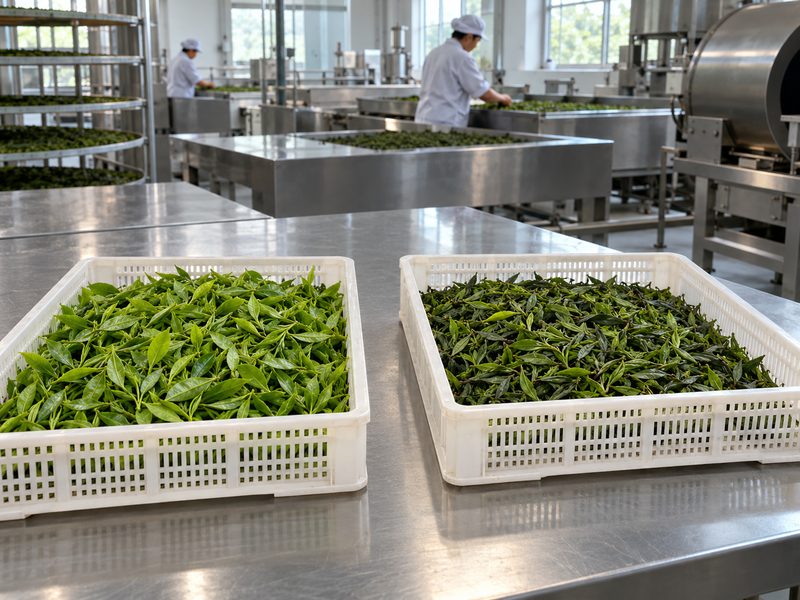
Leaf handling, steaming, drying, stem and vein removal, milling and storage can each alter what reaches the cup. The Uji tea production description lays out the basic tencha-to-matcha route. If a supplier compares two cultivars processed on different days or lines, request processing records before attributing every difference to the plant. A change in powder age or packaging can also affect a comparison. Product teams should standardize what they can and record the rest.
Keep processing identity visible
Follow the leaf lot. Ask whether each fresh-leaf delivery stayed separate through tencha production and milling. In a busy facility, a batch can merge with other material at a planned blending point. That may be commercially sensible, but it changes what a cultivar label means. A supplier should be able to show the point of mixing and the share of each source when making a precise blend claim. The single-origin matcha guide provides related origin questions; cultivar identity needs its own documentary trail.
8. What should buyers ask about mixtures?
Many commercial products use blends to balance color, flavor, price and supply. Ask whether “single cultivar” means the entire powder lot, a dominant share or only the source of one featured component. The answer should appear plainly in the purchase specification. If a recipe can change within agreed limits, document which characteristics must stay stable and what change requires buyer approval. This matters for private-label packs, where a cultivar name can become a consumer-facing promise that is harder to revise.
Define substitution rules
Request a change trigger. A supplier may need an alternate garden after a weather event or harvest shortfall. Ask how it informs buyers, tests replacement material and maintains lot identity. For a product sold by sensory profile rather than cultivar, your acceptance criteria may focus on color, aroma and application performance. For a cultivar-labeled item, source verification and change control should be tighter. Do not let a finished sample’s pleasing taste substitute for a composition record when the label makes a precise botanical claim.
| Product claim | Records needed | Change question |
|---|---|---|
| Named single cultivar | Planting, harvest and lot trace | Can any substitute enter? |
| Declared cultivar blend | Component lot and recipe | What range can change? |
| Sensory-led house blend | Finished specification and tests | When is buyer approval needed? |
| Single origin | Garden and processing trace | Does origin include all components? |
9. How should cultivar claims appear in a specification?
Write what the supplier can verify. Include botanical name, claimed cultivar where relevant, country and block or approved source list, permitted blending and evidence supplied with each lot. Add product requirements such as sensory method, packaging and agreed analytical tests. Keep cultivar evidence separate from quality acceptance: an accurately identified plant can still yield a powder outside your color or flavor target. If the supplier cannot document a specific cultivar, use a broader truthful description rather than forcing a name into the contract.
Match claims with batch records
Align three documents. Check that the supplier specification, certificate or lot statement and your consumer-facing wording agree. A name that appears on marketing material but not on batch records creates avoidable risk. Ask how the supplier handles replanting, new growers and substitutions. A concise change notice can state the affected lot, reason, new source and test results. The quality team can then decide whether to release, retest or hold material under the agreed rules. This is more reliable than relying on the supplier’s general reputation.
10. How do you select a cultivar for a commercial product?
Start with the intended recipe, target market and order pattern. Screen candidate samples under a fixed preparation. Then ask for the field and processing records behind the strongest candidates. Evaluate site fit and supply continuity alongside taste. A cultivar that gives an excellent small batch may be unsuitable for a product needing steady large volumes unless the supplier has a verified expansion plan. Ask for recent lot history and a reasonable plan for harvest variation. Repeat testing when the source or processing route changes.
Record the commercial decision
Choose on evidence. Record the candidate, lot code, application result, origin documents and remaining uncertainty in one decision sheet. A named cultivar can help tell a precise story when plant identity, harvest and processing records support it. A carefully managed blend may give a more stable commercial result when cultivar naming brings no value to your customer. Use the WSU propagation guide and Hawai‘i cultivar review to frame supplier questions, then purchase against the tested product specification.
FAQ
Q1: Are all matcha powders made from one cultivar? No. A powder may come from one selection or a documented blend, depending on the supplier and product.
Q2: Do cuttings prove a cultivar name? Cuttings preserve mother-plant characteristics, but buyers still need credible mother-plant and planting records.
Q3: Can a cultivar guarantee a flavor? No. Site, shade, harvest, tencha making, milling and storage also affect flavor.
Q4: Should buyers reject blends? No. Judge a blend against its declared composition, change rules and finished-product performance.
Q5: What is the most useful comparison sample? A lot-linked sample tested beside alternatives under the same preparation and, where possible, comparable harvest and processing conditions.