
The matcha plant is the tea plant, Camellia sinensis. Matcha does not come from a separate botanical species; growing and processing choices turn tea leaves into a powder suited to whisking, beverages, and foods. For a B2B buyer, the useful question is how a supplier links a particular lot to its field practices, leaf handling, milling, and test results. Kew’s Plants of the World Online confirms the accepted species name. The sections below follow the leaf through production and show where a procurement team can ask for evidence rather than relying on a romantic farm story.
1. What is the matcha plant?
Matcha comes from Camellia sinensis, a member of the tea family Theaceae. Kew describes it as a shrub or tree with a native range extending from the eastern Himalaya through parts of southern China and northern Indochina. The same species provides leaves for many tea styles. Variety, growing site, season, and manufacturing method all influence what reaches the cup. A product label saying “matcha plant” should not imply a special botanical species found only in one country.
What does the species name tell a buyer?
It establishes botanical identity, but it does not prove origin, farming method, or quality. Two tea farms can grow C. sinensis and produce very different powders. Ask where the leaves in the offered lot were grown, which facility processed them, and how lots are identified. A cultivar name may be useful if the supplier can document it; a poetic name without traceability adds little. For a food manufacturer, species identity belongs in the ingredient file alongside the lot code and specification. It is only the beginning of the product description.
| Claim | What it does establish | What it does not establish |
|---|---|---|
| Camellia sinensis | Tea plant identity | Country of origin |
| Matcha powder | Powdered tea product | Exact shade method |
| Farm name | A sourcing lead | Lot traceability by itself |
2. How is a tea plant grown for matcha leaves?
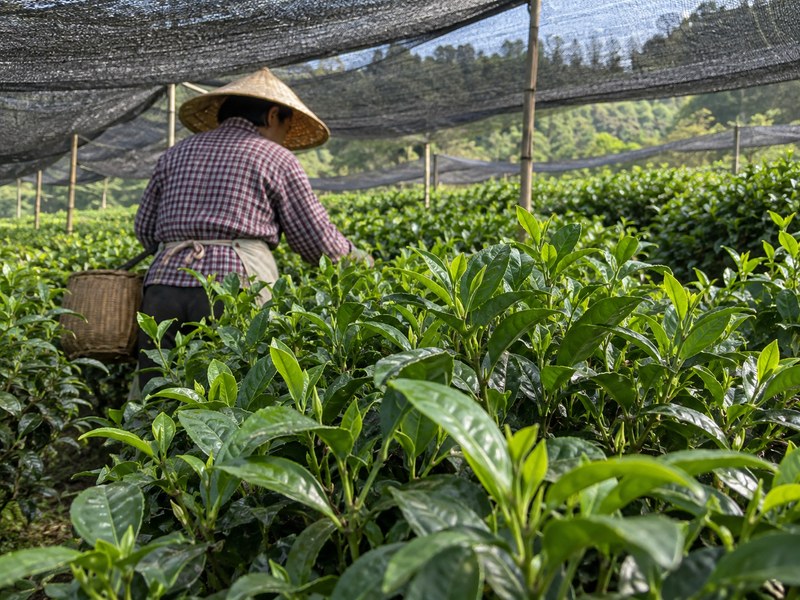
Tea plants need suitable climate, soil, pruning, and harvest management. Farmers manage the canopy to produce usable young growth and keep picking practical. Matcha-directed leaf production often includes shading before harvest, but the precise duration and method vary. A buyer should not turn one supplier’s practice into a universal rule. Ask for a field description for the actual growing area, then compare it with the powder’s taste, color, and price. A shaded leaf still needs careful processing and storage after picking.
Why does site information matter commercially?
Site helps explain differences in harvest timing and supply risk. Weather can shift the picking window; labor, transport, and processing capacity determine how quickly leaves move after harvest. If a brand claims a named region, its purchase and export records should support that region for each lot. Matcha Village’s company materials describe tea garden resources around Hangzhou, but a buyer should verify origin against current lot documents before printing a label. A useful supplier conversation asks how a specific lot moved from a defined growing area through processing, not whether its farm photographs look attractive.
3. Why are matcha leaves shaded?
Shading reduces direct light during part of the growing period and can change leaf chemistry and sensory character. Japan’s Ministry of Agriculture, Forestry and Fisheries describes covered cultivation for tencha, the leaf material traditionally ground into matcha. Shade can support the vivid green and savory, softer profile buyers often seek, but the outcome depends on cultivar, season, duration, processing, and storage. More shade is not a standalone guarantee of a better powder for every application.
What should a supplier be able to explain?
Ask when cover was applied, what method was used, and which lots it covered. A sourcing team may not need a field-by-field agricultural log for every menu launch, but it should request evidence proportional to the claims it plans to publish. A front-of-pack statement such as “shade-grown for twenty days” calls for stronger records than a general explanation of matcha production. Taste the lot in its intended use. A green powder may be attractive in a glass yet underperform in a baked cookie where heat and sugar change the sensory result.
| Shade question | Buyer reason | Evidence to request |
|---|---|---|
| Duration | Supports stated process | Lot or harvest record |
| Cover method | Explains growing practice | Farm procedure |
| Linked lot | Prevents broad claims | Traceability record |
| Cup result | Confirms use fit | Application sample |
4. Which leaves are harvested for matcha?
Young, tender growth is often preferred for a finer sensory profile, but a commercial specification should say what matters in the final powder rather than relying on an undefined “youngest leaf” claim. Harvest timing affects yield and flavor. Mechanical and hand picking can both feed a controlled process, provided the resulting raw material meets the target and can be traced. A buyer may need different material for plain drinking, a sweet latte, or a cookie. The highest-priced leaf is not automatically the most useful ingredient for a high-heat product.
How should harvest differences be evaluated?
Request samples from the seasons or lots available for repeated supply. Compare color, aroma, bitterness, and price at a fixed dose. Ask how supplier specifications handle leaf maturity and whether the quoted product may blend material from several harvests. Blending is not inherently a problem; undocumented changes are. A producer should be able to identify what will remain constant, what may vary, and how replacement lots are approved. For an importer, the practical question is whether the next shipment matches the sensory and regulatory specification agreed during the pilot.
5. What happens after the leaves are picked?
Leaf handling determines whether field potential survives. In the traditional Japanese tencha route, leaves are steamed and dried without the rolling step used for some other teas. MAFF’s Uji tea overview describes that distinction. The dried leaf is then prepared for grinding. Other producers may use different equipment and process controls, so buyers should ask for the actual manufacturing flow behind the offered product. Do not assume a seller’s broad “matcha” label identifies every production step.
Why does the process map matter?
It identifies points where flavor, particle size, contamination control, and traceability can change. Ask where the raw leaf is received, how it is stabilized and dried, whether stems or veins are removed, how powder is milled, and how it is packed. If a claim says “stone milled,” confirm the method for the relevant lot; modern fine-milling equipment may produce a suitable commercial powder without being a stone mill. The right description depends on evidence. A clear process map also helps the buyer decide which tests belong on a specification and which claims should stay off the label.
| Stage | Product risk | Buyer check |
|---|---|---|
| Leaf receipt | Mixed or untraceable material | Intake lot record |
| Stabilizing and drying | Off-flavor or moisture | Process control |
| Milling | Coarse or heated powder | Particle and sensory test |
| Packing | Oxidation or moisture pickup | Barrier and seal check |
6. How does milling change the powder?
Milling reduces prepared leaves into particles small enough for a smooth suspension. Particle size influences how a drink feels and how evenly powder disperses into dough, chocolate, or dairy. Heat generated during milling can also affect aroma and color, so a supplier’s process control matters. “Fine” should be made concrete with a particle-size method or an application test, depending on the product. A laboratory number alone will not tell a café whether its whisked drink feels gritty after five minutes.
Which tests connect milling to use?
For a plain drink, prepare a fixed powder-to-water ratio and inspect the final sip. For a latte, mix the powder using the equipment staff will use. For cookies, test visible specks and flavor after baking. Ask whether the supplier can provide a particle-size range and how it measures it. Compare lots under the same recipe, not separate tasting sessions weeks apart. If one powder requires an extra processing step in your factory, include that labor and yield in cost. Matcha Village describes multiple matcha applications; evaluate its bulk options against the process and sensory targets of your own line.
7. How do growing and processing affect color and flavor?
Color comes from the leaf and the treatment it receives, but appearance alone can mislead. Lighting, packaging, age after opening, and application ingredients all affect what a buyer sees. A green powder may turn muted in a baked product. A powder with an attractive color may still taste flat. Use a consistent viewing method and taste alongside color assessment. Record dry aroma, mixed aroma, bitterness, sweetness, savory notes, texture, and finish. The desired profile differs for a plain bowl and a sweet dessert.
What is a useful sensory benchmark?
Keep a sealed approved sample and a written recipe for each application. Compare new lots on the same day against that reference. Include a mixed drink and at least one finished product if you sell several formats. Photographs can document appearance if lighting and background are controlled, but human sensory notes remain useful. Define tolerance before a shipment arrives. A minor natural variation may be acceptable, while a major flavor shift can change customer perception even if a lab result remains within a broad specification.
| Application | Prioritize | Watch for |
|---|---|---|
| Plain matcha | Clean finish, fine texture | Rough bitterness |
| Sweet latte | Tea presence through milk | Excessive sugar masking |
| Bakery | Flavor after heat | Brown or dull crumb |
| Ice cream | Flavor when frozen | Weak tea note |
8. What does origin tell a brand or importer?
Origin names where the agricultural material came from under the relevant rules; it should not be guessed from the style of preparation. Tea culture and tea supply are connected but distinct subjects. Japan has a deep matcha tradition, while tea plants also grow in China and many other regions. If a brand buys Chinese-grown matcha, it should say so plainly and build its product story around verifiable sourcing. A reference to Japanese ceremony does not transform the powder’s country of origin.
Which records support an origin claim?
Ask for harvest or intake records, lot traceability, processing facility identity, and trade documents appropriate to the transaction. Confirm whether raw leaves and milling happened in the same country. Local labeling and customs rules may define origin differently for a processed food, so have your compliance team review the intended wording for each market. Do not print “single origin” if the product blends leaves from several areas without a clear definition and supporting records. Clear sourcing information is valuable even when the answer is less romantic than a generic “ancient tea” story.
9. How should a buyer specify matcha from the plant to the pack?
A workable specification covers identity, ingredients, sensory expectations, physical properties, packaging, shelf handling, lot coding, and the tests required for the destination market. Pesticide residues, heavy metals, microbiology, and other checks should be selected for the product and jurisdiction, then tied to current evidence. Certifications require verification of scope and validity. A certificate displayed on a website may refer to a different product, facility, or period. Keep the approved sample and the commercial specification together.
How can supplier questions stay precise?
State whether the powder will be whisked, blended into a latte, baked, or packed for retail. Share target dose, desired color and flavor, expected volume, pack size, and sales countries. Request a sample matching the quoted product and lot. Ask how the supplier handles changes in harvest or milling without breaking the agreed profile. If a replacement lot differs, run the relevant application test before release. This review costs less than discovering the change after printed packaging and finished inventory are committed.
| Specification area | Example buyer question |
|---|---|
| Identity | Is it pure Camellia sinensis leaf powder? |
| Process | How was this lot dried and milled? |
| Safety | Which lot tests are available? |
| Supply | How are replacement lots approved? |
10. How can plant knowledge improve a product decision?
Use the botanical and process story to ask better questions, then let a controlled application trial decide the purchase. For a café, that means the same water, dose, and mixing method across samples. For a food factory, it means a pilot bake or production run with documented ingredient weights. For a retail brand, it includes storage and consumer preparation testing. The tea plant gives all these products their raw material; the route from leaf to powder gives each lot its practical strengths and limitations.
What should the final approval contain?
Keep the supplier’s origin and process explanation, current documents, approved lot sample, test results, application recipe, and cost at the working dose. Record any claim you intend to put on a label, then match it with evidence before artwork approval. Review the file whenever the growing source, milling process, pack, or lot changes. A buyer does not need to become a tea agronomist. They do need enough detail to know what they are paying for and what will arrive next month. Matcha Village can be asked to document a candidate powder against that brief.
| Approval item | Evidence to retain |
|---|---|
| Source | Lot-linked origin record |
| Process | Manufacturing flow and spec |
| Application | Finished-product trial |
| Claim | Reviewed supporting document |
FAQs
Q1. Is the matcha plant different from a green tea plant? No. Both come from Camellia sinensis; cultivation and processing create different tea products.
Q2. Does all matcha grow in Japan? No. Tea plants grow in several countries. Confirm the actual lot’s origin rather than inferring it from preparation style.
Q3. Why shade leaves before harvest? Covered cultivation changes leaf development and can contribute to the sensory profile sought for matcha, though outcomes vary.
Q4. Is all matcha stone ground? No. Confirm the milling method before making that claim; different equipment can produce commercial matcha powder.
Q5. What should a buyer request with a sample? A product specification, ingredient and origin information, lot identifier, relevant tests, and a quote linked to the sampled item.