
Matcha soil pH describes acidity in the ground where tea plants grow. A supplier may quote one number without showing where, when or how it was measured. Buyers can make a better decision by reading pH results alongside sampling maps, drainage observations and garden actions. The North Carolina Extension plant profile identifies acid, well-drained soil as suitable for Camellia sinensis; a specific purchasing judgment still needs evidence from the offered source.
Contents
- What does matcha soil pH tell a buyer?
- Why does drainage belong beside a pH result?
- How should a supplier sample garden soil?
- Which site differences can hide in one average?
- What should a laboratory report contain?
- How should buyers read a pH range?
- What changes when a garden corrects acidity?
- How do plants and leaves enter the assessment?
- Which supplier records connect soil with a lot?
- How should buyers decide whether evidence is sufficient?
1. What does matcha soil pH tell a buyer?
Soil pH describes acidity; it does not grade matcha on its own. A number becomes useful when it has a sampled block, depth, date and method. Ask what the supplier was trying to answer when it ordered the test. A pre-planting survey, a routine monitoring round and an investigation into weak growth serve different purposes. Matcha comes from processed leaf, so a pH report is one part of a longer quality story that includes plant condition, shade, harvest and processing. The Matcha Village plant overview can orient product teams to the crop before they review field data.
Separate soil evidence from product claims
Check the question behind the number. A satisfactory pH result does not prove good drainage, leaf safety, pleasing flavor or consistent color. Likewise, one outlying result need not condemn an entire garden if the supplier can locate, investigate and manage that area. Ask whether the reported value represents a composite sample or an individual point. A composite can summarize a management zone, yet it can hide a wet corner or recently amended strip. Request raw point results when a decision depends on within-block variation.
| Result detail | Why a buyer asks | Follow-up if missing |
|---|---|---|
| Block or sampling zone | Links test to source | Request location map |
| Sampling date | Shows current relevance | Ask for later checks |
| Depth and method | Makes tests comparable | Clarify collection protocol |
| Individual or composite | Reveals scale of variation | Request point results |
2. Why does drainage belong beside a pH result?
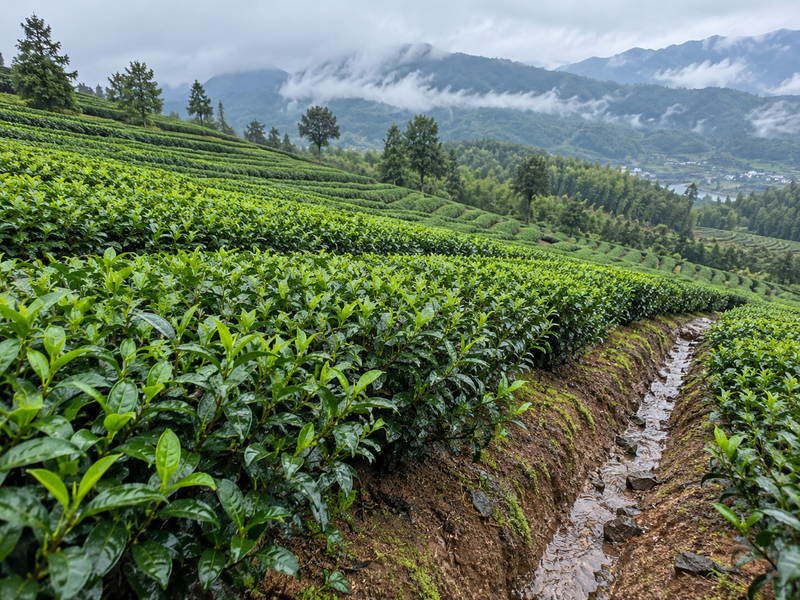
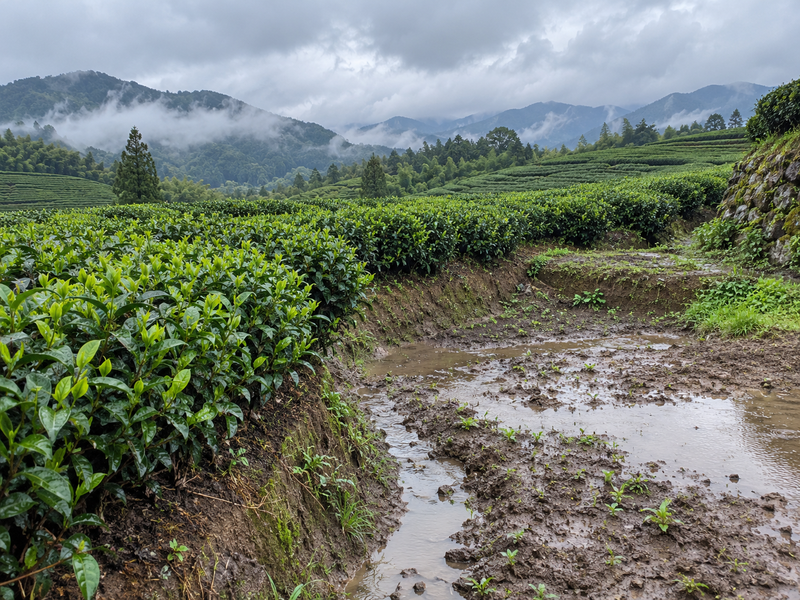
Tea roots need an appropriate balance of air and moisture. A laboratory acidity number cannot describe whether water lingers around roots after rain. Walk the garden during or after a wet period when possible, or ask for dated photographs and drainage maintenance records. Look for low points, blocked channels, compacted access tracks and areas where plants grow unevenly. A well-drained upper slope may sit beside a persistently wet hollow within the same named block. Reporting one pH value for both areas would miss a practical management difference.
Inspect the wettest zone
Follow the water. Washington State University’s planting guide describes well-drained acidic soil for its Pacific Northwest setting and warns against waterlogging during establishment. North Carolina Extension also lists good drainage among cultural conditions. These references support a drainage check, but they do not turn an American site prescription into a universal requirement for Chinese tea gardens. Ask the supplier how it observes runoff, maintains channels and records remedial work in the blocks supplying your lot.
| Field sign | Possible question | Evidence to seek |
|---|---|---|
| Standing water after rain | How long does it remain? | Dated inspection record |
| Blocked ditch | When was it cleared? | Maintenance log |
| Uneven plant growth | Does it align with a wet zone? | Map and plant observations |
| Compacted path edge | Does traffic affect adjacent rows? | Access and repair plan |
3. How should a supplier sample garden soil?
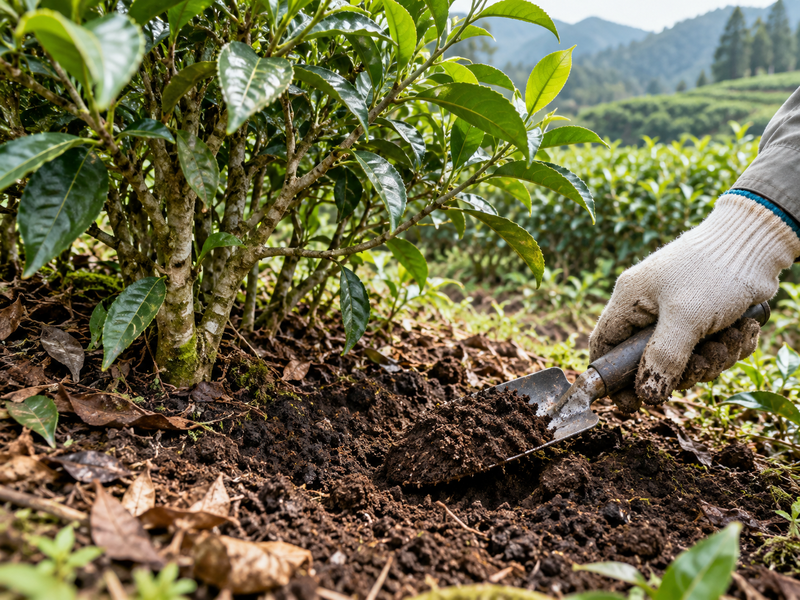
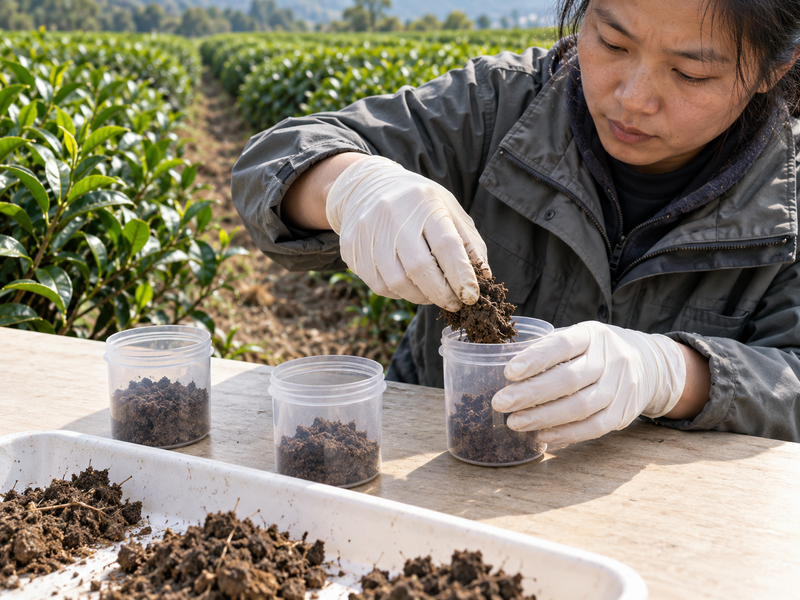
Sampling starts with a clear purpose and a map. Ask staff to show which parts of a garden they treat as one management zone and why. Slope, soil type, plant age, drainage and previous amendments can justify separate zones. Within each zone, collection points should represent planted rows rather than only convenient paths or healthy-looking plants. The supplier should record date, depth, tools and whether points were combined. Clean equipment and properly identified containers reduce mix-ups. A repeat round should use a comparable method so changes over time mean something.
Verify field collection
Ask someone who took the sample. A laboratory report can look polished while the field method remains unclear. Have the collector explain how they avoided fertilizer bands, field edges or recently disturbed soil when those locations were outside the sampling question. If a problem area prompted testing, it may need its own sample rather than blending with ordinary rows. If the supplier uses an outside agronomist, ask for that person’s sampling instructions and block references. Buyers need a method they can understand and revisit, not an unsupported promise that “soil is suitable.”
4. Which site differences can hide in one average?
Tea gardens are not uniform laboratory trays. An upper terrace may drain quickly, while a lower row receives runoff and more deposited sediment. A replanted strip may have different root development and soil history from mature bushes nearby. Shade structures and wind exposure can alter surface moisture without changing a block’s name. Ask whether the supplier’s sampling map reflects these visible differences. The goal is not to demand a test for every bush; it is to see whether samples represent decisions the grower actually makes.
Map management changes
Look for a boundary. Averages become risky when a supplier changes management at an unrecorded line. Ask where drainage repairs end, where a fertilizer program changes and whether any soil amendment was applied to only part of the block. Such boundaries help a buyer interpret an outlier. A single high or low pH reading may call for another sample rather than an immediate garden-wide treatment. The answer should connect field observation, test location and a documented decision. If the area supplies leaf separately, keep that identity through harvest and processing records.
| Garden difference | Risk in a single average | Better evidence |
|---|---|---|
| Upper and lower slope | Different water movement | Separate zone results |
| Replanted rows | Different management history | Planting and test dates |
| Amended strip | Mixed pre- and post-action values | Treatment map |
| Wet corner | Local root stress hidden | Point sample and drainage record |
5. What should a laboratory report contain?
Read a lab report as a chain-of-identity document. It should show sample codes that correspond to the supplier’s map, collection and receipt dates, the analytical method or laboratory description, results and units where relevant. A report copied into a sales deck without its sample identifiers cannot be matched to a garden block. Ask who collected the sample and who entered its location. If a handheld field meter was used, distinguish its screening result from a laboratory test; the two may use different preparation methods and answer slightly different questions.
Read trends without losing context
Compare like with like. A trend chart is meaningful only if sampling zones, depth, timing and methods are reasonably stable. A jump may reflect a real change or a changed method. Ask the supplier to annotate either possibility. A lab result should also be read with field observations, since acidity alone cannot establish drainage or nutrient availability. The North Carolina Extension profile describes acidic soil preference and good drainage as separate characteristics. Keep them separate in your supplier review, then connect them when evaluating plant response.

| Report item | Buyer use | Typical gap |
|---|---|---|
| Sample code | Match result to field map | Code only in lab system |
| Collection and receipt dates | Judge timing | Undated collection |
| Method | Compare repeated tests | Method omitted |
| Result and reference | Interpret with local advice | Sales-only summary |
6. How should buyers read a pH range?
Published ranges are context, not universal buying cutoffs. Washington State University describes tea preference for a pH range of 4.5–5.5 in a Pacific Northwest planting guide. The North Carolina Extension profile classifies the plant under acidic soil below pH 6.0. These statements come from different extension formats and settings. Neither specifies the only acceptable number for all tea cultivars, soils, ages or matcha applications. A supplier may have locally validated practices that require a more nuanced review.
Interpret regional guidance
Read the range with a map. Ask whether a result lies within the supplier’s locally advised management range and what action staff took when it did not. A single result near a threshold should prompt questions about sampling variation and plant condition. Do not recommend a soil amendment from a purchasing desk. Local agronomists should interpret tests alongside soil texture, drainage, nutrient results and crop response. For buyers, the strongest evidence is a repeatable monitoring process with dated action and follow-up, not a number chosen because it looks familiar from an online guide.
7. What changes when a garden corrects acidity?
An amendment changes a management history that buyers may need to understand. Ask what problem led to action, which area was treated, what material was used and whether local advice guided the decision. Record application date and follow-up sampling plan. A supplier should avoid claiming instant improvement from a single treatment, since field response depends on soil conditions and time. If the amended area supplies material for an offered lot, the buyer can ask whether the treatment period overlaps its harvest window and whether any separate testing was required by the purchase specification.
Verify an amendment’s effect
Check the aftercare. A treatment record without a later measurement cannot show its effect. Conversely, a later pH shift without an action log may reflect different sampling, moisture conditions or a mapped zone change. Request both. The WSU guide discusses acidifying materials for its regional growers, but its examples are not blanket application instructions for a production garden elsewhere. The purchasing team should ask for local agronomic rationale rather than prescribing a product or rate. This keeps the decision with people who can inspect the soil and crop.
8. How do plants and leaves enter the assessment?
Walk sampled zones and note canopy uniformity, new growth, leaf condition and signs of stress. Such observations can guide questions; they cannot diagnose a pH problem without testing. Poor growth may reflect drainage, pests, nutrition, pruning, weather or plant age. A dark green leaf also does not prove a particular soil value. Ask the grower whether weak patches appear on a map and whether they are sampled separately. Then connect the response to the harvest records for the material offered to your business.
Compare crop and powder evidence
Keep the product test separate. Tea leaf can be processed into quite different finished products. Powder color and flavor depend on cultivar, shade, harvest stage, tencha making, milling and storage alongside field conditions. The Matcha Village leaf guide gives product context, but a purchase decision should rest on the supplier’s lot-specific evidence and your agreed tests. Compare retained samples in a fixed application before drawing conclusions from soil data. If a supplier attributes a flavor difference solely to acidity, ask what other variables were held steady.
9. Which supplier records connect soil with a lot?
Begin with the finished lot code and move back through processing, leaf receipt, harvest and garden block. Then overlay the soil sampling map. The match need not imply every bag traces to one soil core; it should show that the sampled management zones include the fields that supplied the lot. Ask for planting dates, drainage work, amendments and follow-up results for those zones. If outside growers supply leaf, establish whether their garden records are available and how their leaf is identified during intake.
Connect samples with source blocks
Test a mixed delivery. A blended powder may draw from several blocks with different soil histories. The supplier should identify the source blocks and keep a record of planned mixing. Where it cannot, a soil report for one attractive showcase block has little bearing on the powder in your sample. Record the level of traceability the supplier can actually demonstrate. A buyer may accept a multi-block supply if it meets the product specification and disclosure expectations. The issue is whether the evidence matches the claim, especially when an origin or cultivation story appears on packaging.
| Claim in proposal | Needed link | Buyer question |
|---|---|---|
| “From our garden” | Lot to named blocks | Which blocks supplied it? |
| “Soil tested” | Blocks to sample map | Were all sources represented? |
| “Drainage managed” | Work to affected area | What was done and checked? |
| “Consistent quality” | Lot history to product tests | How did recent lots compare? |
10. How should buyers decide whether evidence is sufficient?
Write the decision around the product you intend to buy. A beverage company may need stable appearance in a standard drink; an ingredient distributor may need an origin description supported by trace records. Identify which soil-related claims appear in the supplier’s offer and what evidence each requires. Then separate three findings: data you saw, explanations you heard and questions still open. A report with sound sampling and mapped blocks may support confidence even if soil conditions vary. A neat single pH number with no location offers little assurance.
Make a documented decision
Ask for the next record. If the evidence is incomplete, request a sampling map, a recent lab report and one follow-up action record for a known problem zone. Pair that review with retained product samples and the agreed quality specification. The WSU planting guide and NC Extension profile can inform questions about acidity and drainage; local agronomy determines field action. Approve the supplier when its records, site observations and finished material tell a coherent story for your intended use.
FAQ
Q1: What pH does tea prefer? Tea generally favors acidic soil. Published extension ranges are regional references, so ask for local agronomic advice and site records.
Q2: Does a good pH result prove matcha quality? No. Shade, leaf selection, processing and storage also affect the finished powder.
Q3: Can one composite sample represent an entire estate? Only if its defined sampling zone is genuinely similar; separate wet, amended or replanted areas may need distinct samples.
Q4: Should buyers ask suppliers to add sulfur? Buyers should request evidence of local diagnosis and follow-up, not prescribe an amendment or rate remotely.
Q5: Which document should come with a pH report? A sampling map or code key should link each result to the garden blocks that supplied the offered lot.