
A café chain in Kuala Lumpur can love a matcha sample and still reject the first reorder because the flavour changed, the pouch sits open too long, or the delivery plan fails its East Malaysia stores. A buyer searching for a matcha supplier Malaysia can depend on needs a specification that survives tasting, import, storage and service. These ten checks are for that decision. They are designed for café operators, foodservice distributors and brands choosing between local stock and a direct import route.
The top-ten result Uji Matcha Supplier raises a useful question about famous origin names: does the proposed powder match the claim and the intended drink? Origin is one part of the decision. Malaysian buyers also need an importer, a sound halal-claim process where relevant, usable packs and a realistic replenishment plan. Use the following questions with the exact SKU and its local sales channel.
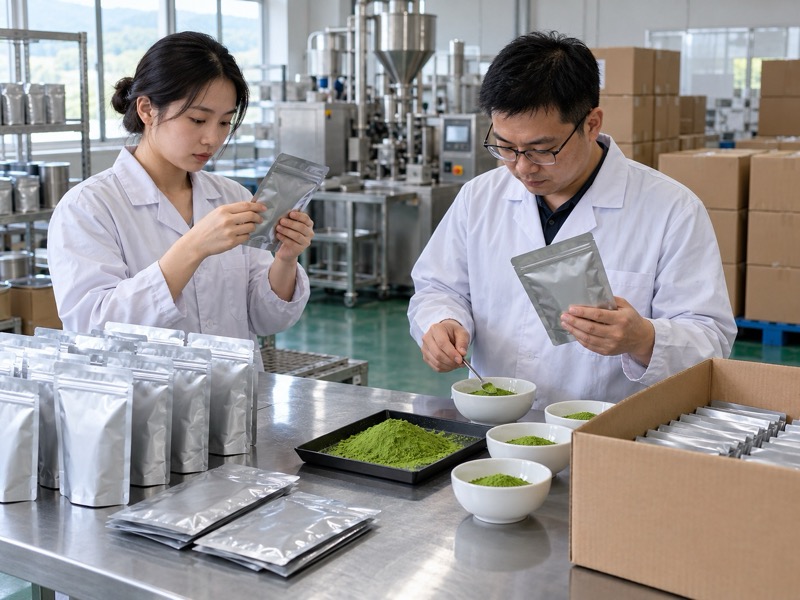
1. Which Malaysian customer and menu is the matcha for?
Start with the cup that earns the sale
List the outlets and products the powder must serve. A single café with one iced latte can choose a different powder from a distributor serving bakeries, restaurants and retail shelves. Write the main recipe in grams and millilitres, including milk, sweetener, ice and serving size. State the price point, desired colour in the finished drink and any bitterness limit. If a straight matcha drink matters, test it separately. A sales sample that looks vivid in a bowl can be too delicate once added to a sweet, cold menu item.
Decide whether the purchase is plain matcha, a sweetened matcha latte blend or a flavoured mix. Those products should never share one price comparison without adjusting for their ingredient composition and usable dose. The supplier’s suggested “premium” grade is only a starting point; your café’s accepted cup defines the final specification. Send the same brief to each bidder. This prevents one supplier from quoting a delicate drinking grade while another quotes a stronger culinary blend and both calling their offers comparable.
| Use case | Test in the cup | Operational check |
|---|---|---|
| Signature iced latte | Colour and flavour in milk | Prep time at rush hour |
| Unsweetened tea | Aroma and finish | Water temperature control |
| Bakery or dessert | Flavour after processing | Batch yield |
| Retail pouch | Home-use instructions | Artwork and shelf pack |
2. Should the buyer use a Malaysian distributor or import directly?
Compare the work as well as the quoted price
A local supplier can offer small replenishment orders and stock already in Malaysia. That may be valuable to a new café that cannot use a direct-import minimum before the powder loses its best cup quality. A chain with stable demand may want a direct relationship and a production specification. The answer depends on order size, inventory space, cash, import capability and how quickly a problem must be resolved. Get a delivered quote from a local distributor and a fully costed direct-import quote for the same accepted grade.
For direct import, name the buyer, exporter, Malaysian importer, forwarding agent and receiving warehouse. Ask who will prepare the product documents, who will submit the import information and who will inspect the goods after release. If a supplier promises to “handle shipping,” ask where its responsibility ends. A distributor should also provide lot traceability and an agreed response to a quality issue; local stock is not a reason to accept unidentified powder. Put the delivery point, lead time, pack count and claim process in writing for either route.
3. How should a buyer test Uji and other origin claims?
Ask where tea was grown and where powder was made
“Uji,” “Japanese,” “ceremonial” and “premium” are common sales phrases, but a purchase specification should identify the actual ingredients, growing origin, milling location and lot. If the powder is blended across origins, the supplier should say so. A buyer may deliberately select Chinese-origin matcha for a milk drink or Japanese-origin matcha for a particular menu story; either choice requires an honest product description. Ask for origin evidence relevant to the actual shipment, not a photograph of a field that cannot be connected to the pouch.
Separate an origin decision from a taste decision. A famous place name does not guarantee that a powder works in a particular recipe or price point. Compare coded samples without showing the team their origin or quoted price, then reveal those details after the tasting. If an origin claim will appear on retail artwork, have the responsible Malaysian party approve the exact wording and evidence before printing. A product change later may require the menu and packaging claims to be checked again, even if the new lot still tastes acceptable.
4. How should Malaysian cafés run a fair sample trial?
Keep the recipe fixed, then find the accepted dose
Request two or three samples with product codes and lot identifiers. Use the same cup size, water, milk, ice, mixing method and sweetener. First taste each at a common dose, then adjust the promising samples until they reach the cup you would sell. Record grams per cup, flavour, colour, clumps and the time a barista needs. A lower kilogram price can disappear when the drink needs more powder. Keep a sealed reference pouch from the selected sample, together with the recipe and tasting notes.
Repeat the trial during ordinary service, not only in a quiet office. Watch whether staff can make the drink consistently with the tools already on the bar. Check a cup at handoff time and after the normal customer delay. For chains, send the same coded sample and recipe to two outlets; different water, milk and staff practices can expose weaknesses. Confirm whether the sample comes from the production lot for the first order. If it does not, require a production-lot check before accepting a large shipment. The site’s café matcha ratio guide gives a starting method for dose comparison.
| Trial stage | Control | Measure |
|---|---|---|
| Blind tasting | Same base recipe | Flavour and colour |
| Dose test | Accepted cup standard | Grams per drink |
| Rush test | Normal bar tools | Time and clumps |
| Second outlet | Written recipe | Consistency |
5. What should the importer check before a shipment to Malaysia?
Give the local party the exact SKU and route
Malaysia’s Ministry of Health describes its commercial food import procedure and the role of FoSIM, the Food Safety Information System of Malaysia. Its Food Safety and Quality Programme controls food entering the country through entry points using risk assessment. The local importer or agent should confirm the current procedure for the proposed matcha, package and port. A supplier’s successful shipment of another tea or a different pack does not establish that this one is ready.
Before dispatch, compare the product specification, ingredient list, origin statement, invoice, packing list, lot record and artwork. The product name and net weight should match across them. Ask the importer whether any category-specific documents or label changes are needed, and what approval must be in place before a retail launch. Do not put a guessed tariff, inspection time or tax rate in the buying plan; have the forwarding agent quote the actual route. If the buyer shifts from a foodservice pouch to private-label retail packs, repeat the check with the new SKU rather than assuming the old paperwork applies.
6. How should a buyer review a halal claim?
Match the evidence to the product, facility and label
When a café, distributor or brand intends to make a halal claim, ask for the complete ingredient and processing information, the relevant certificate or proposed certification pathway, and the identity of the facility. The official Halal Malaysia portal explains how JAKIM treats recognised foreign halal certification bodies and imported products described as halal. The Malaysian buyer should verify the current status of any foreign body and approve the exact claim and mark for its channel. A seller’s informal “halal friendly” statement should not become a printed logo.
This review matters even when the core ingredient is simply tea, because flavoured blends, sweetened powders and processing steps add other materials and suppliers. Ask what change notice the seller will give if a component, plant or manufacturing line changes. Keep the claim review tied to the same product code and pack artwork as the purchase order. If a certificate is supplied, check its holder, scope, dates and product description. If the buyer does not plan to make a halal claim, it still needs accurate ingredient information and should avoid implying a certification that has not been confirmed.
7. Which packaging can survive storage and café service?
Design for humidity and actual pouch turnover
Choose the inner pouch based on how quickly each store uses it after opening. A large bag may reduce the quoted pack cost but expose powder repeatedly during a slow week. Smaller sealed units may preserve a more consistent cup. Ask for the material, barrier properties, seal design, net weight, lot marking and storage instructions. During a pilot, compare the first and last cups from an opened pouch under the café’s real storage conditions. Do not promise a fixed after-opening life without that test.
For a distributor serving both Peninsular and East Malaysia, plan replenishment by destination rather than applying one lead time to every outlet. Confirm the route and carton protection with the carrier; inspect the case when it reaches the warehouse. Retail pouches need artwork approval and traceability as well as a good seal. Keep the shipping carton, inner pouch and lot record linked. If a store reports an off-flavour or damaged seal, the distributor should be able to identify which other stores received that lot without stopping every matcha product in the business.
| Packaging choice | Test or record | Reason |
|---|---|---|
| Pouch size | Days to use after opening | Cup consistency |
| Seal | Arrival and opening check | Damage detection |
| Carton | Case count and lot code | Receiving accuracy |
| Storage plan | Warehouse and outlet practice | Repeatable handling |
8. What is the true cost per accepted cup?
Use the tested dose and the chosen delivery route
Calculate the powder cost at the accepted grams per drink, then add milk, sweetener and other ingredients for the full menu margin. For supplier comparison, add freight, importer and agent charges, testing, warehouse handling, relabeling where applicable and likely waste. Ask each bidder to quote the same pack and order volume. A cheap kilogram can become costly if the MOQ sits too long, the pouch size is wrong or the drink needs a stronger dose to taste balanced.
Run two demand scenarios. In a quiet month, can the business use the order while the powder performs well? In a busy month, can the supplier and route replenish before the stock buffer is gone? Get the actual local charges from the importer and forwarder. Compare the distributor’s delivered price against the direct route using those real figures. Include the cost of a late shipment if matcha is a permanent menu item. The right purchase is the one that protects margin and availability at the same time, not merely the lowest price printed on a quotation.
| Cost item | Use in calculation |
|---|---|
| Powder | Accepted grams per cup |
| Freight and entry | Actual delivery route |
| Stock loss | Slow-month scenario |
| Service gap | Late-order buffer |
9. What should a first commercial order prove?
Make the pilot a test of the whole supply chain
Order a manageable quantity that will be used in real service. State the approved grade, lot or production-lot sampling arrangement, pouch, case count, documents, shipping point and destination on the purchase order. At receipt, check carton condition, seals, counts and lot numbers against the paperwork. Have a barista make the reference drink from the arrived powder. If it differs from the approved sample, record the result and contact the supplier before mixing that lot into routine stock.
Track time from order approval to usable stock at the outlet. The distinction matters when customs, a warehouse transfer or an East Malaysia delivery is involved. Keep an exception process: who holds a questionable case, which photographs or samples are required, and when a supplier must respond. A pilot order is not a success merely because it arrived. It should let the buyer predict the next order’s cost, timing, cup quality and work for staff. Use the lessons to adjust pack size and reorder point before scaling the route.
| Pilot question | Evidence | Next action |
|---|---|---|
| Same product? | Code, lot and reference cup | Accept or investigate |
| Sound pack? | Seal and carton check | Release or hold |
| Useful lead time? | Order-to-store record | Set buffer |
| Expected margin? | Actual dose and charges | Revise price or route |
10. How should a Malaysian buyer manage the next six months?
Reorder against a specification, not a sales sample
Once the pilot passes, maintain a short approved specification with ingredient, origin, grade, cup result, pack, label version and required documents. Require notice before the supplier changes any of them. A new growing area or revised blend may be acceptable, but the buyer needs to retest the drink and review the claim. Keep a sealed reference sample and compare early lots more closely. A distributor should preserve that link even when it breaks cases for multiple cafés.
Forecast from grams used, not just drinks sold; spillage, staff training and promotions change powder consumption. Review sales and stock monthly, with separate lead times for each delivery lane. Set an order trigger that allows for the real import or distributor replenishment cycle and a sensible buffer. Score the supplier on cup consistency, document accuracy, on-time delivery and how it handles a problem. A good matcha supplier for Malaysia can repeat the accepted product and explain each change before the cafés have to discover it in a customer’s cup.
Frequently asked questions
Q1: Is Uji matcha always the best choice for a Malaysian latte?
No. Verify any origin claim, then choose by the cup result, accepted dose, availability and total cost for the menu.
Q2: Can a café rely on a supplier to clear food imports?
The supplier can prepare its product and export records. The named Malaysian importer or agent should confirm the current FoSIM and entry requirements for the exact shipment.
Q3: Does a plain tea powder automatically carry a halal logo?
No. Check the exact product, facility, certification evidence and the permitted Malaysian claim before using a logo or label statement.
Q4: What pack size should a small café order?
Choose a sealed size the store can use while the opened product still meets its cup standard. Confirm this during the pilot.
Q5: What should be checked on every reorder?
Match the product code, lot, pouch, documents and reference cup, then update the landed cost and delivery lead time.