
A matcha ratio is a recipe decision, not a number that travels unchanged from a tea bowl to a 16-ounce iced latte. Hugo Tea’s brewing guide gives useful starting ranges for thin and thick matcha. A café must add its own powder, water, milk, ice, sweetness, cup size and service method. Start with measured trial cups, change one variable at a time, and record the dose that tastes right at a cost the menu can carry. This guide gives staff a practical way to reach that result without relying on a heaped scoop.
Contents
- 1. What should your ratio describe?
- 2. Where should a plain tea trial begin?
- 3. How do you build a latte trial?
- 4. What changes in an iced drink?
- 5. Which variables must stay fixed?
- 6. How should staff judge the cup?
- 7. How do you troubleshoot a weak drink?
- 8. How do you cost the chosen dose?
- 9. How do you write a service recipe?
- 10. When should the ratio be retested?
1. What should your ratio describe?
Name both quantities and the finished format
A ratio can mean grams of powder to milliliters of whisking water, grams per whole finished drink, or the strength of a concentrate before milk is added. Those are different specifications. A card that says “2 grams to 80 milliliters” is incomplete for an iced latte if the cup later receives 250 milliliters of milk and a full scoop of ice. Put the entire recipe beside the concentrated mix, including cup size and expected final volume. Otherwise two staff members can follow the same ratio and serve noticeably different drinks.
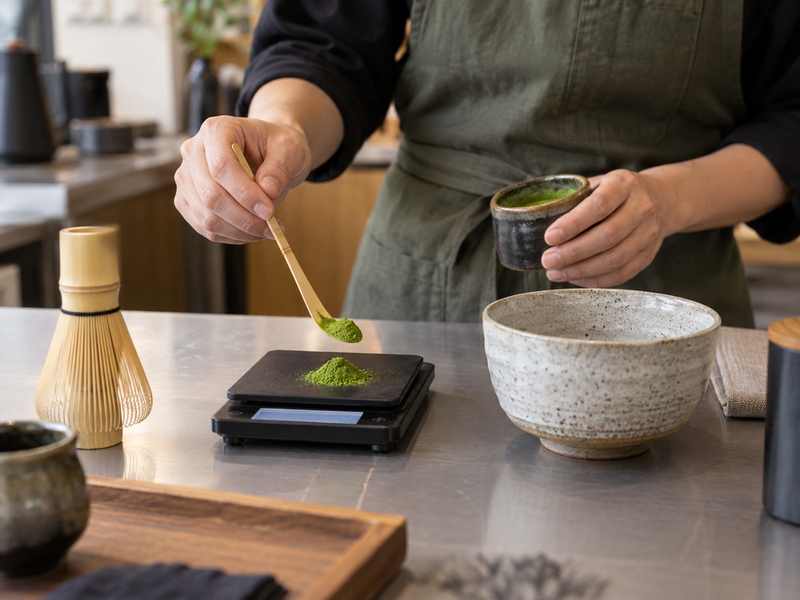
Use weight for the powder. A scoop changes with packing and technique; a scale lets a buyer compare lots and calculate cost. Water can be measured by mass or volume if the tool and procedure stay consistent. Decide whether ice is specified by weight, number of cubes or fill line, then test how much it melts during normal service. Record the brand and lot of powder used in development. The aim is a recipe another barista can repeat, not a mathematical label that leaves the most influential ingredients undefined.
| Ratio statement | What it includes | What it leaves open |
|---|---|---|
| Powder to whisking water | Concentrate strength | Milk and ice |
| Powder per finished cup | Tea dose | Preparation method |
| Powder per liter batch | Production yield | Serving loss |
| Powder cost per cup | Material spending | Flavor acceptance |
2. Where should a plain tea trial begin?
Use a range, then taste your own powder
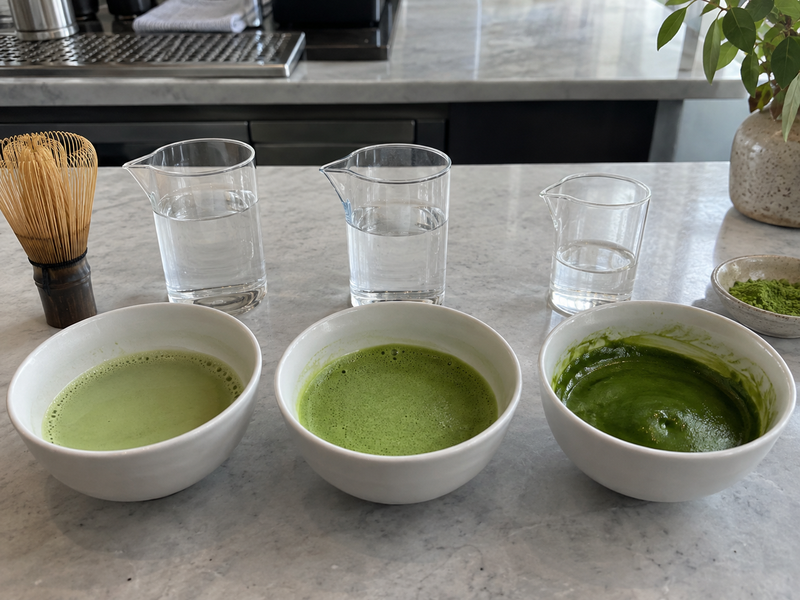
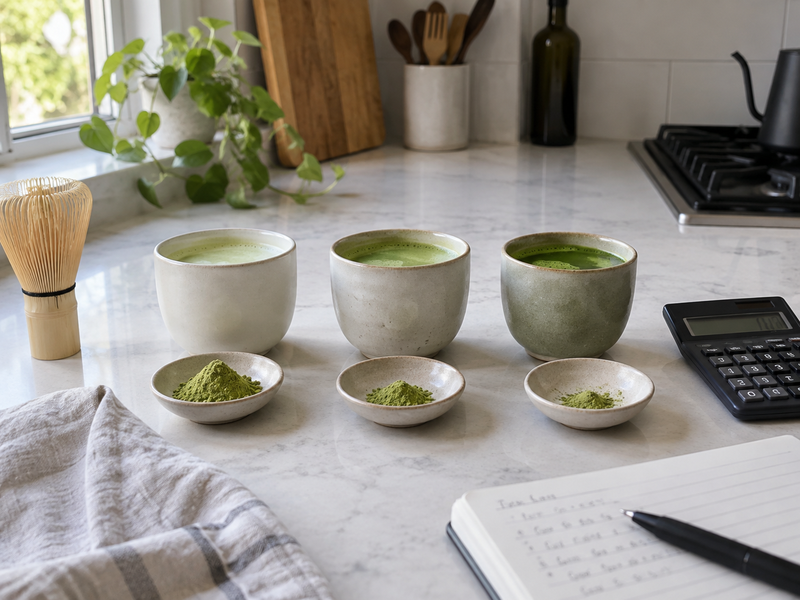
Hugo Tea describes a thin preparation around 1.5–2 grams of powder with 70–80 milliliters of water. Treat this as a trial starting point rather than a universal optimum. Prepare three measured cups using one powder and fixed water conditions. For example, keep water at 75 milliliters and test 1.5, 2.0 and 2.5 grams. The exact values are choices for a bench test, not claims about what every guest should drink. Write down which cup has enough tea flavor without an overly dry or harsh finish.
Next, fix the preferred dose and adjust the water volume in a second small trial. If you change powder and water together, you will not know which alteration helped. Serve cups promptly and in a rotated order so one is not left sitting while the others are tasted. In a café, the chosen plain tea ratio should work with the real bowl, whisk and barista skill. A highly concentrated preparation may suit a specific tea service but require a different approach from a drink meant to be sipped casually. Keep the agreed method on the card with the numbers.
| Trial cup | Powder | Water | Purpose |
|---|---|---|---|
| A | 1.5 g | 75 ml | Light reference |
| B | 2.0 g | 75 ml | Middle reference |
| C | 2.5 g | 75 ml | Strong reference |
3. How do you build a latte trial?
Make the finished cup at full size
A latte test begins with the desired serving, not with a bowl that tastes perfect before milk. Fix the cup size, milk type, milk volume and sweetness. Whisk each candidate powder dose in a measured amount of water, then build each drink the same way. Taste the finished drink without garnish. Ask whether tea stays recognizable after milk, whether bitterness rises at the needed dose and whether the mouthfeel is smooth. A powder that requires twice as much to survive milk may be less economical than its bag price suggests.
Start with a narrow dose ladder appropriate to your product brief, perhaps 2, 3 and 4 grams per cup, and keep the rest identical. These numbers are examples for trial design, not a recommendation for every café. If 4 grams makes the drink harsh while 2 grams disappears, try a different powder or milk combination before endlessly increasing dose. Include the actual sweetener because sweetness can change how tea is perceived. If both dairy and oat drinks appear on the menu, approve both recipes. One number may not give the same result in each.
| Latte variable | Fix during dose test | Record after approval |
|---|---|---|
| Cup size | Same vessel | Nominal volume |
| Milk | Same type and amount | Brand and volume |
| Sweetener | Same dose | Type and mass |
| Concentrate | Same water and method | Powder and water |
4. What changes in an iced drink?
Account for dilution and serving time
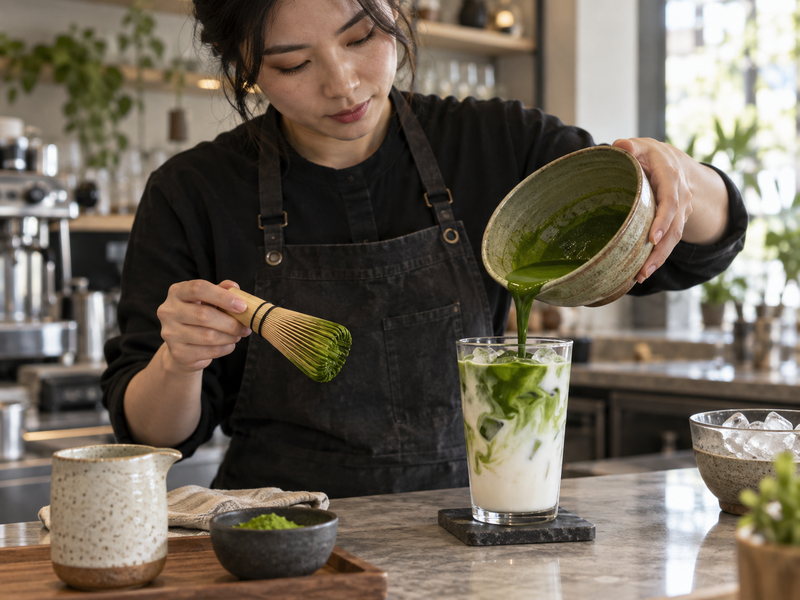
Ice changes the drink after it leaves the counter. Test the same recipe immediately after assembly and again after a realistic wait for pickup or delivery. Record the ice amount and cup volume. A visually full cup can have less liquid than a warm latte, yet its flavor may become thinner as ice melts. Decide whether tea should remain distinct at the later time point. If it fails, adjust one factor: powder dose, milk volume, ice load or concentrate strength. Keep the changed ingredient visible in the cost calculation.
Cold liquid also affects dispersion. A small warm-water concentrate may help staff break up the powder before adding cold milk; test the temperature and method that your operation can reproduce. Do not let a barista substitute a splash of water by eye, as this changes both texture and drink volume. If a shaker or blender is used, specify its fill, mixing time and cleaning process. Inspect the bottom of the cup for settled powder after normal service. The proper matcha ratio for an iced recipe includes the water used to disperse tea and the liquid that appears as the ice melts.
5. Which variables must stay fixed?
Protect the trial from preparation noise
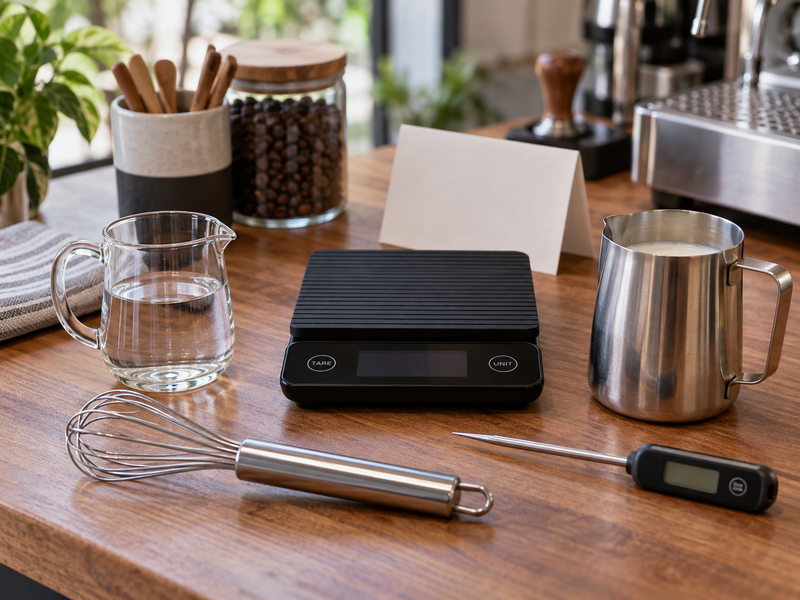
When comparing doses, use one powder lot, one water source, one measured water temperature and the same whisking tool. Weigh the powder and use the same time between mixing and serving. Change only the dose in the first round. A café that changes barista, milk brand, syrup and temperature at once has learned little from its three sample cups. Record variations deliberately in later rounds, especially ingredients that will differ between locations.
The water temperature in a supplier guide can be a starting point, but do not make an unsupported claim that one threshold “burns” a molecule and therefore ruins all matcha. Taste the powder under controlled conditions. A very hot preparation may produce a different sensory result, while a cooler one may disperse differently with a given tool. For multi-site operations, test whether the water system and equipment at a second location produce the same drink. The ratio card is complete only when its preparation conditions are realistic and explicit.
| Control | Why it matters | Simple record |
|---|---|---|
| Powder lot | Flavor may change | Code and opening date |
| Water | Taste and dispersion | Source and amount |
| Temperature | Cup comparison | Measured range |
| Whisking | Texture | Tool and sequence |
| Serving time | Settling and dilution | Minutes after assembly |
6. How should staff judge the cup?
Use a small scorecard with one clear rejection rule
Ask tasters to score tea presence, texture, bitterness or astringency, sweetness balance and finish. Give room for one specific observation: “tea disappears after ice melts” is more useful than “not premium.” Taste samples blind if comparing powders or recipes associated with different prices. Ask people to write notes before discussing favorites. A single confident voice can steer the whole group if the first impressions are not recorded.
Include the people who will make the drink during a rush. A developer may favor the most delicate sample; baristas may find that it clumps and adds forty seconds to service. Compare the cup against the menu brief, not an abstract idea of quality. If the business wants a tea-forward latte with little syrup, a sweetened test should not rescue a powder that tastes rough without it. Repeat an apparent winner on another day with the same lot. If results swing, investigate the preparation steps before moving the dose. A recipe approved from one lucky cup will be hard to defend when service begins.
7. How do you troubleshoot a weak drink?
Change one cause at a time
Check whether the powder was weighed, dispersed and added at the correct point before increasing the dose. A drink can taste weak because milk volume crept up, the ice diluted it, or a new syrup overwhelmed the tea. Compare the actual cup with the recipe card. Make one control cup, then vary only the suspected factor. If the tea remains weak at the maximum affordable dose, screen a different powder. For a buyer, that can be the most economical adjustment.
If the drink is gritty, a stronger ratio may make the problem worse. Check clumps, sieve use and mixing time. If it is harsh, compare a lower dose and a different water temperature before blaming the leaf. Do not present these as medical or chemical diagnoses; they are practical kitchen tests. Keep a small log of the change and sensory result. When several staff members report the same fault, a written sequence prevents every shift from developing its own unofficial recipe. The approved ratio should solve a defined problem in the finished cup.
| Symptom | First check | Trial adjustment |
|---|---|---|
| Tea disappears | Milk, ice, syrup amounts | Controlled dose ladder |
| Gritty texture | Clumps and mixing | Sieve or whisk method |
| Harsh finish | Dose and preparation | Lower dose or compare lot |
| Inconsistent cups | Scale and recipe card | Staff retraining |
8. How do you cost the chosen dose?
Use the dose that passed, not the cheapest test cup
Divide the delivered price per gram by the powder dose in the approved recipe. Add relevant freight, duty and waste if they affect the buying decision. A powder priced at $0.08 per gram contributes $0.24 at a 3-gram dose; one priced at $0.11 per gram contributes $0.22 at a 2-gram dose. These figures illustrate the arithmetic, not a current market quote. Compare the two only if both recipes pass the sensory brief. A cheaper cup that tastes weak is not an equivalent product.
Include the water and milk amounts actually served, syrup, cup, lid and labor needed for an extra preparation step. When a powder must be sifted and whisked separately, estimate the effect on service time. If the cost target forces the dose below the level that tastes right, revise the menu price, cup size or supplier choice. Do not quietly thin the recipe. Costing makes the matcha ratio an operational decision with a visible tradeoff, which is more useful than arguing over a gram figure in isolation.
9. How do you write a service recipe?
Give the barista an exact sequence
The card should list powder in grams, water amount and temperature range, dispersion method, milk or other liquids, ice, sweetener, cup size and build order. Specify whether staff make each serving fresh or use a permitted batch. If they use a batch, define hold time and storage under the operation’s food-safety plan; do not invent a universal safe window. Include a photo of the finished drink under consistent light and a short sensory description, but keep the measurements in text.
Train with a second barista who did not design the drink. Let that person make the cup from the card alone. Watch for steps that invite interpretation: “one scoop,” “a little water” and “whisk well” each conceal variation. Replace them with a scale reading, measured water and a tool-specific method. Then taste the second cup against the approved one. The matcha bowl guide may help a tea service choose a vessel, but a café can use another clean tool if it has tested the result. The best card is the one staff can follow during a queue.
10. When should the ratio be retested?
Put a trigger on the recipe card
Retest when the powder lot or supplier changes, a milk brand is replaced, a cup size changes or customers repeatedly report a shift in taste. Retest after major equipment or water-system changes as well. Use the same control preparation and tasting notes that established the first recipe. A new powder may need a different dose, but a change should be approved centrally rather than improvised across shifts.
Keep the old recipe and new test result together, with an effective date. Cost the proposed dose before releasing it, and update ordering forecasts if grams per cup rise. If a new lot passes at the existing ratio, record that too; the evidence will help with the next delivery. A matcha ratio is stable only while its ingredients and method are stable. The café needs a light, repeatable check rather than an endless search for a perfect number.
Frequently asked questions
Q1. Is there one ideal matcha-to-water ratio?
No. Plain tea, concentrate and latte service have different targets. Use a measured starting range and taste your powder in the finished format.
Q2. Should a café measure powder with a scoop?
A scale is more repeatable for development and training. If a scoop is used in service, validate its average dose and variation.
Q3. Does an iced latte need a different recipe?
Usually it deserves a separate test because ice and serving time change dilution and tea perception.
Q4. Can a stronger ratio fix weak powder?
Sometimes, but calculate the cost and check for bitterness. A different powder may be the better option.
Q5. What belongs on the final recipe card?
Powder, water, milk, ice, sweetener, cup size, temperatures and build steps, all with measurable amounts.