
A matcha supplier Japan plan maps the people responsible for growing, processing, milling and account service. Buyers can lose development details when every question goes through an unnamed contact. Build a responsibility map for the proposed product. First Agri’s own sourcing column distinguishes direct production businesses from trading companies, providing context for asking who performs each role.
Contents
- 1. Who belongs in a matcha supplier Japan responsibility map?
- 2. What should you ask the tea sourcing contact?
- 3. Who answers questions about processing?
- 4. Who can answer milling and powder specification questions?
- 5. How does a trading company fit into the account?
- 6. What authority should the buyer contact have?
- 7. How should a custom development request travel?
- 8. How can language and terminology remain consistent?
- 9. Who should notify buyers when responsibilities change?
- 10. When is the responsibility map ready for use?
1. Who belongs in a matcha supplier Japan responsibility map?
List roles before naming contacts
Start with the proposed product and ask who handles its tea sourcing, processing, milling, packing and account service. Some businesses perform several roles; others coordinate independent parties. Your map should describe the actual account arrangement without assuming every Japan supplier follows one structure. Include the person who can answer a question and the person who can approve a change, since those may differ.
Map the role behind each answer. A grower may provide cultivation information while a trading company collects records and communicates with your team. Ask who owns the accepted specification and who confirms its current revision. Keep a named account coordinator, even when technical information comes from several businesses. Your purchasing team needs a route it can use rather than an organizational chart with no contacts. Begin with roles relevant to your proposed powder and add others only when they affect a question, document or development decision.

2. What should you ask the tea sourcing contact?
Connect origin questions with the product
Ask which sourcing information the contact can provide for the proposed SKU. A region named in a sales discussion may describe a product range rather than a particular batch or blend. Your brief should identify whether it needs country, region, cultivation information or a specific cultivar statement. Route each request to the role that holds the corresponding record.
Ask what the origin statement covers. Your matcha supplier Japan contact may coordinate information from growers without being the grower. That relationship should remain visible. If the product is a blend, ask how the origin description applies to it and who confirms any proposed wording. Keep the response beside the product code so your team does not carry a statement across unrelated SKUs. Our Japanese matcha guide offers a separate product discussion; the responsibility map should identify who can substantiate the information for your own proposed purchase. Avoid assigning quality or performance from geography alone.
| Sourcing question | Role to identify | Record linked to the answer |
|---|---|---|
| Tea origin | Sourcing owner | Proposed product reference |
| Regional statement | Record holder | Scope of statement |
| Cultivar request | Sourcing or technical contact | Accepted description |
| Blend information | Specification owner | Current product revision |
3. Who answers questions about processing?
Find the process information owner
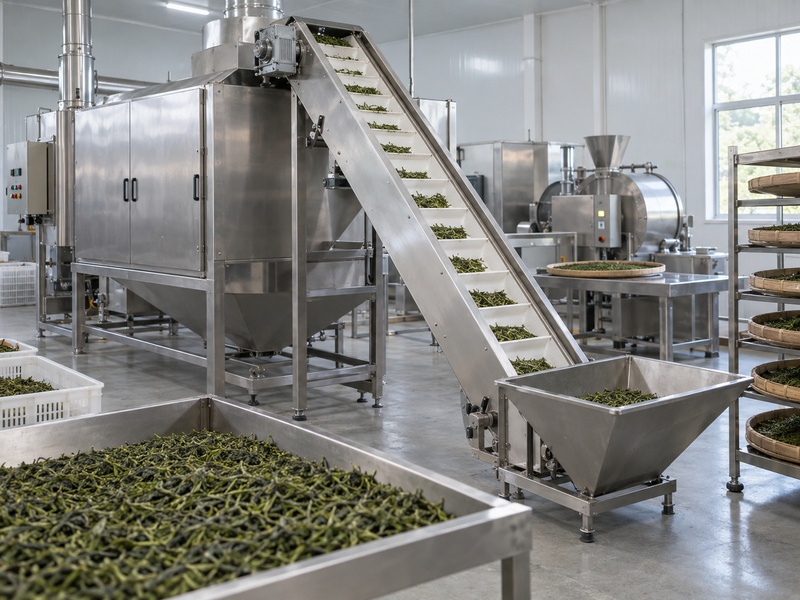
Processing questions should reach somebody who can explain the proposed product’s route. Ask which facility or responsible business supplies that information and how the account team obtains its answer. Keep process descriptions distinct from general promotional photographs. A supplier can describe its activities without proving that every product in its catalogue passes through the same facilities.
Request a product-specific process response. Describe why your team needs the information, such as an ingredient development question or a record review. The account contact can then seek a relevant answer instead of forwarding a long list without context. If the reply introduces an unfamiliar process term, ask the technical owner to explain how it applies to the proposed powder. Record which details remain supplier descriptions and which documents quality has accepted. Your map should preserve responsibility for the answer even if purchasing communicates through one commercial contact. This gives later development questions somewhere definite to go.
4. Who can answer milling and powder specification questions?
Connect the mill with the accepted specification
Ask who owns questions about the powder specification and how milling information reaches your team. A miller may hold process data while a specification owner approves the information supplied to buyers. Clarify that route before asking for a development change. Your team should send the product code, application and reason for the request rather than asking vaguely for finer or brighter powder.
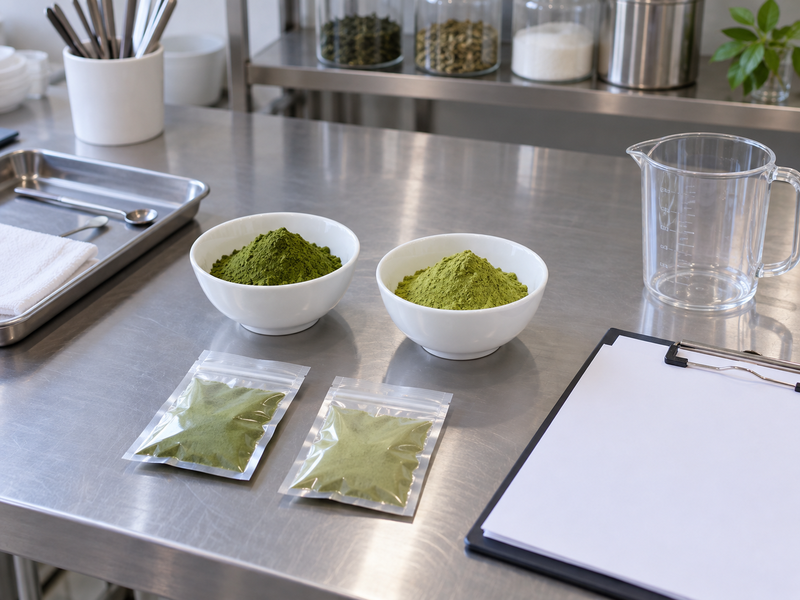
Name the person who can approve a specification response. In a matcha supplier Japan map, record whether the account coordinator communicates directly with the miller or through another business. If a proposed adjustment changes the product, ask how the supplier will identify the new sample and specification. Avoid translating a mesh description into an unsupported precise particle size. Request the supplier’s method and product-specific record when size information is needed. Quality can review the technical answer while development checks the application. Keep both decisions linked to the same proposed revision.
| Powder question | Information needed | Responsible role |
|---|---|---|
| Specification | Code and accepted revision | Specification owner |
| Milling description | Product-specific process reply | Milling information holder |
| Size request | Method and units | Technical contact |
| Proposed adjustment | Identified development sample | Change approver |
5. How does a trading company fit into the account?
Describe its coordination responsibilities
A trading company may coordinate production contacts, documents and communication for a buyer. Ask which services the proposed company provides and which responsibilities remain with another party. First Agri’s supplier column distinguishes production facilities from trading companies and discusses communication and custom requests. That is context from one company’s column, rather than proof of every supplier’s structure.
Ask which handoffs the trader manages. For your matcha supplier Japan plan, record who collects technical answers, who confirms the commercial offer and who notifies your team about changes. A coordinating role can be useful when responsibilities are explicit. Your buyer should still know which product record controls acceptance and which authority approved a technical reply. If the trader uses several production sources, ask how the proposed SKU remains identifiable across that arrangement. Avoid assuming a communication layer creates a particular cost premium or service standard; request the actual services offered for your account.

6. What authority should the buyer contact have?
Distinguish coordination from approval
Your named contact should know which questions it can answer directly and where other questions go. Ask whether it can confirm account details, authorize a proposed product change or only collect a request. Record its deputy and the route used when an answer needs another authority. A single contact remains useful when the handoffs behind it are clear.
Write down the contact’s decision boundaries. Within a matcha supplier Japan account, technical, commercial and document approvals may sit with different people. Your internal owners should follow the same discipline. Purchasing can coordinate messages while development approves a recipe trial and quality reviews product information. Keep the request and accepted answer together instead of reducing them to a summary that loses conditions. Ask the supplier to identify unresolved dependencies. A contact who needs a miller’s response should tell your team that the question remains open. Your record can then show who owes the next action without treating an interim acknowledgment as approval.
| Contact task | Authority to confirm | Buyer counterpart |
|---|---|---|
| Account coordination | Routine correspondence scope | Purchasing |
| Technical answer | Accepted product information | Quality or development |
| Commercial decision | Offer or order authority | Purchasing and finance |
| Change notification | Approved communication route | Product owner |
7. How should a custom development request travel?
Send a brief to the right roles
Describe the application, requested change and reason before asking whether customization is available. A different milling target, blend request or product use may involve several roles. The account coordinator should identify which people need the brief and who can accept it as a development project. Keep a proposed request distinct from a confirmed capability or production commitment.
Give each development question an owner. Ask who prepares samples, who provides technical notes and who confirms what has changed. Your team should name its own approver for the resulting trial. If the supplier needs confidential recipe information, agree the disclosure route before sharing it. Do not assume that public statements about custom requests include ownership or confidentiality terms. Record those as questions for the proposed cooperation. The responsibility map should show how a prototype reaches your internal owners and how their feedback returns to the people making the next development decision.
8. How can language and terminology remain consistent?
Use one accepted product vocabulary
Ask which language the account team uses for specifications and technical correspondence. Keep the supplier’s product codes unchanged across translations. Where a term can mean different things, request a definition within the proposed product record. The person translating an answer should preserve conditions, units and revision details. Sales wording and technical wording may need different owners.
Confirm terminology before circulating instructions. Your matcha supplier Japan map should identify who checks a translated technical response. If purchasing rewrites a paragraph for internal staff, quality or development should review any product conditions affected. Keep the original record available beside your accepted version. Avoid rotating among grade names or process labels merely for readability. Stable terminology helps somebody trace an answer back to the right source. When the supplier changes a definition or revision, update the account’s accepted vocabulary alongside the affected document. A clear term can save several rounds of questions during development, especially when different teams join the conversation later.
| Item to keep consistent | Accepted reference | Reviewer |
|---|---|---|
| Product code | Supplier SKU | Purchasing |
| Technical term | Supplier definition | Quality |
| Application wording | Development brief | Development |
| Translated instruction | Original and accepted version | Responsible product owner |
9. Who should notify buyers when responsibilities change?
Maintain the contact map
Ask the account coordinator how it will notify your team when a contact, production role or record owner changes. Your map should state its revision date and who maintains it. A replacement representative may manage correspondence without changing the specification owner. A changed production arrangement may require further product review. Record those events separately.
Update responsibilities alongside affected records. Your internal coordinator should tell quality and development when a change affects their questions. Keep open requests assigned during a handoff so they do not disappear between contacts. If a product remains under review, ask the incoming contact to confirm which answers are still pending. Use the accepted traceability record to connect relevant product and lot information when your map refers to it. Contact records support communication; product records support identification. Maintaining both lets the team find the person and evidence needed for a later question without guessing that one replaces the other.

10. When is the responsibility map ready for use?
Check a real question through the map
Test the map with a question your project already needs answered. Send it through the agreed coordinator and check whether the accepted response identifies its product, owner and conditions. Confirm that your internal approver receives it. If the answer comes from an unnamed source or lacks a revision, ask the contact to clarify before closing the question.
Keep the tested route in the account file. A usable matcha supplier Japan plan lets purchasing locate the origin contact, process information owner, milling contact and change authority without requiring direct access to every business. It also gives the supplier a clear buyer counterpart. Remove roles that do not affect the proposed account and retain those needed for open questions. Ask the coordinator to confirm the accepted map. Use it during development and review it when product or service arrangements change. The next request can then travel through a route that both teams have already checked.
| Map check | Evidence to retain | Account action |
|---|---|---|
| Role identified | Named owner or responsible business | Keep in map |
| Question routed | Accepted contact path | Use for follow-up |
| Reply authorized | Product reference and responder | Send for buyer review |
| Handoff confirmed | Dated map acknowledgment | Maintain current revision |
FAQ
Q1: Must every buyer contact the grower directly?
Use the agreed account route. Ask which role holds the sourcing information and who provides an accepted response.
Q2: Can one business perform several production roles?
Ask the proposed supplier to describe its actual arrangement and record each responsibility against the product.
Q3: What should a matcha supplier Japan contact map include?
Include relevant roles, named contacts, decision authority, deputies and routes for technical and development requests.
Q4: Does a trader’s reply replace a specification?
Keep the accepted product specification and the reply linked. Your quality owner decides whether the information answers its requirement.
Q5: When should we revise the map?
Revise it when contacts, product responsibilities, production arrangements or document owners change.
Send one genuine project question through the proposed account route. Record who supplied the answer, who approved it and which product revision it covers. Confirm the responsibility map with your account coordinator, then share its current version with purchasing, quality and development before issuing further technical requests.