
A ceremonial grade matcha supplier brief should describe the bowls your business plans to serve. A grade label leaves usucha, koicha and tasting-menu roles unresolved. Build a small assortment around preparation-specific questions. UnD’s own wholesale journal assigns different products to these uses, showing why buyers should ask about the actual preparation behind a recommendation.
Contents
- 1. What should your ceremonial grade matcha supplier brief define?
- 2. Which preparation questions belong in an usucha request?
- 3. How should a koicha request differ?
- 4. What purpose should single-cultivar products serve?
- 5. Where do blends fit in a bowl-service assortment?
- 6. How many products does the opening assortment need?
- 7. What should supplier sample instructions contain?
- 8. Who should approve bowl instructions and menu descriptions?
- 9. What should happen when a service product changes?
- 10. How can the assortment move from trials into service?
1. What should your ceremonial grade matcha supplier brief define?
Name the bowl-service roles
Describe the service your team intends to offer before requesting a ceremonial range. A regular bowl, a thicker preparation and a guided tasting can each need different product and staff instructions. State which roles belong in your menu and which remain development ideas. A supplier can then recommend products for a defined use rather than sending its entire premium catalogue.
Give every proposed SKU a menu role. Include the preparation name and whether staff will follow an existing house method or develop a new one. Treat ceremonial grade as the supplier’s product description and record any further conditions in your accepted specification. Ask how that supplier uses the name within its range. Our ceremonial matcha guide provides a separate product discussion; the assortment brief should identify the actual bowls and purchasing decisions your team needs. Keep a desired origin, cultivar or story in its own field so it cannot replace the preparation requirement.
2. Which preparation questions belong in an usucha request?
Describe the regular bowl service
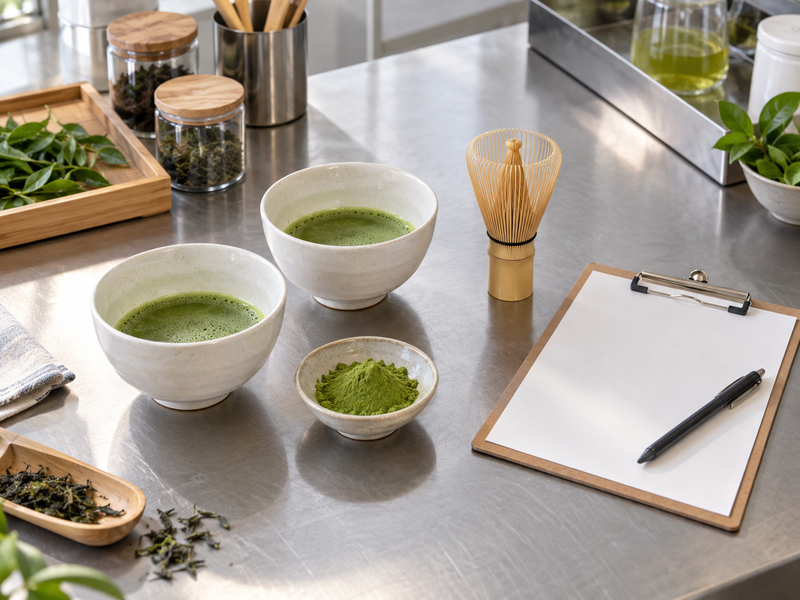
Ask the supplier which proposed product it recommends for your usucha service and why it assigns that use. Supply the preparation instructions your team intends to test, including equipment, water conditions and portion method. Request product-specific guidance where those instructions are still open. Your staff should evaluate a recommendation within a recorded preparation rather than improvising a different bowl for each sample.
Request the supplier’s preparation guidance. UnD’s wholesale journal describes Ren as an usucha option within its range. That assignment belongs to UnD’s product discussion; it does not establish an industry-wide grade rule. A ceremonial grade matcha supplier should identify which of its own SKUs it proposes for your regular bowl. Ask about pack options and staff handling instructions for that SKU. Record the accepted preparation beside its product code. The assortment can then distinguish your regular service product from tasting or development products without relying on a vague hierarchy of prestige.
| Usucha brief field | Question to send | Record for staff |
|---|---|---|
| Product role | Which SKU supports regular bowls? | Approved menu assignment |
| Preparation | What guidance applies to this SKU? | Accepted instruction |
| Equipment | Does guidance match our tools? | Trial method |
| Pack format | Which offered size suits handling? | Ordering reference |
3. How should a koicha request differ?
Keep its preparation separate
Create a separate request for koicha rather than assuming any ceremonial-labelled powder fits the proposed service. Ask whether the supplier offers a product for that preparation and request its own instructions. Give staff a distinct trial sheet and sample identifier. This keeps comments about a regular bowl from becoming approval for a different method.
Approve the koicha preparation on its own record. UnD identifies Sui for koicha within its range. Use that as an example of preparation-specific positioning and ask your proposed supplier which product it assigns to the role. Our koicha purchasing guide can support a separate product review. For the assortment brief, decide whether this service will be permanent, occasional or offered during a guided session. That decision affects which staff need training and how much material your trial requires. Avoid claiming a product’s suitability from its price or label before the preparation has been reviewed.
4. What purpose should single-cultivar products serve?
Choose a tasting role
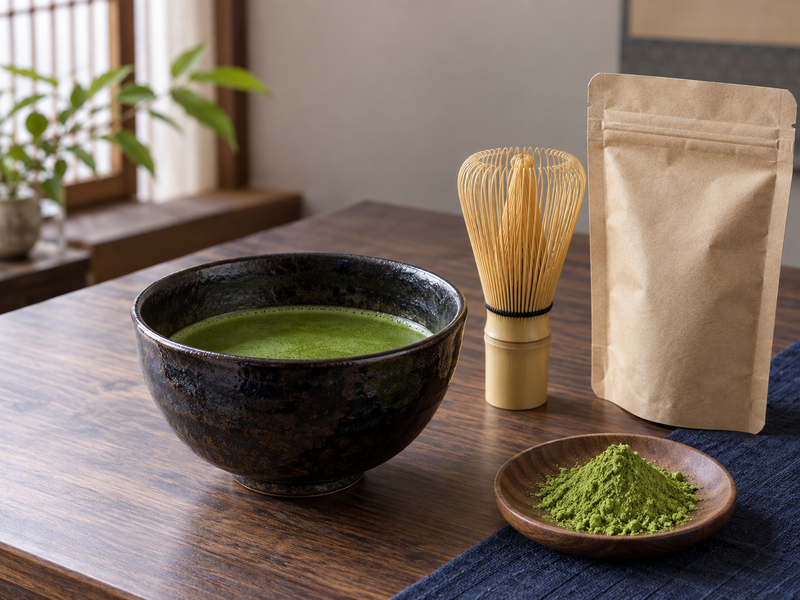
A single-cultivar request should identify what your business wants to present during a tasting. Ask which named products are available and what product information supports the supplier’s description. Decide whether staff will prepare them using one accepted method or follow distinct guidance. Keep the menu explanation tied to the information you have accepted rather than inventing a flavour story.
Select products with a clear tasting purpose. UnD lists Gokou and Samidori as single-cultivar usucha options in its journal. Those are descriptions of its own range. A ceremonial grade matcha supplier may offer a different selection. Ask what it can provide now and which information accompanies each proposed SKU. A small tasting assortment should give staff enough time to explain and prepare each bowl correctly. Include the person who approves customer-facing descriptions. If the supplier changes a product or its description, review the tasting card before staff repeat an outdated statement.
| Tasting choice | Supplier question | Buyer decision |
|---|---|---|
| Named cultivar | Which product supports the description? | Accept product information |
| Preparation | Which method is recommended? | Approve staff instruction |
| Menu role | How will the bowl be presented? | Assign tasting position |
| Customer wording | What information can be supported? | Approve tasting card |
5. Where do blends fit in a bowl-service assortment?
Give blends an explicit role
Ask whether the supplier recommends a blend for regular bowl service, a different preparation or several uses. A blend can have a defined product role without needing a single-cultivar story. Request its product code, intended uses and current description. Keep those facts beside the preparation your team will review. Avoid treating blend as a lower or higher universal grade.
Choose the blend for its assigned service. UnD’s journal separates straight-tea, milk-drink and food uses across its range, including ceremonial blends. Your proposed ceremonial grade matcha supplier should explain which blend suits the service you described. Decide whether it replaces another SKU or fills a separate role. If your assortment contains both a blend and a single-cultivar product, staff need distinct names and ordering references. The menu owner should be able to explain why each item exists without making unsupported claims about superiority. Keep the assortment small enough for your team to maintain the accepted preparation for every offered bowl.
6. How many products does the opening assortment need?
Remove overlapping roles
Start with the services your team can operate consistently. If two proposed products fill the same regular bowl role, decide whether both have a reason to remain. A guided tasting may justify several choices, while a short menu may need fewer. Use the brief to show purpose, staff instruction and approval status for every proposed SKU. Do not choose an assortment size because a supplier catalogue contains that many products.
Keep a reason beside each menu slot. A ceremonial grade matcha supplier can suggest alternatives, but your menu owner should decide which roles the business needs. Mark development samples separately from active service products. When a new product enters, ask whether it adds a role or replaces an existing item. Check that staff can locate its preparation record and purchasing can order its exact code. This keeps an expanding sample collection from becoming an accidental menu. Review the opening assortment against the actual service sessions your business plans to offer.
| Proposed slot | Reason for inclusion | Activation condition |
|---|---|---|
| Regular bowl | Routine usucha service | Accepted preparation |
| Koicha offering | Named service format | Separate approval |
| Cultivar tasting | Guided comparison role | Supported product description |
| Development item | Future menu question | Remains outside active menu |
7. What should supplier sample instructions contain?
Prepare a repeatable service trial
Request enough material for your planned preparation and record the supplier code on the trial sheet. Ask what preparation guidance accompanies the sample and whether it represents the proposed production product. Your team should identify the bowl, utensils, water conditions and handling steps used. These are service-development inputs; they should remain stable while staff practise its preparation.
Keep sample identity beside the preparation. Ask the ceremonial grade matcha supplier to explain any conditions attached to its recommendation. If staff change a method, record what changed and which result they are reviewing. Approval should name the particular SKU and service role rather than the entire grade family. Retain an accepted sample reference where your internal process requires it. A supplier may propose another product after reading your feedback; that product needs its own identity and review. Keep the conversation focused on the preparation question instead of asking for an unexplained upgrade.
8. Who should approve bowl instructions and menu descriptions?
Assign service and product owners
Operations should approve the instruction staff will use. The product or brand owner should review the wording presented to customers. Quality should review product information within your own approval process. These responsibilities can sit with fewer people in a small business, but they should remain explicit. A supplier recommendation does not decide how your staff will explain the product.
Approve the bowl and its description together. Your ceremonial grade matcha supplier may provide product notes that help the discussion. Keep their source and avoid adding claims about health, certification or origin without accepted support. For each SKU, record the preparation revision, menu role and approved customer wording. If the service product changes, review all three. Staff should not prepare a new blend while presenting the old cultivar description. Share the accepted materials before a training session, then record questions that need another supplier response. This gives purchasing a clear product to order and operations a clear bowl to serve.
| Approval | Responsible buyer role | Accepted record |
|---|---|---|
| Bowl method | Operations | Preparation revision |
| Product information | Quality or product owner | Reviewed SKU record |
| Menu wording | Brand or menu owner | Accepted description |
| Ordering identity | Purchasing | Active product code |
9. What should happen when a service product changes?
Review the assigned role
Ask the supplier to identify the proposed replacement and describe what has changed. A familiar grade name cannot confirm that staff can use the same preparation. Review the new product against its assigned service role and ask whether supplier guidance differs. Keep any customer description affected by the change visible to the menu owner.
Reopen the preparation record for the new SKU. Staff should know whether the change applies to regular bowls, koicha or tasting service. Purchasing should retain the old and new product references so open orders remain identifiable. If the supplier cannot provide the previous product, decide whether to pause that menu role or review an alternative. Avoid presenting a temporary change as the same product without checking accepted information. Once the replacement is approved, issue the current preparation and menu records together. Keep the previous revision available for tracing earlier service decisions, while giving staff one current instruction to follow.
10. How can the assortment move from trials into service?
Release the active menu record
Before opening the service, check that every active product has an accepted preparation, menu description and ordering code. Staff should know which products remain trials. Ask the supplier to confirm availability for the products you intend to activate, without treating a sample recommendation as a supply commitment. Keep any open question with its responsible owner.
Release only the approved menu slots. A ceremonial grade matcha supplier brief becomes usable when purchasing can order the active assortment and staff can find instructions for each bowl. Run a service walkthrough with the accepted products and tools. Record missing training or product information before the menu owner signs off. If your business also serves milk drinks, use a separate recipe record rather than extending bowl-service approval automatically. Share the active assortment with the account contact, ask for the accepted product references in its reply and retain the final version beside your trial decisions.
| Service release check | Evidence | Owner |
|---|---|---|
| Product active | Accepted SKU and role | Menu owner |
| Preparation ready | Staff instruction revision | Operations |
| Description ready | Supported wording | Brand owner |
| Purchasing ready | Confirmed ordering reference | Purchasing |
FAQ
Q1: Does ceremonial grade identify one universal preparation?
Ask how the supplier uses that label and which SKU it recommends for your named bowl-service role.
Q2: Can an usucha approval cover koicha?
Review koicha on a separate preparation record with the proposed product and supplier guidance.
Q3: What should a ceremonial grade matcha supplier sample include?
Request the product code, intended service assignment and preparation guidance for the sample you will review.
Q4: Do we need several cultivars on an opening menu?
Include them when they serve a defined tasting role that staff can explain and operate.
Q5: Who approves a replacement bowl-service product?
Your product and operations owners should review preparation and menu information before purchasing accepts the new SKU.
Write an active assortment with one purpose per SKU. Send its preparation questions to the supplier, complete the planned trials and approve staff instructions beside menu descriptions. Give purchasing the accepted codes and give service staff the current bowl records before launching any new regular or guided tasting offering.