
Japanese matcha can mean several different things on a supplier page: tea grown and processed in Japan, powder milled there from imported material, or a brand with Japanese styling. Those distinctions affect origin claims, price and the records a buyer should keep. For a café, manufacturer or private-label brand, the useful question is whether a specific lot performs in the intended product and whether the supplier can deliver comparable material again.
Contents: Origin · Regions · Grade · Cultivar · Process · Documents · Water test · Formula test · Price · Order
1. What Should Japanese Matcha Mean on a Product Specification?
Define where the tea was grown and transformed
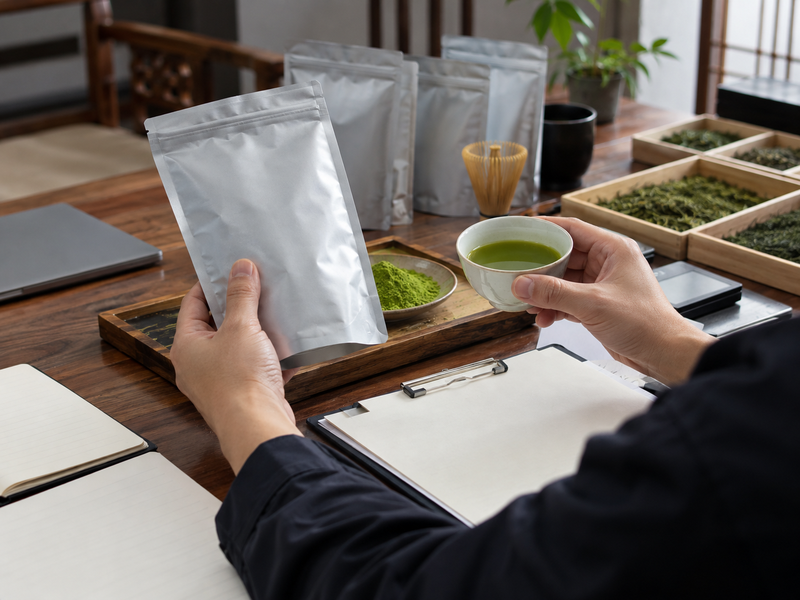
The phrase “Japanese matcha” should have an explicit meaning in a purchasing document. Ask where the tea leaves were grown, where they were processed into the material prepared for grinding, and where the powder was milled and packed. These steps can occur in different places. A label that says “packed in Japan” does not, by itself, establish that the leaf was grown there. Equally, a Japanese brand name is not an origin certificate. The supplier should provide an origin statement tied to the lot it will deliver.
Avoid treating country of origin as a substitute for product quality. The end use still matters. A smooth, delicate powder suited to plain tea can disappear in a heavily sweetened shake. A stronger powder may be useful in a bakery filling but too assertive for a straight drink. Set the origin requirement first if it is part of the brand promise, then test performance within that group. If origin is less important than color, flavor and price, say so honestly in the specification and marketing copy. It is easier to compare suppliers when the desired claim is defined before samples arrive.
2. Do Japanese Growing Regions Predict Flavor?
Use region as context, then taste the actual lot
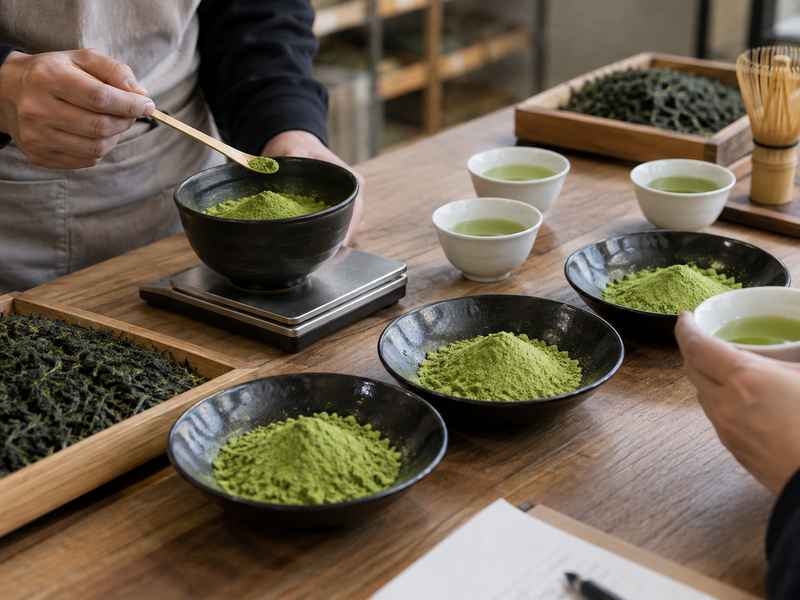
Regions such as Uji in Kyoto, Nishio in Aichi and parts of Shizuoka are often mentioned in matcha discussions. Their names can help a buyer ask where raw material came from. They do not guarantee a single flavor profile. Cultivar, shade practice, harvest timing, leaf selection, processing and storage also influence the cup. Within one region, two suppliers may offer quite different powders at different prices. A region name is most useful when it can be traced to the lot and when the powder meets a written sensory target.
For a retailer, provenance can be a meaningful part of the story. For a multi-site café, repeatability may be more valuable than a narrowly defined district. Ask whether the supplier blends material to maintain a consistent target or sells seasonal lots with a changing profile. Both approaches can work, but the menu and procurement plan should match the approach. If a product uses a famous regional name, obtain the documentation needed to support that claim under the rules of the destination market.
| Origin detail | What it can tell you | What it cannot prove |
|---|---|---|
| Growing region | Where identified leaves came from | Cup quality on its own |
| Milling location | Where powder was finished | Leaf origin without records |
| Packing location | Where final units were packed | Farming practice |
| Lot number | Which material was delivered | A claim unless linked to records |
3. Which Grade Claims Deserve a Closer Look?
Translate marketing terms into measurable expectations
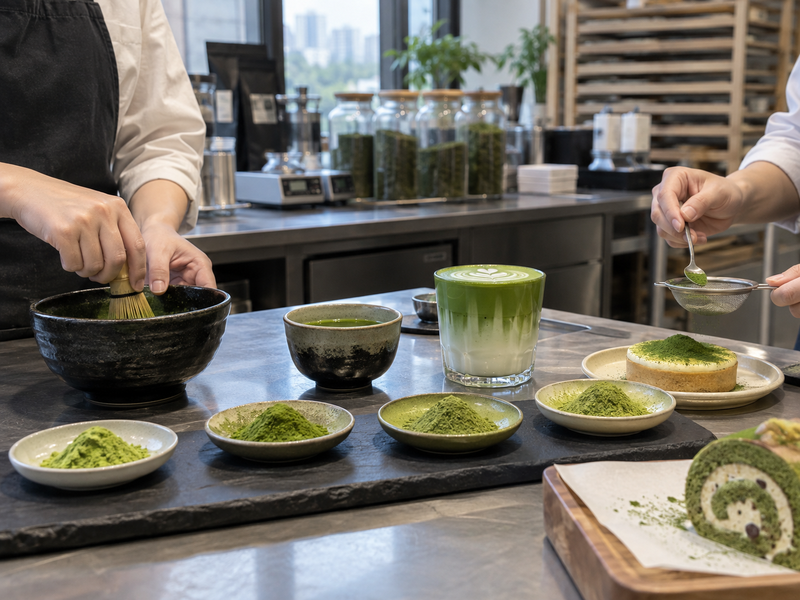
“Ceremonial” and “culinary” appear frequently on matcha listings, but their boundaries are not uniform across every supplier. Instead of buying a word, describe the application. A plain-water service may need low harshness, a clean finish and a fine texture. A latte needs enough tea character to remain distinct after milk and sweetener. Baking may prioritize stable color and flavor after heat. One powder can work across formats, yet the most expensive option is not automatically the most efficient for each one.
Ask the supplier how it defines its grades and how the proposed sample differs from the next option in its range. Request a product specification and test each grade at the same powder dose in the final recipe. A small cost difference per kilogram can be minor per cup; a large grade premium may not produce a noticeable difference in a sweet formula. Conversely, an apparently inexpensive powder that needs a higher dose may increase cost per serving. Record blind tasting results before seeing prices, then compare the commercial numbers.
| Use | Prioritize | Watch for |
|---|---|---|
| Plain tea | Clean aroma, fine mouthfeel | Bitter finish, coarse residue |
| Milk drink | Tea presence in milk | Powder disappearing under sweetness |
| Frozen drink | Color and easy dispersion | Clumps, separation |
| Bakery | Flavor after heat | Paying for subtle notes lost in baking |
4. How Do Cultivar and Harvest Affect a Lot?
Ask for useful detail without turning it into a fetish
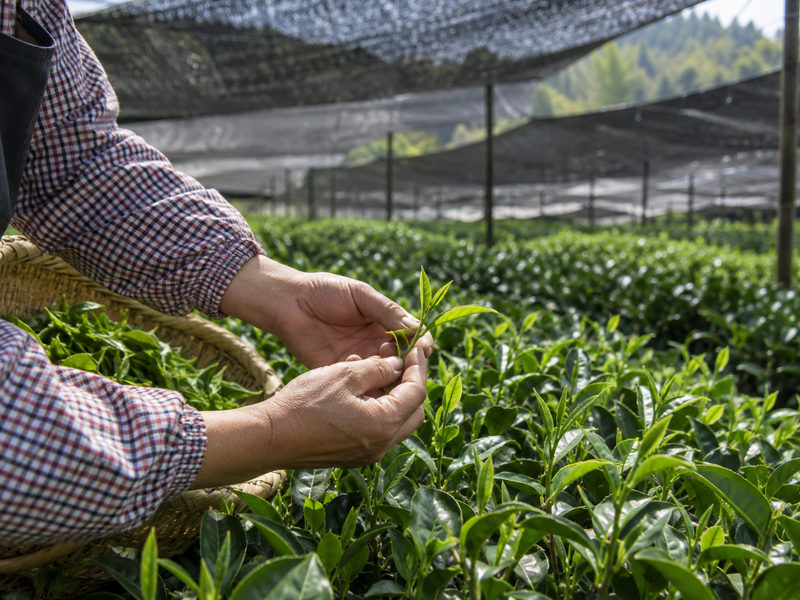
Tea cultivar and harvest timing can shape a matcha’s aroma, color and taste. Early and later harvest material often differ, but the effect is not a simple universal ranking. Growing conditions, shade, processing and storage interact with the leaf. A supplier may combine cultivars to reach a consistent profile. Another may sell a single-cultivar or seasonal release with more variation. The right choice depends on whether the buyer wants stable production or a limited specialty offering.
Request the harvest year and any cultivar information the supplier can substantiate. If a specification says “first harvest,” ask what that means for this producer and how it is documented. Also ask whether the next delivery will be from the same season or a new blend. A café chain should test the transition before switching a national menu. A specialty brand may welcome a changing lot, but the product page should describe it accurately. Keep a retained sample from the approved lot; it provides a fair reference when future material arrives.
The most useful question is operational: can the supplier explain the variation that a customer will notice? That is more valuable than a long list of cultivar names with no batch connection.
5. Which Processing Steps Should a Buyer Confirm?
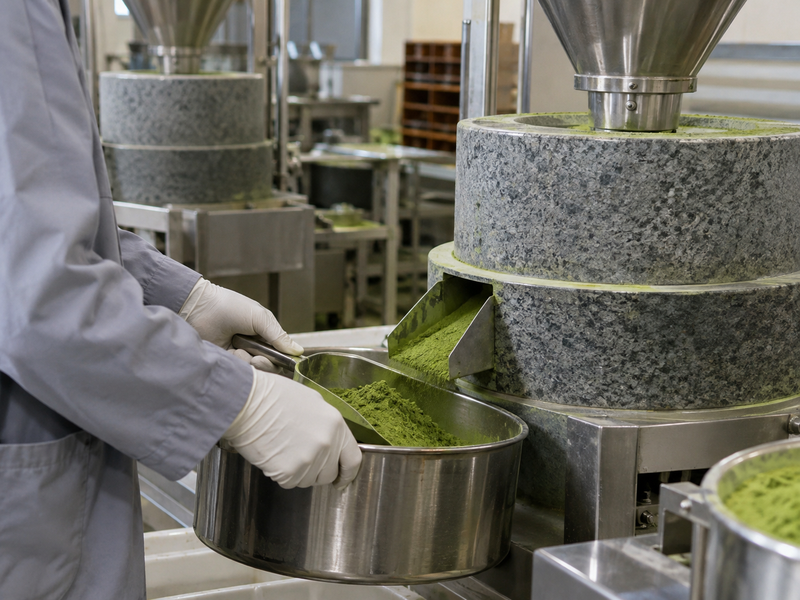
Follow the route from shade to finished powder
Matcha production generally begins with tea leaves cultivated for the intended powder. Leaves are harvested and processed into a dry material suitable for milling, often described as tencha in Japanese production. Milling turns that material into a fine powder. Each stage influences the final product: shade practice can affect the leaf profile, heat treatment and drying affect aroma, sorting affects what enters the mill, and milling affects texture and temperature exposure. A supplier should be able to describe its actual process without relying on a romantic image of stone mills.
Do not assume every mill uses the same equipment or that a particular machine guarantees better tea. Ask for particle-size or fineness information if mouthfeel matters, and verify it in a drink. Check whether the supplier can control foreign matter, metal risk and cross-contact in the facility. A food manufacturer should request a process flow and relevant food-safety documents. A café buyer may only need a concise specification and lot testing record, but it still needs a product that behaves consistently at the bar.
| Process stage | Buyer concern | Evidence to ask for |
|---|---|---|
| Leaf intake | Origin and identity | Lot traceability |
| Drying and sorting | Consistent raw material | Process description |
| Milling | Fine, usable texture | Sample and fineness data if available |
| Packing | Protection after milling | Packaging specification |
6. What Documents Support an Origin Claim?
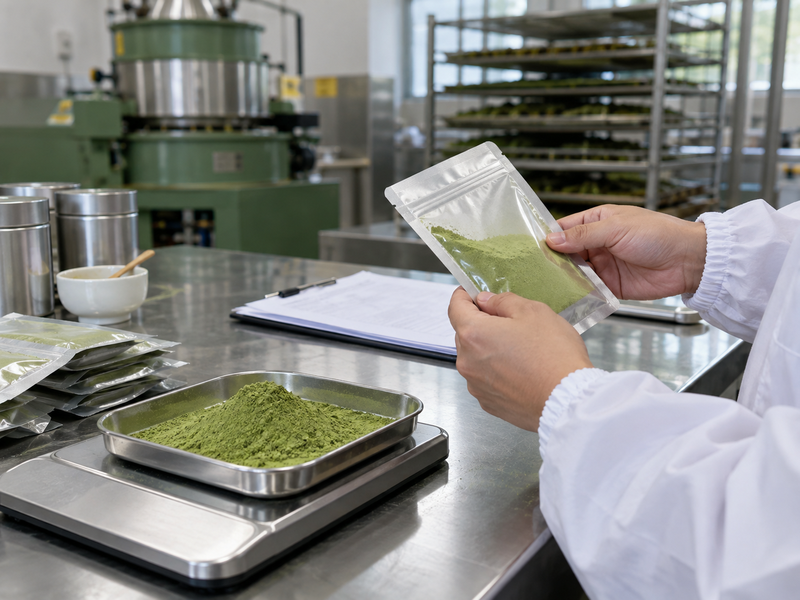
Connect every claim to the delivered lot
Start with the supplier’s product specification, invoice, batch number and a written origin statement. Depending on the destination market and claim, additional customs, agricultural or certification records may be relevant. A certificate of analysis answers a different question: it reports test results for a lot, but it does not automatically prove where tea was grown. Likewise, an organic certificate concerns the certified scope and chain, not every quality attribute. Read what each document actually covers.
If a private-label pack says “Japanese matcha,” keep a file showing the language supplied by the producer and the lot purchased. Ask the supplier to notify you before changing source regions, milling sites or formulation. For blends, clarify whether all components meet the origin claim. A purchasing team should check that names, lot codes and dates agree across the sample, invoice and analysis. When they do not, resolve the discrepancy before artwork is printed or a large order is shipped.
Good documentation reduces disputes, but it should be proportionate to the claim. A simple truthful label supported by a clear lot record is stronger than a dense list of unsupported origin adjectives.
7. How Should a Buyer Taste Samples in Water?
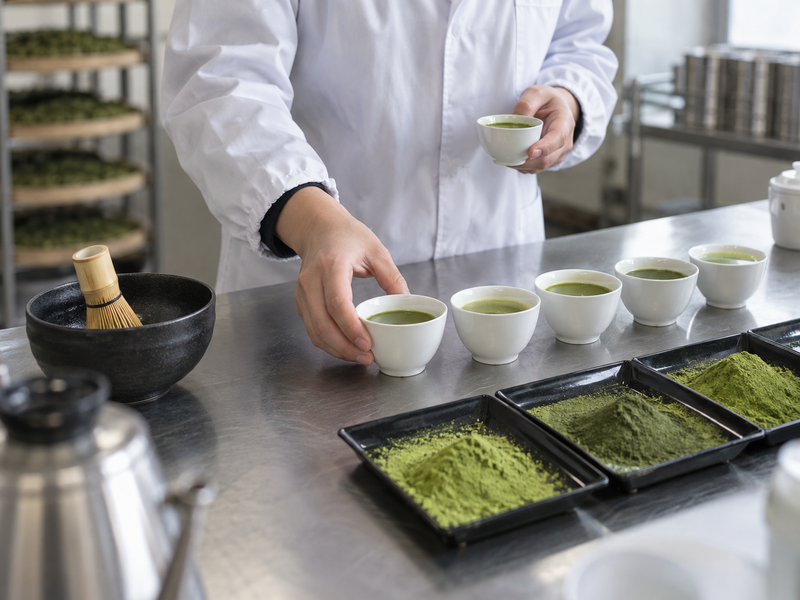
Give each powder the same chance
Prepare candidate powders at an identical weight, water volume, temperature and mixing method. Use neutral water and clean utensils. Label cups with codes so tasters do not know the supplier or price. Compare dry aroma, wet aroma, color under neutral light, initial taste, texture and finish. Let a cup sit for a short, fixed period and note whether the powder settles or leaves coarse material. Do not judge from a photo alone; exposure settings can exaggerate green color.
The sample should be representative of commercial stock, not a special packet assembled for a sales meeting. Ask whether the approved lot can still be supplied, or whether a later batch will need a new approval. Record a simple scorecard with comments rather than only a winner. “Bright green” is less actionable than “clean grassy aroma, mild bitterness, fine texture at our 2 g service dose.” Keep a sealed reference sample and repeat the test when the first production delivery arrives.
| Check | Hold constant | Record |
|---|---|---|
| Dose | Powder weight | Tea intensity |
| Liquid | Water source and volume | Aroma and texture |
| Temperature | Water temperature | Bitterness and finish |
| Mixing | Whisking time and tool | Clumps and foam |
8. How Should Japanese Matcha Be Tested in a Formula?
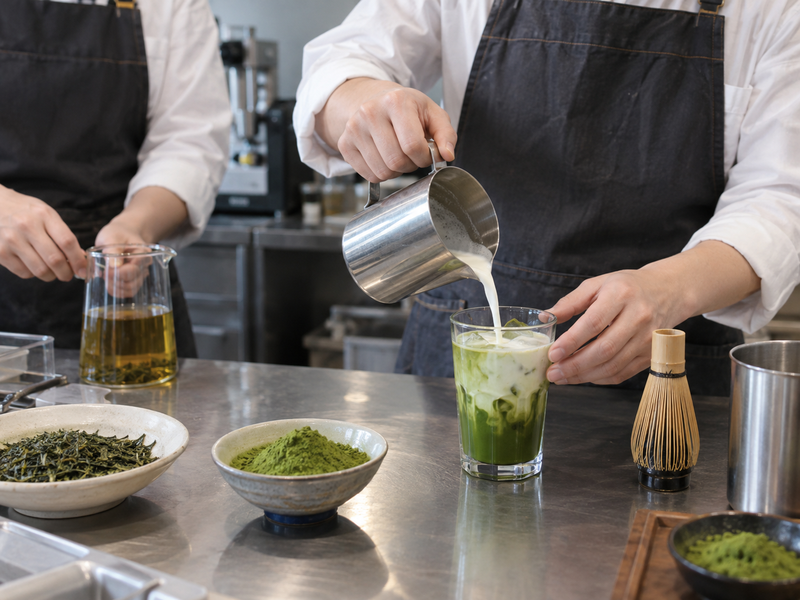
Test the product customers will actually buy
A powder that shines in water may not be the best value in milk, syrup, ice cream or a baked product. Make the complete recipe with the intended ingredients and process. For a latte, check flavor after milk and sweetener are added. For a chilled beverage, look for clumps, sediment and color change over the serving window. For a bakery formula, compare aroma and appearance after heat. A food manufacturer may need a longer stability trial in the finished pack; an immediate kitchen tasting is only the first screen.
Evaluate at the same cost per serving, not only the same powder weight. One candidate may deliver the desired tea character at a lower dose. Another may cost less per kilogram but require more powder and a stronger sweetener to manage bitterness. Include labor: a powder that consistently clumps can slow service. If the product is meant to carry an origin claim, make sure the approved formula still uses the specified material when production scales up.
Do not let a favorable tasting turn into an unsupported health statement. Regulatory review belongs with the product’s actual ingredients, serving size and sales market.
9. What Does a Higher Price Actually Buy?
Compare landed cost with measured performance
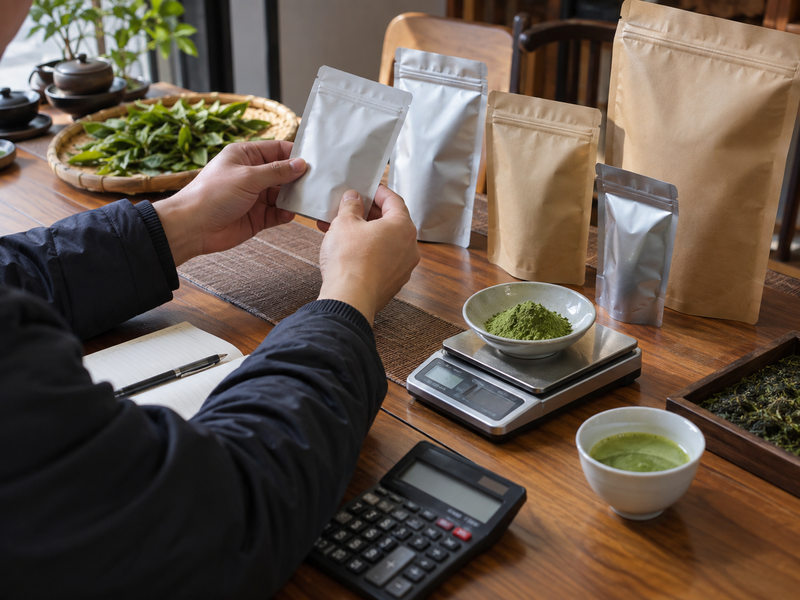
Price reflects more than tea quality. It can include harvest selection, smaller supply, origin, milling, testing, package type, logistics and a supplier’s service level. Ask for a quotation that states minimum order, pack size, lead time, shelf-life on delivery and price validity. For imports, calculate landed cost and currency exposure. If the powder will be sold under a private label, add artwork, packaging, inspection and inventory costs. A low unit quote can become expensive when the minimum order is too large for the sales forecast.
Use the sensory and formula tests to decide whether a premium is worth paying. A specialty retail tin can justify a nuanced powder if customers can experience the difference. A sweet ready-to-drink product may gain little from that nuance, though it still needs reliable safety and quality controls. Record why a supplier was selected so future buyers can repeat the decision when prices move.
| Cost line | Ask the supplier | Buyer calculation |
|---|---|---|
| Powder | Price by volume and grade | Cost per serving |
| Pack | Standard or custom format | Waste and open-pack use |
| Logistics | Incoterm, transit and lead time | Landed cost and stock cover |
| Quality | Lot tests and dispute process | Risk of rejected stock |
10. What Belongs in the Purchase Specification?
Write the agreement the receiving team can use
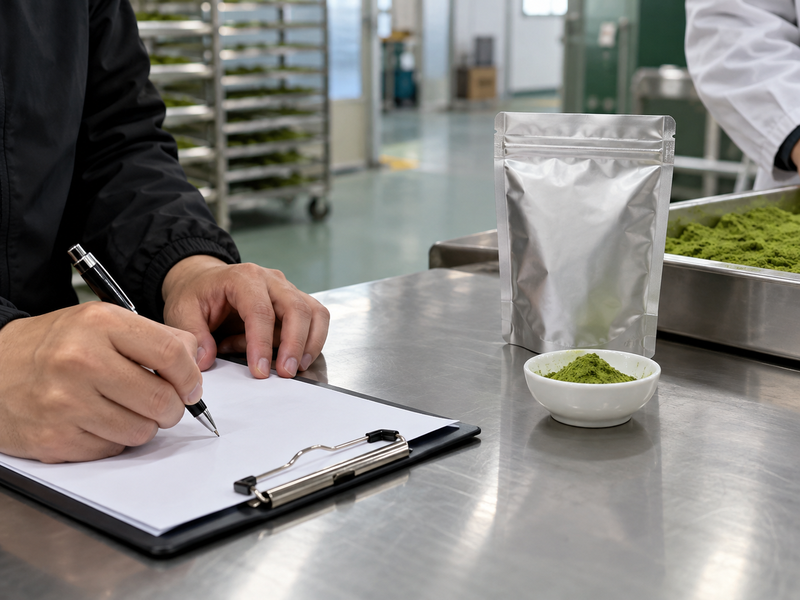
The specification should name the product, origin claim, permitted source changes, target application, sensory reference, pack format, lot identification, shelf-life requirements, test documents and acceptance process. If the brand uses a specific region or cultivar in consumer copy, include that requirement explicitly. Define how a replacement lot will be approved. A supplier may meet the original sample beautifully but run out of that exact material before the second order; an agreed change process prevents a surprise substitution.
For a pilot order, request enough powder to test both a standard water preparation and the real formula. Review the production lot against the approved sample before a full rollout. Matcha Village’s own company material describes bulk supply, OEM formats and testing support for its products; these services are useful examples of questions to ask any supplier. They do not verify a Japanese origin claim for any particular lot. Only the documents for the powder offered can do that.
The final decision should be recorded in plain language: what the powder is, what it does in the recipe, what it costs to use, and what evidence supports the label. That makes reordering less dependent on the memory of one taster.
FAQ
Q1. Is all matcha sold by a Japanese brand grown in Japan?
No. Brand location, packing location and leaf origin are different facts. Ask for an origin statement linked to the exact lot before making a country-of-origin claim.
Q2. Is ceremonial grade an official universal standard?
Grade terms are used differently by suppliers. Compare written specifications and test the powder in the intended drink or food rather than relying on the grade word alone.
Q3. Does a named region guarantee better matcha?
No. Region can describe provenance, but cultivar, cultivation, processing, storage and lot handling also shape the finished powder. Taste and document the offered lot.
Q4. Should a café use its most expensive matcha for lattes?
Not automatically. Prepare blinded samples in the full latte recipe and compare cost per serving. A more expensive powder is worthwhile when customers can perceive a meaningful advantage.
Q5. What should a buyer keep after approving a lot?
Keep the specification, origin statement, relevant test documents, purchase record and a sealed reference sample. Use them when the next shipment or any proposed source change arrives.
For a consumer comparison, see Bon Appétit’s matcha powder review. For the company’s existing sourcing context, see our bulk matcha buyer guide. The commercial checks above apply to the actual lot, package and claim under review.