
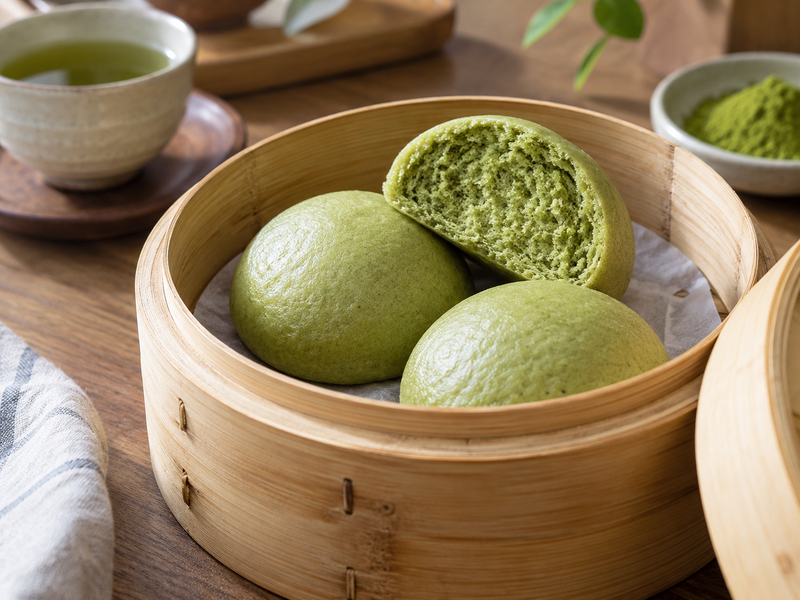
Matcha steamed buns can rise well and still reach the table with wet patches, dull color or a tough skin. A café needs a dough that behaves across a full steamer load and a handoff routine that staff can repeat. The A Kitchen Fable mantou recipe combines flour, glutinous rice flour, starter and matcha, then rests the buns after steaming before opening the lid. That home recipe provides a useful reference. The production checks here are proposed trials for foodservice kitchens, not claims about one universal bun formula.
Contents
- 1. What should a matcha steamed bun deliver at service?
- 2. Which dough ingredients need a fixed specification?
- 3. How should a kitchen set dough hydration?
- 4. Where should matcha enter the dough?
- 5. How can proofing produce even buns?
- 6. How should the steamer be loaded and vented?
- 7. What causes pale color or wet bun tops?
- 8. How should buns be held and served?
- 9. Which pairings deserve a menu test?
- 10. What should purchasing and production record?
1. What should a matcha steamed bun deliver at service?
Set a target for the whole bun
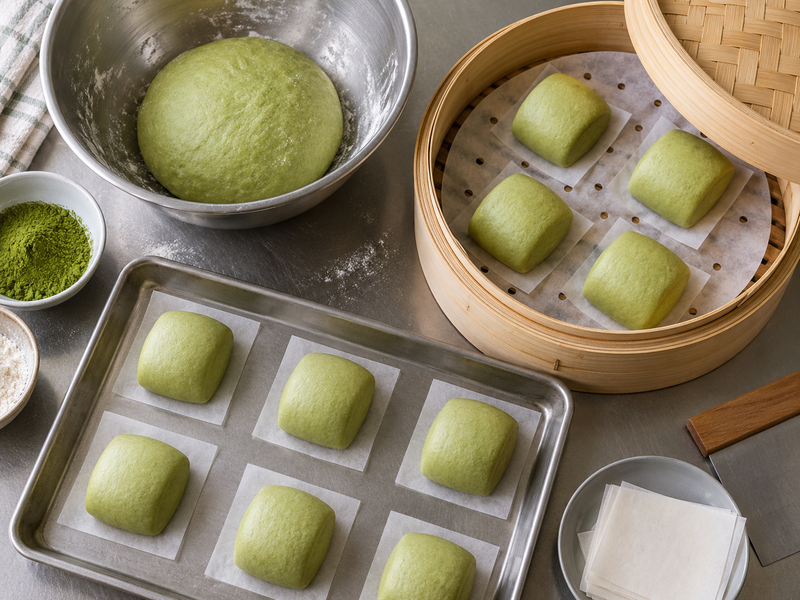
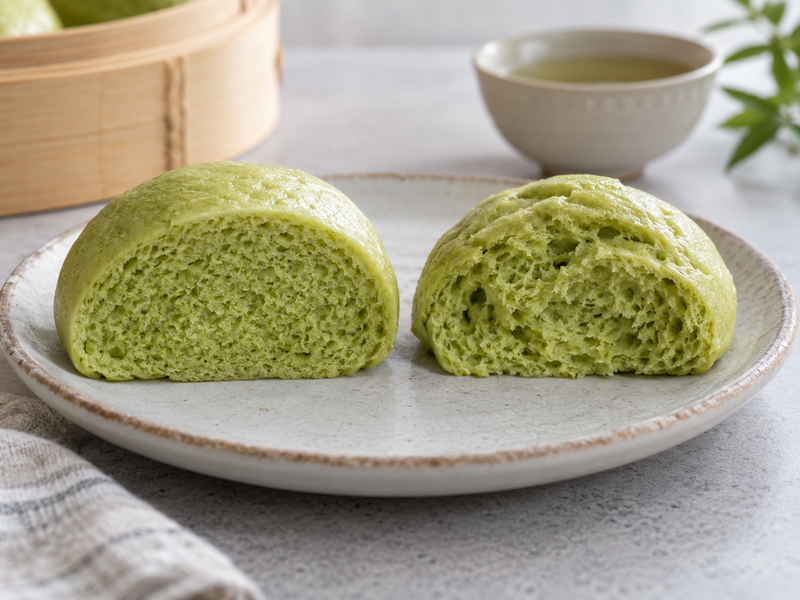
Mantou is a plain steamed bread, often eaten as a side or with a filling or accompaniment. The reference recipe describes a soft bun with a hint of tea. A commercial version should specify what “soft” means after a guest receives it. Cut a finished bun through the middle. The crumb should show a consistent green shade, small even cells and no dense wet band near the base. The surface should feel dry enough to handle without sticking to the wrapper.
Weigh pieces before proofing and after steaming. Photograph a top, base and cross-section under service lights. Taste a bun plain before pairing; a strong sauce can mask weak tea flavor. Score the bun at the steamer and after the planned handoff time. Judge the delayed bun. Define a pass standard for shape, tea flavor, hand feel and bite, then use it when changing powder or flour.
| Service target | Record | Problem to flag |
|---|---|---|
| Portion | Raw and steamed grams | Uneven yield |
| Shape | Height and base width | Collapse or spreading |
| Crumb | Cross-section photo | Dense wet center |
| Skin | Touch after handoff | Condensation patches |
2. Which dough ingredients need a fixed specification?
Keep the base predictable
The example recipe uses wheat flour, glutinous rice flour, sugar, water, oil and sourdough starter. A foodservice team can use that approach or a different approved yeast dough, but it should select one base before changing matcha dose. Record flour protein specification where available, ingredient brands, starter condition or yeast type, sugar and oil. A new flour can change water demand and texture. A changing starter can shift fermentation speed, so “proof for four hours” cannot replace observation of dough condition.
Build a weight-based formula with flour set to 100%. List every other ingredient as a percentage of flour and in grams for the actual mixer batch. This makes it possible to scale without cup conversions. Include the weight of water inside a starter when calculating total hydration; otherwise a starter dough and a straight dough may appear comparable when they are not. Trial a small batch on the same mixer and steamer used for service. Write down the source. A label, lot number and ingredient specification explain changes in the finished bun better than “same recipe” in a notebook.
| Ingredient record | Why it matters | Trial note |
|---|---|---|
| Flour type and lot | Changes handling and crumb | Keep supplier label |
| Leavening or starter | Changes proof rate | Note activity and amount |
| Matcha powder | Changes color and taste | Record lot and dose |
| Added water | Changes dough feel | Weigh, including starter water |
3. How should a kitchen set dough hydration?
Use a controlled water trial
Hydration affects both shaping and the finished crumb. Start with a weighed base dough that staff can knead and portion. Divide it into three small tests, adjusting only added water by a narrow amount while keeping flour, matcha, sugar and proof conditions fixed. Record dough temperature after mixing, stickiness during shaping and visible dryness at the cut edge. No single percentage suits every flour or starter, so the numbers on the trial sheet should come from the chosen formula rather than a borrowed standard.
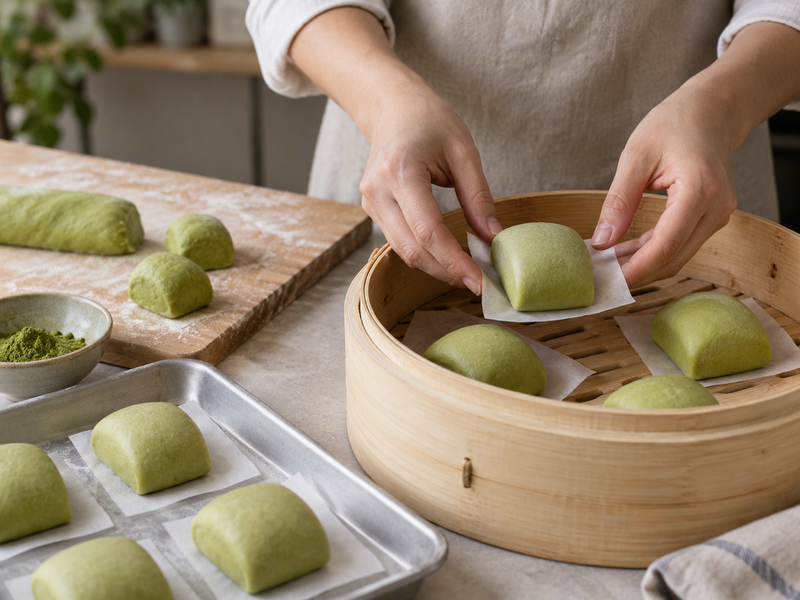
Shape equal-weight pieces and place them on the same size parchment square. A dry dough may split on top and feel tight when torn; an overly wet one may spread or cling to hands, tempting staff to add uncontrolled bench flour. Compare the buns after steaming and after a short handoff wait. If a wetter dough looks better immediately but becomes tacky under a lid, it may be less useful in the real service setup. Keep the steamer constant. Otherwise a water adjustment gets confused with steam intensity or condensation from the lid.
4. Where should matcha enter the dough?
Disperse the powder before large-scale mixing
The reference uses matcha powder in its dough. For a production batch, sift the powder with part of the flour or make a smooth dispersion with some formula water, then follow the same method every time. A dry powder dropped into a nearly finished dough can form dark flecks that survive kneading. A slurry adds water, so count that liquid within the formula. Compare both methods in small tests if the mixer handles them differently.
Choose matcha by tasting it in a steamed bun, not from a price list. Make two doughs with the same dose but different powder lots or grades. Note green color immediately after steaming and at service. Taste plain and with the planned pairing. A powder with a strong dry aroma can fade in a sweet dough, while another may leave a bitter edge. Keep photographs under fixed lighting because camera settings can make one batch look greener than it is. Our matcha powder sifting guide covers dispersion checks that are useful for this mixer trial. Track the water in the slurry. It is part of hydration, not an extra splash.
| Powder trial | Measure | Decision |
|---|---|---|
| Dose | Grams per flour kilogram | Tea flavor after steam |
| Dispersion | Flecks in cut crumb | Change mixing method |
| Color | Photo at two service times | Acceptable appearance |
| Cost | Powder per saleable bun | Fits menu economics |
5. How can proofing produce even buns?
Use dough condition alongside the clock
Portion the dough to a fixed raw weight, then shape every bun with a similar surface tension. Uneven pieces proof and steam at different rates. The home reference rests shaped buns for 30–40 minutes after a long rise. A café using a different flour, leavening system or room temperature needs its own proof endpoint. Record start and end time, dough temperature, room condition and the appearance of a passing bun before steaming.
Place proofing pieces far enough apart that they do not touch as they expand. Use a gentle touch test only after staff agree what a passing response looks like; excessive pressing can damage a delicate surface. Compare the largest and smallest buns in a batch. If some split while others wrinkle, check portioning and proof position before lengthening the whole proof. Photograph the shaped tray at the start and at loading. Look at the edge pieces. A warm corner of the proofing area can create uneven results even when the timer reads the same for every bun.
6. How should the steamer be loaded and vented?
Test the actual basket and lid
The reference recipe keeps water below the basket, steams covered and leaves the lid closed briefly after heat stops. In commercial service, test one full steamer load at the bun size the menu will sell. Water should stay below the food support, and the steamer must produce a consistent supply of steam. Leave gaps so buns can expand without touching or blocking flow. Record the number of buns per shelf and which shelf they occupy.
Condensation can drip from a lid and mark the tops. Depending on equipment, a fitted cloth cover or lid design may help, but any material used must be suitable for the unit and the kitchen’s cleaning plan. Open the lid away from the buns after a documented rest rather than letting droplets fall on the product. Compare top, middle and bottom shelf pieces. If the centers seem dense, change load density or steam time one at a time. Use a full load. A half-empty basket can perform differently from the Saturday rush. The FDA Food Code provides a model for US retail handling; local requirements govern the kitchen.
| Steam variable | Log for every trial | Watch for |
|---|---|---|
| Buns per shelf | Count and spacing | Touching or flat sides |
| Steam time | Minutes at stable steam | Dense center |
| Rest before opening | Minutes | Sudden shrinkage |
| Lid moisture | Photo and observation | Wet patches |
7. What causes pale color or wet bun tops?
Diagnose by location, not guesswork
Pale color can come from a weak powder dose, uneven dispersion or a difference in viewing light. A wet top may come from condensation rather than dough hydration. Separate those possibilities by cutting and photographing one bun from each steamer position. If the crumb is uniformly pale, repeat the test with a different matcha dose while keeping the same steam program. If only the top carries pale blotches, inspect the lid and opening routine before buying a different tea powder.
Condensation on parchment can also make the base sticky. Check the water level, basket surface and time buns remain covered after steaming. Record whether moisture appears during the cook or only after buns wait under a closed lid. Avoid drawing a safety conclusion from visual dryness: temperature control and handling follow the kitchen’s food-safety plan. Find the pattern. A defect present only beneath one lid corner calls for an equipment check, while a defect across all buns points toward formula or process.
8. How should buns be held and served?
Test the handoff after steaming
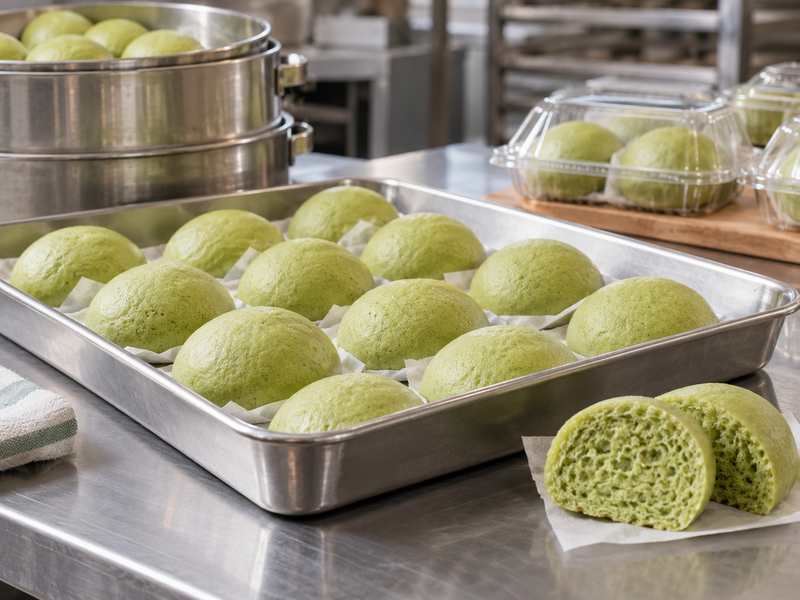
Steam fresh for service where the operation can support it. If the menu requires a hold or reheating step, validate quality and safety with the actual equipment and local rules. Record the elapsed time from steamer to plate, package or warmer, along with appearance and texture. A bun sealed while hot may develop a wet surface; one left exposed may dry. The correct setup depends on service volume and packaging, so a quality trial should use the exact route to the guest.
For potentially hazardous foods or filled variations, follow the operation’s temperature-control plan. The FDA Food Code gives US model requirements for holding and cooling; a plain bun’s classification and local rules require site review. Do not treat a pleasant texture at two hours as proof of safe storage. Label the batch and time, and document who may reheat or discard it. Walk the route. Carry a test portion through the same queue, pass and takeaway bag that staff will use on launch day.
| Handoff check | At steamer | At guest point |
|---|---|---|
| Surface | Dry or tacky | Dry or tacky |
| Crumb | Softness score | Softness score |
| Package | Open or covered | Condensation present |
| Time | Start | Elapsed minutes |
9. Which pairings deserve a menu test?
Test sweet and savory uses separately
Matcha mantou can carry a lightly sweet spread, stand beside a savory plate or serve as a small bun in a set. The tea note may disappear next to an intensely flavored sauce, so taste each pairing with the bun at the intended service temperature. For a café, compare a plain bun with a restrained sweet cream and a savory sesame or mushroom accompaniment. These are trial ideas, not claims about traditional serving or customer preference. Keep each accompaniment’s ingredient and allergen list available to staff.
Measure portion size for the menu context. A large standalone bun and a small side bun may need different dough weights and steam times. Ask tasters to judge whether matcha remains clear, whether sweetness feels balanced and whether the bun’s texture survives dipping or filling. If a filling adds moisture, test it at handoff rather than assuming a successful plain bun will work. Our matcha latte ratio guide can help a café balance a drink pairing, but the bun should pass its own taste test before being sold as part of a set. Taste it together. Menu combinations can change the apparent strength of matcha.
10. What should purchasing and production record?
Turn the approved trial into a working sheet
Record the approved matcha supplier, lot, pack size and dose; flour and leavening specifications; complete weighed formula; mixing method; dough temperature; raw piece weight; proof endpoint; steamer load; steam and rest times; and service method. Keep a photograph of a passing top and cross-section next to a photograph of common faults. The sheet should tell a new operator which condition to measure, not ask them to interpret “steam until ready.”
For purchasing, request matcha samples with the intended application and ask for documents required by the importing market. Compare lots in the same bun formula before substitution. Track yield as saleable buns divided by shaped pieces, and note labor minutes for shaping and cleaning the steamer. If Matcha Village supplies powder for a foodservice program, communicate the target color, tea intensity, formula dose and planned batch scale so sampling matches the use. Repeat with another shift. A recipe that survives a second operator, full basket and real handoff can move from bench trial to a controlled menu test.
FAQ
Q1: What are matcha steamed buns? They are steamed bread buns with matcha mixed into the dough. A plain mantou format offers a practical café starting point.
Q2: Why are my buns spotted? Uneven powder dispersion or lid condensation may be responsible. Compare the crumb and surface separately.
Q3: Should the dough use sourdough starter? The reference recipe does. A kitchen may test another leavening system but must validate its own proof and steam routine.
Q4: Can buns be held for later service? Trial the exact holding and reheating method under the kitchen’s food-safety plan; do not infer a safe period from appearance.
Q5: How much matcha should a buyer order? Calculate grams per approved bun, forecast saleable portions and include the operation’s normal purchasing allowance.