
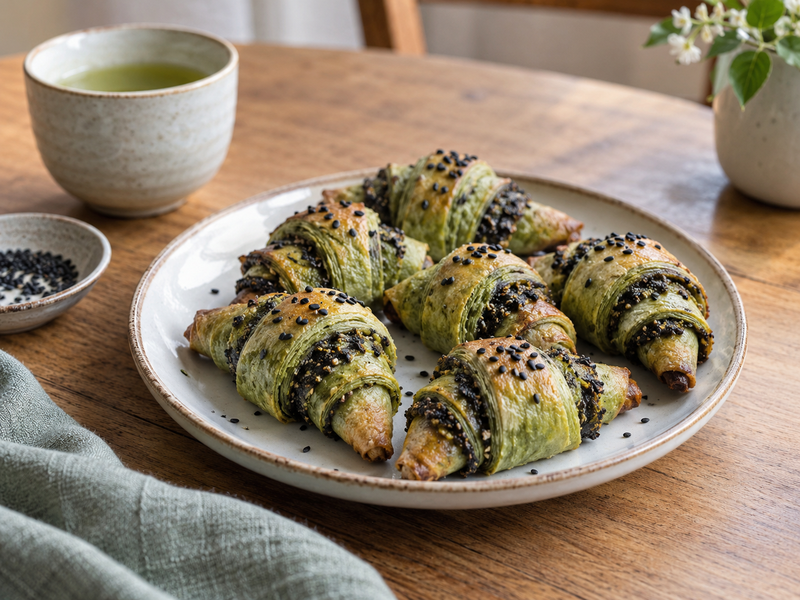
Matcha rugelach can leave a bakery looking good at the oven and disappointing at the counter. A thick sesame seam leaks; a warm log smears under the knife; a crisp pastry softens in display. A small weighed trial solves more than an elaborate recipe rewrite. The Jade Leaf reference recipe combines matcha cream-cheese dough with black sesame paste and slices a chilled log before baking. The guide below turns that home-scale starting point into measurements for a café or bakery team.
Contents
- 1. What makes matcha rugelach work in a bakery case?
- 2. Which dough formula should the first trial use?
- 3. How should the bakery select matcha powder?
- 4. How much black sesame filling belongs in each log?
- 5. How can rolling and slicing stay consistent?
- 6. What bake checks protect color and crispness?
- 7. How should staff cool and display the pastry?
- 8. How do you measure yield and portion cost?
- 9. Which food and allergen checks belong in the brief?
- 10. What belongs in the production specification?
1. What makes matcha rugelach work in a bakery case?
Define the slice customers will receive
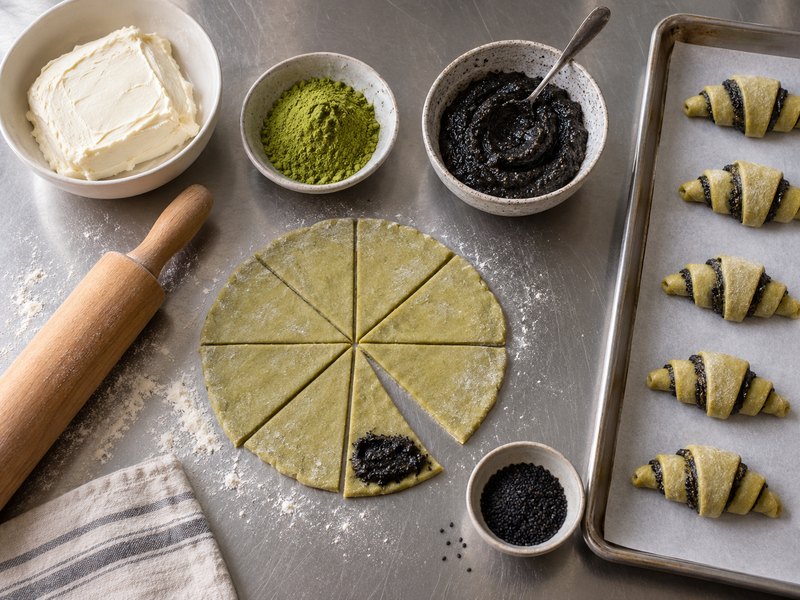
Rugelach is a rolled, filled pastry. The reference article makes a log with cream cheese, butter, flour, matcha and black sesame paste, then cuts individual pieces. A bakery version needs a target beyond “golden brown.” Decide the cut width, visible spiral, finished weight and the texture expected when a customer eats it. A pastry that feels crisp warm may soften after cooling beside moist cakes. Test it in its intended case, not only on a rack.
Photograph slices before baking, after cooling and near the end of the planned selling period. Ask two tasters to score tea, sesame, sweetness and texture without seeing the formula. Start with the slice. Once staff can identify a passing piece, adjustments to dough or filling become easier to judge.
| Finished-piece check | Trial record | Pass decision |
|---|---|---|
| Cut geometry | Width and visible spiral | Repeatable across one log |
| Weight | Raw and cooled grams | Within bakery’s chosen band |
| Surface | Color and sesame coverage | No burnt rim or bare top |
| Bite | Crispness at sale time | Matches tasting panel target |
2. Which dough formula should the first trial use?
Change one variable at a time
The reference formula uses cream cheese and butter in the dough and chills divided portions before rolling. It offers a credible starting method, but volume measures make commercial scaling harder. Convert a pilot batch to grams, recording the brand and fat content of dairy ingredients. Weigh flour, butter, cream cheese, sugar, salt and matcha separately. If a different flour or cream cheese enters production, do not assume the dough will roll the same way. The amount of moisture and fat can change handling.
For an in-house trial, divide one batch into two equal pieces. Roll one sheet to 3 mm and the other to 4 mm, then keep filling mass and cut width constant. These thicknesses are trial settings, not published standards. Record tearing, seam thickness, finished lift and broken pieces. Cool the dough enough to roll without smearing fat. Set a maximum bench-flour allowance and weigh any excess at cleanup. Watch the bench. It reveals process drift before the oven does.
| Dough variable | Trial A | Trial B | Observe |
|---|---|---|---|
| Sheet thickness | 3 mm | 4 mm | Handling and finished layers |
| Bench flour | Weighed allowance | Same allowance | Dry surface or sticking |
| Chill time | Logged minutes | Logged minutes | Clean roll and cut |
3. How should the bakery select matcha powder?
Taste the finished pastry, not a dry sample
Matcha sits inside a flour-and-fat dough, so the powder’s appearance in a cup does not predict the baked piece. Ask suppliers for lot identification, ingredient information, pack size and a sample of the proposed purchase grade. Sift each powder into the same dough formula. Bake blind-coded samples on one tray position where possible, or rotate trays according to a recorded schedule. Compare a freshly cooled slice with one held under normal case conditions. Record green color in the crumb rather than judging only a browned crust.
Run two powder doses in the same base formula, weighed as a percentage of flour. A bakery could compare 2% and 3% of flour weight as pilot inputs, not a universal recipe. Taste alongside the actual black sesame paste: its roasted flavor can bury a subtle matcha. Calculate matcha cost per saleable piece, including rejects, before accepting an expensive grade. Our matcha powder for baking guide gives related procurement questions. Keep the tasting blind. Grade names can sway the panel.
4. How much black sesame filling belongs in each log?
Set a spread weight and leave a clean edge
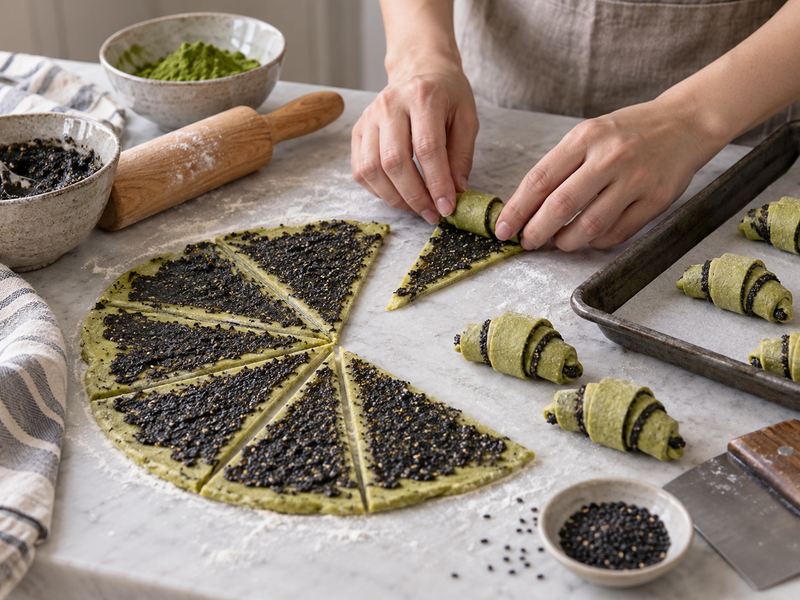
The Jade Leaf recipe spreads about a tablespoon of black sesame paste on each rolled piece of dough and warns against overfilling. For a bakery, weigh the paste instead. Spread it in a thin even film and leave an unfilled strip at the sealing edge. That strip gives the dough contact with itself; a paste-coated seam can open during baking. Note whether the purchased paste contains added oil, sweetener or another ingredient because viscosity and flavor differ between products.
Make three small logs with the same dough dimensions and three measured filling weights. Record the grams that squeeze out when rolling and the grams left on the tray after baking. A heavier log may look more generous before slicing yet yield fewer attractive pieces. Taste each slice for sesame and tea balance after cooling. If the filling tastes bitter, test sweetness in the filling rather than adding sugar across the whole dough. If paste runs, check its temperature and spread thickness before redesigning the pastry. Use the cut face. A clean visible spiral tells the team more about filling control than the top of an uncut log.
| Filling trial | Measure | Failure signal |
|---|---|---|
| Deposit | Grams per sheet | Uneven spiral |
| Coverage | Border width in millimeters | Open seam |
| Viscosity | Spread at working temperature | Paste pools or tears dough |
| Bake loss | Filling left on tray | Excess deposit or weak seal |
5. How can rolling and slicing stay consistent?
Write the geometry into the method
The household reference rolls a rectangle from the long side, chills the log and slices pieces about one inch wide. A production team needs its own rectangle dimensions, log length and cut width, all recorded in millimeters. Mark a template on food-safe parchment or a rolling mat. If sheet dimensions change between staff members, filling thickness and piece count change even when the recipe remains the same. Roll with steady pressure instead of stretching the far edge thin.
Place the log seam down, then chill it until a test cut keeps a round profile and clean spiral. The reference uses a short freezer chill; a commercial batch should validate its own time against log diameter and equipment load. Cut the center pieces and both ends separately for yield accounting. A sharp knife wiped between cuts may give cleaner faces than pressing a dull blade through softened dough. Record how many slices crack, unravel or smear. If failures cluster at the end of a long production run, dough warming during shaping may be the cause. Time the last log. Its handling tells you whether the method survives a full batch.
6. What bake checks protect color and crispness?
Judge the whole slice after cooling
The reference recipe bakes its cut pieces at 350°F for 15–20 minutes. Treat that as a reference point, since tray material, oven load and piece size alter the outcome. Write down oven setting, measured time, tray position and piece weight for every test. Bake a full tray rather than assuming a six-piece pilot represents loaded production. Where the oven has hot spots, map them with photographs of the finished tray. Rotate only if the routine is practical during service preparation.
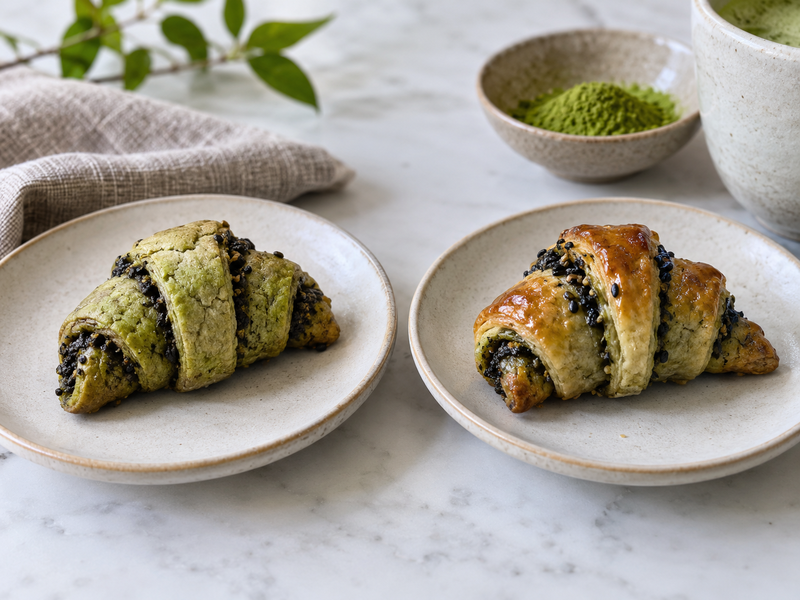
Check the bottom, exposed cut face and outer edge after cooling. A dark outer rim can hide a damp middle; a pale green center can still be properly baked. Use a consistent cooling time before scoring texture. Compare two end points by weighing the cooled pieces and tasting them after a planned display interval. The better choice may be the one that holds its bite, even if the first tray looks slightly less vivid. Log any egg wash and sesame topping separately because they change browning and allergen handling. Test the cooled bite. Customers rarely receive these pastries straight from the oven.
| Bake record | Why it belongs on the sheet | What to change next |
|---|---|---|
| Oven setting and load | Reproduces heat exposure | Adjust only one condition |
| Center and edge photos | Shows uneven color | Map tray position |
| Raw and cooled mass | Shows bake loss | Compare with texture |
| Cooled bite score | Captures sale condition | Select final bake point |
7. How should staff cool and display the pastry?
Protect the texture you paid to bake
Move baked pieces to a clean rack with enough space for air to circulate. Packing warm rugelach traps moisture against the pastry and the package. During a pilot, compare uncovered cooling with the packaging sequence the shop plans to use. Record time from oven exit to case placement and when the packaging no longer fogs. A display cabinet may also change texture through humidity or airflow; test the exact cabinet and tray liner.
Set evaluation times from the café’s actual service pattern, such as opening, midday and closing. This is a quality trial, not a shelf-life statement. Score crispness, aroma, appearance and breakage at each point. Keep the production batch identifier with the tray so staff can connect feedback to dough and bake records. If a filled pastry requires temperature control under the business’s food-safety plan, follow that plan and local rules. The FDA Food Code is a US model for retail practice, not a substitute for site-specific advice. Measure the case result. A perfect rack sample has no commercial value if the displayed pastry loses its bite before the rush.
8. How do you measure yield and portion cost?
Count saleable slices, not theoretical cuts
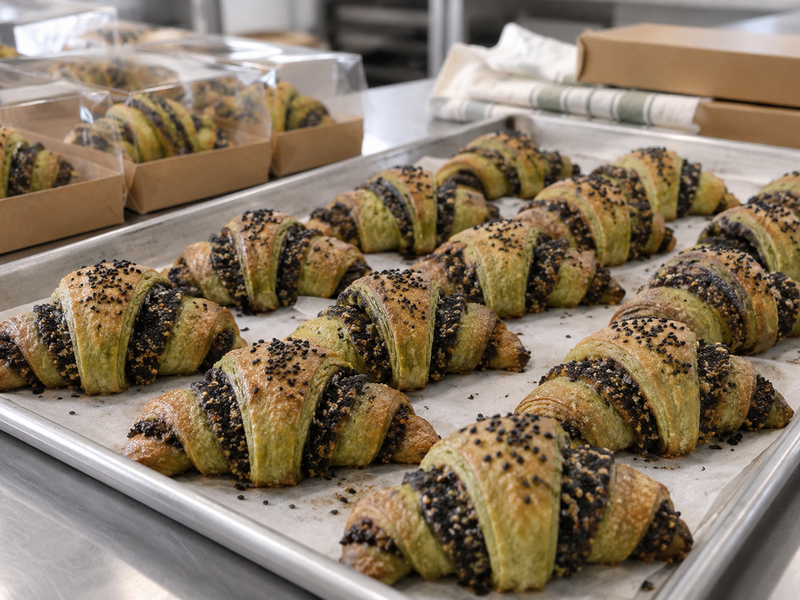
A cost sheet should begin with weighed inputs and end with sellable pieces. Record dough mass, filling mass, cut count, rejected end pieces, baked weight and damaged pieces after handling. Cost matcha at the dose used in the finished dough, not at an abstract price per kilogram. If sesame paste comes in a tub that leaves residue, weigh the practical usable amount. Packaging, labor and display waste can outweigh a small change in powder price.
Compare two batch sizes. Larger logs may save shaping time but create more misshapen ends. Time mixing, chilling, rolling, cutting and packaging, including cleanup. Calculate cost per saleable piece and labor minutes per batch. Count what survived. A formula with cheap ingredients and a high reject rate can cost more than a cleaner process using a better paste.
| Yield entry | Unit | Reason |
|---|---|---|
| Mixed dough and filling | Grams | Checks batch scale |
| Cut pieces | Count | Sets theoretical yield |
| Saleable pieces | Count | Drives real unit cost |
| Reject reason | Count by type | Points to process change |
9. Which food and allergen checks belong in the brief?
Make the ingredient list operational
This pastry commonly brings wheat, milk and sesame into one product; egg may enter through a wash. In the United States, the FDA lists sesame among major food allergens. The bakery must verify labeling and service obligations for its own market and sales format. Ask suppliers for current ingredient and allergen statements for matcha, sesame paste, flour, dairy and any topping. Do not infer that a paste contains only sesame because its front label looks plain.
Write a station plan for utensils, storage containers and changeovers with products that do not contain sesame. Keep a documented cleaning method and train counter staff to answer ingredient questions from the approved specification. If the bakery packs rugelach for resale, send the final label through its normal regulatory review. Record ingredient lot codes with each batch so a complaint can be traced to material and date. Check the paste label again. A supplier substitution can alter sugar, oil and allergen declarations while leaving the flavor name unchanged.
10. What belongs in the production specification?
Make one passing trial repeatable
The final specification should fit the way staff actually work. Include ingredient names and supplier lot fields, gram weights, mixing sequence, dough temperature or handling condition, sheet dimensions, filling deposit, log chill check, cut width, tray layout, bake setting and cooling method. Add photographs of a passing raw spiral and a passing cooled piece. A photograph can settle a shaping question faster than a paragraph of adjectives.
Record accepted ranges only after trials support them. For example, if three successful logs produced similar cut widths, set a practical tolerance around that result. If one log split, document where and why before hiding it in an average. Include a case tasting at the intended sale time, the reject categories and the person who approves a new matcha or paste lot. Matcha Village can discuss powder grades and bulk supply for this application; request samples with the intended formula and a written specification rather than buying by grade name alone. Our bakery sourcing guide offers a wider purchasing checklist. Run one more full batch. If a second operator can reproduce the same spiral and crispness, the recipe is ready for a controlled menu trial.
FAQ
Q1: Can matcha rugelach use culinary grade powder? Yes. Compare candidate grades in the baked dough and judge flavor, color and cost per saleable piece.
Q2: Why does black sesame filling leak? Excess deposit, an oily paste or a paste-coated seam can contribute. Weigh the filling and leave a clean edge in a controlled trial.
Q3: Can the logs be shaped ahead? A bakery can test advance shaping under its food-safety plan. Validate cutting quality and bake results after the proposed hold.
Q4: How do we keep slices uniform? Set sheet dimensions, log length and cut width; photograph a passing cut face and count rejects.
Q5: Which allergens need attention? Check the actual formula. Wheat, milk, sesame and possibly egg commonly appear; review local labeling rules and supplier statements.