
Matcha semifreddo gives restaurants a frozen tea dessert that can be molded before service, but its texture needs testing at the moment guests eat it. A mixture that tastes balanced before freezing may feel too firm, too sweet or weak in tea once portioned. Development should therefore follow the dessert from mixing bowl to plate.
The approach here is for small restaurant and central-kitchen trials. Suggested ingredient levels are unvalidated starting points. Choose an established semifreddo base, retain its approved food safety process and test the tea addition without assuming that one formula will suit every mold or service schedule.
Base · Tea · Formula · Air · Molds · Freezing · Plate · Garnish · Yield · Release
1. Which matcha semifreddo format should you develop?
Choose the base before the garnish
Some semifreddo formulas use an egg-based foam with whipped cream. Other frozen desserts use plant cream, coconut ingredients or a prepared stabilizing system. These approaches need different procedures and should be described accurately on a menu. Switching between them is a reformulation, even when the molded shape looks similar.
The KISSA recipe presents individual frozen cakes using coconut milk, soy whipping cream and agar, with a baked base. It offers a plant-based reference. It does not establish how a dairy-and-egg semifreddo will behave in the same mold.
| Format | Kitchen advantage | Development question |
|---|---|---|
| Loaf for slicing | Flexible portion count | Does each slice stay neat? |
| Individual mold | Portion set during filling | Can staff release it intact? |
| Frozen dessert cup | Little unmolding work | Is the texture spoonable? |
| Cake with base | Ready plated structure | Does the base cut comfortably? |
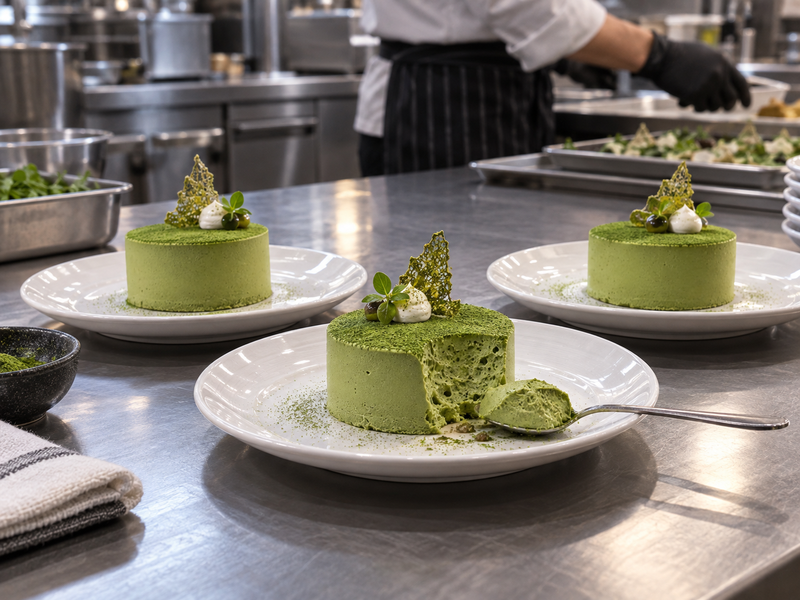
Decide whether the guest will use a fork or spoon. That small service decision affects the acceptable firmness, the base thickness and the size of any nuts or fruit pieces included in the dessert.
2. How should matcha be selected for a frozen dessert?
Taste the powder in its actual base
Assess candidate powders in the chosen cream or plant base, using the same dose and freezing procedure. A powder’s appearance in water gives only part of the answer. Fat, sugar, aeration and serving condition all change the finished eating experience.
Keep tea aroma and bitterness as separate observations. A sample may have strong bitterness but little of the tea character the buyer wants. Adding more powder to that sample may increase cost without moving it toward the target.
Ask Matcha Village for an unsweetened ingredient sample and state the dairy or plant system. Its bulk matcha supplier guide provides a purchasing framework for sample identity, specifications and ongoing supply. Compare the proposed commercial item rather than an unnamed promotional sample.
Record powder condition when opened, the sample lot and how it was stored before use. A poorly closed trial pouch can make a later comparison unfair. Keep enough of each candidate for a repeat batch and follow the supplier’s storage directions. Do not approve a large contract from one taste of powder stirred into room-temperature cream.
3. What is a useful first tea trial?
Add one variable to an approved base
Prepare the house semifreddo base through its established process, then plan equal batches with different tea levels. The following is a proposed development screen. It is not a complete recipe, because the egg treatment, sugar system and whipping procedure must come from a validated base suitable for the business.
| Trial | Base before tea | Proposed matcha | Main observation |
|---|---|---|---|
| Plain reference | 300 g | 0 g | Base firmness and sweetness |
| Lower tea | 300 g | 3 g | Delicate tea expression |
| Middle tea | 300 g | 4.5 g | Balance after freezing |
| Higher tea | 300 g | 6 g | Bitterness and powder feel |
Disperse the sifted tea in a measured portion of the base before folding in the aerated component. Account for any additional liquid. All samples should receive the same total liquid change, otherwise firmness comparisons become difficult to interpret.
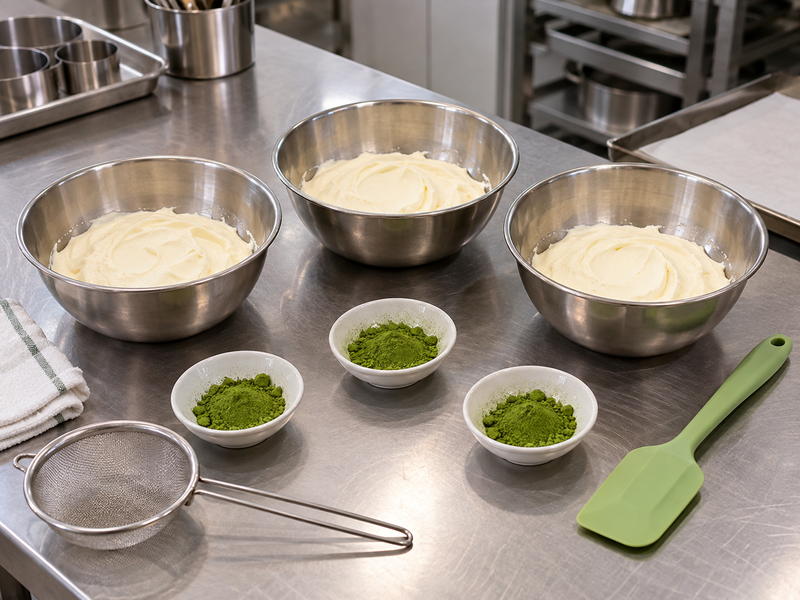
Freeze samples in identical molds with the same fill weight. Keep a written order so the tasting team can identify them after blind assessment. Select the preferred level only after testing the planned garnish and serving condition.
4. How can you keep aeration consistent?
Measure a fixed volume of mixture
Aeration affects both the mouthfeel and the number of molds a batch fills. A bowl that looks larger after whipping may contain more air rather than more dessert. During development, weigh the same small container filled level with each mixture and record the result. Use that comparison within your process rather than claiming a universal density target.
Whip cream or the chosen plant product to the endpoint specified by its method. Photograph the texture and record the product brand. Plant whipping products differ in composition; substituting one without a trial can change the volume and firmness.
Fold the tea base and foam in a consistent sequence, scraping the bottom of the bowl. Stop when the color is even and the mixture is combined. Long delays before depositing can also change how the mixture handles, so record the time from final folding to the last filled mold.
For egg-containing bases, follow a validated cooking process or use a suitable pasteurized egg product. The FDA egg safety guidance recommends pasteurized eggs or egg products for preparations served raw or undercooked. Freezing does not replace that ingredient and process decision.
5. Which molds make service easier?
Match the shape to the kitchen’s hands
Tall narrow molds can create a dramatic plate but may be awkward to release and move. Broad shallow molds take more tray area but can give a lower center of gravity. Test the intended mold with the actual mixture rather than approving it from an empty sample.
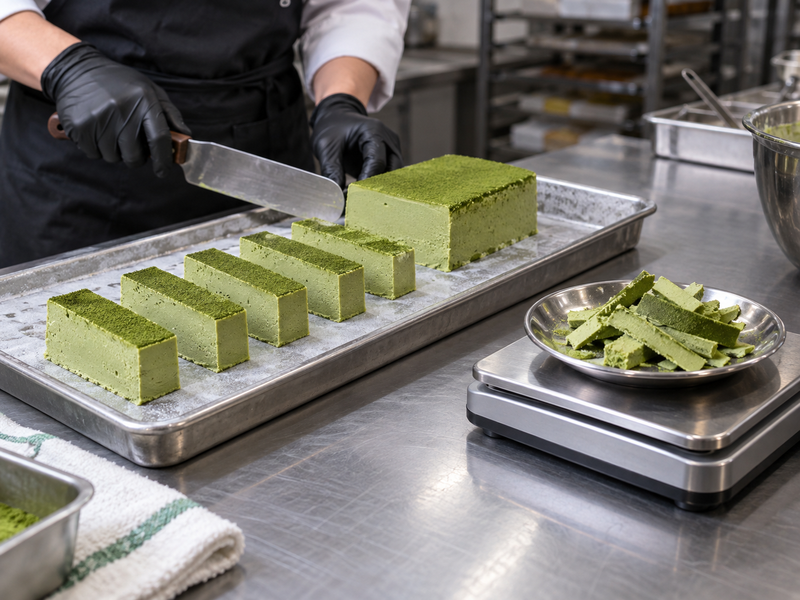
For a loaf, measure the usable length after trimming and compare the first, middle and last slice. A tapered pan can produce portions with different weights even when the cuts have equal width. A straight-sided mold may suit a fixed portion specification better.
| Mold detail | What to inspect |
|---|---|
| Release surface | Tearing, marks or stuck edges |
| Portion depth | Firmness at the center |
| Tray footprint | Number that fits the freezer rack |
| Base shape | Stability during plating |
| Cleaning access | Corners and seams staff must reach |
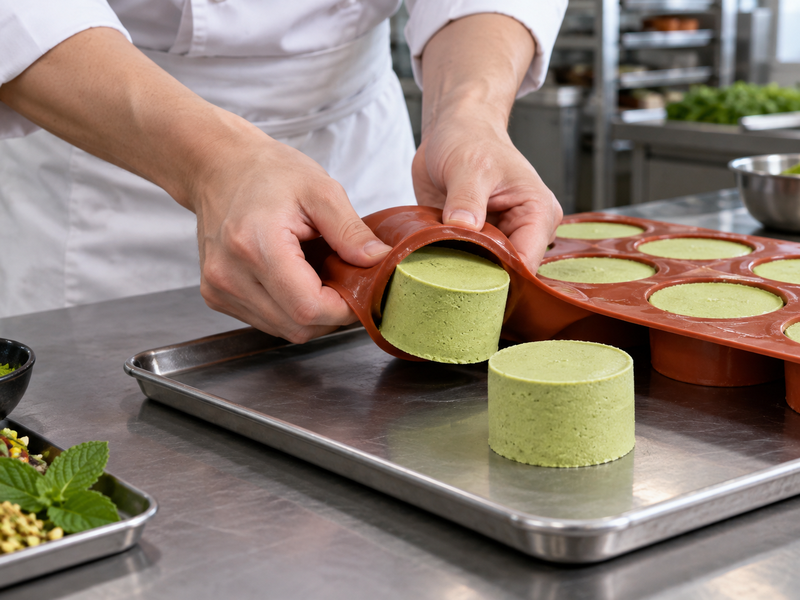
Weigh every cavity during the first trial. Once the depositor or scoop has a repeatable result, define the routine check. Keep molds supported during filling and movement; a flexible mold that bends can leave uneven tops and variable portion depths before freezing starts.
6. What should the freezing trial record?
Record the load as well as the equipment setting
Write down the freezer identity, tray position, number of filled molds and time of loading. A trial with four portions on an empty rack does not represent a full production load. Repeat the selected sample under a realistic load before confirming the work schedule.
Use the business’s approved temperature monitoring procedure and instruments. The air display on a freezer does not describe the condition at the center of every dessert. The food safety team should decide what monitoring is required for the formula and process.
| Trial record | Why the kitchen needs it |
|---|---|
| Fill weight and depth | Defines the portion being frozen |
| Initial mixture condition | Explains differences between batches |
| Rack and tray location | Helps find uneven performance |
| Product observations | Connects firmness to the process |
| Cover and pack | Identifies surface exposure |
Protect the portions from odors and physical damage using suitable covered storage. Keep the development samples labeled with formula and batch identity. Do not infer a shelf life from an intact appearance. Texture, flavor and food safety need appropriate evaluation for the intended storage and distribution conditions.
7. How do you test the dessert during service?
Follow one portion through the actual pass
Start with the dessert in its specified storage condition. Have the service team release or cut it, plate it with the intended garnish and carry it to a table. Record how easily the spoon enters the center and how the edges change during the normal handover period.
The name semifreddo should not become an instruction to leave the product at an uncontrolled temperature. Set handling conditions through the restaurant’s food safety procedure, then evaluate eating quality within those limits. The FDA Food Code resource is a reference for US retail operations; local requirements and the particular recipe still govern.
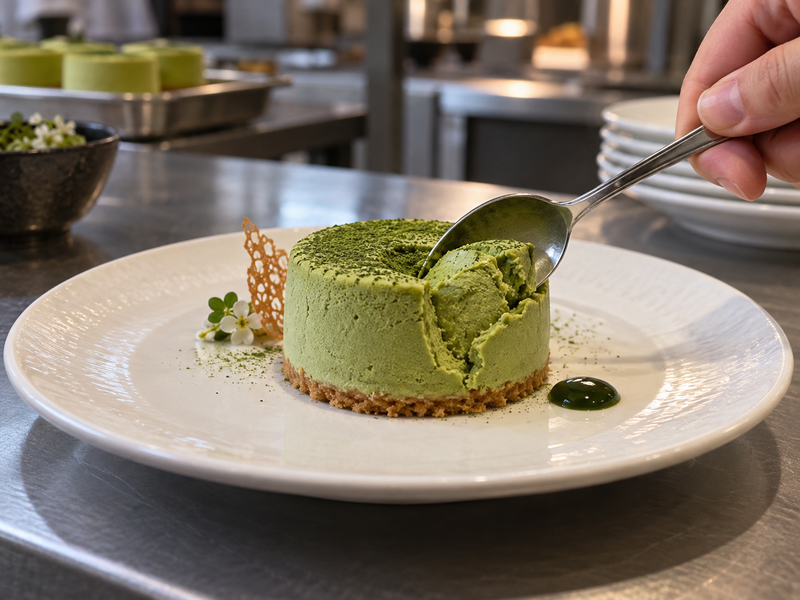
Ask two servers to follow the same plating card independently. Note any step that requires guessing, such as how much sauce to add or where to grip the mold. A formula that works for the pastry chef can still fail during a busy dinner service if the release method is hard to communicate.
8. Which garnishes deserve a separate trial?
Keep frozen inclusions and fresh finishes distinct
Fruit, nuts, biscuit and sauce can change the way a guest perceives the tea. Add them one at a time during development. If every test portion carries a different garnish, the team cannot tell whether it preferred the tea dose or the topping.
An inclusion frozen inside the dessert needs its own bite test. A nut piece that is comfortable at room temperature may feel hard in a frozen portion. A fruit component can introduce uneven pockets of moisture or a different firmness. Start with a simple base before adding either.
| Component | Test at the plate | Production detail to fix |
|---|---|---|
| Biscuit base | Fork or spoon cuts cleanly | Thickness and placement |
| Fruit sauce | Acidity suits the tea | Weighed sauce amount |
| Chopped nuts | Comfortable bite | Particle size |
| Chocolate garnish | Does not overwhelm the tea | Piece weight |
Keep allergen information attached to every garnish, including bought-in biscuit and chocolate decorations. The finished dessert’s ingredient list must match what service staff place on the plate. An optional topping can still affect what a customer needs to know.
9. How do you measure yield and waste?
Count portions after release
Record the mixture weight before filling, the number of filled molds and the number released without damage. For a loaf, record trim and broken slices separately. These measurements show whether the selected shape turns an acceptable ingredient cost into an expensive plated portion.
Weigh mixture left in the mixing bowl and piping bag during the trial. Small development batches can lose a noticeable share to equipment surfaces. Repeat the yield measurement at the intended batch size instead of multiplying a tiny batch’s loss percentage indefinitely.
Cost the garnish, base, sauce and serving container alongside the tea. If a decorative chocolate piece costs more than the matcha in the portion, reducing tea quality may be a poor response to a margin problem. Review the complete plate with the kitchen manager.
A cafe considering a second frozen tea item can compare the service requirements in Matcha Village’s matcha granita guide. Use the comparison to decide which dessert fits existing equipment and staff time, while assessing each formula independently.
10. What must be agreed before a menu launch?
Give purchasing and service the same reference
Approve the tea item code, base ingredients, fill weight, mold, garnish and handling procedure together. A last-minute change of whipping product or mold can alter the result enough to require another trial. Record permitted substitutions explicitly instead of leaving them to individual shifts.
Ask the matcha supplier for the documents needed for your destination and customer specification. State whether you require pure tea or a formulated blend. A sweetened blend can be useful in some systems, but it changes the base and must be declared and tested accordingly.
Keep a photograph of the approved portion at the point of service, plus a cut or spooned view of the center. Include the measured yield and a brief defect list. This gives the receiving kitchen something more useful than an image of an unopened ingredient bag.
Schedule a final run that fills the actual molds under the planned freezer load. Have the kitchen manager and service lead sign off the same plated sample, then place the ingredient order against that recorded formula and item code.
FAQ
Q1: Does semifreddo require an ice cream machine?
Many semifreddo methods rely on a prepared aerated mixture that freezes in a mold. The equipment requirement depends on the selected base. Confirm that the kitchen can repeat its whipping, depositing and freezing process before choosing the menu format.
Q2: Can coconut cream replace dairy cream directly?
Treat that as a new formula. Fat content, whipping behavior and flavor can differ, and some coconut products are not designed for whipping. Choose a complete suitable plant-based method and trial the exact commercial ingredients you plan to buy.
Q3: Why should the tea be tasted after freezing?
The guest eats a cold, aerated dessert with its garnish. A warm liquid sample gives an incomplete picture of bitterness, sweetness and texture. Compare equal portions under the same serving conditions before deciding which powder or dose is preferable.
Q4: Can the dessert be shipped between stores?
Only after the business establishes a suitable frozen distribution and handling system. Trial the package, route, temperature controls and receiving procedure with the actual product. A successful freezer trial in one kitchen does not validate delivery to another location.
Q5: How should a small cafe begin?
Use one familiar base, one mold and a plain reference plus two tea levels. Record fill weight and service texture. Choose the most workable version before adding a biscuit base, several garnishes or a larger production schedule.