
Matcha eclairs need a dry, useful cavity inside the choux shell and a filling that tastes of tea after chilling. A bright glaze cannot rescue a collapsed shell or a pastry cream that leaves dry powder on the tongue. For a bakery adding this item, develop the shell, filling and finish in separate trials before combining them.
The proposed quantities below are starting points for small development batches. They have not been validated as a commercial formula. Use your existing approved choux and pastry cream procedures wherever possible, then measure what changes when matcha enters the product.
Product · Shell · Trial · Dispersion · Glaze · Filling · Service · Defects · Cost · Supply
1. Where should the tea flavor go in matcha eclairs?
Start with the component customers taste most
Tea can enter the shell, pastry cream, glaze or more than one component. For an existing choux operation, a matcha filling is a convenient first development route because the team can retain its familiar shell process. A green shell introduces another variable before the filling has been approved.
Jo the tart queen’s recipe places matcha in both choux and pastry cream, with a dark chocolate finish. It demonstrates a possible arrangement rather than a requirement for every bakery. Select a combination that customers can recognize from the menu description.
| Tea location | Development advantage | Check before approval |
|---|---|---|
| Pastry cream | Direct control of the main flavor | Texture after chilling |
| Glaze | Visible green finish | Sweetness and surface handling |
| Choux shell | Tea in every component | Expansion and drying |
| Cream plus glaze | Strong product identity | Total bitterness and cost |
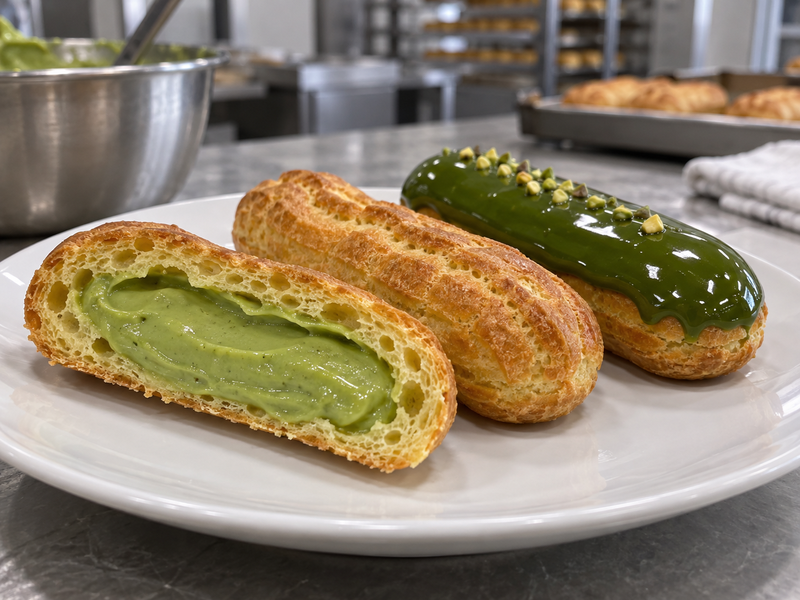
Write a short sensory target before sampling. For example, “recognizable tea, moderate sweetness, crisp first bite” tells staff more than “premium.” Let that target guide which component receives the next adjustment.
2. What makes a choux shell useful for production?
Inspect the cavity before discussing decoration
An attractive shell can hide a wet interior or a divided cavity that is difficult to fill. Cut several shells lengthwise during development. Photograph the wall thickness, base and internal partitions, then compare samples from the front, middle and back of the tray.
King Arthur’s cream puffs and eclairs recipe provides a practical choux reference using water, butter, flour and eggs. Follow a complete established method for the base. Combining the ingredient list from one source with the baking schedule from another produces a new formula that still needs testing.
Weigh the cooked paste and the egg added during your trial. Water lost during cooking affects the amount of egg needed for the desired piping consistency. Record how the paste behaves at the nozzle and whether the deposited line holds its shape.
Agree on shell length and raw deposit weight before filling a full tray. A long thin shell and a short thick shell can contain similar amounts of paste but bake differently. Use a piping guide, keep spacing consistent and reserve one shell per tray as a destructive inspection sample.
3. How should you trial matcha pastry cream?
Use a small dose ladder in a known base
Prepare a validated plain pastry cream base under the kitchen’s approved cooking and cooling procedure. For development, compare tea levels in equal portions. The following is a proposed flavor screen, not a validated formulation or safety process.
| Sample | Plain pastry cream | Matcha addition | Purpose |
|---|---|---|---|
| Control | 200 g | 0 g | Confirm base texture |
| A | 200 g | 2 g | Lower tea level |
| B | 200 g | 3 g | Middle tea level |
| C | 200 g | 4 g | Higher tea level |
Make these comparisons with the same tea lot and the same cream batch. If a small amount of liquid is needed for dispersion, deduct it from a reformulated base or keep it identical in all trial samples, including the control. Otherwise, a softer filling may result from added water rather than tea.
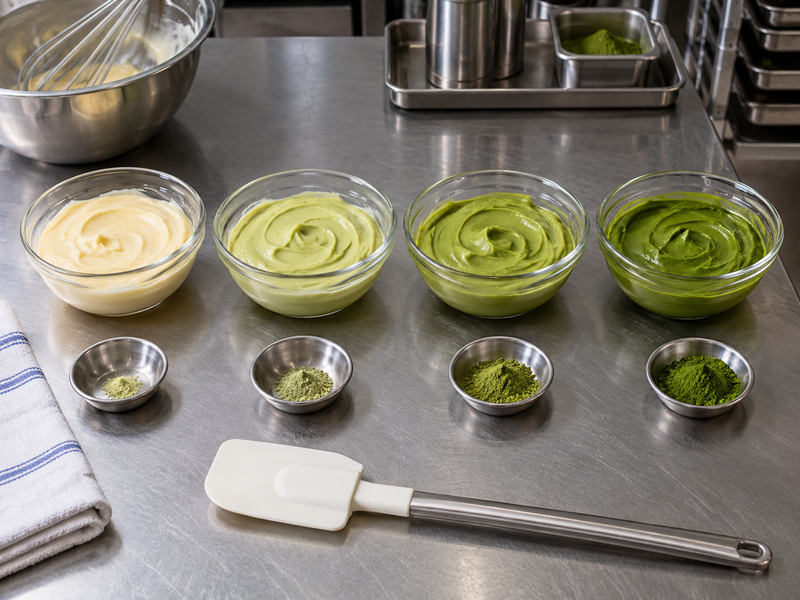
Taste after the samples reach the intended serving condition. Record tea aroma, sweetness, mouth coating and any powdery finish. Then pipe each into comparable shells. Filling tasted from a spoon can seem stronger than the same amount surrounded by choux and glaze.
4. How can you prevent green specks in the filling?
Specify the mixing order
Sift the matcha before incorporation and inspect it for compacted lumps. Decide whether the tea enters a dry premix, a small portion of the liquid or the prepared cream. Each route changes the mixing task. The production card should name one route and show the resulting smooth mixture.
For a bench comparison, work a little cream into the sifted powder gradually, then blend that paste into the rest. This is a suggested dispersion trial; it does not replace a validated food safety process. If tea is added after a cooking step, have the food safety lead assess that ingredient addition and its handling.
Scrape the bowl base and sides. A green streak near the bottom may remain hidden until the final piping bag is filled. Spread a thin sample on a white plate to inspect for concentrated specks, then taste it for grit.
Do not assume stronger mixing is always better. Additional beating may change the cream’s consistency or introduce air. Record the attachment, speed and duration that gave an even sample, then confirm those settings in the actual production bowl. A hand whisk result does not establish what a large mixer will do.
5. Which glaze suits the finished eclair?
Compare the bite as well as the color
A thin chocolate glaze can add a clear contrasting flavor. A sweet green fondant finish puts color at the surface but may dominate a small pastry. A white chocolate coating introduces its own sweetness and firmness. Taste a full bite before selecting the finish from photographs.
Use the same glaze weight for comparative samples. A heavy coating can make a moderate filling appear weak. If the selected glaze is green, assess its appearance under the counter lighting and after the planned handling period rather than only immediately after dipping.
| Finish | Practical attraction | Trial observation |
|---|---|---|
| Dark chocolate glaze | Contrast with green filling | Tea remains recognizable |
| Matcha fondant | Smooth visible tea color | Sweetness per bite |
| Matcha white chocolate | Firm, defined top | Cracking during cutting |
| Light dusting | Minimal finishing work | Powder transfer to packaging |
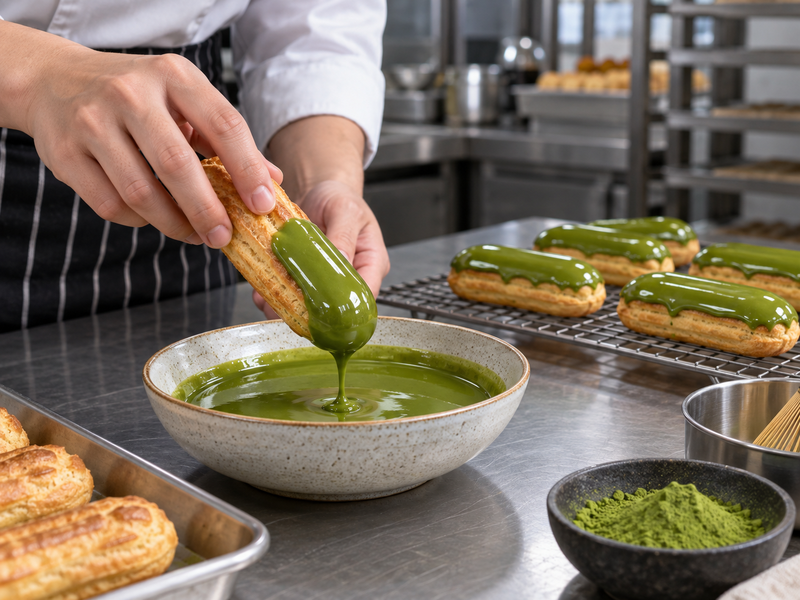
Include the package in the glaze test. A surface that looks set may mark the lid or wrapper during transport. Compare the highest finished eclair with the pack’s internal height, and allow staff enough room to lift the pastry without gripping the decorated top.
6. How do you control the fill weight?
Check for empty ends
Weigh a shell before and after filling to establish the deposited cream amount. Then cut it open. A correct total weight does not prove that both ends are filled; cream can collect near the entry hole while a distant cavity remains empty.
Choose either a split shell presentation or underside filling holes. A split shell shows the cream and permits visual control, while underside filling keeps the outside intact. Train operators using the selected nozzle and a real shell rather than demonstrating with a piping bag in the air.
| Check | Method | Action when it fails |
|---|---|---|
| Fill amount | Before and after weighing | Adjust deposit |
| Distribution | Cut sample along its length | Change entry points |
| Shell damage | Inspect base and ends | Review pressure or nozzle |
| Leakage | Observe after handling | Review cream and shell |
Set a sampling frequency that fits the batch and risk. Recheck after changing operators or refilling the depositor. Mark the cream batch on the production record so a later texture problem can be traced without treating every eclair made that day as identical.
7. What should happen between filling and sale?
Build the schedule around the filled pastry
The shell begins changing after it meets the moist filling. A dry shell stored separately and a filled eclair need different quality checks. Trial the intended assembly time, transport period and counter service together. Record both texture and temperature under the business’s approved procedure.
The FDA Food Code is a model used by US jurisdictions for retail food controls. Local adoption and the recipe determine the applicable requirements. A pastry team should have its food safety lead set cooking, cooling, cold holding and date-marking rules for the actual cream-filled product.
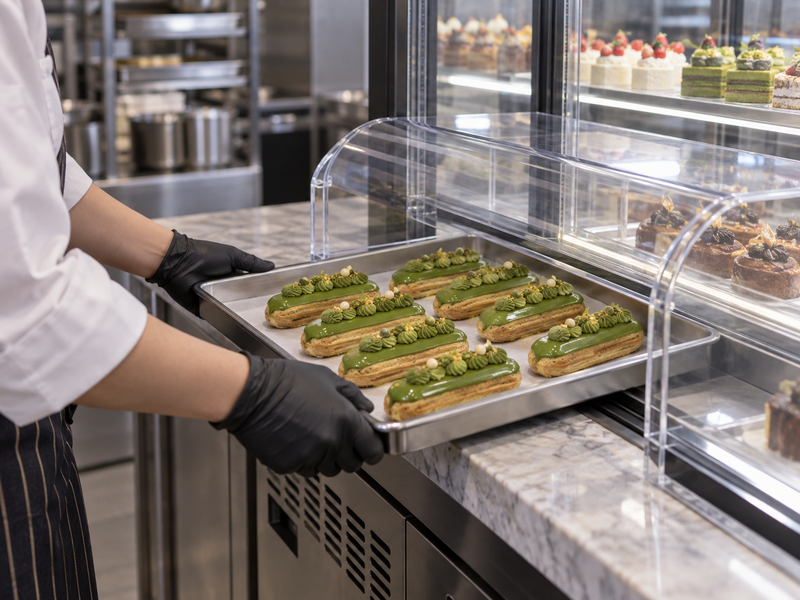
Avoid repeatedly taking a whole tray out for one order. Portion the working quantity according to service demand and keep the rest under the specified conditions. Label trial trays clearly so a development sample is not mistaken for saleable production.
Quality tasting can establish when the shell becomes too soft for your menu. It cannot prove that a longer storage period is safe. Keep the quality assessment and the food safety decision as separate approvals on the release sheet.
8. How can the team trace common defects?
Investigate one component at a time
If finished eclairs soften rapidly, inspect an unfilled shell from the same bake and a filled shell from the same assembly time. This separates shell drying from changes caused after filling. If every shell collapses before assembly, changing the cream will not address that failure.
A gritty filling requires a different comparison. Smear the cream thinly, inspect powder dispersion and review the addition stage. Check whether the defect appeared before chilling or only after further handling. Save those observations before the batch is discarded under the kitchen’s procedure.
| Defect | First evidence to collect |
|---|---|
| Flat shell | Cut section and baking record |
| Empty end | Filling entry locations and cut sample |
| Green specks | Powder condition and mixing order |
| Cracked topping | Glaze thickness and cutting condition |
| Cream leakage | Fill amount, shell damage and holding record |
Keep photographs of acceptable and unacceptable examples beside the production specification. Written descriptions become easier to apply when staff can compare an actual shell wall or filling streak. Update the photographs when the approved size changes; an old picture can teach the wrong standard.
9. How should you cost shell losses and finishing?
Use the number that reaches the counter
Calculate cost from acceptable finished eclairs, including shell rejection, filling left in equipment and glaze left in the dipping bowl. A recipe yield based on every deposited shell overstates the number available for sale when breakage is common.
Measure the hands-on time for filling, glazing and packing a representative batch. Finishing often involves several short operations that disappear from a rough estimate. Include the time needed to clean the filling equipment between products according to the site’s allergen procedure.
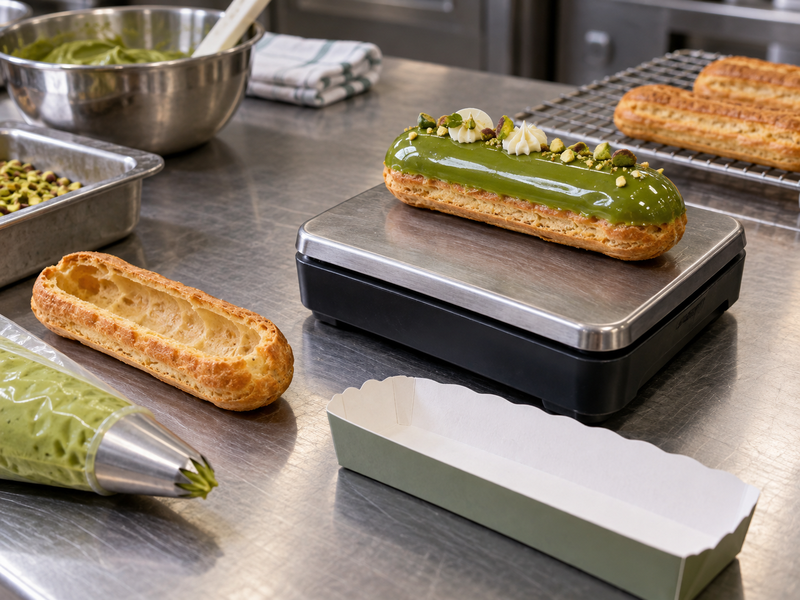
Compare matcha prices at the approved dose. If the cream contains more tea than the glaze, focusing negotiations only on the glaze powder saves little. Keep separate line items for both when two different powders are used.
For another bakery application with a different fat and baking profile, Matcha Village’s matcha financier guide can help purchasing teams organize a second application trial. Do not assume that a powder approved in a financier will produce the same result in chilled pastry cream.
10. What information should go to the matcha supplier?
Describe the cream and the selling format
State whether the powder will enter cooked pastry cream, a cold mixed filling or a glaze. Provide the proposed dose, dairy system and expected tea intensity. Include the serving temperature range used in your own assessment, because buyers tasting warm development samples may approve a different balance from customers eating chilled pastries.
Request item identity, ingredient declaration, lot traceability and the quality documentation required by the destination market. Ask the supplier to identify any change between the trial sample and the offered commercial lot. Keep the sample code in the recipe record.
Have the production team repeat the selected formula with a second operator. This checks whether the method can be communicated. If only the developer can fill the shells without damage, revise the work instruction before expanding output.
Prepare a purchase brief with the approved cut-section photograph, matcha dose and a small list of rejection defects. Then schedule one full service simulation using the intended shell, cream, glaze and pack, with production and counter staff recording the same sample from assembly through handover.
FAQ
Q1: Can plain eclair shells be used?
Yes. Plain shells are a sensible first comparison when a bakery already makes reliable choux. Put the tea in the filling, assess the complete pastry and add a green glaze only if it improves the intended flavor and appearance.
Q2: Why does a filled eclair feel heavier at one end?
The cream may not have reached every cavity. Check a cut sample and the location of the filling holes. More total filling can worsen leakage without correcting an isolated empty section, so inspect distribution before increasing the deposit.
Q3: Is a darker filling always stronger?
Color alone cannot establish tea intensity. Powder identity, dairy ingredients, dose and lighting affect appearance. Taste samples at equal weights and the same serving condition, then record color separately from aroma, bitterness and sweetness.
Q4: Can we freeze the finished product?
That requires a product-specific trial and an approved handling procedure. Test shell texture, cream separation, glaze appearance and packaging after the intended freeze and thaw process. This guide does not assign a frozen storage life or thawing schedule.
Q5: What is the best first supplier sample request?
Request a small unsweetened matcha sample intended for pastry cream, with its lot code and ingredient documents. Share the base and planned tea dose. A supplier can respond more usefully to that brief than to a request for its “best” powder.