
Matcha granita is a frozen tea dessert with loose, scraped ice crystals. A cafe can make a good bowl yet struggle to repeat its texture during service. Start with weighed ingredients, shallow trays and a recorded scraping routine. The trials below help teams turn that small dessert into a repeatable menu item.
Contents
- 1. What should a matcha granita feel like?
- 2. How should you set up a small recipe trial?
- 3. Which matcha should you test in the frozen base?
- 4. How can you mix the tea without leaving clumps?
- 5. Which tray and fill depth suit your freezer?
- 6. When should staff scrape the freezing mixture?
- 7. How do toppings change the finished portion?
- 8. What causes hard blocks or wet slush?
- 9. How should you plan portions and service?
- 10. What belongs in the approved production record?
1. What should a matcha granita feel like?
Set a texture target that staff can recognize
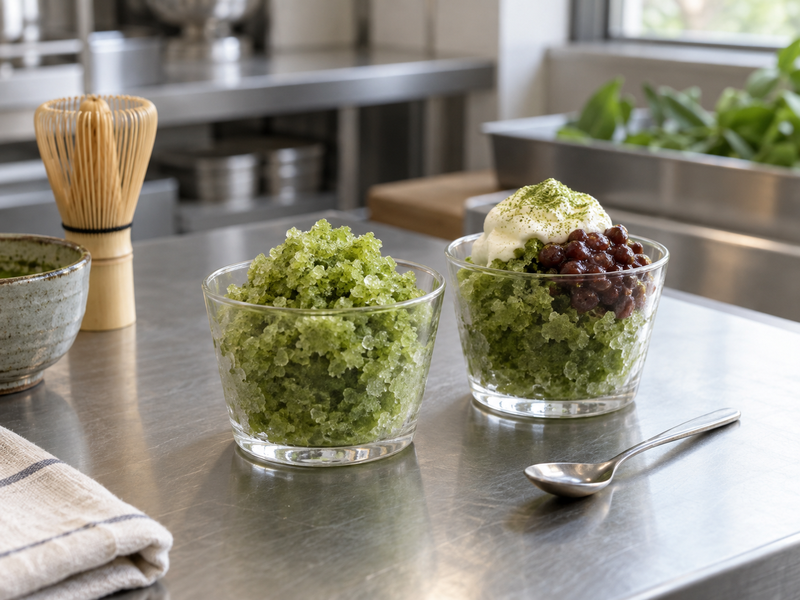
A spoonful should contain small, separate ice crystals that loosen under light pressure. The surface can look rough. A dense slab that needs chopping will slow service and produce uneven cups. A liquid puddle under a mound of ice suggests the portion has spent too long outside the freezer or needs a different formulation.
Sift & Simmer’s recipe describes a coarse, light texture made through repeated scraping. Use that physical description when briefing staff. Give them a photograph of your approved portion, a serving spoon and the actual cup. A verbal instruction such as “make it fluffy” leaves too much room for different interpretations.
Write down whether guests will eat the dessert alone, under fruit or beside a pastry. Those uses need different portion sizes. A small palate-cleansing serving may need a clearer tea finish than a large cup with sweet cream. Test the product in that complete serving before buying larger quantities of powder.
2. How should you set up a small recipe trial?
Compare sweetness while holding tea dose steady
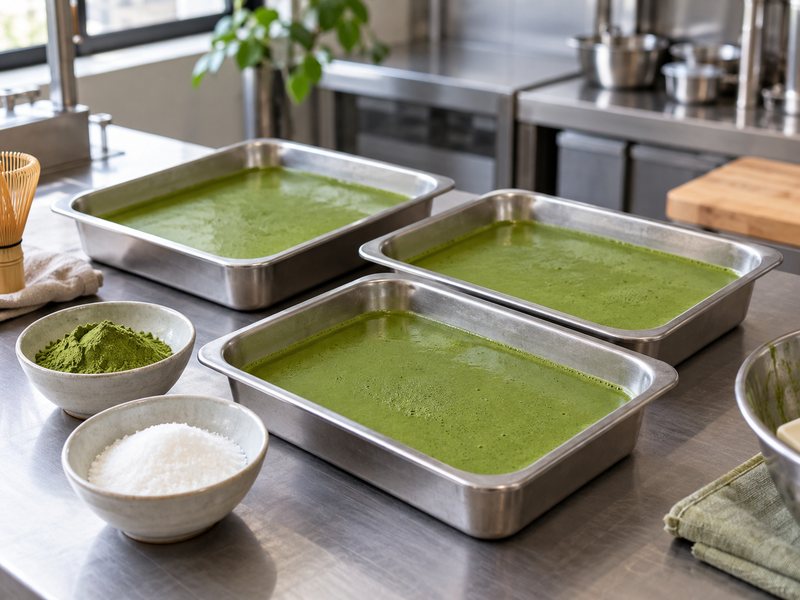
Begin your matcha granita trial with a plain water, sugar and matcha base. This makes ingredient effects easier to identify. Adding fruit, coconut milk and syrup at once makes it difficult to trace a soft or overly bitter result. Use the same powder lot, water supply and containers across the trial.
The following amounts are proposed development trials. They are untested starting points for a cafe team, not a validated commercial formula. Each column totals 1,000 grams. Weigh every ingredient and label the trays with a code so tasters can compare without seeing which one contains more sugar.
| Ingredient | Trial A | Trial B | Trial C |
|---|---|---|---|
| Water | 912 g | 882 g | 852 g |
| White sugar | 80 g | 110 g | 140 g |
| Pure matcha | 8 g | 8 g | 8 g |
| Total mixture | 1,000 g | 1,000 g | 1,000 g |
Taste each sample while frozen and again as a spoonful softens. Record tea aroma, sweetness and any dry finish. Keep a rejected sample long enough for the team to agree on its fault. Then repeat the preferred formula in a separate batch. One appealing cup does not establish how a whole tray will behave.
3. Which matcha should you test in the frozen base?
Compare the powder in the dessert you will sell
Choose unsweetened powder for the initial matcha granita comparison. A latte premix adds sugar and other ingredients that change the trial formula. Read the ingredient statement before treating two green powders as equivalents. Weigh equal quantities of each candidate into identical bases and record the supplier lot numbers.
Inspect a sample as it softens on a white spoon. You can then see the green color without the glare of a freezer tray. Taste for grassy aroma, bitterness and the feel of any coarse particles. A vivid dry powder can still produce a dessert that tastes weak beside a topping. A more expensive powder also needs to justify its cost in the finished serving.
Include a plain, untopped spoonful in the tasting even if the menu item includes cream. This makes it easier to identify whether sweetness is masking the tea. Keep the same tasting order across the samples, with drinking water between them.
For an ingredient discussion with Matcha Village, provide the frozen recipe, serving size and desired tea intensity. Ask for application samples against that brief. The separate matcha ice cream guide covers a dairy application; use separate trial records for that product because its composition and texture target differ.
4. How can you mix the tea without leaving clumps?
Make a smooth tea dispersion before filling trays
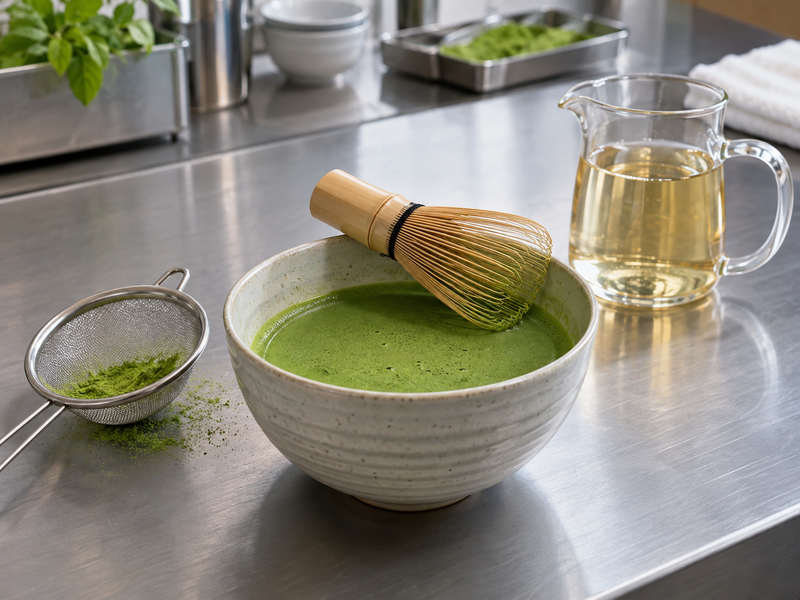
Sift the powder into a clean bowl and whisk it with a small, measured part of the recipe water. Add the rest in stages. Matcha particles remain dispersed in the liquid; describing the powder as completely dissolved can hide the need to remix a base that has been standing.
For matcha granita, prepare the sugar solution separately if that suits your kitchen, using water already allocated to the formula. Record the amount so a staff member cannot accidentally add an extra cup. Combine both components, scrape the bowl and inspect a small pour against the light. Dry green specks on the side of a cup are easier to see at this stage.
| Mixing check | What to look for | Action before freezing |
|---|---|---|
| Powder wetting | Dry islands or clumps | Whisk the small tea portion again |
| Sugar mixing | Grit in a cooled spoonful | Check mixing and ingredient weights |
| Transfer | Thick residue left in bowl | Scrape consistently and record losses |
| Standing base | Uneven green appearance | Stir before dividing between trays |
Use the same mixing tool throughout a comparison. A high-speed blender may produce a different amount of foam from a whisk. If you change equipment for a larger batch, record the change and inspect the surface before freezing.
5. Which tray and fill depth suit your freezer?
Keep the geometry visible in the recipe record
A matcha granita recipe that lists only “one container” is incomplete for production. Record the tray’s internal dimensions, material and filled weight. Measure the liquid depth as well. Two trays holding the same weight can expose very different surface areas to the freezer.
Use food-contact trays that suit your freezer and cleaning procedure. Leave room for staff to work a fork or scraper across the base without spilling over a high rim. During a pilot, compare equal mixtures in the same tray type before experimenting with deeper fills. A tray that fits neatly on the shelf may still be awkward to scrape.
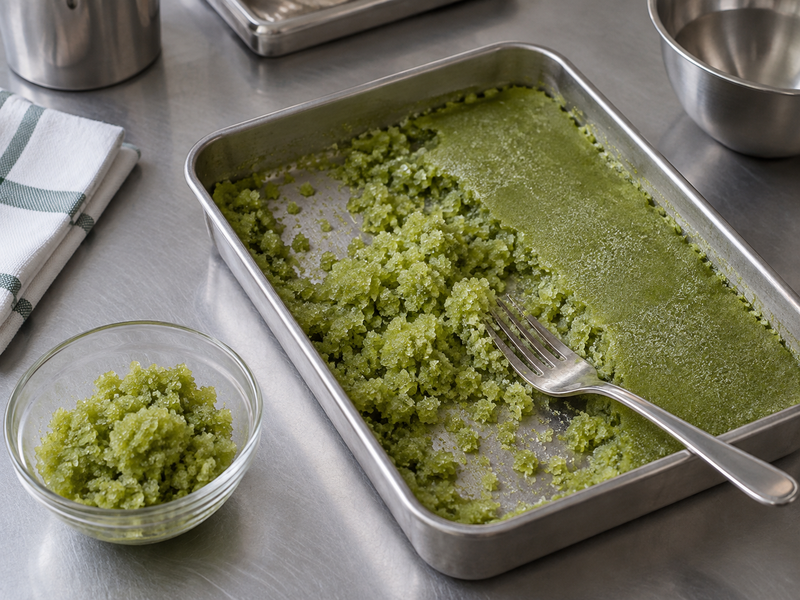
Record the shelf position and the number of trays loaded together. A nearly empty development freezer gives a different working situation from a busy cafe freezer. Watch where ice forms at the edges and where liquid remains in the middle. Those observations are more useful than assuming every batch will follow a fixed clock time.
When the cafe expands output, add trays of the approved depth before increasing depth in a single tray. Repeat the trial with the intended service load and keep space for lids and clean utensils.
6. When should staff scrape the freezing mixture?
Follow the ice formation and record the timing
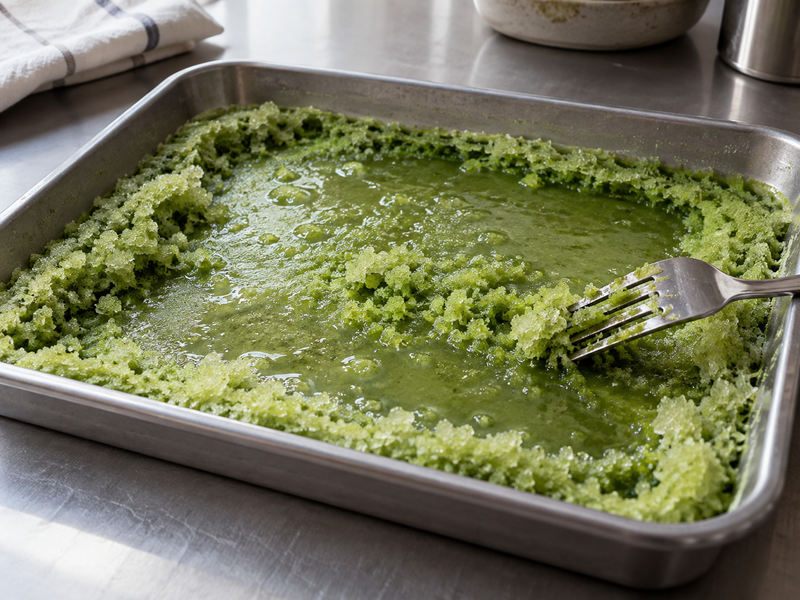
Scrape when ice begins to form around the tray and can be broken into loose crystals. Work those crystals back through the softer mixture. Return the tray promptly to the freezer, then repeat as more of the base freezes. The aim is an even texture across the container.
Junbi’s granita method calls for an initial check after an hour and subsequent raking at intervals of 30–45 minutes. Treat that as one published method. Your tray depth, freezer loading and formula need their own observations before you set a staff schedule.
| Checkpoint | Observation to record | Practical decision |
|---|---|---|
| Initial ice | Edge crystals and liquid center | Start the scraping sequence |
| Middle of batch | Crystal size across tray | Break up large patches evenly |
| Near service texture | Free liquid and hard clumps | Adjust the next inspection time |
| Ready tray | Loose crystals from edge to center | Cover and follow the service plan |
Put the next check time where another staff member can see it. Include the batch code and who last handled it. A process tied to one person’s memory is difficult to repeat across shifts, especially while that person is also making drinks.
7. How do toppings change the finished portion?
Test the full serving with its actual utensils
Keep toppings separate until the matcha granita base performs consistently. Sweetened condensed milk, fruit puree and a plain tea base create a different eating experience from granita served alone. Weigh each topping during development so the tea does not disappear under an inconsistent pour.
Try one topping per test cup. Evaluate a cup immediately, then another after a short simulated handoff delay. Watch for pooling and changes in the upper layer. Record the temperature and amount of the topping used in your trial. A warm topping can damage a carefully prepared mound before it reaches the customer.
Choose utensils that suit the resulting texture. A narrow drinking straw will disappoint someone facing coarse ice. A spoon needs enough length to reach the bottom without forcing fingers against the rim. Test a takeaway lid with the filled cup; a high mound may look attractive in a photo yet prevent the lid from closing.
Write a menu description that matches the serving. If a dairy topping is optional, keep its utensils and handling instructions clear within the cafe’s allergen procedures. Have the responsible team check ingredient information for the complete product, including purchased syrups and decorations.
8. What causes hard blocks or wet slush?
Change one variable after checking the record
Start troubleshooting matcha granita with the batch sheet. Confirm ingredient weights, tray fill and scraping history before blaming the matcha. A staff member who skipped a scheduled scrape may have produced a different texture from the same formula. Adding more powder will not correct that missed step.
Compare a portion from the center with one from the edge. If the difference is large, inspect scraping coverage and tray geometry. If every sample is hard, revisit the formulation and service conditions. Keep those questions separate so the team can identify which adjustment helped.
| Observed fault | Check before changing the recipe | Next controlled trial |
|---|---|---|
| Dense frozen slab | Scraping times and tray depth | Repeat with recorded inspections |
| Wet cup at handoff | Time outside freezer and topping | Shorten handling and compare |
| Green specks | Sifting and wetting stage | Improve dispersion before freezing |
| Weak tea finish | Powder weight and topping dose | Compare one tea-dose change |
Do not promise that refreezing repairs every tray. Melting, handling and contamination history still belong in the cafe’s food safety decision. Follow the approved procedure for affected batches. For a texture experiment, use a clearly identified test tray and keep it out of customer service.
9. How should you plan portions and service?
Cost the usable output and the work it requires
Weigh a finished matcha granita tray after allowing for residue and trial samples. Then portion several cups with the intended scoop or spoon. Volume alone can mislead because loose crystals pack differently under pressure. Choose a serving weight and train staff against that weight before relying on visual judgment.
As an illustrative calculation, 920 grams of usable granita gives eleven full 80-gram servings, with 40 grams left. If that tray’s ingredients cost $5, the ingredient cost per full serving is about $0.45. Add the actual cup, spoon, topping and paid handling time. These figures demonstrate the arithmetic; they are not supplier prices or measured yields.
Include scraping labor in the cost sheet. Even a short task becomes expensive if it interrupts another station repeatedly. Run a trial during a representative service period and ask whether staff can reach the freezer without crossing a congested path.
Plan small service trays when demand is uncertain. Keep reserve production under the approved storage conditions and avoid repeatedly warming the whole batch during portioning. Record waste separately from tasting samples. Otherwise the purchasing team may increase ingredient orders to compensate for a handling problem that should be fixed at the counter.
10. What belongs in the approved production record?
Release a recipe that another shift can reproduce
Keep the chosen matcha granita formula alongside the method, tray specification and portion photograph. Record the powder supplier, product code and lot. If a replacement matcha is proposed, repeat the frozen tasting before approving it for service. A supplier change can affect flavor even when the powder weight stays the same.
Write acceptance checks in terms staff can observe. “Loose crystals with no large hard patches” gives a clearer instruction than “excellent texture.” Include who can approve the batch and where rejected or experimental trays belong. Keep a separate storage and handling procedure signed off by the responsible food safety team; this article does not establish a commercial shelf life.
| Record | Minimum useful detail | Owner |
|---|---|---|
| Formula | Ingredient weights and total yield | Recipe developer |
| Freezing method | Tray depth, loading and checks | Production lead |
| Serving standard | Weight, topping and cup photograph | Cafe trainer |
| Ingredient approval | Matcha code, lot and sample outcome | Purchasing team |
For a new ingredient sample request, send Matcha Village the approved base, intended market and expected monthly powder use. Include a frozen tasting note from your current product. That gives the supplier a concrete application to match and gives your team a reference for the next delivery.
FAQ
Q1: Does matcha granita need an ice cream machine?
A shallow freezer-safe tray and a clean scraping tool can produce the coarse texture. Trial the process with the equipment your cafe will use.
Q2: Can a cafe use a sweetened matcha mix?
It can develop a separate formula for that mix. Read the ingredients and account for its sugar and other solids when comparing trials.
Q3: How much matcha should go in each batch?
Set a proposed powder dose by weight, then compare the frozen flavor. Record total batch weight so a percentage has a clear basis.
Q4: Can the same recipe go into a slush machine?
Do a separate equipment trial using the manufacturer’s requirements. A scraped tray recipe does not automatically suit a machine’s operating conditions.
Q5: How long can a cafe sell a finished batch?
Use a product-specific, approved storage and handling schedule. Recipe appearance and an online holding suggestion do not establish a commercial shelf life.