
Matcha profit margin measures how much revenue remains after a defined set of costs. Operators often compare a powder quote with a drink price and overlook the rest of production. Start with net sales, label the margin you calculate and include the costs that belong to that measure before making changes.
Table of contents
- What does matcha profit margin measure?
- How does margin differ from markup?
- How should powder cost per serving be calculated?
- Which ingredients and packaging costs belong in the model?
- How should preparation labor be treated?
- How do sales channels change the remaining contribution?
- How do waste and rejected servings affect margin?
- How can a menu or product change be evaluated?
- Why can a strong margin coexist with weak cash flow?
- What should a recurring matcha profit margin review contain?
1. What does matcha profit margin measure?
Name the costs included in the calculation
A margin calculation needs a defined numerator and denominator. Gross margin subtracts the cost of goods sold from revenue. Contribution margin subtracts the variable costs you choose to include for a sale or order. Operating margin considers operating expenses as well. Businesses can use different cost classifications, so write the included costs next to every result. A figure without that definition cannot tell a manager whether packaging, preparation labor or delivery fees have been counted.
Use net sales as the denominator when calculating a sales margin. Discounts and credits can reduce what you receive from a listed price. Keep sales tax and similar collected amounts separate according to your accounting method. For management planning, make the calculation consistent across products and periods. Ask your finance owner how costs should be classified in the formal accounts, then reconcile your operating view with that method. A useful matcha profit margin report lets a buyer identify which change affected the result, rather than treating every percentage labeled profit as the same measure.

2. How does margin differ from markup?
Keep the denominator visible
Margin and markup describe the same price-and-cost difference from different bases. To calculate margin, divide that difference by the selling price. Markup divides it by cost. Mixing the two can cause pricing errors when a team translates a target percentage into a sales price. Put the formula beside the result and use the same cost scope throughout. If one calculation includes packaging and another excludes it, correcting the denominator alone will not make them comparable.
Consider an explicitly hypothetical item with net sales of six currency units and included costs of two. The remaining amount is four. Margin on that basis is four divided by six, or about 66.7%. Markup is four divided by two, or 200%. These are arithmetic examples, not matcha market benchmarks or a supplier quotation. If a manager requests a margin target, confirm which costs the target covers before deriving a price. The matcha profit margin calculation should state both the formula and its commercial scope so a café owner, distributor and finance reviewer can discuss the same result.
| Hypothetical calculation | Formula | Result |
|---|---|---|
| Remaining amount | 6 minus 2 | 4 currency units |
| Margin on sales | 4 divided by 6 | About 66.7% |
| Markup on included cost | 4 divided by 2 | 200% |
3. How should powder cost per serving be calculated?
Use weighed portions and usable output
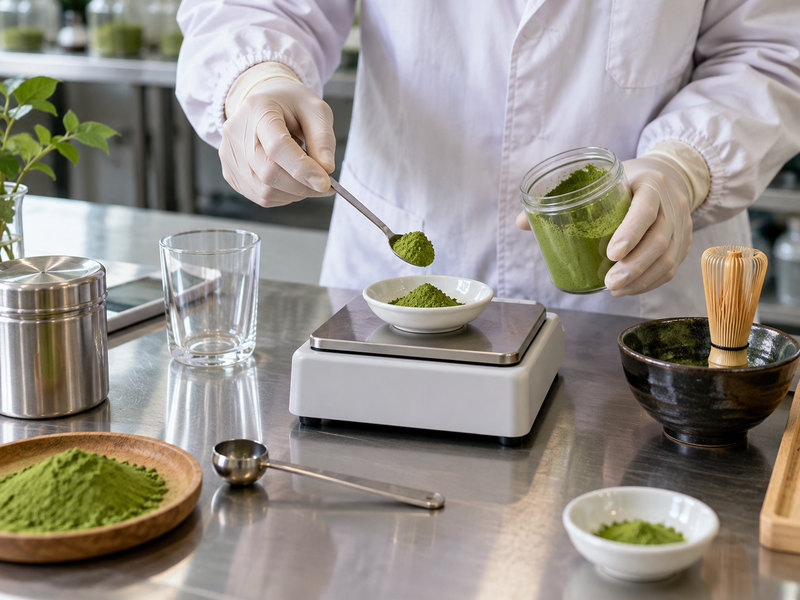
Calculate powder cost from the delivered cost of the product and the weight used in the recipe. Convert all units before multiplying. A kilogram contains one thousand grams, so a cost per kilogram must become a cost per gram if portions are weighed in grams. Record the recipe version and the product identity. A cheaper powder requiring a larger dose can change the per-serving comparison, while a different recipe can change flavor and customer acceptance.
For a hypothetical calculation only, suppose powder costs twenty currency units per kilogram and a trial recipe uses three grams. Powder cost before handling loss is 0.06 currency units per serving. That arithmetic does not describe a Matcha Village quote or a recommended dose. Observe how much usable output the pack delivers under normal preparation. The matcha beverage formulation guide can support recipe trial planning. Use your approved recipe and actual purchasing costs when calculating matcha profit margin. Record rejected drinks and residue separately so planned portion cost can be compared with actual ingredient consumption.
4. Which ingredients and packaging costs belong in the model?
Build the complete saleable item
List everything needed to deliver the item as sold. A latte may include milk, sweetener, water treatment where relevant, ice, cup and lid. Packaged powder may include a pouch, label, carton and filling work. A bakery product needs its full formula and saleable yield. Account for customizations that alter cost, such as a different milk or an extra ingredient. Cost the common order configurations separately when their consumption differs.
Measure the output of an ingredient pack where practical. Purchase volume may differ from usable servings because of residue, preparation choices or rejected items. Use the same observation window for the ingredients being compared. If you offer dine-in and takeaway versions, distinguish their packaging and handling requirements. A hypothetical café could find that powder savings are smaller than a cup-and-lid change, but that conclusion needs its own invoices and usage records. Your matcha profit margin model should show the complete item before anyone decides which input deserves negotiation or a recipe trial.
| Sale format | Costs to identify | Measurement basis |
|---|---|---|
| Takeaway drink | Powder, milk, cup and lid | Saleable serving |
| Retail powder | Powder, pack and filling | Finished unit |
| Bakery product | Complete formula and packaging | Saleable batch output |
5. How should preparation labor be treated?
Distinguish variable effort from fixed staffing
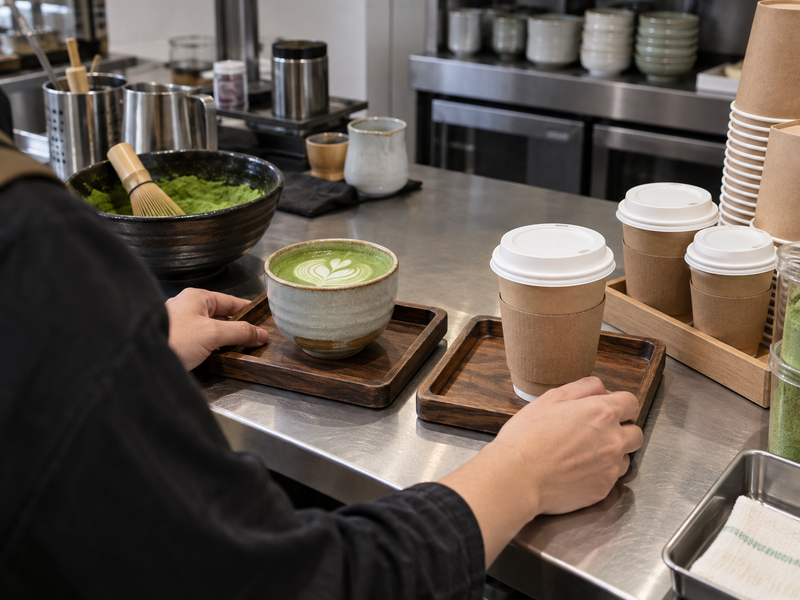
Preparation time affects service capacity and may affect variable labor cost. Decide how your management model treats it. If adding matcha requires paid hours that change with production volume, include that cost in the relevant contribution calculation. When the team works scheduled hours regardless of one extra drink, the immediate cash effect differs. Keep the capacity consequence visible even when formal cost classification places wages outside cost of goods sold.
Observe ordinary preparation rather than the fastest demonstration. Include weighing, mixing, cleaning and handling of failed servings when these tasks belong to the process. Record the equipment and recipe used, since a preparation change can shift both time and output. A hypothetical café might test a different mixing method, then review texture, service time and cleaning workload together. Labor savings that create more remakes can disappear in practice. When reviewing matcha profit margin, avoid turning every second of preparation into an assumed cash saving. Show whether the change reduces paid time, frees capacity or improves consistency, and support that conclusion with an operating trial.
6. How do sales channels change the remaining contribution?
Calculate the route used by the customer
A customer buying in store can create a different cost pattern from a delivery order or wholesale shipment. Payment charges, platform fees, picking, protective packaging and outbound freight may change with the route. Record the actual commercial terms and use the amounts that apply to that order. If a delivery charge is collected from the customer, show both the collected amount and the delivery cost according to your model. Hiding one side can distort the comparison.
Compare channel contribution on net realized revenue. A larger order can spread some handling expense over more units, but it may also carry a discount or different payment arrangement. In a hypothetical distributor arrangement, a brand selling retail packs should compare its received price with costs it still owns, including any agreed support or returns. It should not use the final shelf price as its revenue. Your matcha profit margin review should name the seller, customer and channel. Then managers can see whether a product remains attractive after the actual route expenses are counted.
| Route | Additional cost to check | Revenue basis |
|---|---|---|
| In-store sale | Payment and service costs | Net customer receipt |
| Delivery order | Platform and delivery terms | Net order revenue |
| Distributor sale | Handling and agreed support | Amount received by brand |
7. How do waste and rejected servings affect margin?
Reconcile purchased ingredients with sales
Count powder and related ingredients used during the review period, then compare that consumption with saleable output. Separate recipe servings from samples, staff drinks, spills and remakes. Each category can require a different response. A rejected drink caused by an incorrect portion needs preparation control. Samples sent to new buyers belong in customer development spending. An old opened pack may prompt a format or turnover review. Grouping every difference as waste hides the cause.
Use measured records before applying a loss allowance to future costs. If observations are limited, state that limitation and review the allowance after more ordinary service. Do not copy a loss percentage from another business. The wholesale matcha for cafés article provides commercial context for pack and preparation decisions. A café can use its own usage records to decide whether a larger pack fits its consumption. Lower purchase prices only improve matcha profit margin when the product reaches a paying customer in the approved form.
8. How can a menu or product change be evaluated?
Compare contribution and demand together
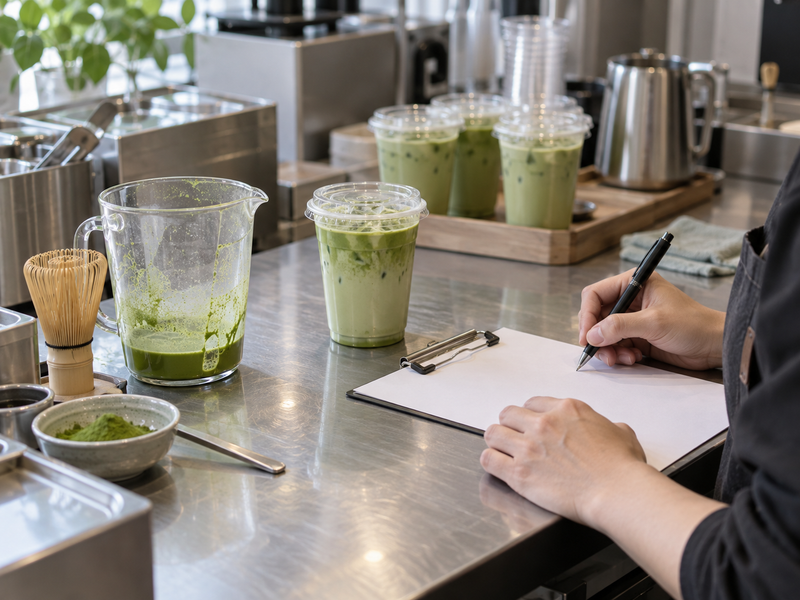
Evaluate a proposed change with both unit economics and observed buying behavior. A higher price can increase contribution per sale while reducing sales volume. Reducing the portion can lower ingredient cost while changing the customer’s assessment. An added flavor can increase revenue and preparation work. Define the proposed change and test it within a bounded period or account group. Keep the recipe and offer version identifiable throughout the trial.
Use clearly labeled hypothetical calculations when planning. If a change adds one currency unit of net revenue and 0.4 units of variable cost, contribution increases by 0.6 units per sale on that model. You still need evidence of customer acceptance and ordinary demand. Avoid presenting the arithmetic as proof of a sales outcome. Review repeat orders, remakes and preparation effort alongside the contribution calculation. A matcha profit margin decision should state what the trial showed and what remains uncertain. Approve a wider rollout only when the proposed price, product and operating process have been tested together.
| Proposed change | Economic question | Trial observation |
|---|---|---|
| New price | Contribution per sale | Customer response |
| Revised portion | Usable ingredient cost | Taste and remakes |
| New format | Pack and handling cost | Order and repeat pattern |
9. Why can a strong margin coexist with weak cash flow?
Separate profitability from payment timing
Margin describes a relationship between revenue and included costs. Cash flow follows when money enters and leaves the business. A profitable order can require a deposit, components and freight payments before the customer pays. Inventory left unsold has consumed cash even if the model gives each potential sale an attractive margin. Review the cash calendar alongside product economics before increasing stock commitments.
For a hypothetical wholesale brand, longer customer payment terms may create a financing need even when contribution per bag remains positive. Buying extra stock for a discount can make that gap larger. Calculate the actual cash required and the saleable period your product plan supports. Avoid assuming that a higher margin percentage allows unlimited inventory. If your next purchase depends on collection from prior orders, record that dependency and assign an owner to monitor it. A disciplined matcha profit margin review can support a purchase decision, but it should be paired with stock turnover, customer payment evidence and the available cash balance.
10. What should a recurring matcha profit margin review contain?
Keep a small report that explains changes
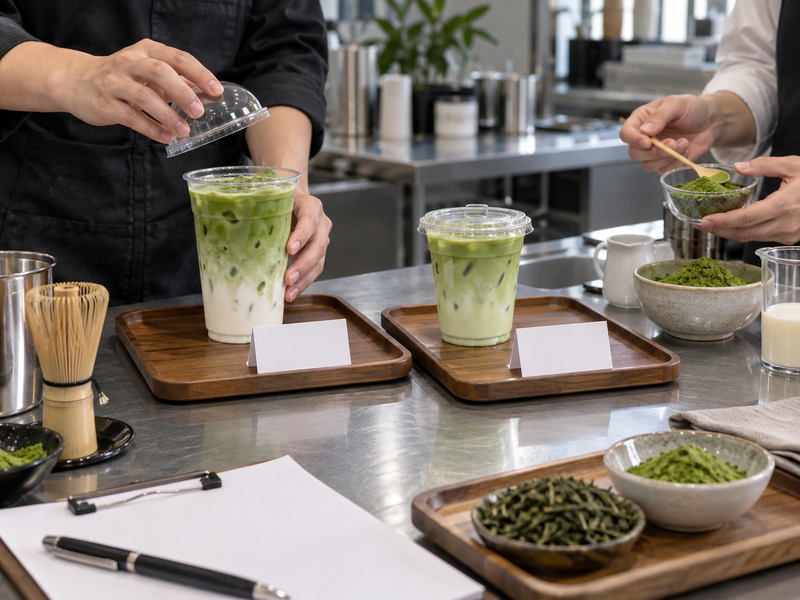
Use a report that names the product, recipe or pack version, sales channel and cost scope. Show net sales, included costs, remaining contribution and the reason for changes since the previous review. Trace differences to prices, portions, yield, fees or order mix. If the model relies on estimates, mark them and give each a check date. A total percentage alone cannot tell the team what action to take.
The Restaurantware article on matcha latte economics discusses ingredients, labor, packaging and pricing decisions. Its illustrative business outcomes should not be adopted as expected results for your operation. Use your own invoices, approved preparation and sales records. Assign the next action to the cause you identified: request a comparable quote, repeat a portion trial, review a channel fee or revise a purchase. Keep the prior calculation for comparison and record when the new one takes effect. That makes the report usable by purchasing, operations and finance.
| Report field | What to record | Action supported |
|---|---|---|
| Product version | Powder, recipe or pack | Valid comparison |
| Cost scope | Included cost categories | Meaning of percentage |
| Change reason | Price, yield or channel difference | Named follow-up |
Cost one current product using its approved preparation and actual net sales. Reconcile ingredient use and channel expenses, then name the cost change you will investigate. Request a Matcha Village quote with the application and pack requirements needed for a valid powder comparison.
FAQ
Q1: Is gross margin the same as operating profit?
No. Operating profit includes operating expenses beyond the costs used in gross margin.
Q2: Why does markup look larger than margin?
Markup divides the price-cost difference by cost; margin divides it by sales revenue.
Q3: Can the cheapest powder deliver the best margin?
Only if its dose, usable yield, product acceptance and route costs support that result.
Q4: Should rejected drinks be counted?
Yes. Record them separately so ingredient consumption and preparation problems remain visible.
Q5: Can a profitable order create a cash shortage?
Yes. Stock and supplier payments may be due before the customer pays.