
A matcha business plan connects customer demand, product choices and cash requirements in one operating model. Ambitious sales targets alone give buyers and managers little guidance. Build the plan around recorded assumptions, channel costs and decision dates so the team can see what must happen before expanding supply.
Table of contents
- What decisions should a matcha business plan support?
- How should you describe the customer and sales channel?
- How can demand scenarios avoid false precision?
- What should the revenue model measure?
- How should product costs be built into the plan?
- How much working capital does the plan require?
- What operating capacity must support the forecast?
- How should supply and commercial risks be modeled?
- What evidence should accompany a funding or partner review?
- How often should the matcha business plan be revised?
1. What decisions should a matcha business plan support?
State the investment question
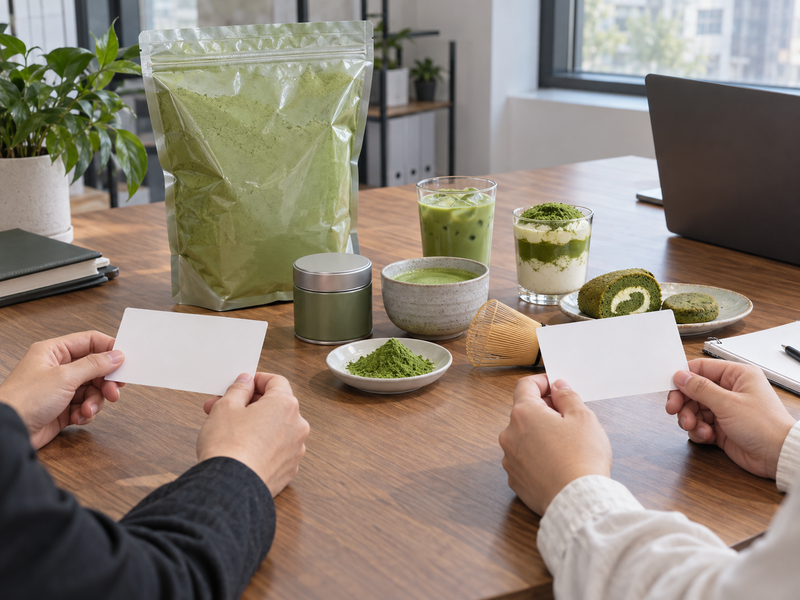
Start with the decision the plan must support. You might be choosing between retail packs and café ingredients, opening a new distribution territory or deciding whether a product line deserves more working capital. Each question changes the evidence you need. Write the proposed commitment, its timing and the person who can approve it. Then identify the conditions that would lead to a smaller commitment or a hold. This keeps the document useful when actual results differ from expectations.
Separate a planning assumption from a confirmed fact. A quoted product cost can be traced to a supplier and validity date. Sales estimates may come from buyer conversations and need a confidence note. A future packing capacity may depend on equipment or a partner that has not been approved. Do not present these inputs with equal certainty. Your matcha business plan should expose the unresolved assumptions that can change the decision. Give each one an owner, a check date and a defined consequence if it remains unconfirmed.
2. How should you describe the customer and sales channel?
Model distinct purchasing patterns
Describe customers through their buying behavior. Café accounts reorder ingredients as service consumes them. Retail buyers may order for a promotion or a shelf reset. Manufacturers may purchase against production schedules and technical approvals. Record order frequency, likely pack format, sales process and payment arrangement for each channel. These are proposed assumptions until supported by your own records. Avoid using a consumer audience description as a substitute for identifying the business that places the order.
A hypothetical brand serving cafés and retailers should build separate channel schedules. The café schedule might track sample review, first order and refill. Retail schedules might track pack approval, listing review and replenishment. Combining them into one average hides the workload and timing. A slow retail approval can delay revenue while packaging bills still arrive. Use channel records to show who advances each sale and when demand can become a purchase. That gives your matcha business plan a more credible basis than treating every interested buyer as an immediate account.
| Channel | Purchase trigger | Planning input |
|---|---|---|
| Café | Ingredient consumption | Reorder pattern |
| Retail | Listing and stock review | Approval and replenishment dates |
| Manufacturer | Production schedule | Technical release and run timing |
3. How can demand scenarios avoid false precision?
Use a small set of explicit assumptions
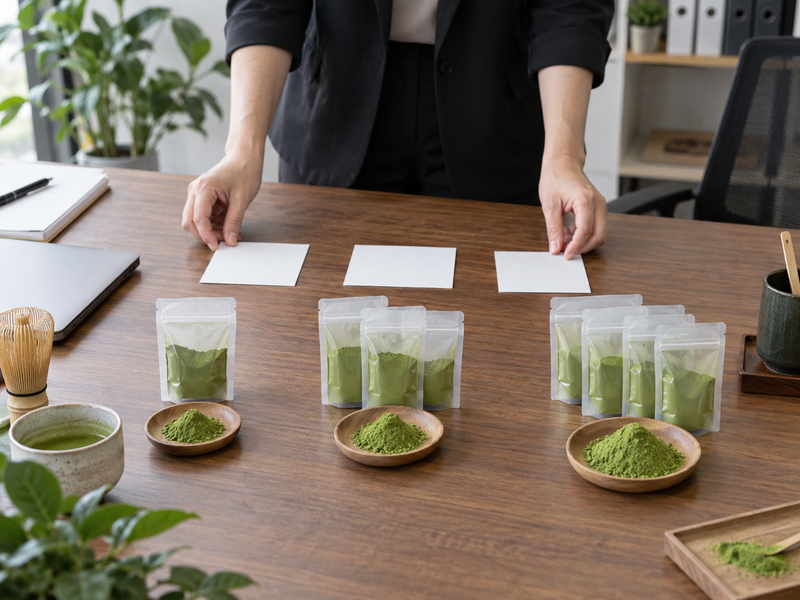
Build low, base and higher demand scenarios from the same inputs. Change the number of active accounts, order frequency or quantity per order rather than writing three unrelated revenue totals. Explain why each input changes. If you have no operating history, use customer evidence and a bounded pilot to narrow the range. Label the result as a planning scenario. An estimate can guide a decision without pretending to be a market forecast.
For a hypothetical café ingredient business, the base scenario could assume a named group of prospective accounts progresses through sampling and first orders. The low scenario could assume fewer approvals or slower reorders. Higher scenarios could assume more active accounts, while still recognizing the time needed for support and supply. Connect every scenario to stock and cash requirements. Higher sales may require earlier purchases and more delivery work before customers pay. A useful matcha business plan shows that consequence explicitly. Review the scenario inputs when a pilot produces new evidence instead of defending the original projection.
4. What should the revenue model measure?
Forecast recognized sales and realized price
Build revenue from saleable units and the net price you expect to receive. Identify whether a unit is a bag, a retail pack, a case or a kilogram. Keep unit conversions visible. If a distributor buys cases while your stock system tracks bags, document how those quantities connect. Record discounts, credits and expected returns where they belong. List prices cannot describe realized revenue when channel terms reduce what your business receives.
Keep order bookings, shipments and payment receipts in separate schedules. A buyer may confirm an order before shipment and pay later. Those events affect operations and cash at different times. Define which event your revenue model uses and make the cash model follow the actual payment arrangement. For a hypothetical new brand, a deposit-supported order can help fund production, but the deposit should still appear in the correct period. A matcha business plan becomes easier to review when managers can follow one planned sale from customer commitment through stock movement and cash collection.
| Event | What it records | Schedule |
|---|---|---|
| Order confirmed | Customer commitment | Sales pipeline |
| Product shipped | Physical order movement | Delivery plan |
| Payment collected | Cash received | Cash calendar |
5. How should product costs be built into the plan?
Use the product and process you expect to sell
Cost each planned product in its commercial form. A bulk powder quote needs packaging, transport and handling context. Branded retail items may include components, filling and artwork-related spending. A blend requires the complete formulation and process cost. Ask which expenses scale with units and which occur per run or per order. Attach source dates to the inputs so a manager can see whether the model still reflects current quotations.
Include usable yield in the calculation. Purchase weight does not automatically equal saleable output when trial losses, filling differences or rejects occur. Use actual pilot observations once available. Until then, show the yield assumption and test how a less favorable outcome affects unit cost. The matcha price per kg guide offers purchasing context, while your plan should use quotes for the proposed product. If a packaging option changes, recalculate the whole finished-unit cost. Updating only powder cost leaves the model inconsistent with the offer your sales team is presenting.

6. How much working capital does the plan require?
Map payment timing against stock commitments
Working capital planning starts with timing. Record deposits, balance payments, component purchases, freight bills and customer collections in the periods when cash moves. Include inventory already paid for but not yet sold. If you commit to packaging components for several runs, the cash exposure may arrive before the corresponding product revenue. Make that commitment visible even if unused components remain with a packing partner.
A hypothetical brand could show a profitable product and still face a cash shortage when an order must be paid before its previous customers settle invoices. Compare the cash calendar across demand scenarios. A higher sales scenario may increase the shortfall if procurement accelerates faster than collections. Identify the point at which another order depends on a deposit, payment collection or approved financing. Avoid treating an unsigned funding plan as available cash. The matcha business plan should tell the team which purchases it can authorize under present conditions and which require another decision.
| Cash event | Planning question | Evidence source |
|---|---|---|
| Supplier deposit | When must funds leave? | Dated quote or agreement |
| Component commitment | What remains payable? | Packing proposal |
| Customer collection | When should funds arrive? | Agreed payment terms |
7. What operating capacity must support the forecast?
Connect growth with ordinary work
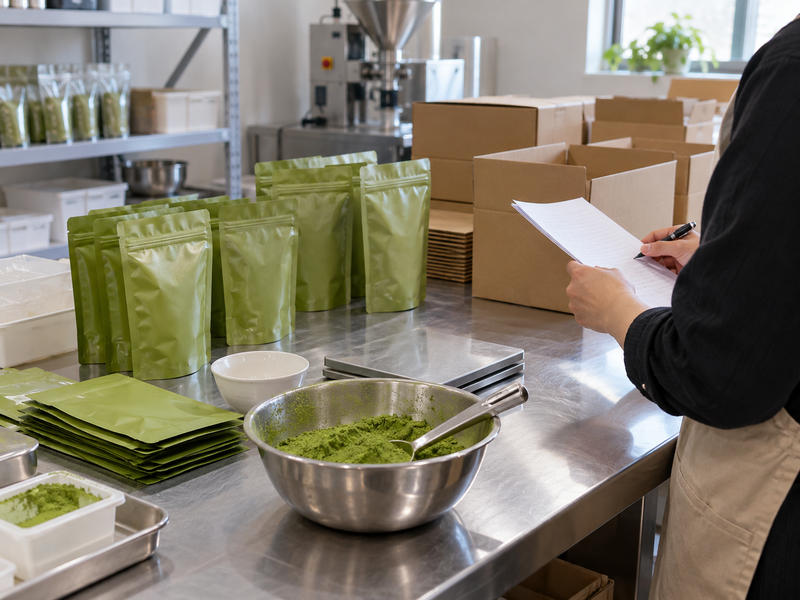
Forecast the tasks needed to deliver the planned volume. Count sample requests, technical reviews, packing runs, order handling and customer support, rather than focusing only on kilograms purchased. A product line with several small accounts can create more administrative work than one manufacturing customer buying the same weight. Identify the person or partner responsible for each task and the point at which more capacity would be required.
Check storage, pack handling and distribution against the product range. A new format may change receiving space, picking time and component inventory. Entering a new destination may change document review and logistics coordination. The matcha private label article can support discussion of branded product responsibilities. Matcha Village supplies bulk ingredients and supports OEM and private label formats. Request a proposal for the products included in your plan. Put external dependencies beside internal capacity. If a partner has not confirmed a packing slot or deliverable, keep that item open rather than allowing projected revenue to imply confirmed operating readiness.
8. How should supply and commercial risks be modeled?
Assign an observable trigger and a response
Write risks as events that change a decision. Examples include an unapproved substitute product, a delayed packing slot, a lower reorder rate or a customer paying after the planned date. Give each event an observable trigger. A vague entry such as supply risk tells the team little about when to act. Link the trigger to a practical response and the person authorized to choose it. Keep the response proportional to the product and order affected.
Separate preventive spending from contingency spending. Maintaining an approved alternative sample may be a planned development cost. Expedited delivery after a delay may be a contingent expense. Include both in the model where they can affect cash. For a hypothetical branded range, slower sell-through could trigger a smaller next packing run rather than another promotion funded without review. Your matcha business plan should show how the team can reduce its commitment when evidence weakens. A contingency that requires an untested supplier or unapproved label change needs work before it can become a usable response.
| Trigger | Proposed response | Decision owner |
|---|---|---|
| Slower reorder pace | Reduce next stock commitment | Commercial manager |
| Packing delay | Review launch date and format | Operations owner |
| Late collection | Hold dependent purchase | Finance owner |
9. What evidence should accompany a funding or partner review?
Make the model traceable
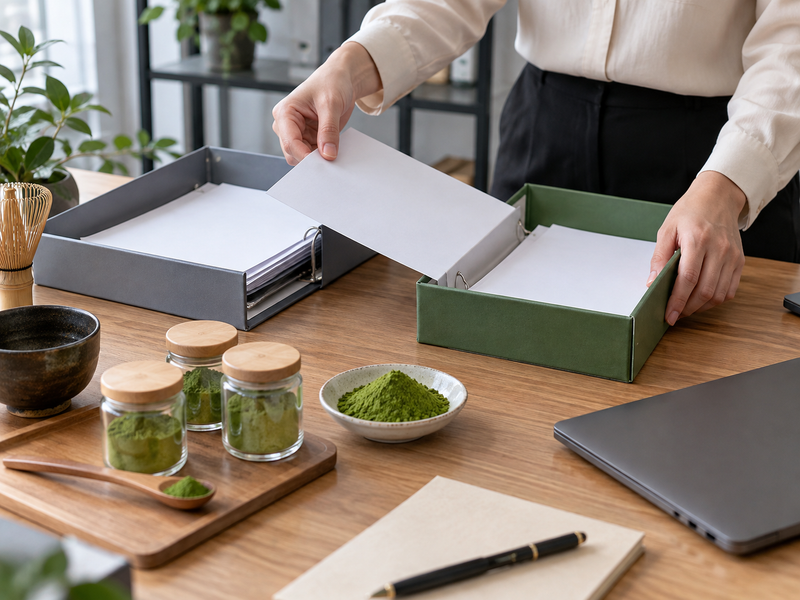
Attach evidence that allows another person to check the proposed commitment. Useful items include dated quotations, trial results, confirmed orders, channel conversations and a versioned cash schedule. Show where the evidence ends. A verbal expression of interest should not become a signed order in the appendix. Product samples should not imply a guaranteed annual allocation. A quote for one pack format should not silently support a different retail item.
The AnbanTea business startup guide covers sourcing, branding, sales routes and financial planning. These categories provide a starting structure; its product descriptions and assurances remain seller-specific. Your matcha business plan should contain your own commercial evidence and clear assumptions. Give reviewers a concise decision sheet showing requested funds or commitment, expected use and the conditions for release. If the plan depends on unresolved product or channel approvals, list them beside the request. This allows a partner to review a concrete proposal without filling gaps with optimistic assumptions.
10. How often should the matcha business plan be revised?
Set review events that match decisions
Choose review dates around real decisions, such as the end of a pilot, a new quote, a packing commitment or a channel launch. A calendar review can help, but it should not delay action when a major input changes. Compare actual results with the assumptions that produced the forecast. Trace the difference to account conversion, order frequency, realized price, yield or payment timing. Revising the cause makes the next forecast more useful than changing its total revenue figure alone.
Keep old versions with dates and decision notes. They show which assumptions were available when spending was approved. Update the current operating schedule and tell owners which actions changed. If a lower demand scenario becomes more likely, revise purchases before excess stock grows. When repeat orders increase, confirm supply and cash capacity before releasing more spending. End each review with a decision, an owner and a date for the next evidence check. This keeps the matcha business plan connected to purchases, customers and cash rather than becoming a document prepared once for an investor meeting.
| Review event | Input to update | Resulting action |
|---|---|---|
| Pilot ends | Repeat demand and yield | Revise next order |
| Quote changes | Product and delivered cost | Recalculate unit economics |
| New channel opens | Approval and payment timing | Update cash calendar |
Write the decision request and cash calendar before polishing the plan. Mark every unresolved assumption, then assign the trial, quotation or customer check that can resolve it. Use the current version to authorize only the product and stock commitments it supports.
FAQ
Q1: Is a matcha business plan only for investors?
No. It also guides product commitments, stock purchases, capacity and cash decisions.
Q2: Can a new brand forecast without sales history?
Yes, using labeled scenarios and customer evidence, then revising assumptions after a bounded pilot.
Q3: Should wholesale and retail use one sales forecast?
Model their order and payment patterns separately before combining the totals.
Q4: Does profitability guarantee enough cash?
No. Supplier payments and inventory commitments can occur before customers pay.
Q5: What should change after the pilot?
Update conversion, repeat orders, product yield, costs and payment timing with observed results.