
Wholesale matcha for cafes should be chosen through the drinks, equipment and routines that staff will use during service. A buying decision made from powder color alone can leave branches adjusting doses, changing milk ratios or discarding unfinished preparation. A cafe operations manager needs an ingredient and a method that can be repeated across shifts.
Start with a limited menu trial, record the quantities and preparation steps, then connect the result to pack size and replenishment. The method below is a proposed operating plan. Supplier prices, minimum orders and storage instructions need confirmation for the product you actually buy.
Contents: 1. Which menu items should the cafe trial cover? | 2. How do you request wholesale matcha for cafes? | 3. How should the cafe compare wholesale matcha samples? | 4. How do you test preparation during a busy shift? | 5. Which pack size fits branch operations? | 6. How can multiple branches reproduce the approved drink? | 7. How should the cafe forecast its matcha requirement? | 8. What should a branch do when a new lot tastes different? | 9. What should be checked before rolling out a replacement? | 10. What should the cafe send with its next order?
1. Which menu items should the cafe trial cover?
Start with the drinks that drive use
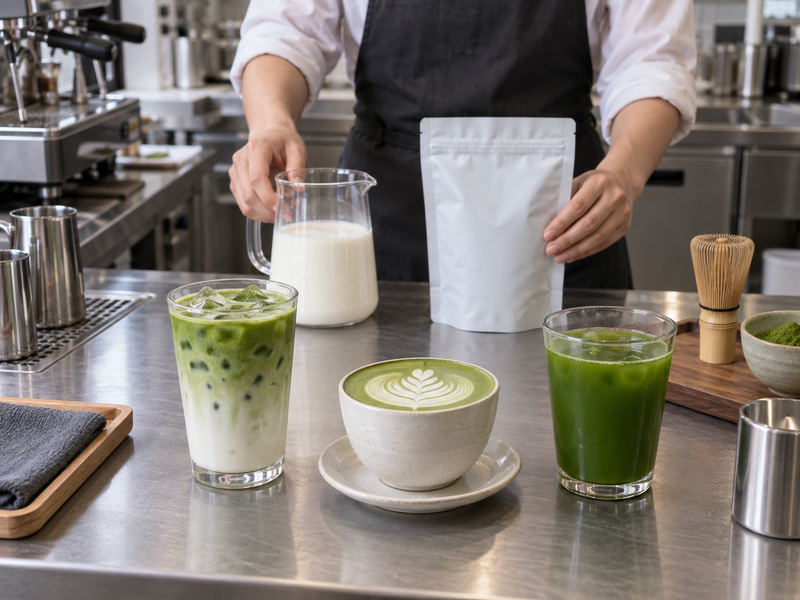
List the matcha drinks the business intends to sell and identify which ones are expected to account for most powder consumption. Select representative preparations for evaluation. A straight drink, an iced milk drink and a flavored drink may reveal different application needs, but a cafe with only one planned item should focus its trial on that item.
| Menu variable | Fix for the comparison | Record separately |
|---|---|---|
| Cup size | Approved serving format | Alternate sizes |
| Milk | Exact product and quantity | Other milk options |
| Sweetener | Type and measured amount | Customer modifications |
| Matcha | Candidate code and dose | Supplier and lot identity |
Describe what the customer should notice: tea intensity, sweetness balance, mouthfeel and appearance. Give the trial team language that relates to the menu. A description such as better matcha tells purchasing little about why one sample fits.
Keep seasonal additions outside the core approval unless they materially affect ingredient selection. A fruit syrup that appears briefly on the menu should not determine the main supply decision without a clear volume or brand reason.
2. How do you request wholesale matcha for cafes?
Send operational information with the inquiry
Tell the supplier the planned drinks, current preparation equipment, working pack preference and expected ordering pattern. Separate an opening forecast from actual sales history. A new cafe can ask for sample and trial-order options without presenting a guessed annual volume as a commitment.
Matcha Sense’s cafe sourcing article discusses menu trials and supplier questions. Its quoted prices, storage periods and statements about particular origins are specific claims that should not become your purchasing assumptions. Ask each supplier for its own current product and commercial information.
Include receiving details that can affect delivery: whether one central location or several branches receive stock, whether deliveries require appointments and who checks documents. Ask the supplier to identify the product code behind each sample and whether the same code is available for routine supply. If a supplier proposes a blend instead of pure matcha, request its composition and assess how the change affects the recipe and menu description before tasting it as an equivalent option.
3. How should the cafe compare wholesale matcha samples?
Use one preparation card per drink
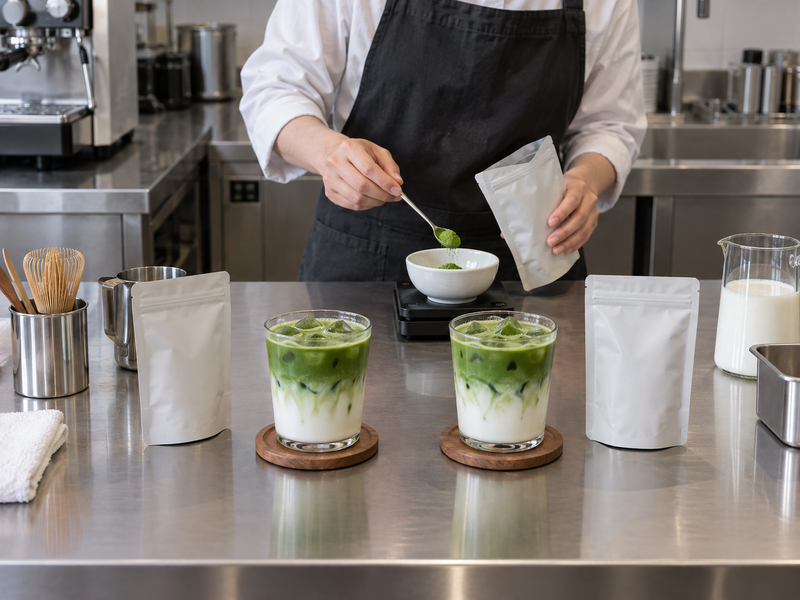
Write a preparation card with measured ingredients, equipment, mixing sequence and serving format. Have one staff member prepare coded candidates while other reviewers record observations independently. Keep the original sample identity with the coordinator. The cafe can then compare the drink without making the supplier name part of the tasting result.
| Observation | How to compare | Useful note |
|---|---|---|
| Tea presence | Same milk and sweetener | Clear or obscured |
| Texture | Same mixing method | Clumps or smooth dispersion |
| Finish | Same tasting sequence | Specific aftertaste |
| Appearance | Same light and cup | Visible difference |
Ippodo’s matcha latte preparation gives a defined dose and liquid quantities for its recipe. Treat that as one producer’s preparation, not a universal cafe formula. Your accepted method should fit the drink size and ingredient combination you sell.
Repeat promising samples with another trained operator. Save preparation errors instead of quietly correcting them between candidates. If one powder requires a different method, test that method separately and record the extra work before deciding whether the improvement fits service.
4. How do you test preparation during a busy shift?
Observe the complete task
Run a controlled service rehearsal using the station layout and equipment that staff will use. Time the complete task from retrieving ingredients to handing off the drink, including cleaning and resetting. A fast whisking demonstration does not measure how long staff spend opening pouches, finding a scoop or remaking a drink with visible lumps.
Have operators note where the method is difficult to repeat. The scale may be poorly positioned, the sifter may be hard to clean or the working container may hide the lot identity. Change one part of the method at a time so the team can identify which adjustment helped.
If the cafe proposes preparing a base in advance, have its food-safety lead review the process, holding conditions and permitted use period for that recipe. Do not borrow a shelf-life claim from dry matcha and apply it to a liquid preparation. Validate the selected service method before including it in a purchasing forecast. Keep the accepted station instructions short enough that a new shift can use them without oral corrections.
5. Which pack size fits branch operations?
Compare usage with opened-pack handling
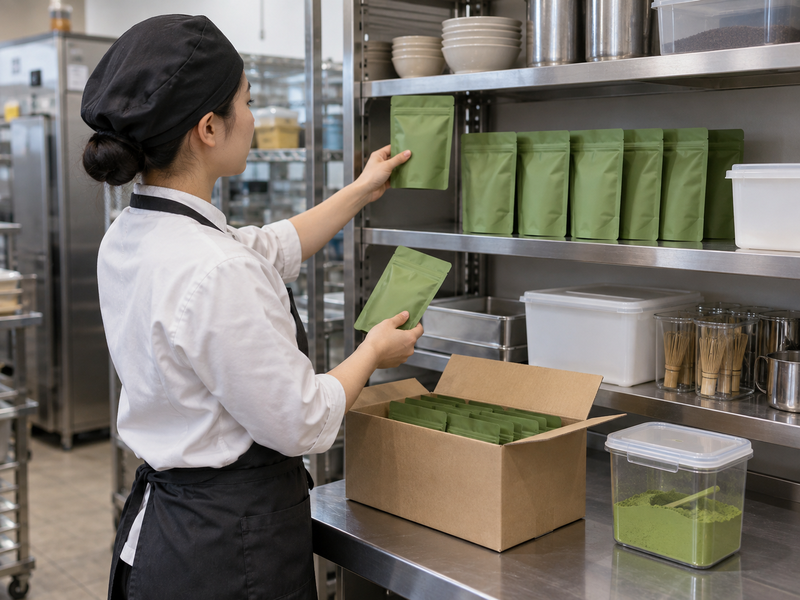
Measure how much powder a branch uses under the approved recipe and compare that with the proposed working pack. The shipment quantity and inner-pack size are separate decisions. A chain may buy one consolidated order while distributing sealed units that fit each branch’s use.
| Branch condition | Pack question | Trial to perform |
|---|---|---|
| Low matcha use | How long is a pack open? | Track actual consumption |
| Limited storage | Where will sealed stock fit? | Check cartons on site |
| Several stations | Who controls working stock? | Reconcile transfers |
| Frequent handling | Is closure practical? | Observe end-of-shift routine |
Review the supplier’s storage instructions and pack information with operations. Ask how staff will identify the opening date, lot and remaining quantity. If powder moves into a working container, define how that information remains available and how the container is cleaned under the cafe’s procedures.
Use the matcha storage discussion to prepare handling questions, then confirm the product-specific instructions. A larger pouch is useful only if its lower purchasing or handling cost fits the cafe’s actual consumption and approved storage practice.
6. How can multiple branches reproduce the approved drink?
Test variation before launch
Send the same identified trial material and preparation card to representative branches. Ask each location to record its water source, milk product, equipment and any departure from the central method. Compare results with those differences visible. A branch complaint about weaker matcha may reflect a different cup fill or milk quantity rather than a changed ingredient.
Have the central team decide which variables must stay fixed and which can vary within the menu. If a branch lacks the required equipment, adjust the operating plan before sending stock. A method that succeeds only with one trainer standing beside the bar is not ready for a chain rollout.
Keep a version number on the preparation card and withdraw outdated versions when the method changes. Include photographs of the expected station arrangement or completed drink where they help training, but do not use edited images as proof of a product’s actual color. Assign a branch contact to record problems during the initial service period and give that person a clear route for sending usable observations.
7. How should the cafe forecast its matcha requirement?

Start with measured recipe use
Calculate planned powder use from the drink mix and approved dose, then add separately measured preparation losses and other authorized uses. Keep launch estimates distinct from actual sales. If pastries use the same stock, give them their own consumption line so the beverage forecast does not absorb unexplained withdrawals.
| Forecast input | Source | Treatment |
|---|---|---|
| Drink count | Sales or stated launch estimate | Separate by menu item |
| Dose | Approved preparation card | Use measured grams |
| Other use | Kitchen or training record | Record separately |
| Loss | Observed waste log | Show method and period |
Convert planned grams to kilograms after adding the item-level use. Compare the result with sealed stock, approved incoming orders and the supplier’s confirmed schedule. Keep held or unidentified material outside usable stock.
Review the forecast after menu changes, promotions and branch openings. Ask the supplier what portion of the forecast is planning information and what requires a firm order. Do not buy a large quantity solely to reach a price tier until operations confirms that the pack and use plan remain acceptable.
8. What should a branch do when a new lot tastes different?
Check identity and preparation together
Ask the branch to retain the pack identity and record the drink, dose, milk, water and preparation method used. Compare the new lot with an appropriate retained reference under the same method where available. A description such as less green is easier to investigate when photographs use the same lighting and cup.
Check whether the difference follows the powder across operators or occurs only at one station. Record the outcome without using extra sweetener or a larger dose to hide the problem during the investigation. Any recipe adjustment should receive product approval and a revised cost check.
If the observation suggests a quality concern, follow the cafe’s hold and escalation procedure. Purchasing should contact the supplier with the product code, lot, delivery reference and evidence. Keep the technical decision separate from the commercial remedy, then connect them in the order record. Branch staff need a clear instruction about what they may serve while the issue is unresolved and which approved alternative, if any, is available.
9. What should be checked before rolling out a replacement?
Treat a substitute as a changed ingredient
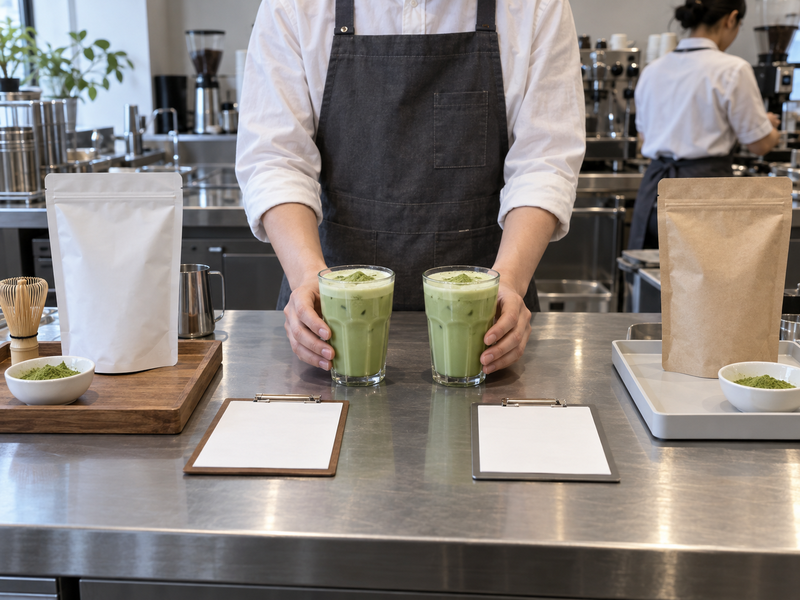
A substitute may require a different dose, mixing method or menu description. Compare it against the approved drink and document those differences before sending it to every branch. Keep the original and replacement product codes visible on the transition plan so staff do not combine them casually in one working container.
| Rollout item | Confirmation needed | Responsible team |
|---|---|---|
| Drink performance | Accepted trial method | Product development |
| Preparation | Current card and training | Operations |
| Pack identity | Correct stock and lot | Warehouse and branches |
| Cost | Revised measured use | Finance and purchasing |
Plan how the branch finishes existing approved stock and starts the replacement. A dated changeover can help interpret feedback and reconcile consumption. If different branches change at different times, record the dates rather than treating the chain as one simultaneous event.
Ask the supplier whether the replacement is temporary or intended for continuing supply. Approve only the scope demonstrated by the trial. A temporary successful lot should not become an unrestricted product substitution through repeated emergency orders.
10. What should the cafe send with its next order?
Make the reorder match the approved operation
Include the product code, specification or approved reference, inner-pack size, required quantity, delivery location and requested arrival window. Ask for lot-related documents and advance notice of changes covered by the supply agreement. Record the order confirmation where branch operations and purchasing can both retrieve it.
Use recent service observations to improve the next cycle. If a pack was difficult to close or a branch repeatedly overfilled the scoop, address that operating issue before blaming the purchasing price for excess consumption. Keep the measured loss and preparation records attached to the relevant recipe version.
Prepare a cafe trial brief containing one representative drink, its measured preparation card, branch handling constraints and the proposed repeat requirement. Send that brief with your sample request, then schedule a service rehearsal and branch review before approving routine wholesale supply.
FAQ
Q1: Can a cafe use one matcha for every drink?
It can if each planned drink passes its application review. Evaluate the operational benefit of one ingredient against any required recipe changes or compromises in the menu.
Q2: Should staff use a scoop instead of a scale?
Decide after checking dose variation with the actual powder and scoop. A volumetric measure needs a defined filling method and periodic checks against measured mass.
Q3: Can branches share opened pouches?
Use only a transfer process approved by operations and quality. Preserve lot identity, handling records and storage conditions rather than moving unmarked powder between locations.
Q4: Should complimentary drinks enter the forecast?
Yes. They consume powder even when sales revenue is zero. Record promotions, staff drinks and training separately so purchasing can explain the difference from paid drink counts.
Q5: How should customer feedback affect supplier choice?
Group specific comments by drink, branch and product lot where possible. Check the preparation before changing the ingredient, then use controlled trials to evaluate a proposed replacement.