
A matcha mocktail can give a cafe or restaurant a distinctive alcohol-free drink, but a pretty first pour will not keep it on the menu. Tea flavor must survive fruit and sweetener, staff need a method they can repeat, and the ingredient list must match what the business promises. Use the ten checks below to move from a one-off kitchen idea to a measured service recipe that behaves in a real glass.
Contents: Audience · Base · Balance · Texture · Garnish · Batching · Service · Claims · Cost · Launch
1. Who Is the Matcha Mocktail For?
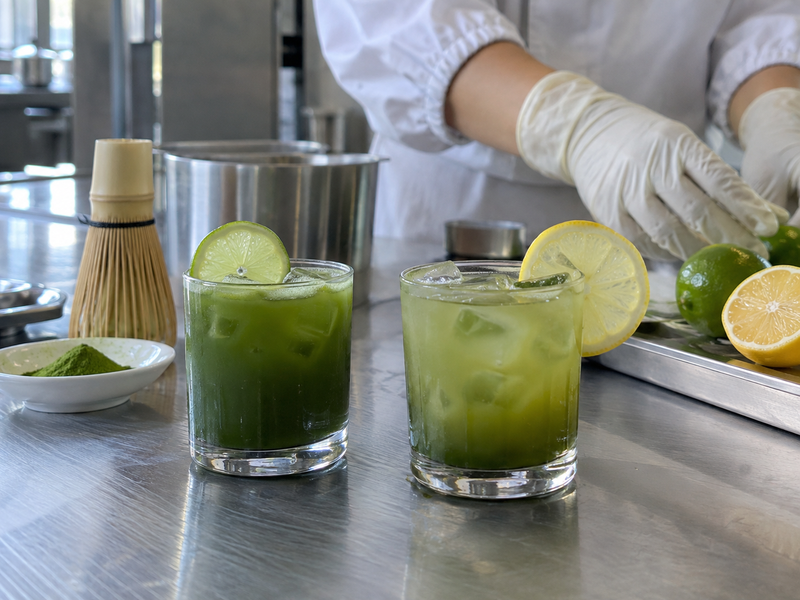
Decide what the guest is ordering
An alcohol-free option can serve different needs. One guest wants a tart drink that feels like an aperitif; another wants something closer to iced tea. A matcha mocktail should not be a latte poured into a cocktail glass. Define the occasion, serving size and expected sweetness. A restaurant may need a drink that pairs with food, while a cafe may want a bright afternoon special. The brief should name the strongest flavor after matcha and the intended level of tea bitterness. That decision guides every ingredient choice that follows.
Order the finished drink yourself. If staff cannot describe it in one natural sentence, the recipe may be trying to do too much. “Matcha, lime and mint over ice” gives a clear expectation. A long list of fruit purees, syrups and powders makes it harder for the tea to register. Build one simple reference before developing a seasonal variant. Serve it in the actual glass with the planned ice. A drink that tastes concentrated from a tasting spoon may be thin after five minutes in a tall glass.
2. Which Matcha Base Should You Start With?
Test powder in the final recipe
A powder chosen for straight matcha can be wasted under strong citrus; a powder chosen only for price can leave a harsh finish. Ask for two or three supplier samples and mix each with the same water, sweetener and acid. Compare tea aroma, green color and residue after the drink sits. Write down the lot identity for the winner. If the venue already uses a matcha powder for another menu item, test that first. One stock keeping unit simplifies purchasing, but it should earn its place in the mocktail rather than win by default.
Keep the base flexible until tasting. A fresh powder slurry gives control over sweetness. A prepared matcha syrup may speed service but changes the sugar balance. The syrup route may be useful for a busy multi-site operation if the product can be handled under its approved storage plan. For a small cafe, freshly mixing a measured powder dose may be simpler. Compare the time, waste and flavor of both routes, then make the station card reflect the one actually chosen.
| Base option | Service advantage | Watch for |
|---|---|---|
| Fresh powder slurry | Flexible sugar and dose | Clumps and extra preparation time |
| Prepared matcha base | Fast, repeatable pour | Storage and settling |
| Sweetened syrup | Single measured ingredient | Limited sugar flexibility |
3. How Should Acid, Sweetness and Tea Balance?
Change one variable at a time
Start with a measured matcha base, then add a small amount of citrus or another acid component. Taste before adding sweetener. Acid can make a drink feel sharper and may change the look of green tea in a clear glass. Sweetener can soften that edge but can also bury matcha. Make three numbered cups with the same powder dose and different acid levels. Select the best acid level, then repeat with different sweetness levels. This sequence produces a useful answer; changing both at once does not tell the team which adjustment helped.
Finish the whole glass. The first sip may be cold and bright. As ice melts, bitter notes or excess sweetness can become obvious. Ask tasters to record the start, middle and finish. A mocktail intended to accompany a meal should leave the palate ready for food. If a fruit puree makes the drink too thick, consider a clear juice or infusion instead. Keep ingredient names and amounts in the development sheet. “A squeeze of lime” is not a repeatable measure across shifts.
4. What Texture Should the Drink Have?
Observe particles, ice and bubbles
Matcha consists of fine leaf particles, so it does not become a clear solution. That is acceptable in a cloudy mocktail but can look like a fault if the menu photo promises transparent green liquid. Make the drink in a clear glass and watch for floating specks, a bottom layer and foam along the rim. A brief preblend in still liquid usually gives more even dispersion than dropping powder onto ice. If sparkling water is part of the recipe, add it after the matcha base and pour with enough space for foam.
Use the same glass each time. Shape changes how quickly ice dilutes a drink and how visible sediment becomes. A tall glass encourages long sipping; a smaller stemmed glass can make a tart serve feel more deliberate. Test both with the same recipe before picking a photograph for the menu. If the drink needs a vigorous shake immediately before serving, train staff and specify the shaker. If the texture falls apart within minutes, reformulate rather than relying on a garnish to hide it.
| Observation | Check during the trial | Possible response |
|---|---|---|
| Clumps | Dry cores in the first sip | Wet powder before the main mix |
| Sediment | Bottom layer after normal wait | Revise dose or dispersion |
| Excess foam | Lost serving volume | Change pour order |
| Rapid dilution | Weak finish | Adjust ice or serving size |
5. Which Garnish Adds Something Useful?
Keep it edible, relevant and manageable
Lime, mint, cucumber or a small fruit piece can signal flavor before the guest tastes the drink. The garnish should match the recipe; a bright berry garnish on a drink with no berry flavor can mislead. It also needs a sensible preparation plan. A delicate herb that wilts within an hour creates waste. A large fruit skewer may make the glass awkward to carry. Cost and labor belong in the garnish decision as much as appearance does.
Photograph the service version. Build the drink as a barista would during a busy shift, then take a picture in the venue’s real lighting. If the garnish only looks good under a studio lamp, simplify it. Where allergens or dietary claims matter, review every garnish and syrup ingredient, including premixed components. A mocktail sold as alcohol-free should be checked for ingredients such as some bitters or extracts that may contain alcohol. Menu language should describe the actual recipe, not a loose impression.
6. Can Any Part Be Prepared Ahead?
Separate safe preparation from quick assembly
A measured matcha base can reduce service time, but its handling needs a documented method. Decide who makes it, how it is labeled internally, how long it is held under the venue’s food-safety plan and how it is mixed before use. Do not adopt a shelf-life claim from a home recipe. Citrus juice, fruit puree and herbs may have different preparation schedules. Keep components separate if combining them early changes color or flavor. A well-designed mocktail may require only a base and a final mixer at the bar.
Run a short rush simulation. Make several orders back-to-back with one person and the real equipment. Count missed measures, spills and cleaning steps. If the mocktail takes longer than the rest of the drink menu, decide whether that price and customer experience justify the time. Prebatching can help, but a complex batch that settles or spoils creates a different problem. Record the approved assembly order so sites do not invent their own shortcut.
| Component | Prepare ahead? | Decision depends on |
|---|---|---|
| Dry matcha dose | Often practical | Moisture protection and accurate portions |
| Wet matcha base | Possible under a defined plan | Storage and redispersion |
| Citrus component | Venue procedure | Freshness and flavor change |
| Garnish | Limited preparation | Appearance and waste |
7. How Will Staff Repeat the Recipe?
Give the station a measured card
List powder weight, base liquid, acid, sweetener, mixer, ice and garnish. Then specify the preparation order in verbs: disperse, add, shake or stir, top and serve. Use a pump or graduated tool only after confirming its real output. A bar spoonful is not a precise powder dose. Place the card where the drink is made, and keep a photo of the approved result. Ask a new staff member to follow it without verbal coaching. Any question they ask identifies a gap in the instructions.
Compare two operators. Make a pair of drinks and place them side by side. Differences in color, volume or taste are useful feedback. Perhaps one operator stirred longer or another filled ice first. Fix the method or tool rather than accepting variation as inevitable. For a chain, test with the ingredients each site actually receives. A recipe that depends on one brand of sparkling water or fruit puree should name it, or specify measurable alternatives.
8. What Should the Menu Say About Ingredients?
Describe the drink without stretching the claim
Guests should know the core flavors and whether the mocktail contains caffeine. Matcha naturally contains caffeine, but the amount in a finished serving depends on powder dose and the batch. If a business wants to quote a number, it needs reliable data for its own formula. Avoid implying that an alcohol-free drink is caffeine-free. Check every ingredient before making vegan, organic, allergen or alcohol-free claims. A flavored syrup may contain components that change those descriptions.
Keep the copy plain. “Matcha, lime, mint and sparkling water” tells the guest more than a line about calm energy or detox. Include sweetness cues if they help someone order confidently. If the drink can be made less sweet, state how; do not promise that an already sweetened base can be made unsweetened. Marketing can describe flavor and craft without inventing health effects. A clear menu sentence also helps service staff answer questions quickly and consistently.
| Menu claim | Verify before printing |
|---|---|
| Alcohol-free | Every extract, syrup and garnish ingredient |
| Vegan | Bases, sweeteners and processing aids |
| Organic | Certification scope for relevant ingredients and product |
| Caffeine amount | Formula-specific calculation or testing |
9. Does the Price Work at Your Target Margin?
Cost the serve customers actually receive
Calculate powder, fruit, sweetener, mixer, garnish, ice, cup or glass washing, labor and expected waste. If a mocktail uses a premium powder, compare its finished-drink benefit with a less expensive sample. Do not judge only from powder cost per kilogram; the relevant number is cost at the chosen serving dose. A drink with a simple garnish and reliable preparation may earn a better margin than a more elaborate recipe with a similar menu price.
Include the slow hour and the rush. Ingredients wasted during a quiet shift and time lost during a busy one have different costs. Track both in a pilot week. Ask whether customers reorder the drink or only photograph it once. If the mocktail sells well as a seasonal special, keep the formula and supplier records so it can return next year. For a chain, negotiate material volume only after the recipe and serving size are stable; otherwise, a price quote may be built on the wrong powder dose.
10. What Makes a Mocktail Ready for Launch?
Approve a repeatable drink, not a single photo
A launch file can be short: the final formula by weight, powder and other supplier identities, service card, approved glass and garnish, sensory notes, cost worksheet and the handling plan for prepared components. Keep the menu description beside that file. Have a second operator make the drink without the developer in the room. Then taste and inspect it after the time a guest would normally wait. If it still resembles the approved sample, the recipe is ready for a limited menu trial.
Listen to the actual guest. During the trial, ask what people expected from the description and whether the drink delivered it. Feedback about sweetness or tea strength can guide a controlled revision. Avoid a dozen simultaneous changes; update the formula version and retrain staff. A strong matcha mocktail has a recognizable tea taste, a reason for each added ingredient and a service method that survives Friday night.
| Launch item | Owner | Evidence |
|---|---|---|
| Approved powder and formula | Product team | Recorded tasting and dose |
| Handling procedure | Operations | Staff training card |
| Menu description | Marketing | Ingredient and claim review |
| Margin | Purchasing | Real serving cost |
| Trial feedback | Store manager | Orders and customer comments |
FAQ
Q1: Is a matcha mocktail caffeine-free? No. Matcha contains caffeine; the serving amount depends on the powder dose and recipe.
Q2: Can matcha be mixed directly into soda water? Predispersing powder in still liquid usually gives a more controlled pour and fewer clumps.
Q3: Can a matcha mocktail be made ahead? Components may be prepared under a documented handling plan. Check flavor, color and food safety for the exact recipe.
Q4: Which fruit works best with matcha? There is no universal winner. Test one fruit at a time in the finished drink and watch whether it hides tea flavor.
Q5: What should a cafe ask its matcha supplier? Request lot-linked samples, a product specification, quality records and pricing at the expected volume.
For adjacent menu formats, see matcha drinks and matcha without milk. The SERP reference mocktail offers a consumer-scale recipe; this guide focuses on repeatable foodservice operations.