
A matcha making kit should let its user make a good cup without hunting for another tool halfway through the recipe. This matcha making kit guide starts with that simple test. Many boxes include a beautiful bowl but omit powder, or pair a narrow vessel with a whisk that cannot move. Design backward from the drink and the person making it. A home beginner, café team, and professional tea buyer may need different versions.
MATSU’s article on matcha kits makes a useful distinction between a starter kit and an evaluation kit. The checks below turn that distinction into a product brief, sample test, and reorder plan.
Contents
- 1. Who will use the kit and for which drink?
- 2. What must be inside the box?
- 3. Which matcha suits the recipe?
- 4. Does the bowl work with the mixing tool?
- 5. How should the user measure powder and water?
- 6. Is a sifter worth including?
- 7. Can a beginner follow the preparation card?
- 8. What changes for a tasting kit?
- 9. Will the kit survive shipping and storage?
- 10. How will the set be replenished and checked?
1. Who will use the kit and for which drink?
Start with one person and one cup
Write a brief that names a user, a drink, and the place where preparation happens. “New home drinker making an iced latte in a small kitchen” is a useful brief. “Premium matcha lifestyle” tells a supplier almost nothing. The former helps you decide whether a pouring lip, a small sifter, or a storage tin earns space in the box. A café training kit may need a scale, wipe-clean instructions, and replacement whisks. A buyer tasting kit may need several powders and identical cups rather than retail gift packaging.
Ask what the user already owns. If most customers have a kettle and scale, adding cheap copies raises cost without improving the cup. Start here: prepare the intended beverage using only the proposed contents and common household items listed on the package. Any surprise missing piece is a design problem to fix before production.
| User | Drink or task | Kit priority |
|---|---|---|
| Home beginner | Straight matcha or latte | Simple sequence and forgiving tools |
| Café team | Repeatable menu drink | Measured recipe and fast cleaning |
| Retail gift buyer | A complete opening experience | Clear contents and protective packing |
| Wholesale evaluator | Compare candidate powders | Controlled tasting conditions |
2. What must be inside the box?
Separate working parts from optional extras
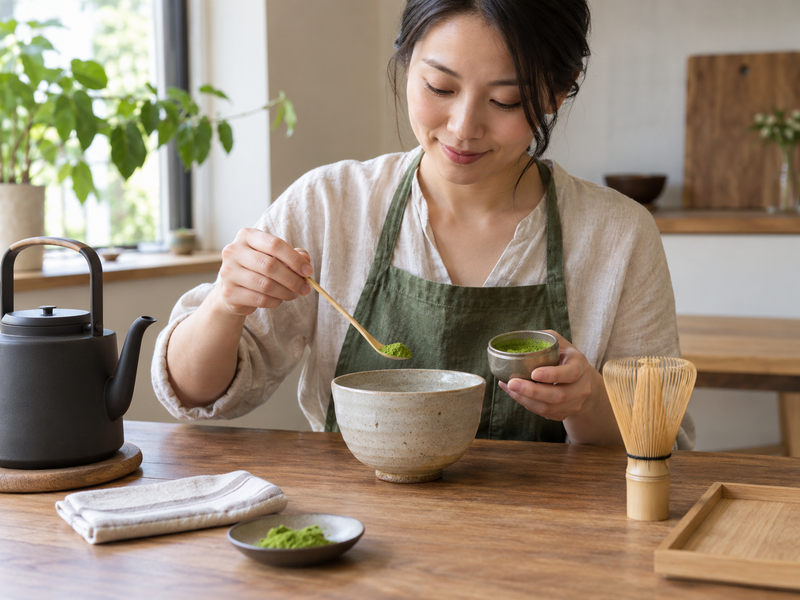
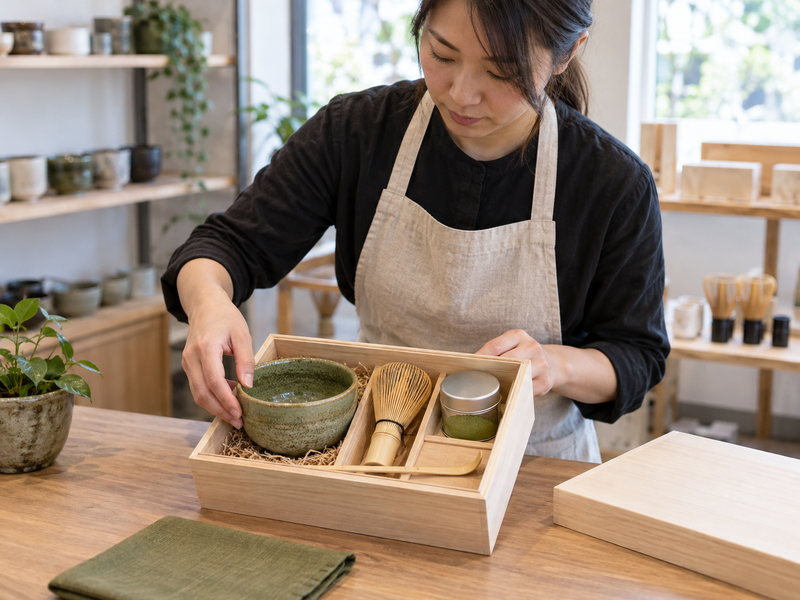
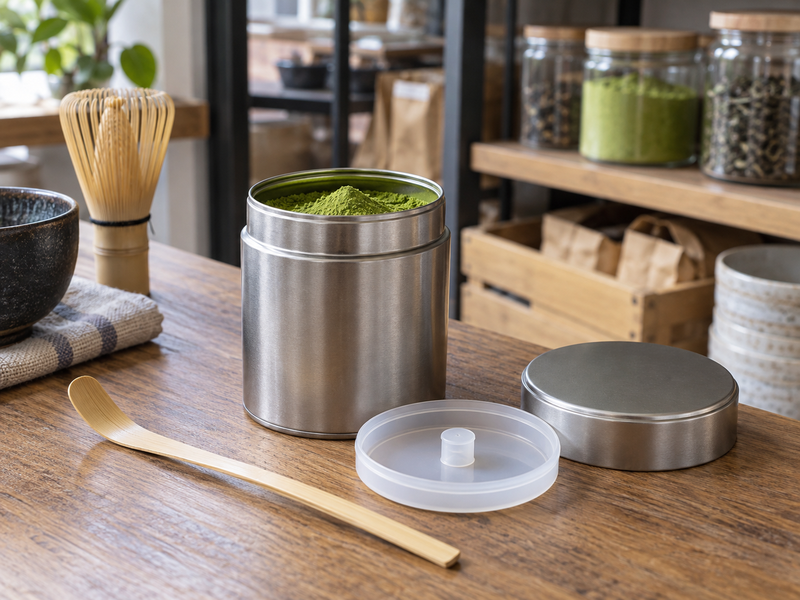
A basic kit needs matcha if it promises an immediately usable cup, a vessel, a mixing tool, and a way to portion the powder. A bamboo scoop helps transfer tea, but it is not a precision measure. A gram scale may be better for commercial recipes, though few gift sets include one. A sifter can help break up dry clumps; a whisk holder may support storage after use. None should appear merely to increase a component count. Check the package copy against the actual tray.
If tea is sold separately, state that in the title and contents list. Customers who expect powder and find only tools will judge the entire product harshly. The contents list should also say whether a whisk is bamboo, whether a bowl is ceramic or another material, and what each piece is intended to do.
3. Which matcha suits the recipe?
Test the tea in its real use
Powder for a small unsweetened bowl should be tasted that way. Powder for a sweetened iced latte must be tested with the intended milk, sweetener, and serving size. Supplier grade labels alone cannot predict how a recipe will taste or whether the green color remains attractive. Ask for a sample from the proposed commercial specification, record its lot where available, and compare it against a retained reference. If the kit promises multiple preparations, test all printed recipes.
For a gift with included tea, coordinate shelf life, seal quality, pack size, and storage directions with the planned sales period. Avoid unsupported promises about origin, certification, harvest, or health effects. Matcha Village can discuss grade and blend options for different applications, but an actual set should only carry claims supported by its current tea documents and final packaging.
| Kit promise | Tea test | Approval note |
|---|---|---|
| Unsweetened bowl | Taste with water | Flavor and finish |
| Milk latte | Mix with intended milk | Color and balance |
| Multi-recipe box | Prepare each printed drink | Consistency across uses |
| Gift with tea | Inspect packed pouch | Seal, label and shelf life |
4. Does the bowl work with the mixing tool?
Test the pair rather than separate samples
A wide-looking bowl may narrow sharply near the base. Put the proposed whisk into the actual bowl and make a serving at the printed water level. The tines should move without being forced into a steep wall, and the bowl should sit firmly on a counter. Check the rim for comfortable handling and the interior finish for easy cleaning. If the kit uses an electric frother, assess splashing, power requirements, and whether the vessel can contain the motion.
A café may prefer a stainless mixing jug for speed, while a gift buyer may expect a bowl suitable for presentation. Neither choice is automatically better; both should fit the promised use. Keep approved bowl and whisk samples as a matched pair. Substituting one component can change the whole preparation experience even if the new item looks similar in a catalog.
5. How should the user measure powder and water?
Make the recipe repeatable
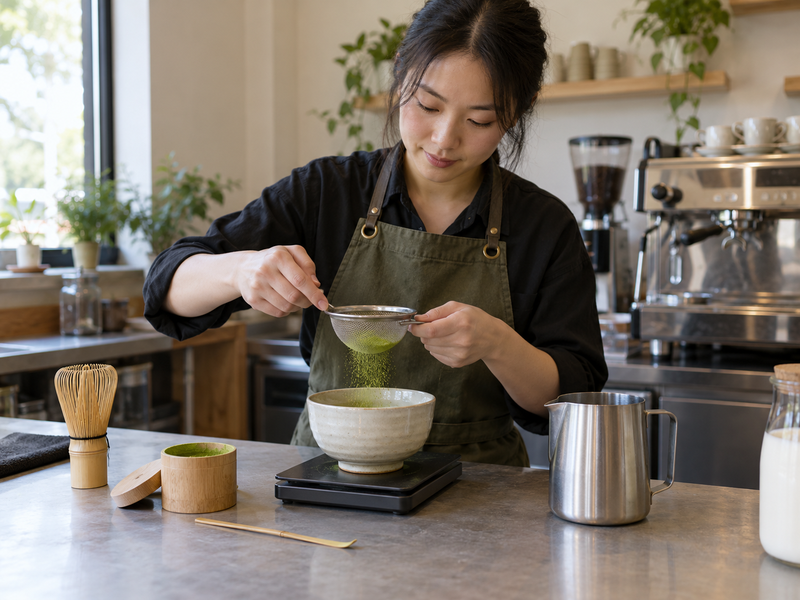
For a test kitchen or café, write powder mass and water volume rather than relying on “two scoops.” Scoop capacity changes with shape, powder packing, and user technique. A retail card may show an approximate scoop count for convenience, but it should be calibrated against the supplied powder and scoop. Give a water-temperature range that was actually tested with that tea, and explain how to avoid scalding the user. The point is repeatability, not a false claim that one ratio suits every taste.
Ask a novice to follow the card while someone records where they pause or improvise. If the latte recipe begins with a small water-and-matcha mixture before adding milk, show that sequence explicitly. If customers can adjust strength, suggest changing one measured variable at a time so the adjustment is understandable.
| Measurement | Better instruction | Why |
|---|---|---|
| Powder | Grams; scoop approximation if validated | Scoops vary |
| Water | Milliliters or local kitchen measure | Affects concentration |
| Temperature | Tested range and safe handling note | Affects flavor and user safety |
| Milk or ice | Quantity used in recipe trial | Makes latte result comparable |
6. Is a sifter worth including?
Let the powder and workflow decide
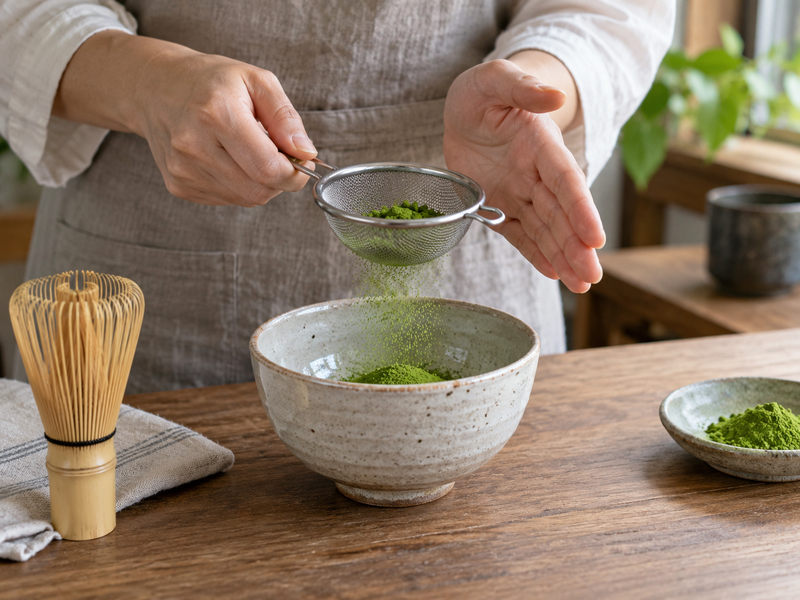
Some powders form dry clumps during storage or handling. A small, fine sifter can help separate them before whisking. But it also adds a cleaning task and another object to fit in the box. Run a simple trial: make several servings with the supplied powder and recipe, half with the proposed sifter and half without. Observe texture, preparation time, powder left in the mesh, and cleanup effort. If the difference matters to the intended user, include the sifter and illustrate how to use it.
If not, reserve box space for a better bowl or better tea. A café may use a larger sieve already on the bar, while a home beginner may appreciate a compact one. Check food-contact materials and whether the mesh can be cleaned and dried completely under the provided care directions.
7. Can a beginner follow the preparation card?
Test instructions with someone outside the team
Product teams know what each object is, so they often omit the explanation a beginner needs. Give a boxed sample and the draft card to a person who has not watched the development process. Do not coach. Note whether they understand where to place the powder, how to handle the whisk, when to add water, and what to do after drinking. A short sequence of tested quantities and clear pictures often works better than a page of brand history.
Use the same component names on the card, box, and product page. Include care instructions for bamboo separately from those for ceramic or metal. If tea is not included, repeat that fact on the card. Read the copy aloud to catch vague commands such as “whisk until perfect.” Define a visible endpoint the user can recognize, while allowing natural variation in foam and taste.
8. What changes for a tasting kit?
Make comparisons fair
A professional evaluation kit answers a different question from a starter gift: which powder fits a particular menu or product. Include a small, manageable number of clearly labeled samples and a record sheet. Hold dose, water, temperature, vessel, and mixing method constant while comparing powder. If the intended use is a latte, repeat the test in the same milk recipe. Serve samples in a planned order and let tasters make independent notes before discussion. An evaluation kit can omit a decorative bowl if the buyer already has standardized equipment.
It may need more precise sample labels and lot information instead. Do not let a persuasive tasting card decide the outcome before buyers taste. The useful result is a recorded selection criterion tied to color, aroma, flavor, mouthfeel, application, and cost at the target serving size.
| Tasting control | Keep consistent | Record |
|---|---|---|
| Tea dose | Same weighed amount | Grams and sample code |
| Water | Same volume and temperature | Recipe conditions |
| Tool | Same whisk or frother method | Mixing time and style |
| Application | Same milk or food base | Performance in intended use |
9. Will the kit survive shipping and storage?
Inspect the packed product, not an empty box
Ceramic, bamboo, metal mesh, and sealed powder respond differently to pressure and moisture. An inner insert should stop the bowl from hitting the whisk and protect the tea pouch from sharp edges. Test packed samples through the planned route: parcel shipment, wholesale carton, or hand-carried event kit. Record breakage by component and position inside the carton. Open the set as a customer would; the powder should be easy to identify and the recipe should appear before the user discards the sleeve. Test whether everything can be stored cleanly after use.
A damp whisk should not be packed against an opened tea pouch. Packaging cost belongs in landed cost, alongside replacements and returns. A set that arrives intact but cannot be used again after its opening moment has failed the longer customer experience.
10. How will the set be replenished and checked?
Plan beyond the opening sale
Powder runs out; bamboo whisks wear; a ceramic bowl can break. Ask the supplier which items can be reordered individually and whether color, fit, or size will change between production lots. For a café, keep approved reference components and check incoming shipments against them. For a retailer, provide a clear path to buy replacement tea and care for the tools. Review complaint notes by part: a high rate of broken bowls calls for packaging work, while repeated clumping complaints may call for tea-pack and instruction checks.
At Matcha Village, a buyer can discuss powder supply or private-label combinations alongside a tool set, then confirm current specifications before production. The best kit is not the fullest box. It is a small, coherent system that still works after the opening day.
| Reorder signal | Record to review | Likely action |
|---|---|---|
| Tea runs out quickly | Refill orders and customer questions | Offer a compatible pack |
| Whisk damage | Arrival and use-stage reports | Improve protection or replacement route |
| Bowl breakage | Carton position and shipping route | Revise insert and retest |
| Inconsistent cups | Recipe and tea-lot records | Check sample against approved reference |
Final thoughts
Build a matcha making kit by choosing the intended user and drink, then testing every supplied piece together. A starter box needs a complete, readable path to one cup; an evaluation kit needs controlled samples and records. Verify tea, tools, instructions, packaging, and replacement terms with assembled samples before committing to volume. If a component does not improve the user’s preparation, leave it out or replace it with something that does.
For component fit checks, compare the matcha tea set guide with your assembled sample.
FAQ
Q1. Does a matcha making kit have to include powder? Only if the listing promises a ready-to-use kit. If it contains tools alone, state that clearly on the box and page.
Q2. Is a bamboo scoop precise enough for café recipes? It helps transfer powder, but dose should be checked by weight for repeatable commercial service.
Q3. Is a sifter always needed? No. Test whether it changes the supplied powder’s texture enough to justify its cost and cleaning work.
Q4. Can one kit support both straight matcha and lattes? Yes, if both recipes have been tested with the same tea and tools and the instructions distinguish the steps.
Q5. What should a buyer request before a bulk order? Ask for an assembled sample, current component and tea records, pack test results, care directions, and replacement terms.