
Matcha without milk gives the tea nowhere to hide. A powder that seemed smooth under sweetened milk can taste coarse or bitter in water, while a careful straight-tea preparation can reveal aromas that a latte covers. That makes this format useful for both customers and buyers: it is a drink, and it is a simple quality check. Cafés need a method staff can repeat, with a powder chosen for the cup rather than for a bakery or flavored drink.
Contents: Purpose · Powder · Water · Temperature · Dose · Mixing · Cold · Flavor · Service · Supplier
1. Why Serve Matcha Without Milk?
Give tea customers a clear choice
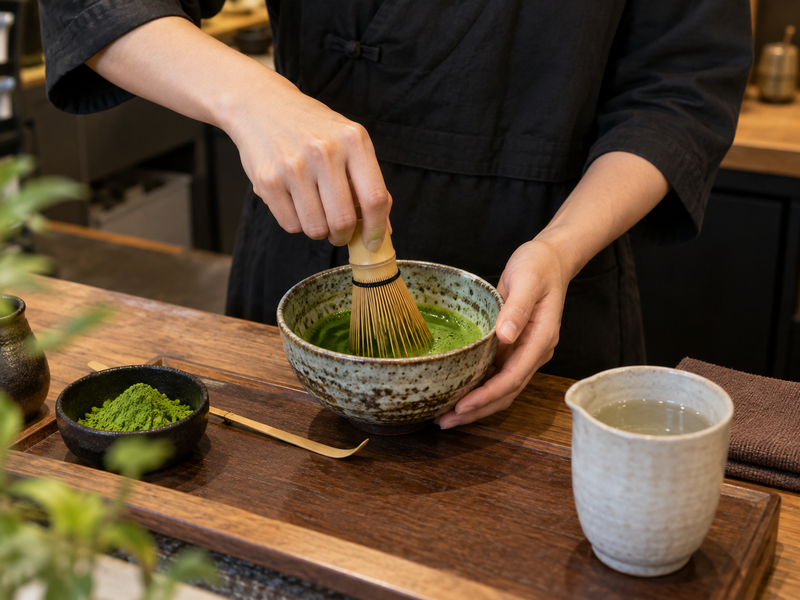
A water-only matcha offers a different experience from a latte. Customers can notice aroma, texture and finish directly, and the drink can fit a menu that already has many milk-based options. It also avoids making dairy the default for a tea that does not require it. The menu should describe the cup honestly: it is a finely powdered tea suspended in water, not a clear brewed infusion. Some natural sediment may appear if the drink sits. Staff can explain that without turning a normal physical property into a defect.
For purchasing, a plain cup is an efficient first test. Sweetener and milk can soften harshness or hide a stale aroma. Prepare a candidate powder in water before testing it in other formats. If the plain drink is intended as a premium menu item, set a higher sensory bar than a powder used mainly in desserts. That does not mean every customer prefers the most delicate or expensive tea. Taste with the target audience and price the experience the café can consistently deliver.
| Business reason | Customer sees | Team must control |
|---|---|---|
| Tea-forward option | Clear matcha flavor | Powder quality |
| Simple ingredient list | Tea and water | Accurate menu wording |
| Fast supplier screen | Visible texture and aroma | Fixed test method |
| Premium service | Careful preparation | Staff training and time |
2. Which Powder Suits a Water-Only Cup?
Choose by blind tasting, not grade alone
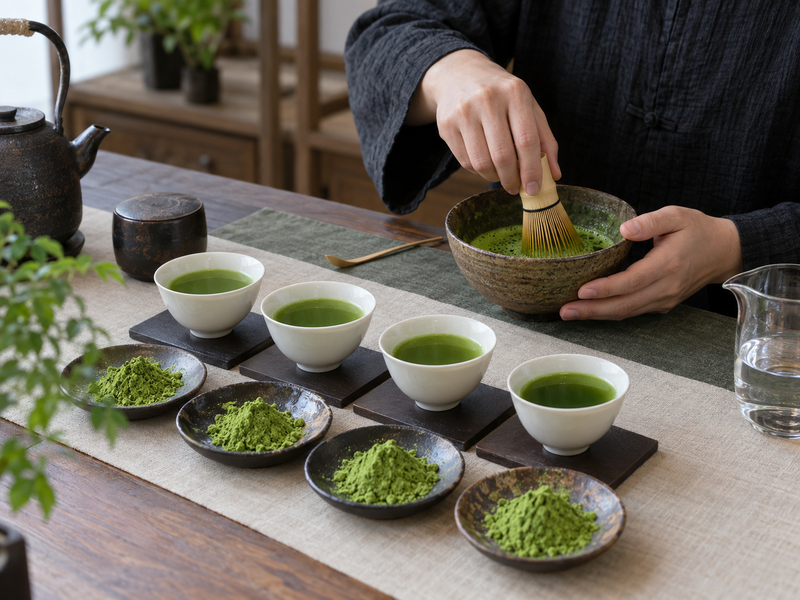
The words “ceremonial” and “premium” may help a supplier arrange its catalog, but they do not guarantee the cup you want. Request representative production samples and prepare them at the same dose and water conditions. Compare dry aroma, prepared aroma, color under neutral light, mouthfeel, bitterness and finish. A powder with a vivid green photograph can still have coarse particles or a short, flat flavor. A gentler-looking powder may be pleasant to drink. Keep the sample codes hidden during the first tasting so price and packaging do not bias the result.
Ask whether the approved powder can be supplied again. A seasonal specialty tea can be a good limited offer, but a chain needs a plan for new lots. Retain a sealed reference sample and agree on what changes require notice. Matcha Village’s company material describes several bulk matcha formats; buyers should ask which exact lot and grade suits straight drinking, then verify it themselves. A vendor’s suggested use is a starting point, not an acceptance test.
Calculate cost per cup at the dose that tastes right. A lower-priced powder can become expensive if it needs more grams or a larger sweetener addition to be enjoyable.
3. How Much Does Water Quality Matter?
Treat water as the main ingredient
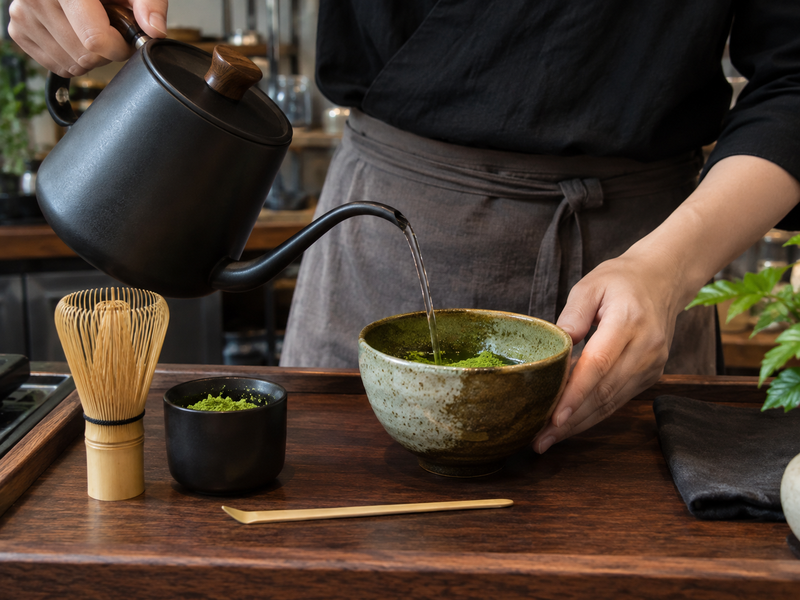
In a water-only drink, water has a stronger effect on the cup than it does in a sweet latte. Use the same clean, drinkable water for comparisons, and test with the water used at the actual store. Taste water by itself. If it has a noticeable odor or off-taste, the matcha may seem flawed when the real issue is the liquid. Different store locations may have different water profiles, so a chain should check representative sites before setting a national recipe.
Measure volume rather than filling a bowl by eye. A small difference can change strength and texture, especially in a short cup. Keep water vessels clean and free of detergent residue. A high-end powder will not compensate for poor water handling. The café’s normal drinking-water and food-safety program remains responsible for water quality; sensory advice in a recipe cannot replace it.
Do not promise a particular flavor from a mineral number alone. Taste the complete cup under controlled conditions, then decide whether filtration or a different water source is warranted for the business.
| Water check | Why it matters | Practical action |
|---|---|---|
| Clean taste | Off-notes carry into tea | Taste water alone |
| Measured volume | Controls strength | Use marked vessel |
| Store variation | Changes repeatability | Test several sites |
| Clean vessel | Prevents residue flavor | Check washing routine |
4. What Water Temperature Should a Café Test?
Find a range that suits the powder and service
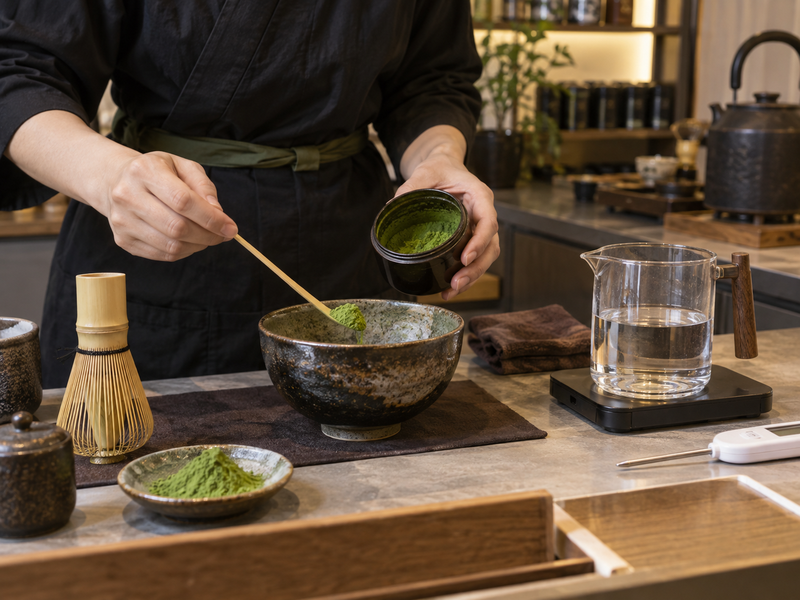
Water temperature affects how the tea tastes and how quickly staff can prepare it. Very hot water can make a cup taste harsher and is uncomfortable to serve; cooler water may make mixing slower or leave the drink feeling weak if the recipe was developed hot. Follow the powder supplier’s advice as a starting point, then run a controlled tasting across a few temperatures. Keep powder and volume fixed. Record what tasters actually notice rather than assuming there is one perfect number for all matcha.
Once approved, define a practical operating range and a way to check it. A thermometer in the development kitchen is useful, but a busy café needs an easy routine, such as a temperature-controlled hot-water source. If equipment differs between stores, test the range at each kind of machine. A recipe that depends on a precise temperature staff cannot achieve reliably is not ready for rollout.
For cold service, mix the powder using a tested method before adding chill if direct cold mixing leaves clumps. Count any warm water used in the final drink volume.
5. How Should the Powder-to-Water Ratio Be Set?
Start with a weighed dose and adjust by taste
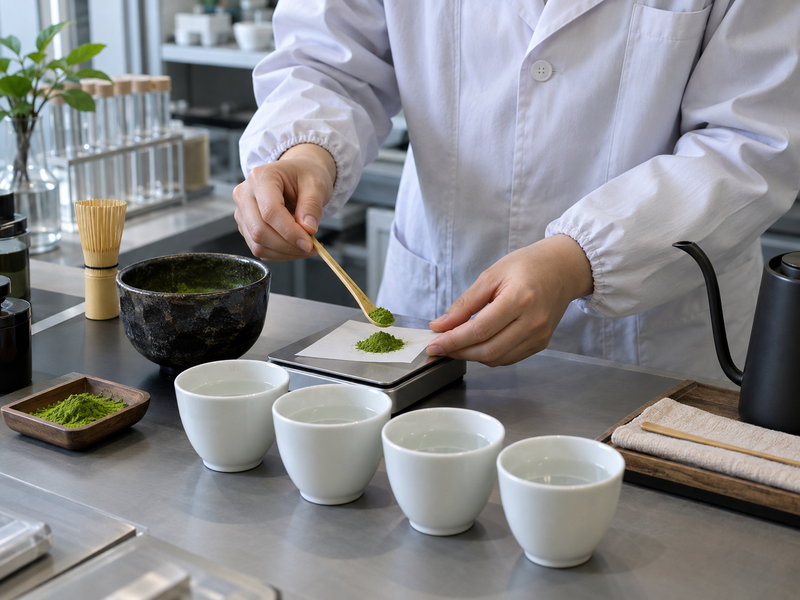
Weigh powder during development. Spoons vary with powder density and how staff fill them. Test a small range of doses in the same cup size and water volume. For an illustrative pilot, a team might compare 2 grams in 60, 90 and 120 milliliters of water, then adjust the range based on the powder and customer preference. Those values are test points, not a claim that one is the authentic or healthiest way to drink matcha.
Decide whether the menu offers one standard strength or two clearly described options. A concentrated short cup and a longer, lighter drink can both be legitimate, but they should not be accidental variations from staff scoops. Record the selected grams and milliliters on the recipe card. If the cup is served with ice, account for melt and the resulting dilution. A larger serving needs its own taste test rather than a blind scaling of one number.
Cost follows the selected dose. Compare supplier quotes at cost per approved cup, not only per kilogram.
| Test cup | Powder | Water | What to judge |
|---|---|---|---|
| Short pilot | 2 g | 60 ml | Body and intensity |
| Medium pilot | 2 g | 90 ml | Balance |
| Long pilot | 2 g | 120 ml | Clarity after dilution |
| Final recipe | Approved weight | Approved volume | Repeatability |
6. How Do You Make a Smooth Cup?
Wet the powder evenly and check the bottom
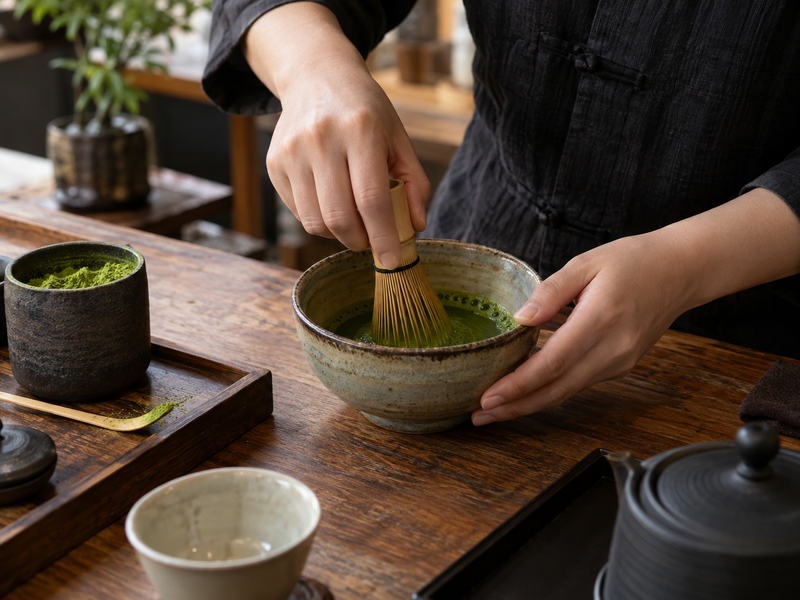
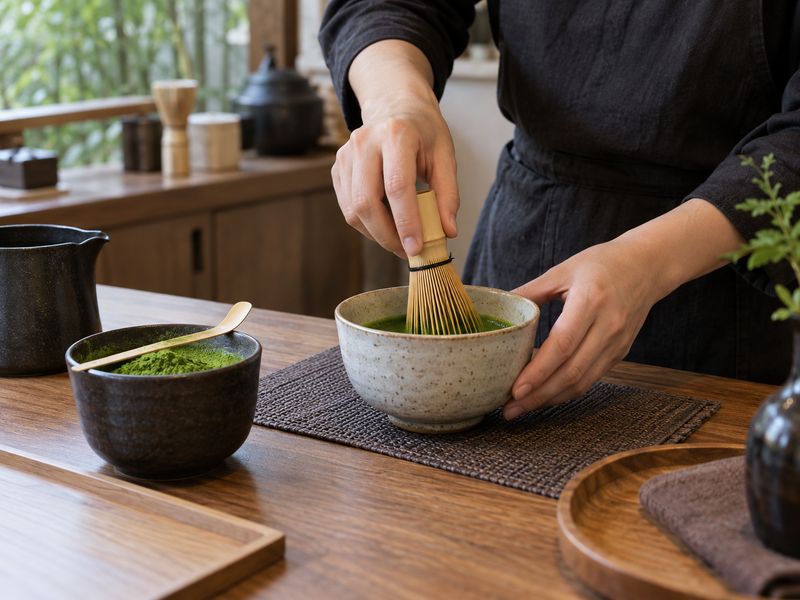
Place the weighed powder in a clean, dry bowl or mixing vessel. Sift soft compacted powder if the chosen grade needs it. Add a measured small portion of water and whisk until no dry pockets remain, then add the remaining water. A bamboo whisk is traditional and useful for small cups; other food-safe mixers may be more practical at volume. Test the tool that stores will actually use. The goal is a fine, pleasant suspension, not a perfectly clear liquid—matcha particles do not dissolve like sugar.
Inspect the bottom and sides of the vessel. Dry powder can hide there while the surface looks foamy. If the drink sits, fine particles may settle; a quick gentle mix before handoff can help. A hard clump from a damp or damaged pack is different from ordinary soft compaction and should be investigated. Keep the scoop and sieve dry between servings so moisture does not enter the working container.
Record tool, mixing time and order of addition. “Whisk well” leaves too much to individual judgment.
7. Can Straight Matcha Be Served Cold?
Design for temperature and settling
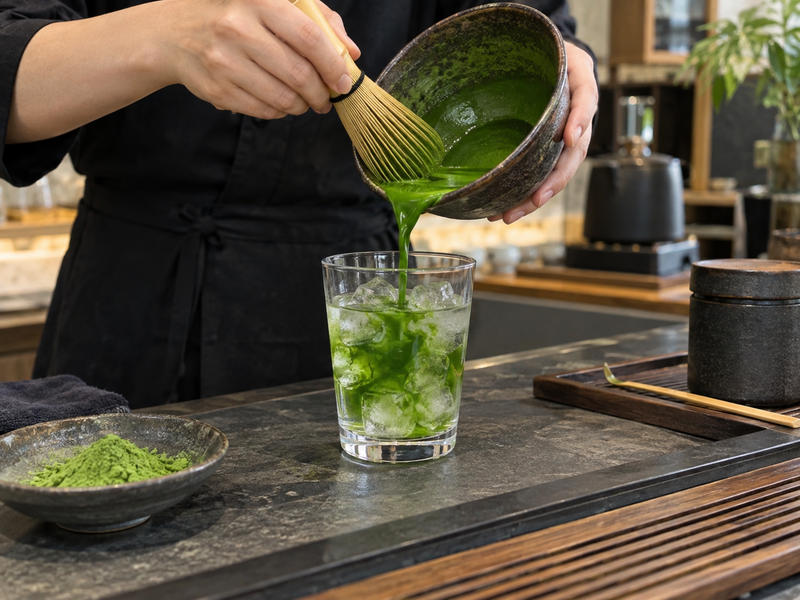
Yes. A cold water-based matcha can be refreshing without milk, but it requires attention to dispersion and ice. Prepare a smooth base with the method approved for the powder, then add measured cold water and ice. Test the drink immediately and after a realistic carry time. Ice melt changes strength, and fine particles can collect at the bottom. Decide whether staff should stir before handoff and whether the customer needs a brief instruction on the cup or menu.
Do not turn every cold matcha into a layered spectacle. A clear cup may show attractive green movement at first, then an uneven drink. If a layered format is intended, test how it tastes after the customer mixes it. An opaque takeaway cup shifts emphasis to flavor and texture. Keep this water-only service focused on tea flavor and texture rather than hiding the cup under syrup.
If a cold batch is prepared ahead, define a covered holding period under the site’s food-safety plan and a re-mixing rule. A fresh cup and a pitcher left for hours are different products.
| Cold-service factor | Standardize | Check |
|---|---|---|
| Base | Powder and first water | No dry pockets |
| Cold water | Measured volume | Tea strength |
| Ice | Weight or calibrated scoop | Dilution |
| Holding | Time and re-mixing | Sediment and flavor |
8. Should Sweetener or Citrus Be Added?
Keep the tea choice visible
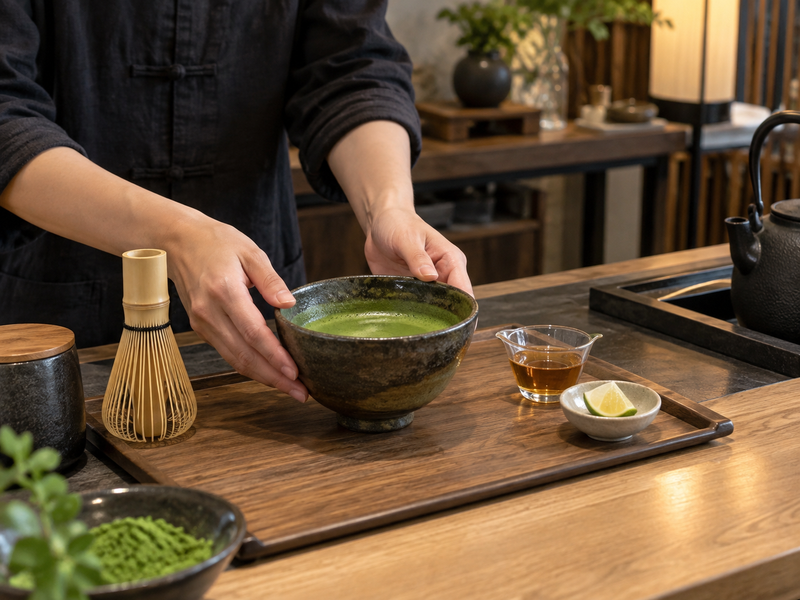
A small amount of sweetener may help a broad audience enjoy a water-only matcha. Citrus or fruit can create a different drink, but acidity can alter perceived flavor and appearance. Decide whether these are customizations or separate menu products. Develop the plain standard first; then test additions one at a time at measured amounts. A powder that is pleasant only after a large syrup dose may not be the best choice for a straight-tea menu position.
Menu wording should match the actual drink. “Without milk” does not mean “unsweetened,” and “plain matcha” should not hide a flavored syrup. If the café offers add-ons, train staff to ask rather than assume. For a packaged product, ingredients and nutrition information require a separate label review. A quick café tasting cannot establish shelf life or safety for a bottled citrus tea.
Some customers may request a less bitter cup. Before adding sugar, check powder quality, water and temperature. A preparation correction can sometimes solve the problem without changing the product’s identity.
9. How Can a Team Keep the Drink Consistent?
Make the standard easy to observe
Train staff with a recipe card that names powder, dose, water volume, temperature range, tool, mixing sequence and cup size. Show a normal cup under store lighting. During a pilot, have several workers prepare it independently and compare taste, texture and time. If one person consistently makes the only good cup, the method needs to be simplified or taught more clearly. Check the drink at opening and during a busy period, when shortcuts appear.
Keep a sealed reference sample and compare incoming lots before they reach the bar. Store opened matcha away from steam, light and odors, and mark the opening date. A quality drop after several days may be a storage issue, not a recipe error. Record complaints with lot and shift details so the team can see whether a problem repeats.
| Control | Daily action | Review trigger |
|---|---|---|
| Powder | Use approved lot | New delivery |
| Dose | Weigh or calibrated scoop | Flavor drift |
| Water | Standard source and volume | New site or filter |
| Mixing | Same tool and sequence | Clumps or slow service |
10. What Should a Buyer Ask Before Launch?
Match the supplier’s product to straight-tea service
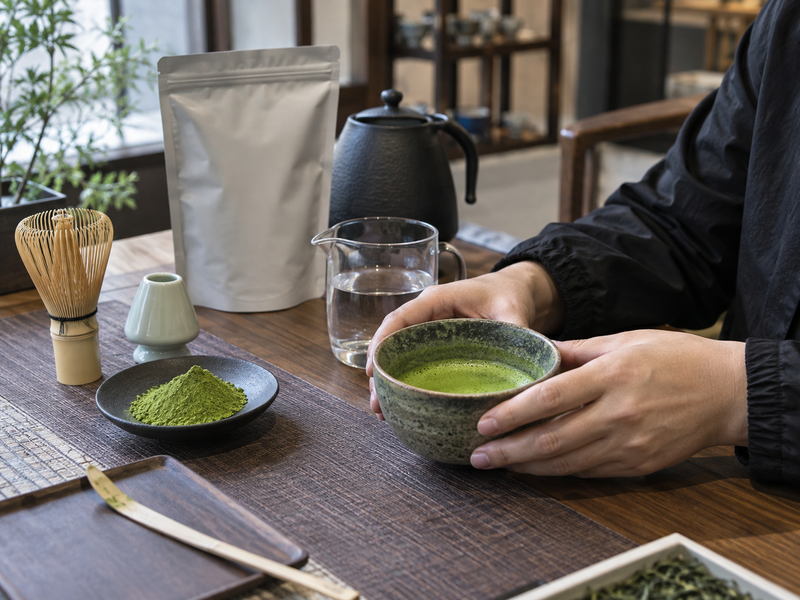
Ask for a production sample, specification, lot identification, shelf-life guidance and relevant test results. Explain that the powder will be served in water without milk. Request the supplier’s recommended dose and preparation method, then test them alongside the café’s own pilot. If a product is offered as “ceremonial,” ask what that word means for the supplier and how the lot differs from its other grades. A name alone cannot guarantee a smooth cup.
Check pack size against turnover. A small tea bar may be better served by several sealed packs than by one large bag opened for weeks. Agree on what happens if the supplier changes origin, blend or grade. Matcha Village describes bulk matcha and OEM support in its company material; any supplier still needs to show that the specific offered lot suits the intended plain-water product.
The launch decision should include sensory approval, cost per serving, staff method and a repeat-lot plan. A pleasant tasting on one afternoon is an encouraging start, not a complete supply arrangement.
FAQ
Q1. Can matcha be made with only water?
Yes. Pure matcha powder and water make a straight tea drink. Measure both, mix thoroughly and choose a powder that tastes good without milk or syrup.
Q2. Why does matcha taste more bitter without milk?
Milk and sweetener can soften or cover tea notes. In water, powder quality, dose, temperature and water taste are easier to notice. Test those variables before changing the recipe.
Q3. Does matcha dissolve in water?
No. Fine tea particles form a suspension. Whisking disperses them, and some settling can occur if the cup sits.
Q4. Can a café serve plain matcha over ice?
Yes. Make a smooth base, then add measured cold water and ice. Check dilution and sediment through the normal service window.
Q5. Is a more expensive grade always better for plain tea?
No. Blind-taste representative lots at the same dose, then compare the customer experience, repeatability and cost per cup.
For a consumer-oriented preparation overview, see Matcha Guide’s milk-free methods. For commercial sourcing, see our bulk matcha guide. The final recipe should be approved with the actual powder and store water.