
Matcha madeleines need enough tea flavor to remain clear in a buttery crumb, with shell grooves that survive unmolding. A bakery can control both through small, weighed trials before scaling production. Use an established madeleine base, compare powders in that base and record batter temperature, deposit weight and baking conditions. The proposed trials below require validation in your kitchen.
Contents
- 1. What should good matcha madeleines look and taste like?
- 2. Which powder should a bakery sample?
- 3. How can you set a useful matcha dose trial?
- 4. How should you mix and rest the batter?
- 5. What do mold shape and deposit weight change?
- 6. How should you establish the baking conditions?
- 7. How do you inspect cooling and crumb texture?
- 8. Which finish suits the sales format?
- 9. How can you calculate saleable batch cost?
- 10. What should a supplier and production brief contain?
1. What should good matcha madeleines look and taste like?
Define the product before changing the recipe
Set a visual reference showing the shell face, side profile and cut center. Specify whether your product needs a pronounced hump or a lower profile that fits a shallow tray. A large hump has little commercial value if the lid crushes it during packing.
Madeleines are small shell-shaped cakes. Namiko Hirasawa Chen’s matcha madeleine recipe at Just One Cookbook provides a home-baking reference for that format. A bakery still needs its own production and acceptance records before transferring any recipe to larger equipment.
| Product feature | Proposed acceptance check | Where to inspect |
|---|---|---|
| Shell grooves | Clear ridges without torn patches | Mold face |
| Tea flavor | Recognizable after butter and sugar | Cooled center |
| Crumb | Even texture without wet streaks | Cut cross-section |
| Packing fit | No contact damage from lid | Closed sales pack |
Choose one format for the initial development run. Miniatures, standard shells and dipped gift pieces create different portioning and packing questions. Record intended serving conditions too. A cake sold warm at a counter needs a different texture reference from one evaluated after delivery.
2. Which powder should a bakery sample?
Taste it after baking
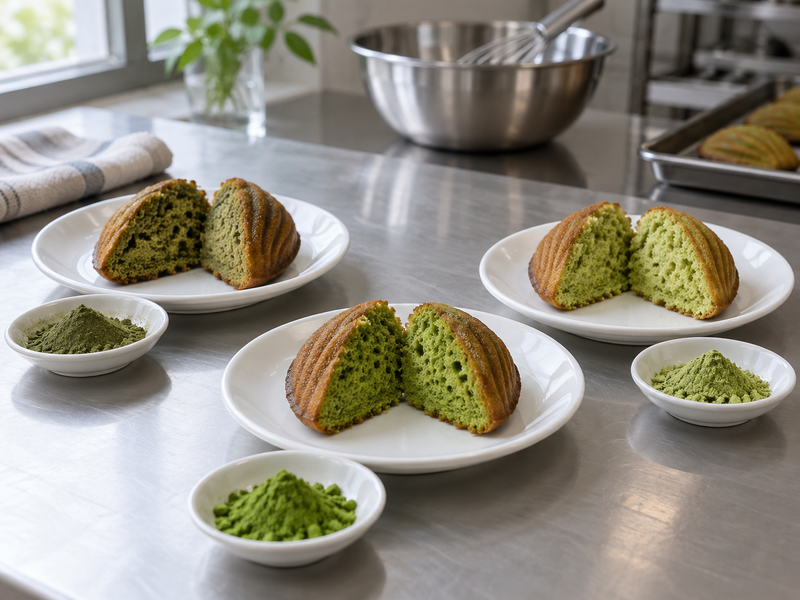
Request plain matcha with a clear ingredient declaration. A sweetened beverage mix introduces sugar and possibly other ingredients, making a direct substitution unreliable. Keep the supplied product code and lot number with every trial. A dry powder photograph cannot show how matcha madeleines will taste after baking.
Select two or three candidates within a plausible purchasing budget. Use the same base batter, dose and baking conditions for the initial comparison. Evaluate tea aroma, bitterness, crumb color and any coarse sensation in the mouth. Photograph cut pieces under the same light rather than adjusting each image until it looks greener.
Ask the supplier about pack sizes and the documents available for your destination market. A small bakery may need packs it can use predictably; a manufacturer may need details that connect deliveries with its internal quality system.
Matcha Village’s published powder selection guide offers broader buying context. For a madeleine inquiry, provide your base formula, expected dose and finished texture target. Request samples suitable for that application and judge the actual baked pieces before choosing a purchase grade.
3. How can you set a useful matcha dose trial?
Change one quantity at a time
For matcha madeleines, use your current madeleine formula as the control. For an initial proposed trial, replace a small amount of its flour with an equal weight of matcha. This keeps the combined flour-and-tea weight constant while you compare tea levels. It does not make the powders functionally interchangeable, so inspect structure as closely as flavor.
The following example starts with a formula containing 100 g of flour. These are experimental variations, not a tested standalone recipe.
| Proposed trial | Flour | Matcha | Main observation |
|---|---|---|---|
| Control | 100 g | 0 g | Base texture |
| A | 98 g | 2 g | Mild tea expression |
| B | 96 g | 4 g | Flavor and crumb balance |
| C | 94 g | 6 g | Bitterness and structure |
Keep egg, sugar, butter and raising agent unchanged for this comparison. If every tea version becomes less acceptable, revisit the base and mixing method before increasing sweetness. Sugar changes can conceal bitterness while adding a new variable.
Choose a powder and dose together. A more expensive powder used at a lower acceptable level may cost less per cake. Calculate that after tasting, using saleable yield.
4. How should you mix and rest the batter?
Record temperatures and handling
Sift the measured matcha with the flour and raising agent so the dry ingredients distribute before wet mixing. Break up visible lumps without pushing foreign material through the sieve. Weigh eggs and butter in grams; egg counts and loosely filled spoons make scaling harder to reproduce.
Record the melted butter temperature and batter temperature after mixing. If your process introduces melted butter in stages, define those stages in the recipe card. Scrape the bowl consistently. A pocket of unmixed fat near the bottom can make the last deposits differ from the first tray.
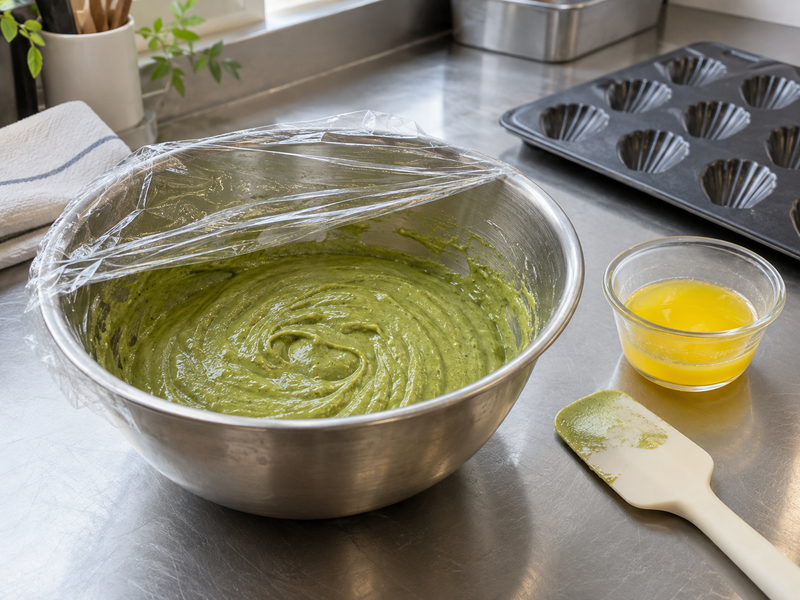
Chen’s recipe directs readers to refrigerate the batter for three hours or overnight. Treat this as that author’s method, not proof of an appropriate commercial holding period for every batter. Follow your food handling procedures and validate your chosen schedule.
A proposed comparison can hold the formula steady while testing two approved refrigerated rest schedules. Record covered container depth and batter temperature before depositing. A deep production tub and a shallow trial bowl may reach different temperatures even after equal time. Check the last portion in the hopper and the opening deposit.
5. What do mold shape and deposit weight change?
Match the deposit to the cavity
Record mold material, cavity dimensions and cavity count. Keep a pan identification code on the batch sheet. Two pans described as standard madeleine pans can produce noticeably different shapes, and their capacity may differ enough to change overflow or headspace.
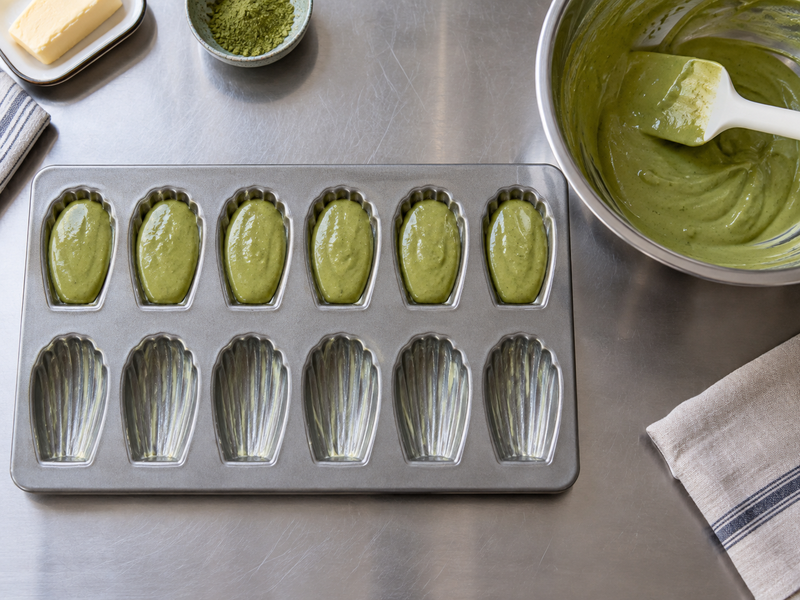
Establish deposit weight with a scale. Weigh several consecutive deposits into a separate container before filling a tray. Repeat the check after a pause or refill, when batter temperature and flow may have changed. For manual piping, train operators to finish each deposit without leaving a long tail across the mold rim.
| Visible issue | Check before changing formula | Record |
|---|---|---|
| Connected cake edges | Excess deposit or small cavity | Deposit weight |
| Missing shell detail | Mold preparation and release | Pan identity |
| Uneven piece height | Deposit variation or batter flow | Consecutive weights |
Set pan preparation as a measured operation too. Thick flour patches or pooled release material can mark the shell face. Photograph a prepared empty pan and an acceptable baked piece for staff training.
6. How should you establish the baking conditions?
Build the oven record around the actual tray
Begin the matcha madeleines bake trial with conditions appropriate to your established base recipe and equipment. Record oven type, set temperature, loading pattern and bake time. Keep fan setting and tray spacing fixed during comparisons. An empty oven test cannot describe a fully loaded production run.
King Arthur Baking’s chocolate madeleine recipe gives different times for light and dark pans in its own method. That example supports recording pan characteristics; its times should not be copied as a validated schedule for your matcha batter.
Inspect shell edges, spring and the cut center. Green batter makes color alone a poor description of the whole baking result. Write down what your acceptable piece looks and feels like after a defined cooling interval. Have your production or food safety lead establish the required cooking controls for your formula and process.
If edges darken before the center reaches the required result, change one relevant condition in the next trial. Review cavity size, deposit weight, pan characteristics and oven setting. Keep the rejected pieces labeled so a later adjustment can be compared with an actual result rather than a remembered impression.
7. How do you inspect cooling and crumb texture?
Follow the cake from pan to counter
Unmold matcha madeleines according to the procedure established for your pan and recipe. Count pieces with torn ridges, stuck bases or crushed humps. Record the interval between oven exit and release. Moving that step earlier or later may change handling losses, so include it in the trial sheet.
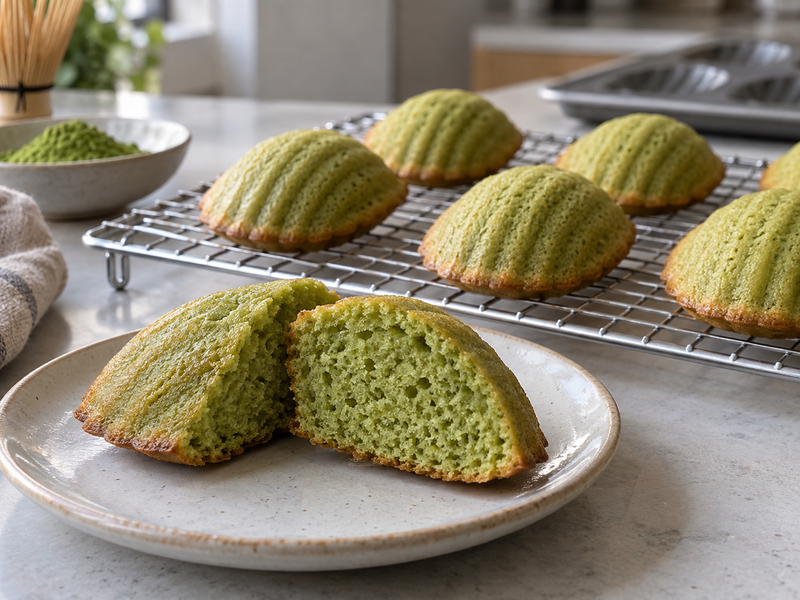
Place cakes on racks with consistent spacing. Avoid piling warm pieces into a deep container while waiting for packing. Inspect both the shell face and the underside after cooling, then cut a sample through its thickest point.
The following is a proposed same-day quality check, not a shelf-life study. Use your approved handling conditions throughout.
| Checkpoint | Examine | Decision supported |
|---|---|---|
| After cooling | Crumb and shell release | Bake acceptance |
| Planned display midpoint | Tenderness and edge texture | Counter replenishment |
| End of intended service | Aroma and pack condition | Sale format suitability |
Taste samples without a topping before judging the finished version. Note whether the crumb feels dry, greasy, elastic or tender. Record specific observations; a single score labeled quality gives the baker little direction for the next batch.
8. Which finish suits the sales format?
Give the shell room in the design
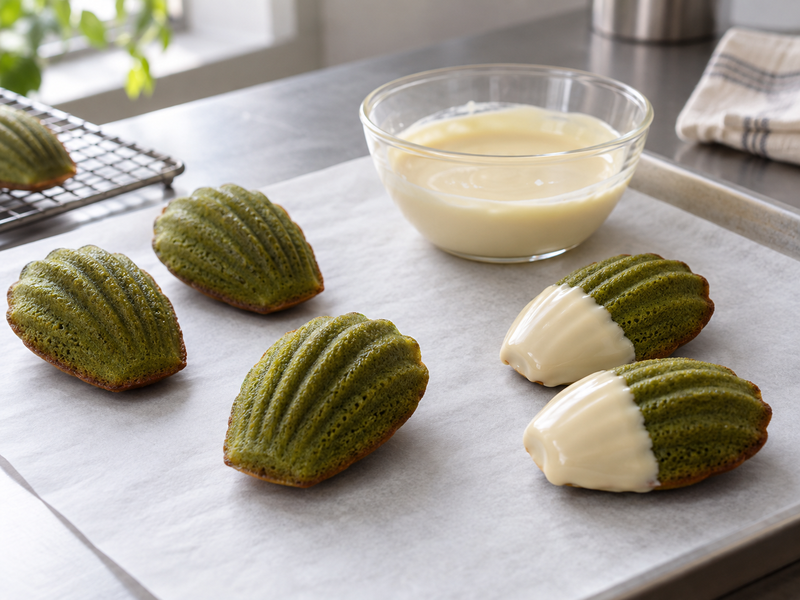
A plain cake shows the mold detail and keeps tea flavor easy to assess. A light dusting changes presentation with little equipment. A chocolate dip adds sweetness, handling and a setting step. Select the finish after the base cake passes your texture trial.
For a proposed dipping comparison, weigh an undipped cake and its finished counterpart. The difference estimates coating pickup. Keep dipping depth and drainage time consistent so tasters compare the same cake-to-coating balance. Use the chocolate supplier’s handling instructions for the chosen product.
Pack fully cooled cakes under your approved procedure and inspect the result after the intended handling route. Look for rubbed shell ridges, topping transfer and grease marks on the insert. A close-fitting tray may restrain movement but also press against a high hump.
Matcha madeleines sold beside matcha shortbread cookies can share an ingredient purchasing discussion while needing different texture and packaging checks. Give each product its own acceptance reference. A pack approved for a firm cookie may damage a soft cake during delivery.
9. How can you calculate saleable batch cost?
Count rejects and finishing labor
Calculate the unit cost of matcha madeleines by dividing total batch cost by accepted pieces after cooling and finishing. The deposited count alone excludes broken shells, overflow and pieces damaged during coating. Record those losses separately so production can see which step needs attention.
This illustrative example compares ingredient spending at different saleable yields. It excludes labor, energy and packaging to make the arithmetic visible; add those costs to your own costing sheet.
| Illustrative batch | Ingredient cost | Accepted pieces | Ingredient cost per piece |
|---|---|---|---|
| A | USD 24.00 | 96 | USD 0.25 |
| B | USD 24.00 | 80 | USD 0.30 |
| C | USD 27.00 | 100 | USD 0.27 |
Time depositing, pan preparation, unmolding and packing during a representative run. Include cleaning and the number of pans needed between oven loads. A low ingredient cost may coexist with slow manual handling.
Track powder cost per batch alongside yield. If a new powder improves acceptable flavor at a different dose, update the full formula and cost record. Keep the comparison tied to approved cakes with the same target size, finish and sales pack.
10. What should a supplier and production brief contain?
Freeze the version that passed the pilot
Send your powder supplier the intended application, proposed use level, annual forecast and packaging needs. Include photographs of the cut cake and notes on the flavor you want. Ask for a product specification, batch identification and relevant quality documents. Avoid approving future shipments solely against an attractive sample photograph.
Your matcha madeleines production brief should name the formula version, powder code, pan, deposit weight, rest procedure and baking schedule. Attach a photo of an accepted shell and a cut center. Add the cooling, finishing and packaging instructions used in the pilot.
Repeat the pilot with the expected production load before fixing a launch quantity. Compare opening, middle and final trays for portion consistency and acceptable yield. Assign one person to approve changes so an operator cannot unknowingly combine a revised dose with an outdated bake card.
Matcha Village can receive an application brief for ingredient selection and OEM discussions. Send the approved product target with your sample feedback, then request written confirmation of the proposed powder, pack format and commercial terms before ordering.
FAQ
Q1: Are matcha madeleines cookies or cakes?
They are small cakes baked in shell-shaped molds. For production planning, judge their crumb and handling as a cake rather than assuming the durability of a crisp cookie.
Q2: Can sweetened matcha powder replace plain matcha?
It needs a separate formulation trial. Read its ingredient declaration and account for added sugar or other ingredients before comparing flavor, batter flow and finished texture.
Q3: Must the batter rest overnight?
Use the schedule established for your recipe and approved handling procedure. Compare rest conditions deliberately, recording batter temperature before depositing instead of relying on time alone.
Q4: Why are the shell grooves tearing?
Check mold condition, release preparation and unmolding timing. Count damage by pan and tray position before changing the flour or butter quantities.
Q5: Can a bakery promise a fixed shelf life from this guide?
No. These development checks do not establish shelf life. Validate the finished formula, packaging and storage conditions with qualified support before applying a commercial date mark.