
The best matcha powder is the lot that meets your product’s flavor, appearance, safety, supply, and cost requirements in its final use. A favorite plain-drinking powder may disappear in ice cream, while an economical bakery powder may taste rough in a bowl. B2B buyers need a repeatable selection method rather than a single consumer ranking. Set the application and acceptance criteria, request lot-linked samples, taste blind, review documents, and run a pilot at commercial dose. The steps below help a café, food brand, or importer make that choice with evidence.
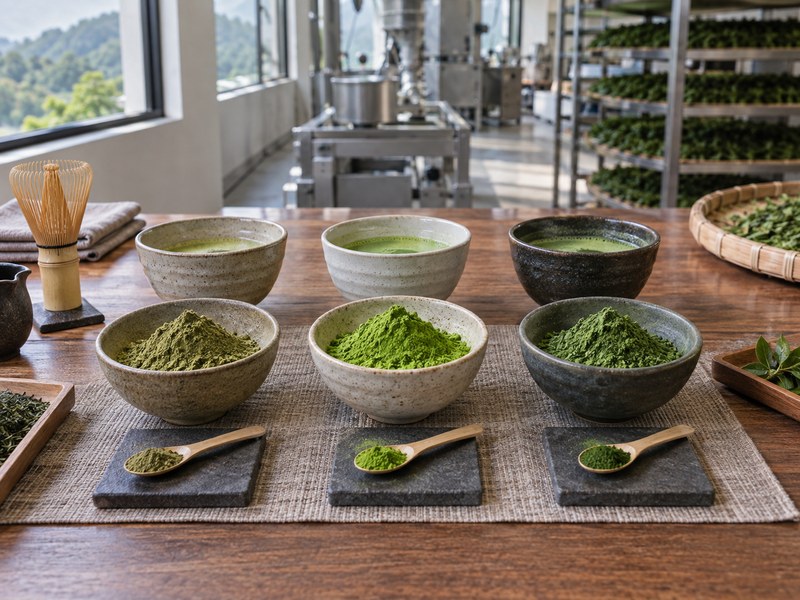
1. What does “best matcha powder” mean for a business?
There is no useful single winner across every application. Plain bowls expose aroma and mouthfeel. Milk drinks demand tea character after dilution. Cakes put color and flavor through heat. Ice cream requires tea to remain perceptible when frozen. The best matcha powder for one format may be poor value in another. Define success in sensory terms and operational terms before requesting a price list. A buyer should be able to say, for example, “clean tea flavor in a 350 mL oat latte at 2 g powder with acceptable green color after ten minutes.”
Which criteria should have priority?
Start with the product, not the label. Rank flavor, color, texture, ingredient status, documentation, lead time, and cost in order for the target channel. A tea house may accept a higher cost for a plain bowl. A bakery may prefer a powder that tolerates heating with a predictable delivered price. Separate must-have criteria from preferences. If organic certification is a market claim, it is a gate, not a bonus. If green color is only visible under chocolate coating, it should not outweigh flavor and supply. Write these rules before tasting so a persuasive sample story does not change the decision.
| Application | Leading test | Frequent blind spot |
|---|---|---|
| Plain tea | Aroma, texture, finish | Cost and lot continuity |
| Latte | Tea after milk and ice | Sugar masking weak powder |
| Bakery | Flavor and color after heat | Testing only raw batter |
| Ice cream | Flavor at serving temperature | Judging liquid mix alone |
2. How is matcha different from other green tea powder?
Matcha refers to finely powdered green tea, with Japanese matcha traditionally made by grinding tencha. The Japanese Ministry of Agriculture describes tencha as shaded, steamed leaves dried without rolling before grinding. Commercial powders sold internationally differ by origin and processing. A buyer should request a production description for the offered ingredient rather than infer process from an attractive name. Powdered sencha, sweetened matcha latte mix, and matcha itself may all be green, yet they have different ingredient and sensory profiles.
What should the product identity file include?
Ask for the exact ingredient declaration, botanical source, country of origin, processing location, and whether anything has been added. If a pack says “100% matcha,” a sugar-containing latte mix does not fit that statement. If a brand uses a protected regional name, verify the origin documents. Keep growing origin distinct from the location where leaves were milled or packed. This precision helps import, labeling, and marketing teams use the same facts. It also prevents a supplier change from quietly changing what the customer thinks the product is.
3. Do grades such as ceremonial and culinary settle quality?
Suppliers often use terms such as ceremonial, premium, café, and culinary to organize their ranges. These labels do not replace a product specification or a tasting. Two suppliers may apply the same grade word to very different powders. A more expensive grade can make sense for a plain bowl and still be wasted in a heavily sweetened cookie. Conversely, a lower-cost application powder can deliver sufficient tea color and flavor after baking. Treat grades as invitations to sample, then compare them by the same method.
What should buyers ask instead of “Which grade?”
Specify the target application, dose, desired flavor, color range, budget, packaging format, and destination market. Ask the supplier to propose two or three options and explain how each behaves in that use. Request current lot samples, not unnamed showcase tins. If a supplier says one product is “ceremonial,” ask how they define that claim internally and what measurements or sensory standards support it. A decision record can then refer to a product code and lot rather than a broad grade. That makes future procurement and quality checks possible.
| Supplier term | Useful interpretation | Missing evidence |
|---|---|---|
| Ceremonial | Supplier’s suggested plain-tea range | Lot taste and specification |
| Premium | Relative position in one catalog | Cross-supplier equivalence |
| Culinary | Suggested food application | Finished-product performance |
| Organic | Claimed certification status | Current scope and import paperwork |
4. How can you taste samples without bias?
Code each powder and prepare it with the same water, dose, vessel, mixing time, and serving interval. Compare dry aroma, whisked aroma, color, mouthfeel, sweetness, savory notes, bitterness, and finish. Have several tasters score separately before discussion. Then repeat in the intended product with the same recipe and processing conditions. A blind tasting reduces the pull of price, origin story, and packaging. It does not eliminate personal preference, so record why the panel chose a sample and who the intended customer is.
Why should the test happen twice?
One bowl cannot approve a latte powder. Plain tasting exposes defects; application tasting reveals performance. A powder can be clean in water yet too subtle under milk. Another can look dull dry but remain attractive after mixing. Test at the planned commercial dose, then check a slightly lower and higher dose for sensitivity. Keep a sealed reference from the winner. Repeat the tasting when a new lot arrives, using the same recipe and lighting. A sensible acceptance range allows natural variation while protecting the customer experience.
5. Which documents matter before a purchase order?
A tasting winner still needs a file that supports import and production. Request a current product specification, ingredient declaration, origin and lot traceability, packaging details, storage guidance, and relevant analytical reports. Ask which lot the report covers and whether tests match the destination market’s requirements. Depending on risk and market, buyers may review residues, heavy metals, microbiology, allergens, and other parameters. A broad statement that a factory “passes all tests” is weaker than current documents tied to an offered product and batch.
How do import rules change the review?
US importers should assess applicable FDA Foreign Supplier Verification Program guidance. A certificate sent by a supplier does not by itself complete an importer’s obligations. Other destinations have different controls. Ask the regulatory or quality team to define the required file before approving labels or shipment. If a claim will appear on consumer packaging, preserve evidence for that exact claim. A buyer who completes this review early avoids a strong sensory choice that cannot enter the intended market.
| Document | Buyer question | Record to retain |
|---|---|---|
| Specification | What product is being sold? | Current signed version |
| Lot test report | What was tested and when? | Report linked to lot |
| Origin record | Where was it grown and processed? | Traceable declaration |
| Packaging data | How is quality protected? | Pack size and barrier spec |
6. How should origin claims be evaluated?
Origin affects brand positioning, traceability, and sometimes flavor expectations, but country alone cannot rank a powder. Compare samples from stated origins by the same sensory protocol. Ask where tea was grown, processed into powder, and packed. Those can be different places. A Chinese-grown matcha should be described accurately as such; Japanese cultural associations do not confer Japanese origin on every product. Equally, a Japanese regional name should be used only when the supporting documents justify it. Honest origin copy gives procurement and marketing a stable basis for later reorders.
What should a multi-market label avoid?
Avoid vague phrasing that implies a region without naming actual origin. Check translations as well as English copy. If tea is blended from more than one growing area, agree on how the declaration changes when blend proportions change. A packaging designer may want a traditional scene that suggests a country not supported by the ingredient file; review that visual claim too. Keep the brand story separate from lot facts. A company can discuss tea culture and its own manufacturing process without merging them into an unsupported geographical promise.
7. How do organic and other claims affect selection?
An organic claim requires valid certification and transaction records for the relevant market and supply chain. It cannot be inferred from green color or an “untreated” description. The European Commission states that organic products imported into the EU need an electronic certificate of inspection. The USDA Agricultural Marketing Service describes import certificate requirements for US organic shipments. Have the importer confirm current rules for the exact route. Halal, kosher, allergen, and other claims likewise need documents matching the product and facility scope.
What should happen if a claim is optional?
Price the whole claim. Compare certified and non-certified options at the approved dose, then include document handling, lead time, minimum order, and labeling constraints. A café that does not make an organic claim may choose on flavor and cost. A brand whose entire line is certified needs continuity and compliant paperwork before taste can settle the choice. Never assume a supplier’s general company certificate covers every product or lot. Check dates and scope, then retain the version used to approve a shipment.
| Claim | Evidence to verify | Decision consequence |
|---|---|---|
| Organic | Certificate and shipment records | Market entry and label |
| Single origin | Lot traceability | Brand copy |
| Pure matcha | Full ingredient declaration | Product naming |
| Allergen statement | Current product and facility data | Consumer and buyer review |
8. What makes a supplier reliable beyond the sample?
Supply reliability means repeatable specifications, realistic lead times, clear change notice, and a response when a lot does not meet the approved standard. Ask how much volume the supplier can reserve, what pack sizes are available, and how it handles seasonal variation. A factory presentation can provide context, but procurement should confirm offered terms in writing. For a growing brand, a small pilot order and a larger forecast may need different packaging or delivery schedules. Test the process on an actual repeat order before committing the entire range.
How do you measure lot continuity?
Keep an approved reference sample and a sensory scorecard. On receipt of each new lot, compare dry aroma, color, particle handling, and the target application. Review the lot report and packaging integrity. If there is a deviation, agree on a retest or alternative before production consumes the stock. Ask for notification of changes in growing source, milling, formulation, or packaging. A supplier with a clear change process can be easier to work with than one that promises every crop will look identical. Matcha Village can discuss bulk and OEM options against a written product brief.
9. How do you compare total cost fairly?
Price per kilogram misses the dose needed for an acceptable product. Calculate cost per cup, slice, tub, or pack at the approved formula. Add freight, duties, testing, storage, waste, and expected yield. A powder that costs more per kilogram can win if it works at a lower dose or reduces rejected batches. Conversely, a high-end plain tea may bring no visible advantage in a sweet, heavily processed product. Cost each candidate only after it passes the same quality gates.
What numbers belong in the buying sheet?
Record quoted currency, incoterm, minimum order, pack size, lead time, powder dose, and cost per saleable unit. Include an assumption for currency and freight that purchasing can update. Compare samples from the actual products on quote. If a supplier proposes a less expensive replacement, rerun the application test rather than substituting based on a similar grade name. The decision sheet should make the tradeoff visible to product, quality, and finance without asking any of them to trust a single tasting note.
| Cost line | Unit | Why it matters |
|---|---|---|
| Powder | Cost per approved dose | More useful than price/kg |
| Freight and duty | Cost per delivered kg | Changes by market |
| Waste | Rejected finished units | Captures process fit |
| Documentation | Testing and certification | Supports claims and import |
10. How can you choose the best matcha powder with confidence?
Write the product brief, screen suppliers for required documents, taste coded samples, and validate finalists in the final recipe. Confirm full-scale process performance and cost per saleable unit. Keep a reference lot and acceptance sheet for repeat orders. The answer may differ across your portfolio: one matcha for plain service, another for lattes, and another for frozen or baked goods. That is a sound purchasing outcome if each product has a clear specification and forecast. A single “best” powder for every use would need evidence across every use.
What is the next action for a buyer?
Send suppliers the application, target dose, flavor and color brief, annual volume estimate, destination market, packaging need, and document list. Ask for lot-linked samples and quote terms. Then schedule one blind plain tasting and one controlled application trial. Record decisions before negotiating final price so a lower quote does not erase a failed product test. The best matcha powder is the one your team can keep buying, verify, and turn into a product customers recognize from one batch to the next.
FAQs
Q1. Is ceremonial grade always the best matcha powder? No. Compare the offered lot in the product you plan to sell and review its specification.
Q2. Does brighter green always mean better flavor? No. Color is one criterion; aroma, texture, aftertaste, and application performance also count.
Q3. Should a café and bakery buy the same powder? Only if it passes both use tests at acceptable cost and supply terms.
Q4. What should an importer ask for before buying? A current specification, traceable lot, relevant tests, origin, certification evidence for claims, and import documents for its market.
Q5. How often should a business retest matcha? Compare every new lot with the approved reference, and rerun fuller trials after a material product or process change.