
Decaf matcha gives cafes and tea brands a buying question that ordinary powder comparisons cannot answer: how much caffeine remains in a measured serving? Start with product records, then compare flavor and service costs using weighed samples. A supplier’s process description supports an inquiry; a caffeine result tied to the supplied powder supports a purchasing decision. For a cafe buyer, the best decaf matcha is the documented powder that meets the intended flavor, dose, pack size and cost requirements.
Contents
- 1. What does decaf matcha mean for a buyer?
- 2. Which caffeine records should you request?
- 3. How do you calculate caffeine per serving?
- 4. What should you ask about processing?
- 5. How should you compare powder samples?
- 6. Which drink tests fit a cafe menu?
- 7. How do you handle powder during service?
- 8. What belongs in a supplier specification?
- 9. How should you compare purchasing costs?
- 10. What should happen before a commercial order?
1. What does decaf matcha mean for a buyer?
Begin with the exact product
The word decaf does not tell a buyer that a powder contains no caffeine. Ask the seller for its stated caffeine level, measurement unit and serving basis. Keep that information attached to the product code. A general page about decaffeination may describe a different powder from the sample on your desk.
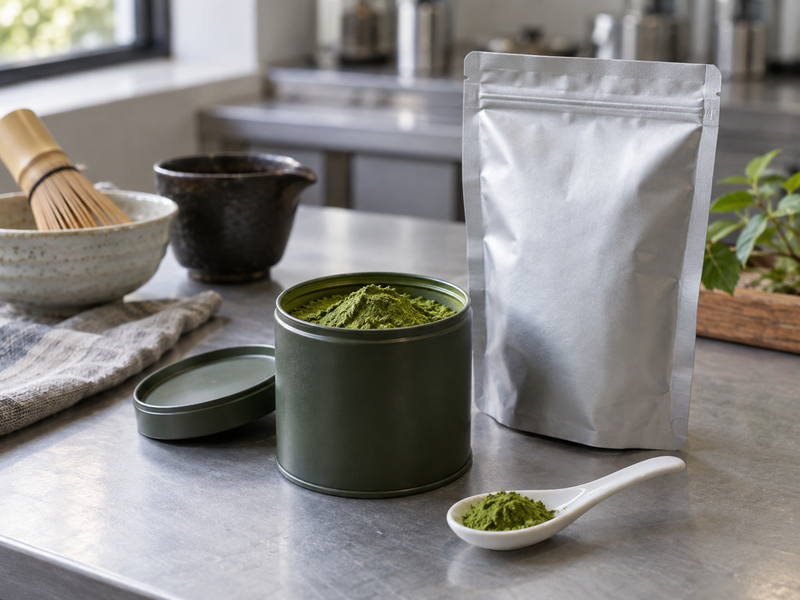
For a specific example, DōMatcha describes its Master’s Decaf as containing about 6 milligrams of caffeine per gram. It also identifies a proprietary water extraction process. Those statements concern that named product; they do not establish a category average. See the manufacturer’s Master’s Decaf product page.
| Buyer question | Useful answer | Follow-up request |
|---|---|---|
| What is being sold? | Named powder and product code | Ingredient declaration |
| What caffeine remains? | Result with units | Relevant analysis record |
| What was measured? | Powder or prepared drink | Preparation details |
Write the intended menu description before ordering samples. A measured caffeine statement, a decaf label and a caffeine-free promise communicate different things. Your team needs evidence for the wording it plans to use.
2. Which caffeine records should you request?
Read the result and its context
For decaf matcha, request a certificate or laboratory report that identifies the sample, date, analytical method and reporting unit. Ask whether the figure represents a typical result, a batch result or a contractual maximum. Those categories answer different procurement questions. A typical result alone does not describe the permitted variation between shipments.
Check the sample identity against the quotation and packaging. A report for leaf material cannot automatically describe a finished blend. A result for a prepared drink needs its powder dose and preparation method before it can inform your recipe.
If a report gives a result below a reporting limit, retain that wording. Ask the laboratory or supplier to explain what the limit means before converting it into customer copy. Do not replace an unfamiliar result with a zero.
Save the original report alongside your internal comparison sheet. Record who reviewed it and which questions remain unresolved. This avoids a common purchasing gap: a sample passes tasting, the order changes product code, and nobody checks whether the supporting documents changed too.
3. How do you calculate caffeine per serving?
Multiply concentration by powder weight
When a supplier reports caffeine in milligrams per gram of powder, multiply that figure by grams used per serving. A larger cup does not change the powder’s contribution if its dose stays fixed, while more powder increases it. Added coffee, chocolate or other ingredients may need their own calculation.
The table uses DōMatcha’s stated approximate 6 mg/g solely to demonstrate arithmetic. These are calculated powder contributions, not laboratory results for finished drinks.
| Illustrative powder dose | Calculation | Approximate caffeine contribution |
|---|---|---|
| 1.0 g | 1.0 x 6 mg/g | 6 mg |
| 1.5 g | 1.5 x 6 mg/g | 9 mg |
| 2.0 g | 2.0 x 6 mg/g | 12 mg |
Replace the input with evidence for your purchased material before using the calculation commercially. Keep the number of decimal places sensible; an approximate ingredient figure cannot justify a highly precise drink claim.
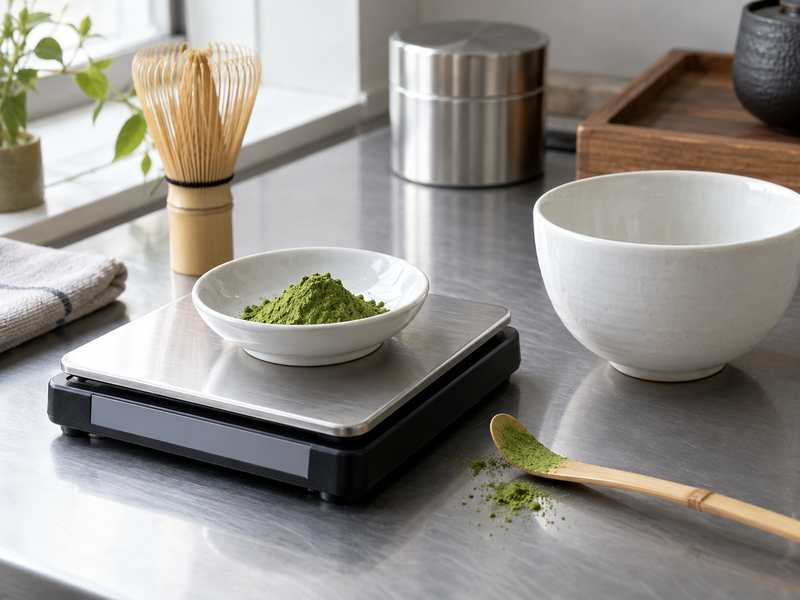
Weigh your scoop during training. Powder can sit loosely in a spoon or become packed against its side. Set a gram target, check the scale and confirm that staff can repeat the dose during a normal service sequence.
4. What should you ask about processing?
Connect the process to a purchasing concern
Ask which material undergoes decaffeination and at what stage the supplier mills and packs it. Request a plain description of the process used for the quoted product. DōMatcha’s water extraction statement is one documented example. It gives no basis for claiming that every decaf powder uses water, carbon dioxide or any other single process.
Your follow-up should concern the finished ingredient. Ask what specification controls caffeine, how batches are identified and whether processing changes require customer notification. If a process claim will appear on your packaging, request permission and documentation for that exact wording.
Discuss the sample’s intended use as well. A supplier may propose a powder for sweetened drinks while your development team plans straight-water service. Send the recipe format, powder dose, package size and expected order pattern so the response addresses your application.
Avoid judging taste from a process name. Treat aroma, bitterness, mouthfeel and color as separate sample checks. Keep the source material and processing answers in the purchasing file, then let the measured tasting trial determine whether that material fits your menu.
5. How should you compare powder samples?
Use coded cups and repeatable preparation
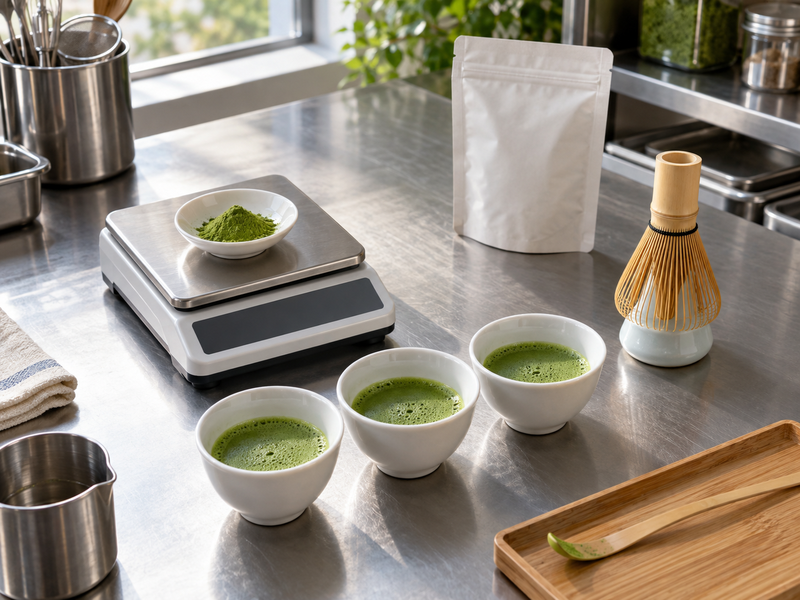
Give each sample a code and prepare it with the same scale, water and bowl. Record water temperature when it reaches the bowl. A kettle display alone does not describe the conditions of every cup. Keep preparation order and tasting time consistent so one sample does not sit much longer than another.
One maker’s reference method uses 2 g of powder, 60 ml of water at 80 C and 15 seconds of whisking. Ippodo’s basic usucha method provides those parameters. It is a preparation reference, not a validated decaf recipe or a caffeine benchmark.
| Attribute | Record during tasting | Keep constant |
|---|---|---|
| Aroma | Tea, roasted or muted notes | Cup and waiting time |
| Mouthfeel | Fine suspension or coarse sensation | Dose and whisking |
| Finish | Bitter, dry or clean aftertaste | Serving temperature |
Have tasters write notes before discussing their preferences. Ask them to describe the sensation rather than assign a premium label. Repeat close comparisons on another preparation round before deciding.
6. Which drink tests fit a cafe menu?
Test the recipe customers will receive
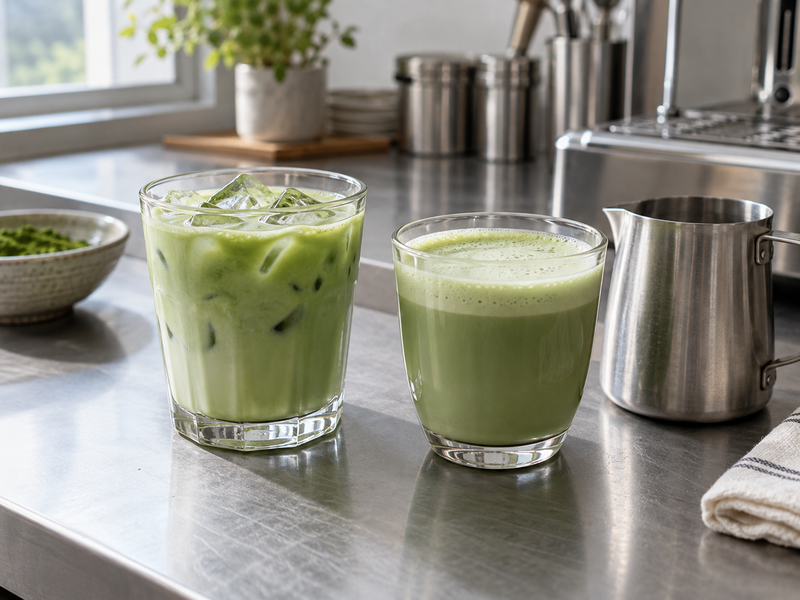
Straight-water tasting helps expose differences that milk and syrup can soften. A cafe still needs a separate decaf matcha test in its intended drink. Use the actual milk, cup, ice weight and sweetener. Changing several ingredients while changing powder makes the result hard to interpret.
A proposed development sequence starts with an unsweetened preparation, then a fixed milk recipe, then the planned sweetened version. Keep the powder dose unchanged during that sequence. After selecting a promising powder, run a separate dose trial and recalculate its caffeine contribution for every candidate recipe.
Taste immediately after preparation and again at a defined point during ordinary consumption. Record separation, aroma and the impression left after a sip. These checks describe service quality; they establish neither storage life nor health effects.
Decide whether the drink belongs in your regular menu before buying a large pack. Staff should be able to explain its ingredients and measured recipe without promising sleep, relaxation or suitability for an individual medical condition. Route personal health questions to an appropriate healthcare professional and keep menu training focused on documented product facts.
7. How do you handle powder during service?
Separate stock control from drink preparation
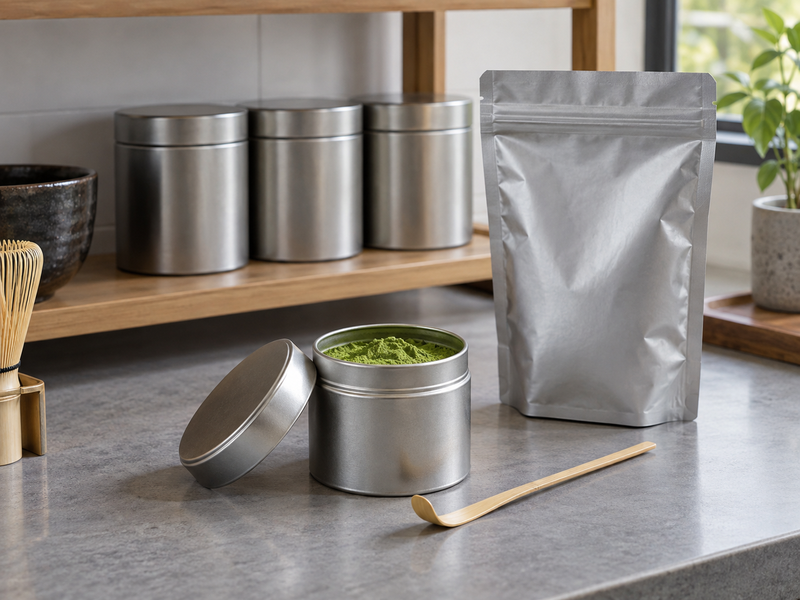
Assign decaf matcha its own clearly marked container and product code. A busy bar may keep several green powders in similar tins. Readable labels and a defined storage position reduce the chance of selecting the wrong one. Retain the original lot identity when decanting.
Follow the supplier’s storage and opening instructions. Choose a working container that fits your expected use, closes properly and permits a dry scoop. Keep powder handling away from splashing rinse water. Do not refill an old container indefinitely without a documented cleaning and batch-change routine.
| Service point | Practical control | Record to retain |
|---|---|---|
| Receiving | Match pack to order | Product and lot code |
| Opening | Mark the container | Opening date and instructions |
| Dosing | Use a checked scale | Recipe version |
| Refilling | Track the new material | Batch change |
Train the preparation sequence during a simulated busy period. Check who weighs powder, where the sifted portion waits and how staff identify an unfinished drink. A correct recipe card still needs a workflow people can follow at the counter.
8. What belongs in a supplier specification?
Describe what you intend to accept
A buying specification should connect the sample you liked with the material you expect to receive. Include ingredient identity, caffeine reporting requirements, pack size, lot traceability and agreed quality documents. Set sensory references in language your team can assess, such as the approved sample code and preparation method.
Keep optional preferences separate from acceptance requirements. A vivid dry powder color may be desirable while a verified caffeine specification could be a condition of purchase. Write down which deviations require investigation and who can accept them. Otherwise, an urgent delivery can turn a preference into an undocumented exception.
Discuss the destination market and application with the supplier. Ask your quality and regulatory team which product records, contaminant specifications and label checks apply. A certificate for a company does not automatically cover every product or shipment.
The published Matcha Village powder selection guide can support broader application comparisons. Treat a decaffeinated ingredient as a separate sourcing inquiry. This guide does not confirm that Matcha Village offers or manufactures decaf matcha; request written confirmation of any proposed product and its supporting records.
9. How should you compare purchasing costs?
Cost the accepted serving
Calculate decaf matcha cost from your actual dose before comparing suppliers. Divide the price per kilogram by 1,000, then multiply by grams per drink. Add freight, packing costs and ordinary preparation losses in separate lines. This keeps a cheap quotation from hiding a larger recipe dose or an unsuitable order size.
The following figures are illustrative calculations, not market quotations. Each example assumes that the proposed dose has already passed your taste and documentation checks.
| Illustrative option | Powder price | Dose | Powder cost per drink |
|---|---|---|---|
| Sample A | USD 100/kg | 1.5 g | USD 0.15 |
| Sample B | USD 80/kg | 2.0 g | USD 0.16 |
| Sample A, larger dose | USD 100/kg | 2.0 g | USD 0.20 |
Ask for minimum order quantity, delivery terms and price validity. Compare those terms with expected sales and pack opening patterns. An order that sits beyond your planned stock rotation can cost more than its purchase price suggests.
Keep caffeine and cost calculations linked to the same recipe version. When development changes a dose, update both sheets before approving the menu margin.
10. What should happen before a commercial order?
Close the sample-to-shipment gap
Run a pilot using the pack format and preparation routine you expect to use commercially. Check that staff can identify, weigh, sift and whisk the material consistently. Record cup yield from the pack and account for powder left in containers or lost during handling. Keep the pilot observations separate from sales forecasts.
Reconcile the approved sample code, purchase specification and quotation. Confirm which documents accompany each shipment and how the supplier communicates a changed process or product. Retain a reference sample under the agreed conditions if your quality procedure calls for one.
Before printing a label or menu board, review every caffeine statement against the current product evidence and portion size. Ask the person responsible for your market’s labeling compliance to approve the final wording. A competitor’s wording cannot establish permission for your product.
Send the supplier a short decision sheet with the selected application, proposed dose, target pack format and unresolved questions. Place the commercial order after your purchasing and quality teams have accepted those details in writing.
FAQ
Q1: Is decaf matcha caffeine-free?
Do not assume so. Request the caffeine figure for the specific powder and calculate its contribution at your chosen dose. Keep approximate results described as approximate.
Q2: Can a cafe use its usual matcha recipe?
Use it as a proposed comparison recipe. Confirm flavor, suspension and powder weight with the new material before approving it for service or calculating a caffeine statement.
Q3: Does more milk reduce the caffeine amount?
Adding milk changes drink volume. It does not remove caffeine contributed by a fixed powder dose. Include any other caffeine-containing ingredients when assessing the complete drink.
Q4: Should buyers choose powder by color alone?
Color cannot establish caffeine content or suitability for a recipe. Review documentation and taste weighed samples under consistent conditions, then check the intended milk or sweetener combination.
Q5: What should a decaf matcha inquiry include?
Provide destination market, application, expected dose, pack size and forecast volume. Ask for current availability, product identity and caffeine documentation before requesting a commercial quotation.