
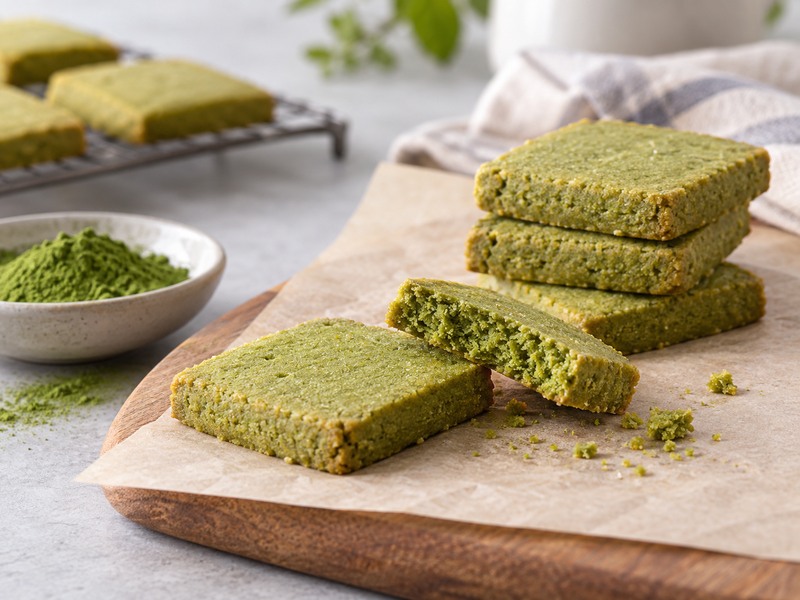
Matcha shortbread cookies look simple: butter, flour, sugar, and tea powder. Their low-moisture, crumbly structure makes commercial production less forgiving than a home batch. A slightly changed butter temperature can alter cutting; extra baking can dull green color; fragile pieces can break before they reach a shelf. Bakery manufacturers and private-label brands need an approved texture, powder specification, cutting method, and protective pack. This guide covers those decisions from first pilot to repeat order. It treats a saleable cookie after transit as the product, rather than a perfect piece lifted from the development tray.
1. What should matcha shortbread cookies promise?
Shortbread is valued for a tender, crisp bite and butter flavor. Matcha should be clear enough to justify the name without making the finish harsh. Define whether the product is a plain tea shortbread, a dipped biscuit, or a cookie with inclusions such as nuts. Also specify size, thickness, shape, color, and where it will be sold. A café counter cookie can be larger and handled gently; a small wrapped retail pack must survive packing and distribution. A visually green cookie that tastes only of butter and sugar is a weak matcha product.
How can R&D establish a reference?
Make a plain shortbread control and two measured matcha versions in the same dough and bake. Judge the cool cookie. Warm pieces may seem soft and aromatic, while customers usually eat them later. Score snap, crumb, butter aroma, tea strength, bitterness, and aftertaste. Photograph both top and broken interior under fixed light. Define an acceptable breakage level at packing and after shipping. If the team wants a square shape, test corners for damage; if it wants a round slice, check thickness uniformity. The reference should represent ordinary production, not the best piece selected from a pilot tray.
| Product attribute | Test | Commercial consequence |
|---|---|---|
| Tea flavor | Coded tasting after storage | Repeat purchase |
| Snap | Break and bite test | Positioning |
| Green color | Standard-light photo | Shelf appeal |
| Breakage | Pack and route pilot | Saleable yield |
2. Which matcha powder works in a butter-rich dough?
Butter and sugar can soften tea bitterness but also hide delicate aroma. A powder chosen for a plain bowl may not offer value after baking, while a strongly flavored culinary sample may make the shortbread taste rough. Request lot-identified powder samples and test them at a fixed formula dose. Compare raw dough only for dispersion; make the purchase decision from cooled cookies and packed samples at the planned sales age. Color should be judged after baking, since a bright dry powder does not guarantee a green biscuit.
What should buyers ask the supplier to provide?
Request specification, origin, ingredient declaration, storage instructions, pack options, and documents required by the destination market. Describe the cookie. Tell the supplier whether the product is plain, chocolate-dipped, or nut-filled and what color and flavor range is required. Pure matcha provides control over sugar and butter in the formula. A sweetened blend changes dry solids and labeling and should be treated as a different ingredient. Keep a retained sample of the accepted powder lot and repeat the bake comparison when the supplier changes the specification.
3. How does matcha change shortbread dough handling?
Adding powder changes the dry ingredient balance. If matcha is added on top of an established formula, dough may feel different from a version where it replaces a measured portion of flour. Test both approaches rather than assume they are interchangeable. Mixing should distribute green color evenly without overworking the dough and toughening texture. Powder pockets may appear as dark specks in a pale cookie. Define a dry preblend or sifting step if it improves the result and can be repeated on the production line.
Which dough measures should the plant record?
Record ingredient temperature, mixing order, time, dough temperature, rest, and deposit or sheet thickness. Inspect the cut face. Uneven green streaks can reveal poor dispersion before baking. Do not add unmeasured flour at the bench to make sticky dough easier to handle; it changes flavor and yield. If the dough is chilled before cutting, define a practical temperature range and maximum hold. A process that works only for one skilled baker is not ready for a multi-shift line. Compare several normal batches before fixing the final instruction.
| Dough control | Measure | Failure to prevent |
|---|---|---|
| Dry preblend | Mixing sequence | Tea pockets |
| Dough temperature | At cutting | Smearing or cracking |
| Thickness | Across sheet | Uneven bake |
| Rest window | Time and condition | Shape drift |
4. Should shortbread be sliced, stamped, or sheet-cut?
The shaping method affects waste, thickness, edge finish, and speed. Sliced logs can produce round pieces but require controlled diameter and firmness. Stamping suits distinctive shapes but can generate trim and handling damage. Sheet-cut squares reduce some trim yet expose corners to breakage. Choose the method by product design and equipment, then calculate saleable yield. A hand-cut pilot that makes ten perfect cookies says little about thousands of units handled by a depositor, cutter, or packing belt.
What should a shaping trial measure?
Track dough temperature, pieces per batch, trim weight, thickness range, cracked edges, and time per tray. Count the corners. A square cookie may look distinctive but lose margin if many pieces break in transport. Test reworked trim only under a defined quality procedure; repeated rolling can change texture or color. For seasonal shapes, validate each cutter separately. If a nut inclusion is used, check that pieces do not catch on the blade or create uneven unit weights. The simplest shape that meets the brand brief may be the most reliable commercial choice.
5. How can bakers control color without underbaking?
The goal is an acceptable green interior and surface at a validated bake endpoint. Record pan material, load pattern, oven profile, time, and cooling. Edges may brown before the center dries; that contrast can be intentional if the product still matches its visual promise. Do not shorten baking solely for color without checking texture and safety. Evaluate samples from several oven positions and after storage. Matcha color may look different in a photograph, under retail lighting, and inside a printed pouch window.
How should the bake target be communicated?
Use a reference cookie plus measurable weight loss or other plant-appropriate endpoint checks. Show the normal batch. An idealized green photograph can cause operators to pull trays too early. Break cookies after cooling and inspect the interior. If the product is chocolate-dipped, judge color before and after dipping; a large coating may make a premium color powder unnecessary. Changing oven settings can alter snap and shelf life, so repeat those tests before approving a greener appearance. The matcha cookies category may suggest presentation, but the plant’s own bake record should govern release.
| Bake check | Sample point | Decision |
|---|---|---|
| Surface color | Multiple oven positions | Visual range |
| Interior color | Broken cookie | Tea appearance |
| Snap | After cooling | Texture release |
| Packaged color | End of life | Shelf promise |
6. Which inclusions fit shortbread without creating excess loss?
Nuts, white chocolate, citrus, or a partial dip can make matcha shortbread distinctive. Each adds cost, allergen and label work, and a possible mechanical problem. Large nut pieces can fracture a thin cookie during cutting; chocolate can scuff packaging; citrus flavor can hide tea. Trial the plain cookie first, then add one inclusion at a measured rate. Compare customer preference and unit yield. An inclusion is worth keeping only if the complete product tastes better or sells at a price that covers its extra labor and loss.
How should nuts be assessed specifically?
Define nut type, size, roast, dose, distribution, and allergen controls. Cut through the inclusion. Test whether cutters crush nuts and split dough. A recipe with nuts in some pieces and none in others makes portion cost and customer expectation uneven. Review raw material storage and supplier declarations. If a nut-free version is planned, do not assume shared equipment can support that claim without a separate cross-contact assessment. Keep packaging imagery representative of normal inclusion levels. A dramatic top-dressed pilot piece is not a valid reference for a line that deposits nuts randomly.
7. How should breakage be managed through packing and shipping?
Shortbread often fails after the oven, not in it. Tray transfer, cooling conveyors, robotic pick-up, wrapping jaws, case packing, and freight vibration can crack pieces. Map where breakage occurs and calculate the saleable yield at each stage. A protective tray may raise pack cost but reduce returns. A tighter pack may prevent movement while crushing edges if product size varies. Test normal units through the actual route. The most fragile shape may require a different portion design rather than a more elaborate package.
What should a route trial include?
Pack units from a normal production run, move them through the intended warehouse and shipping path, then inspect unopened retail packs. Open the bottom case. It may experience different pressure from the top. Record intact pieces, crumbs, seal damage, and appearance through any window. If a few broken fragments are acceptable, define the limit and check consumer expectations. Avoid calling a pack “protective” based only on a bench drop test. For e-commerce, test parcel handling separately from pallet distribution. The resulting breakage allowance belongs in costing and the release specification.
| Stage | Breakage source | Control trial |
|---|---|---|
| Cooling | Handling warm pieces | Transfer timing |
| Wrapping | Jaw or film pressure | Pack setup |
| Case | Compression and movement | Case design |
| Delivery | Vibration and drops | Route test |
8. What shelf-life study does a shortbread SKU need?
The finished cookie’s date depends on formula, bake, moisture, package barrier, and storage route. Test snap, flavor, tea aroma, color, rancid or stale notes, and pack condition through the proposed life. Quality should add safety measures appropriate to the product and market. A powder supplier’s shelf-life statement does not establish a baked cookie date. If butter or nuts are prominent, pay particular attention to flavor changes after storage. A product that stays crisp but loses tea identity may fail its commercial target before a safety limit is reached.
How should the study be designed?
Use normal production units in the exact film, tray, or box to be sold. Test the sold pack. A cookie in a laboratory jar is not a substitute for a retail pouch. Include units from the start and end of packing and record storage conditions. Taste at a defined temperature with an approved reference. If the pack material or serving size changes, quality should decide which tests to repeat. Consumer instructions should match the study; an “ambient” claim needs a defined storage environment, not an assumption that every sales channel behaves alike.
9. How should labels and supplier claims be checked?
The ingredient list must include butter, flour, matcha, sugar, and every inclusion or coating in the actual formula. Allergen declarations should reflect ingredients and the site. Tea origin, organic status, or a special processing claim requires documents linked to supplied lots. Do not imply that shortbread is gluten-free merely because matcha itself is a tea powder; ordinary wheat-flour shortbread contains gluten. Avoid health promises for a biscuit. Destination-market review is needed before the same private-label artwork is used across regions.
What should procurement keep current?
Store signed specifications, supplier declarations, lot records, quality documents, and change notices. Check the packaging sentence. If a label says Japanese matcha and sourcing switches, artwork needs review before production. A new chocolate or nut supplier can alter allergens and flavor even when the tea stays the same. Require a pre-shipment or production-lot sample for high-volume powder orders where appropriate. Bulk wholesale matcha conversations should identify this exact application and the evidence required for the target market.
| Claim or label item | Supporting file | Trigger |
|---|---|---|
| Matcha origin | Lot traceability | Supplier shift |
| Nuts or dairy | Ingredient and allergen file | Inclusion change |
| Best-before date | Packed-cookie study | Film change |
| Unit weight | Finished-unit checks | Cutter change |
10. When are matcha shortbread cookies ready for launch?
Approve the cookie after a plant run, packed shelf-life study, route trial, label review, and cost check based on intact saleable units. Keep a reference cookie at the intended sales age and a photo of acceptable shape and color. A small retail pilot can test whether the flavor and texture match the price and whether damage appears on shelves. Change one variable at a time if the pilot reveals a problem. A better box cannot compensate for a cookie that tastes stale, and a good recipe cannot earn repeat sales if too many pieces arrive broken.
What should the final ingredient brief contain?
Specify matcha sensory target, use rate, pack size, forecast, destination, required certifications, and change-control terms. Keep the bake with the buy. Ask for a lot-identified powder sample and test it in the approved shortbread formula. Record landed cost per saleable cookie, including breakage and pack. Qualify a backup powder only after it passes the same bake and storage checks. The final SKU should be crisp, tea-forward, and intact when the customer opens it, with enough process control to produce the same experience on the next order.
FAQs
Q1. Is matcha shortbread the same as a soft matcha cookie? No. Shortbread targets a crisp, tender bite and has different dough handling and breakage risks.
Q2. Can a bakery add nuts? Yes, after testing cutter performance, distribution, texture, allergen controls, and packaging.
Q3. Why did green dough bake brown? Powder choice, formula, oven exposure, and storage affect color; inspect controlled finished-cookie trials.
Q4. What pack protects shortbread best? Choose through a route trial that measures damage, cost, and shelf-life performance for the actual channel.
Q5. How should matcha be bought for this SKU? Approve a lot-identified sample and specification in the finished cookie, then set change notice and receiving checks.