
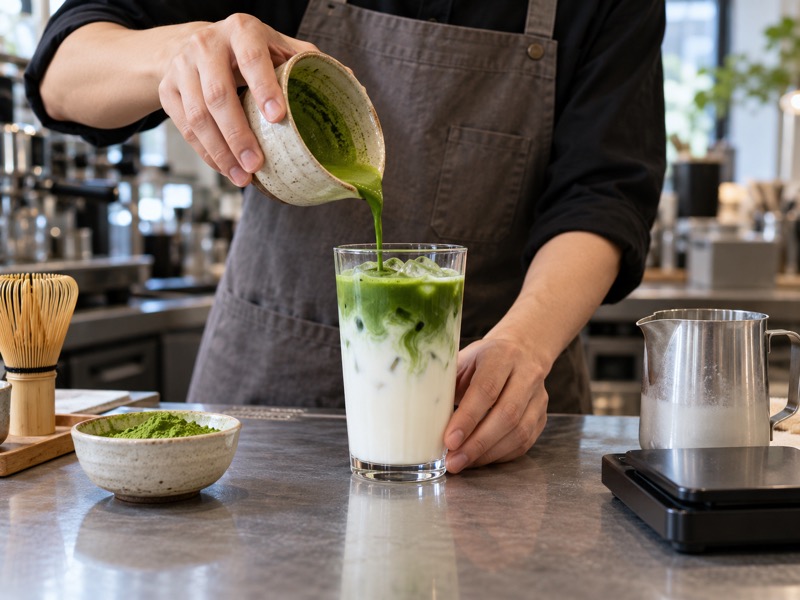
A matcha macchiato can mean different drinks on different menus. Some cafés serve cold milk marked with a small pour of matcha; others add vanilla or caramel; a few use espresso as well. If the menu leaves those choices unstated, customers and baristas imagine different cups. A café should define its version, test it in the serving glass, and write a build that works during a rush. The green layer is part of the presentation, but the drink must still taste balanced after a customer stirs it.
This guide treats the drink as a café product, not a home recipe. Jade Leaf’s Iced Matcha Caramel Macchiato appears among the first ten results for this search and shows one coffee-free version with milk, vanilla and caramel. The method below helps a shop decide its own ingredients, powder dose, serving sequence, cost and training checks. For a drink that also contains espresso, say so on the menu and test the coffee as a separate ingredient.
1. What should a matcha macchiato menu description promise?
Name the ingredients before selling the look
Write one sentence that tells a customer whether the drink contains coffee, which milk it uses and whether it is sweetened. The word “macchiato” alone does not settle those questions. A clear coffee-free description might be “iced milk with vanilla, topped with whisked matcha and a light caramel finish.” If the shop adds espresso, say “matcha, milk and espresso” instead of making guests discover the caffeine sources at pickup. Confirm that staff can repeat the same answer when a customer asks at the register.
Decide whether the layered appearance is part of the offer or a brief moment before stirring. A transparent glass can show the green pour; an opaque takeaway cup cannot. The serving note may ask customers to stir before drinking so the first sip is not mostly sweet milk and the last sip mostly tea. Photograph the actual cup during a trial, not a styled version with a different fill. Menu photography should show the product the bar can hand over at normal speed.
| Menu decision | Write it down | Customer risk if unclear |
|---|---|---|
| Coffee | None or an espresso shot | Unexpected ingredient |
| Milk | Default and alternatives | Different taste or allergens |
| Sweetness | Vanilla, caramel or unsweetened | Too sweet for the order |
| Presentation | Layered and stir before drinking | Uneven first and last sip |
2. Which matcha powder should a café test for this drink?
Judge tea flavour after milk and syrup are added
Sample several powders in the finished cup. A soft powder can be pleasant with water and disappear under a full serving of milk. A stronger powder may hold its flavour but become bitter when the customer stirs the last centimetre of concentrate into the drink. Use the café’s actual milk, syrup, glass and ice in the test. Compare two or three weighed doses blind. Record flavour immediately after stirring and after the time a takeaway customer normally waits. A powder that only works at an expensive dose may be the wrong purchase even if its dry colour looks attractive.
Ask the supplier for a product code, ingredient statement, pack options and a normal production-lot sample. Pure matcha and a sweetened latte mix are different inputs; adding a premix to the same vanilla recipe can double the sweetness. Check how quickly each powder wets and whether a new barista can make a smooth concentrate. Keep a sealed approved sample to compare with the first commercial lot. The site’s matcha powder guide for cafés covers broader grade selection; here the purchase decision belongs to this specific layered drink.
3. How should the barista prepare the matcha base?
Wet the powder before it reaches cold milk
Weigh the tested matcha dose into a clean, dry mixing vessel. If the sample has visible compacted lumps, sift it first. Add a small measured portion of the recipe water and work the powder into a smooth slurry, then add the remaining water and mix until no dry edges remain. The exact water amount should come from the cup trial. A base that is too thick can cling to the bowl and pour in clumps; too much water thins the final drink and weakens the layer.
Inspect the bottom and sides of the vessel before the pour. A tall frother can create foam while leaving powder in a corner. A bamboo whisk, handheld frother or shaker may work if the vessel and cleaning routine suit the station. Time the entire preparation, including rinsing the tool. A single smooth test cup made slowly by one experienced barista does not prove the method works when the queue is long. For more on dispersing tea leaf powder, see the site’s guide to keeping matcha evenly mixed.
| Base control | Record in recipe | Failure to watch |
|---|---|---|
| Powder | Weighed grams | Weak or bitter cup |
| Water | Volume and tested temperature | Thin or stubborn base |
| Tool | Vessel and mixing endpoint | Dry pockets |
| Pour | Base volume and timing | Uneven green mark |
4. What makes a visible green layer without a gritty drink?
Control the cup build and test the stirred result
Start with a measured glass, ice amount and milk volume. Add syrup in the agreed position, then pour the milk. Prepare the matcha base separately and pour it slowly over the ice or milk surface using one repeatable movement. The resulting green cap should be visible long enough for handoff. It should also stir into a balanced drink without dry specks or heavy sediment. That second test prevents a café from approving a drink solely because it photographs well.
Ice shape, amount and pour height can change the appearance. Trial one variable at a time. If the matcha drops straight to the bottom, first check whether the base was too dilute or poured too forcefully; do not automatically add more syrup. If the top stays dark and the lower milk tastes plain after several stirs, the recipe or serving instruction needs work. Use a clear test glass even if the production cup is opaque. Photograph the drink immediately and after the normal handoff interval, then taste from top to bottom.
5. How much vanilla or caramel should the recipe contain?
Choose sweetness in a blind tasting, not by drizzle size
Sweetener can make a matcha macchiato accessible to guests who do not normally drink unsweetened tea, but a heavy caramel line can hide both the milk and the powder. Test a small range of measured vanilla syrup and caramel sauce in the same cup. Keep the matcha dose, milk and ice fixed. Ask tasters to score tea presence, sweetness and finish after stirring. If the café offers a “less sweet” option, define how much syrup changes and whether the caramel finish remains. A vague instruction to “use less” produces a different drink on every shift.
Check the actual syrup pump and sauce bottle. One pump may not dispense the same volume when syrup viscosity, bottle level or pump head changes. Weigh several normal pumps during setup and record the approved measure. For a dairy-free variation, confirm that the chosen sauce suits the menu claim rather than assuming caramel is free of milk ingredients. If the shop has allergen information duties, have the responsible team approve the ingredient statement and staff response before the drink launches. Keep the menu promise aligned with the served cup.
| Sweetness trial | Hold constant | Taste after stirring |
|---|---|---|
| No syrup | Powder, milk, ice | Tea and milk balance |
| Measured vanilla | Same base recipe | Sweetness in first and last sip |
| Measured caramel | Same vanilla amount | Finish and visual effect |
| Reduced sweet option | Same cup and pour | Whether tea remains pleasant |
6. What changes when a café serves a hot matcha macchiato?
Test foam and integration as a separate recipe
A hot version cannot simply reuse the iced build without adjustment. Ice no longer controls the pour, warm milk has a different texture and a tall cap of foam can trap the matcha at the surface. Prepare the same smooth tea base, then test it with the café’s steamed milk volume and texture. Pour slowly and observe whether the green mark remains visible. The hot cup should taste even after a customer stirs it; a dramatic green patch is not useful if most of the milk below is bland.
Record the delivered water and milk temperatures the team actually uses. A steam wand can add both heat and air, and two baristas may produce very different foam from the same milk. Use the machine maker’s cleaning instructions and the café’s food-safety process. Keep powder out of coffee paths and milk circuits unless the equipment explicitly permits that ingredient. A short side-by-side trial of hot and iced drinks may show that only one version fits the menu; that is a sound outcome, not a failure to expand the offer.
7. Should the matcha macchiato include espresso?
Make coffee an explicit recipe and menu choice
The word “macchiato” can lead some customers to expect coffee. A café can offer a coffee-free milk-and-matcha version or a version with espresso, but staff must know which one a menu name refers to. If espresso is included, test it as a separate ingredient. Hold matcha, milk and sweetener fixed, then add a measured shot and compare flavour, colour and the final cup after stirring. Coffee can dominate a delicate powder, while extra caramel can make the drink taste like a dessert rather than either tea or coffee.
Specify shot count and preparation order. A dirty matcha latte elsewhere on the site already covers the general coffee-and-matcha combination; this recipe should keep its own identity through a defined milk layer and clear menu wording. Avoid suggesting that every matcha macchiato contains espresso or that every coffee-free version is caffeine-free. Matcha itself contains caffeine. Train the register team to describe the ingredients rather than relying on the drink name as a shortcut.
8. How should a shop calculate the cost of each drink?
Use the dose and loss from the approved service method
Calculate powder cost from the accepted grams per cup, not the supplier’s cost per kilogram alone. Add the measured milk, syrup, sauce, cup and lid, and the normal loss from remakes or expired opened packs. If a slower technique takes staff away from other orders, include preparation time in the launch decision. Compare the fully costed drink with the menu price and expected sales volume. A bright premium powder can still fit the offer if its lower working dose balances the kilogram price.
Run a small trial during ordinary service. Record how often baristas need to remake a cup because the base clumps or the pour ruins the presentation. Do not hide those costs inside a broad food-cost percentage. For a “less sweet” option, the ingredient cost may fall slightly while preparation time remains the same; the price decision belongs to the menu strategy, not to an arbitrary syrup subtraction. Recalculate when pack size, milk supplier or cup size changes. The useful number is cost per accepted cup.
| Cost line | Measure | Why it can drift |
|---|---|---|
| Matcha | Accepted grams per cup | Dose or powder changes |
| Milk | Measured volume | Overfill at the bar |
| Sweetener | Pump or weighed sauce | Variable pour |
| Loss | Remakes and opened stock | Training or slow turnover |
9. How can staff repeat the build on every shift?
Give the bar a short station card and a pass test
Write a station card with the powder grams, water measure, vessel, mixing endpoint, ice fill, milk volume, syrup measure, pour order and customer instruction. Place it where the drink is made. “Whisk well” is too vague; “no dry ring in the bowl before pouring” gives a barista a visible endpoint. Pre-portioning dry powder can save time if the shop’s handling procedure permits it. Keep portions protected from moisture and identify the product and lot under the café’s traceability process.
Ask two or three staff members to make the drink independently. Compare their bases before milk enters the cup and their finished drinks after the same wait. If the layer differs but the base is smooth, inspect ice fill and pour height. If one cup has grit, inspect powder wetting and the vessel. Train the specific step that failed. Include tool washing and reset in the timed build. A recipe that only the creator can execute should remain in trial until ordinary staff can make it at normal pace.
| Station check | Pass condition | If it fails |
|---|---|---|
| Concentrate | No visible dry pockets | Remix before milk |
| Build | Approved milk and ice fill | Correct measure |
| Layer | Visible at handoff | Check pour and base volume |
| Stirred cup | Even flavour and texture | Retest dose or sequence |
10. What should managers monitor after launch?
Link customer comments to the part of the recipe that changed
Track sales of the macchiato separately from ordinary matcha lattes so the café can judge its own demand. Log remakes for clumps, collapsed layers, wrong sweetness and ingredient questions. Record the powder lot and recipe version when a pattern appears. A rise in weak-flavour comments after switching milk does not automatically mean the matcha changed. A rise in gritty cups after a new employee joins points to the hydration step until a controlled test says otherwise.
Watch opened-pack turnover, syrup usage and the actual powder grams withdrawn from stock. If the drink sells only occasionally, a special pack may stay open too long; the shop may be better off using the same approved powder as a core latte. Review the photograph against cups served during a rush. If staff cannot produce the advertised appearance without slowing the line, adjust the build or the image. The final measure is a cup customers understand and staff can make consistently, not an isolated photo of green milk.
Frequently asked questions
Q1: Does a matcha macchiato always contain espresso?
No. Recipes differ. State clearly whether the café’s version includes coffee and list it in the build.
Q2: Is a coffee-free matcha macchiato caffeine-free?
No. Matcha naturally contains caffeine even when no espresso is added.
Q3: Why does the green layer disappear?
Ice fill, milk texture, base dilution and pour speed can change the layer. Test those variables one at a time.
Q4: Should the customer stir the drink?
Usually yes. Tell customers when a layered drink should be stirred so the cup tastes balanced from first to last sip.
Q5: How should a café select the matcha powder?
Blind-test normal production samples in the actual drink, record the accepted dose, and compare cost per finished cup.