
The phrase “matcha leaf” is useful shorthand, but it can hide the steps between a tea plant and a fine green powder. Matcha begins with tea leaves; in conventional production, shaded leaves are processed into tencha and then milled. A buyer choosing powder for a café or food factory cannot inspect every leaf in the field, yet can ask how the raw material was grown, picked, processed and traced. These ten checks connect leaf decisions to the finished product without assuming that one photograph of a bright green leaf proves quality.
Contents: Plant · Shoot · Shade · Harvest · Steaming · Tencha · Sorting · Milling · Records · Trial
1. Which Plant Provides Matcha Leaves?
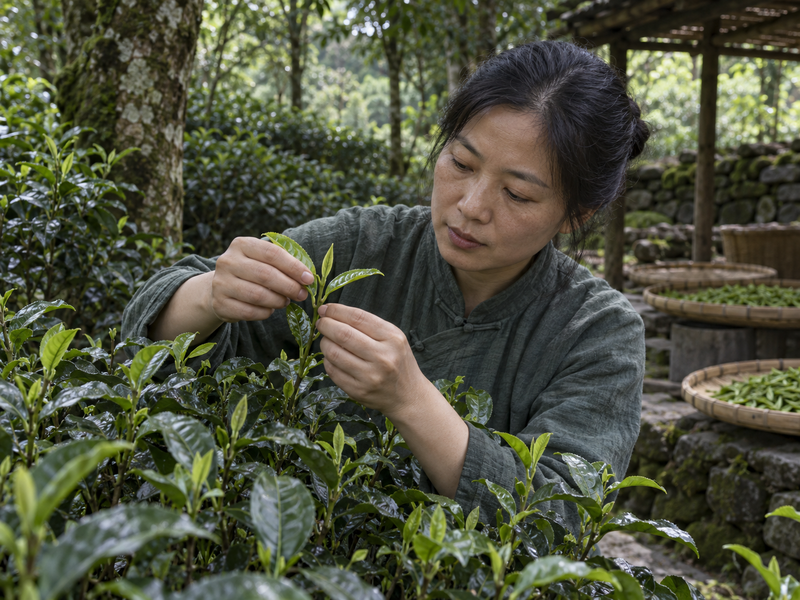
Identify tea, cultivar and source
Matcha comes from the tea plant, Camellia sinensis. That botanical identity is a starting point, not a complete product specification. Different cultivars and growing locations can yield different leaf composition and sensory traits. A buyer should ask for the product’s origin, any declared cultivar or blend, and the record that links finished powder to the raw-leaf lots. An attractive field photo could come from a different harvest than the powder being offered.
For a brand making a specific origin claim, traceability needs to be more detailed than for a generic tea blend. If several farms feed one mill, a blend may still be consistent, but its components must be documented. Ask whether the supplier can repeat the same source program next season. If the source changes, require a new sample trial before the substitute enters production. The plant name alone does not tell you whether the tea will whisk smoothly, taste balanced or survive a hot bake.
| Identity layer | Useful record | Buyer decision |
|---|---|---|
| Plant | Tea species and raw material spec | Product identity |
| Cultivar | Declared cultivar or blend | Sensory consistency |
| Farm or region | Lot-linked origin | Label accuracy |
| Harvest | Date or season | Replenishment planning |
2. Which Part of the Plant Is Picked?
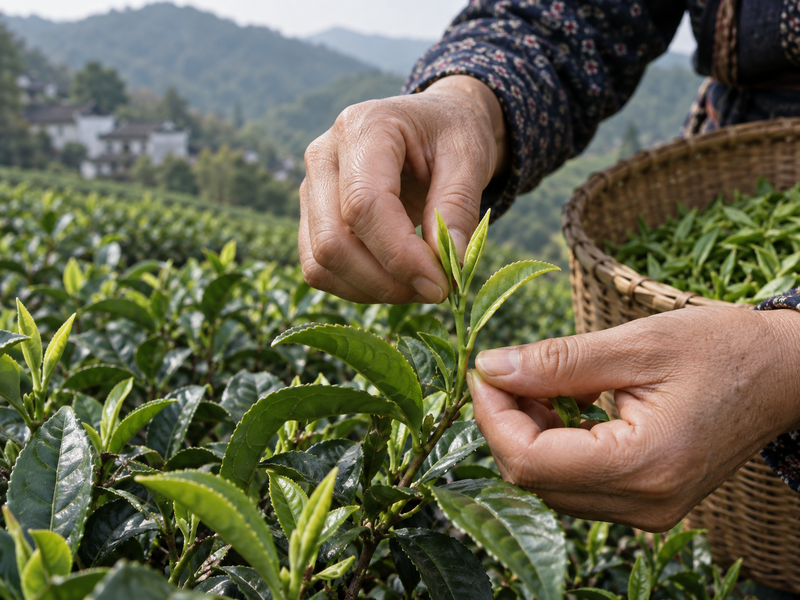
Leaf maturity affects the raw material
Tea shoots change as they grow. Tender young leaves and more mature leaves need not behave alike in processing or taste. Suppliers may also use different picking standards for powders intended for drinking, milk beverages or bakery. Ask what leaf material is collected and how that standard is communicated to harvest teams. “First leaves” may sound premium, but buyers still need a sample and a commercial specification.
Picking is only one factor. A careful harvest can be undermined by poor handling before processing. Conversely, a slightly broader leaf standard may be appropriate for a product where strong tea flavor matters more than a delicate water-bowl taste. Review the finished powder at the proposed dose and price. Keep the picking description in the sourcing file so a change in raw material is visible when the next lot arrives.
At receiving, record leaf weight and the time since picking. If a farm delivers several small loads, do not merge their identities before the factory has assigned batch codes. Those simple records help explain later differences between powders made on the same day.
They also narrow a quality investigation to the affected load.
3. Why Is the Leaf Shaded?
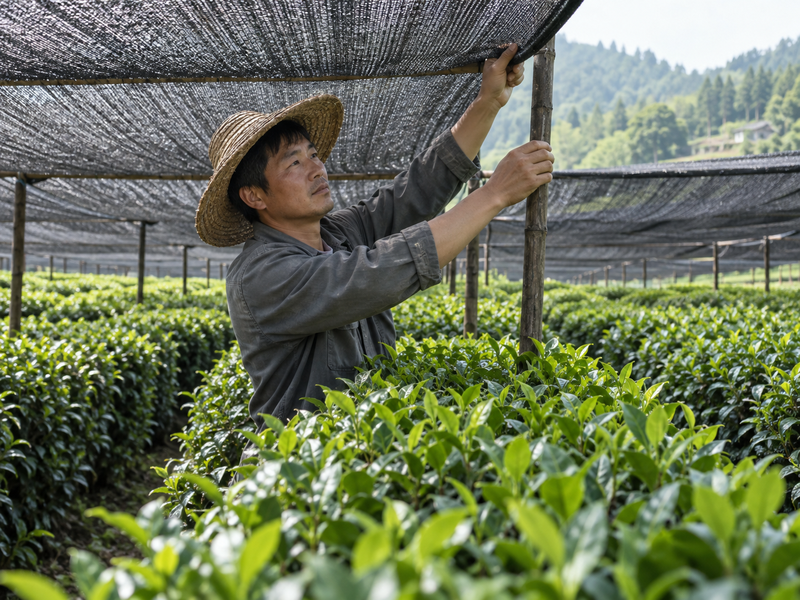
Understand the practice and its limits
Tea plants used for matcha are commonly shaded before picking. Shade can alter pigment and flavor-related chemistry. A study of tea plants grown in Guizhou, China compared open-air and specific shade treatments and reported changes in chlorophyll and other measured components. It was conducted under defined conditions; it does not establish a single optimal shade recipe for all farms or prove that every shaded leaf becomes premium matcha.
Ask how the supplier shades the crop, what part of the production uses that crop and how lots are separated. A label saying “shade grown” should refer to the material actually sold. Compare the resulting powder’s color and taste, since shading can interact with cultivar, season and processing. For a large buyer, an on-site or remote audit can clarify whether the claimed practice exists at commercial scale. Avoid translating a percentage from a research paper directly into a contract without supplier-specific trials.
| Shade question | Reason to ask | Evidence |
|---|---|---|
| Which fields? | Claim scope | Farm records |
| Which lots? | Traceability | Harvest codes |
| How controlled? | Repeatability | Process description |
| What outcome? | Product fit | Finished-powder trial |
4. How Does Picking Time Affect the Material?
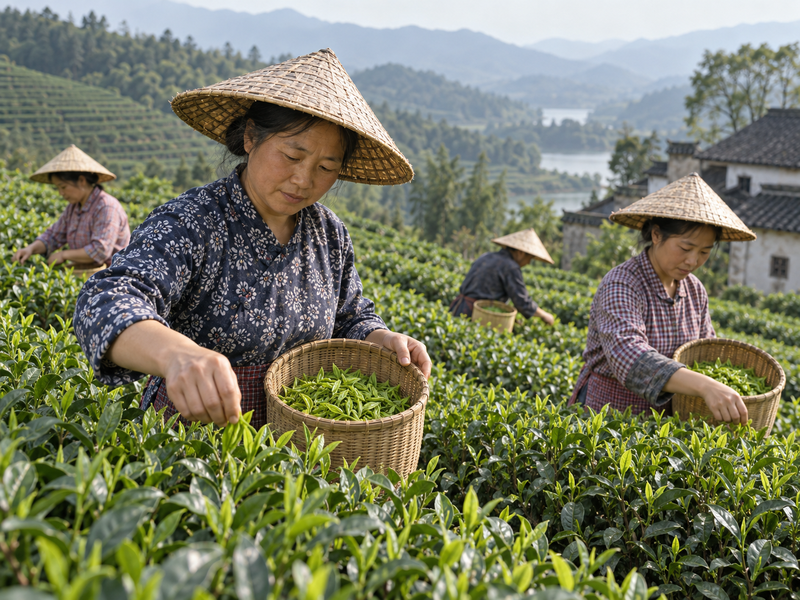
Do not use season as a stand-in for tasting
Harvest timing affects which leaves are available and how the product may taste. It also shapes supply volume and price. A supplier may reserve a particular picking for a drinking-grade product and use other lots for formulated foods. These are commercial choices that should be tested, not assumed from a seasonal name. Ask for the harvest period, lot date and whether the powder contains a blend of pickings.
When a brand prints “first harvest,” it needs records supporting that claim for every packed lot. If the brand does not make a harvest claim, it still needs consistent specifications. Samples from two pickings may be blended to keep color and flavor within a range. Evaluate the blend in the intended recipe and set a change-notification rule. Our matcha harvest guide covers the supply questions in more detail.
5. What Happens Soon After Harvest?
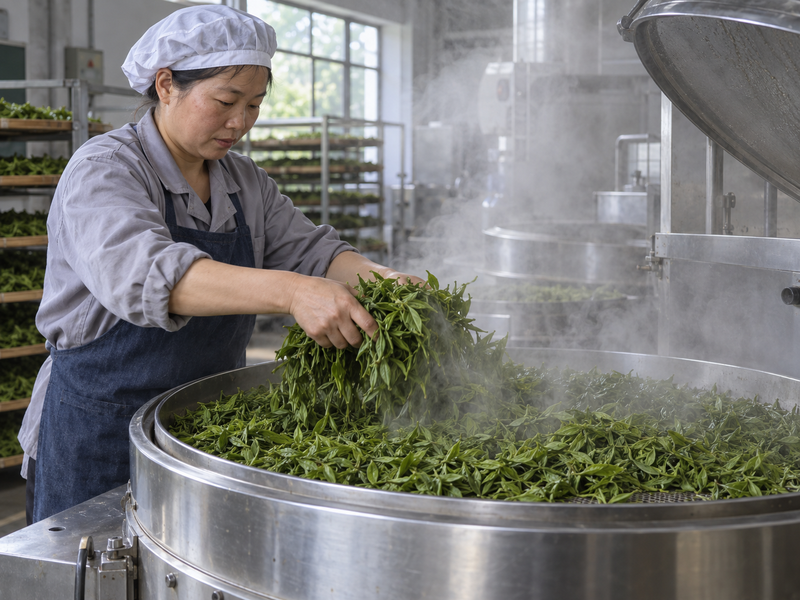
Watch the handoff from farm to factory
Fresh tea leaves are perishable raw material. The processor needs a controlled flow from picking to the steps that stabilize and dry them. Conventional tencha production uses steaming followed by drying without the rolling typical of some other green teas, as described in a research review of matcha processing. A Chinese producer may use its own equipment and process sequence; the buyer should request a clear account of what the commercial lot actually underwent.
Ask where the fresh leaf is held, how long before processing begins and how mixed lots are prevented. Temperature, moisture and delays can affect the final sensory result. The exact factory settings may be proprietary, but a credible supplier can show process controls and batch records. A buyer who sees only a mill photograph misses much of the quality story; the leaf has already passed through several decisions before it becomes powder.
| Stage | Buyer question | Record |
|---|---|---|
| Picking | Which lot and field? | Harvest ticket |
| Transport | How was leaf protected? | Transfer log |
| Stabilization | What process was used? | Batch record |
| Drying | What release condition applied? | Moisture result |
6. How Does a Leaf Become Tencha?
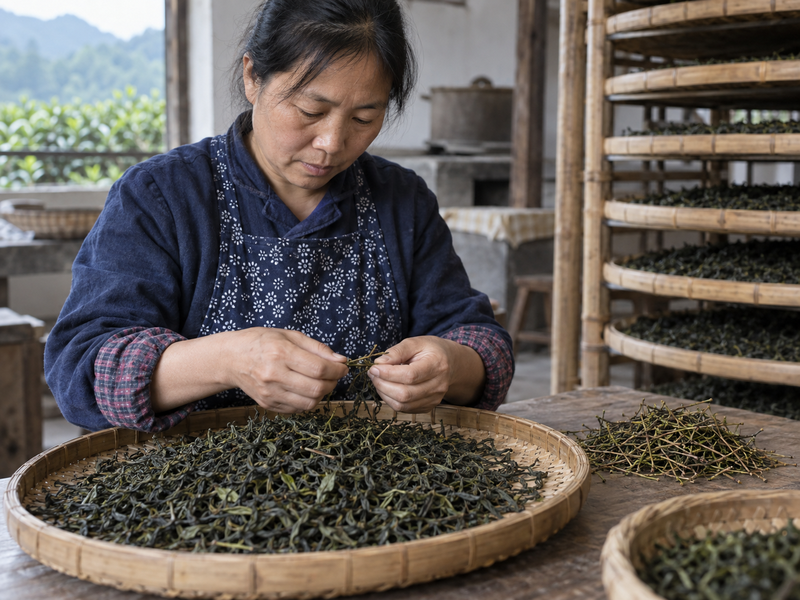
Be precise about the intermediate material
Tencha is the processed leaf material milled to make conventional matcha. A scientific review describes shaded tea leaves that are steamed and dried without rolling before grinding. Not every fine green tea powder has followed that route. Buyers who need tencha-based matcha should say so in the specification and ask the supplier to describe the actual process. A familiar word on a sales page is not itself a process record.
The intermediate leaf offers a useful inspection point. Check its appearance, aroma, moisture and lot identity before milling. Keep a retained sample if the supply agreement allows. When a powder later tastes different, those records can help distinguish a raw-leaf shift from a milling or storage issue. For product teams, understanding tencha also prevents a common misunderstanding: matcha is not produced by simply grinding any finished green tea leaves into a fine powder.
7. Why Are Stems and Veins Managed?
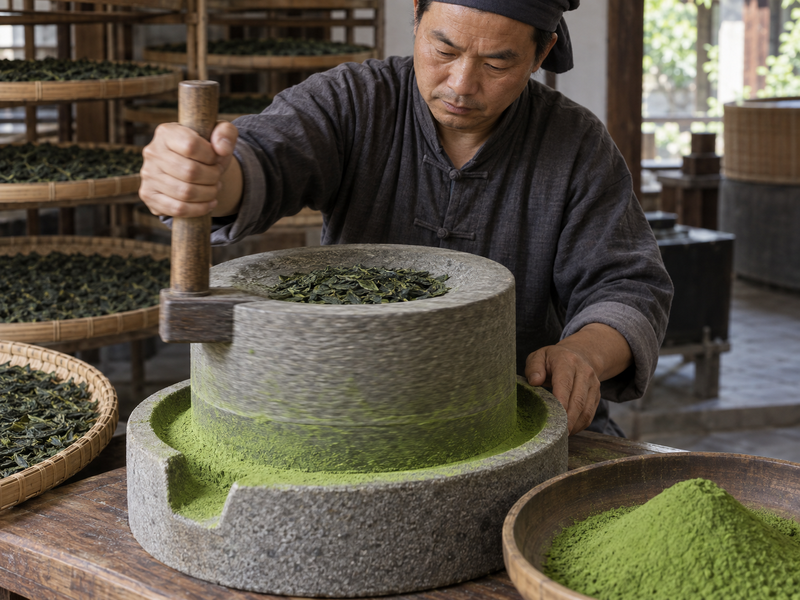
Define the raw material entering the mill
Before milling, processors can sort the dried leaf material and manage stems, veins or other fractions. The chosen standard affects texture, flavor, color and yield. A supplier should explain what it removes for the grade being offered and how the output is checked. The buyer does not need to demand a romantic hand-sorting story; it needs a repeatable process and a powder that meets the agreed application.
Ask for a physical specification and inspect production samples. If a lot is more fibrous or gritty than the approved one, test whether the difference is caused by raw material, sorting or milling. Rejecting a lot simply because it looks a little different under an uncontrolled light may miss the underlying issue. A clear acceptance method—particle measure, standard whisk trial and sensory comparison—gives both parties a practical basis for resolution.
8. What Changes When Leaves Are Ground?
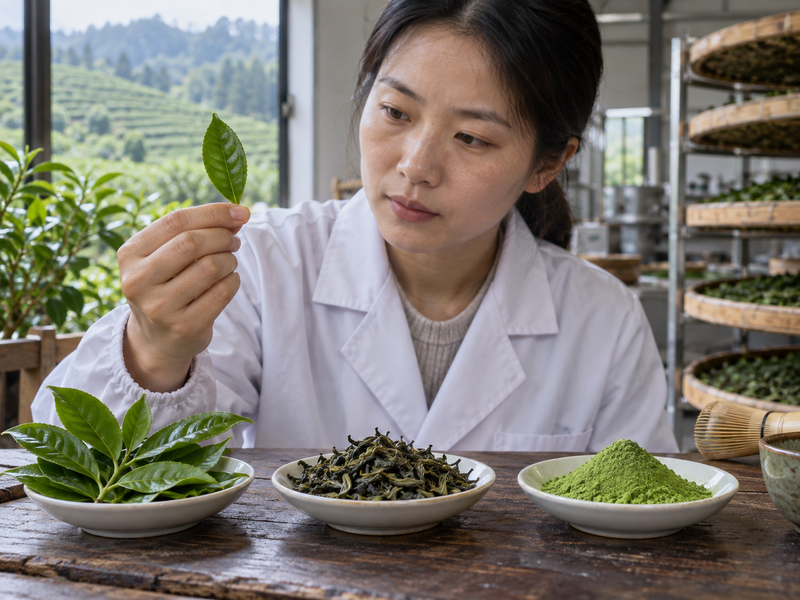
Whole leaf becomes a suspended powder
Milling reduces dried leaf to fine particles. In a prepared drink, much of that leaf material remains present as suspended matter rather than dissolving like sugar. Particle size and agglomeration therefore matter to mouthfeel and sediment. A dry powder can appear uniform yet disperse poorly in cold liquid. Test the finished powder with the water, milk or process planned for the product, using a fixed dose and mixing method.
Milling can also create handling concerns: fine powders may clump if exposed to moisture, and repeated transfers can complicate lot control. Ask how the mill cleans between products, captures foreign material and seals finished powder. A café buyer should focus on smooth preparation; a factory buyer may also need flow, dosing and shelf-stability data. Our matcha solubility guide explains the difference between dissolving and dispersing.
| Powder property | Relevant application | Trial |
|---|---|---|
| Particle size | Water bowl texture | Standard whisk test |
| Dispersion | Milk or bottled drink | Mixing and hold test |
| Flow | Dry dosing | Production trial |
| Moisture sensitivity | Storage | Pack and handling review |
9. What Leaf Records Should Buyers Request?
Connect the farm lot to the finished pack
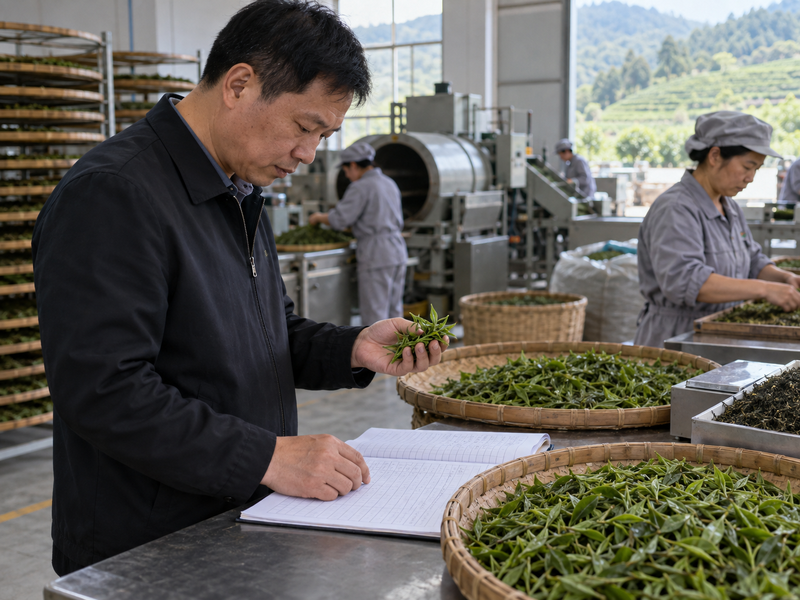
At minimum, ask for raw-material origin, harvest lot, process batch, milling batch and finished-pack code. For a specific origin, organic or harvest claim, request the additional records that prove it. A certificate for a different product or an undated farm photograph is not enough. The buyer should be able to follow a pouch backward through the mill to its input material, and forward to the shipped cartons.
Test the traceability system before a problem occurs. Give the supplier a finished-pack code and ask it to retrieve the corresponding leaf and production records. Check whether the response is timely and internally consistent. A recall plan depends on this chain. The record system need not be glamorous; simple, accurate batch logs are more useful than a complex dashboard with gaps. Agree how long documents and retained samples will be kept.
10. How Should a Leaf Source Be Approved?
Finish with a product trial and a supply plan
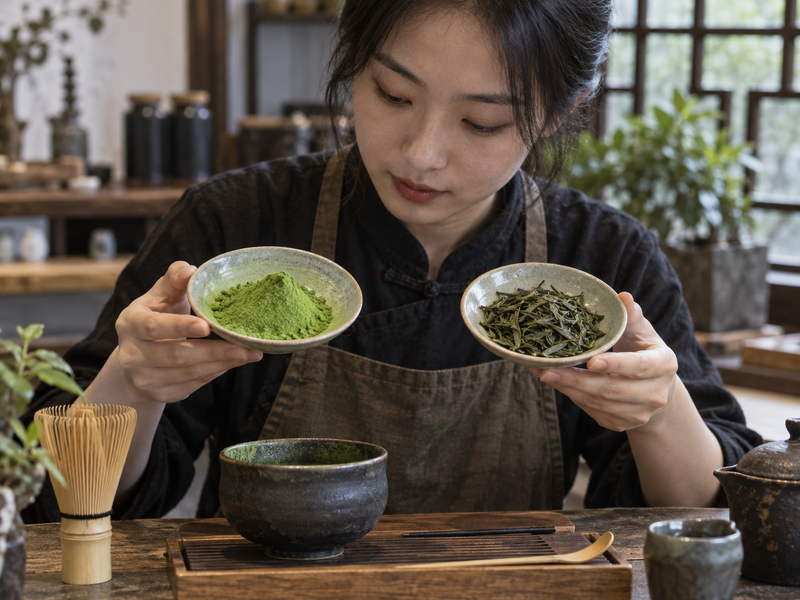
Begin with a representative commercial sample, not a one-off showcase powder. Compare it with the target recipe under controlled conditions. Review lot-linked origin, process and testing records, then set acceptance criteria for sensory quality, moisture, particle behavior and packaging. If the application is a milk drink, test it in milk. If it is a bakery product, evaluate the baked result after realistic storage. Approve the tea that works in the actual use.
Finally, discuss capacity and substitution. What happens when weather or demand changes the leaf supply? Require notice and a new sample when the source program changes materially. Matcha Village describes manufacturing and private-label capabilities in its materials; any buyer should still request leaf traceability and product-specific evidence. The most useful “matcha leaf” claim is one that can be followed through every step to the powder in the finished pack.
| Approval item | Evidence | Owner |
|---|---|---|
| Raw leaf | Origin and harvest record | Sourcing |
| Process | Batch flow and controls | Supplier QA |
| Powder | Trial and specification | Product team |
| Pack | Lot and seal check | Receiving |
Frequently Asked Questions
Q1. Is matcha made from a different plant than green tea?
No. Both come from Camellia sinensis. Cultivation, leaf selection and processing determine the different products.
Q2. Can any green tea leaf be ground into matcha?
Any dry leaf can be ground, but conventional matcha uses a particular shaded-leaf and tencha process. Ask for the actual process if the distinction matters to the product claim.
Q3. Does a younger leaf always taste better?
Not in every application. Leaf maturity is one factor among cultivar, processing and recipe. Test a commercial lot at the intended dose.
Q4. What is tencha?
It is the processed leaf material used as the intermediate input for conventional matcha milling.
Q5. What should a buyer inspect besides the leaf?
Inspect processing records, finished-powder texture, lot-linked tests, packaging and the product’s performance in its intended recipe.