
Matcha solubility is often discussed as though the powder were instant coffee. It is ground tea leaf. Some components enter the water, while much of the finely divided leaf remains as particles that need to be dispersed. A smooth bowl can therefore become visibly settled after standing, and a bottled drink needs a different stability plan from a drink whisked to order. For cafés and manufacturers, the useful question is how the powder behaves in a defined recipe over the time customers will see it.
Contents: Terms · Evidence · Particle · Clumps · Temperature · Mixing · Sediment · Milk · Factory · Specification
1. What Is the Difference Between Dissolving and Dispersing?

Watch what happens after stirring stops
Sugar dissolves when its molecules enter the liquid and form a solution. Matcha contains soluble compounds, but it is also made of tiny plant particles. Whisking distributes those particles through the drink. This is dispersion: the beverage may look uniform for a time even though not all solid material has dissolved. Leave the bowl still and some particles may settle. That is normal physics, although the amount and speed can vary by powder and recipe.
Buyers should avoid promising “completely soluble matcha” when selling an ordinary ground-leaf powder. If a product has been processed into an extract or a highly formulated instant mix, describe that product accurately rather than treating it as equivalent to whole-leaf powder. For a café, a light layer of sediment may be acceptable. For a clear retail bottle, it may be a commercial failure. Define the intended presentation before judging the powder.
| Term | Practical meaning | Buyer check |
|---|---|---|
| Dissolution | Material enters solution | Water solubility test |
| Dispersion | Particles distribute in liquid | Mixing trial |
| Suspension | Particles remain distributed for a time | Hold-time observation |
| Sedimentation | Particles settle | Bottle or cup stability test |
2. How Much of Matcha Can Enter Water?

A test result needs its method
An original study of ten commercial matcha powders reported a mean water-solubility index of about 22% under its specified laboratory method, with variation across samples. The researchers mixed powder with water under controlled conditions, then separated and measured dissolved material. That number is not a universal percentage for every matcha or a prediction of how much will remain suspended in a café cup. It does show why “all of the powder dissolves” is the wrong model.
When a supplier quotes solubility, ask which method, temperature, mixing time and units were used. A result from warm water after laboratory shaking may not predict a cold milk drink prepared quickly at a busy counter. Request both a laboratory measure where needed and a practical application trial. Keep the raw data with the product specification so later lots can be compared by the same method.
3. Why Does Particle Size Matter?
Finer is useful, but not a complete answer
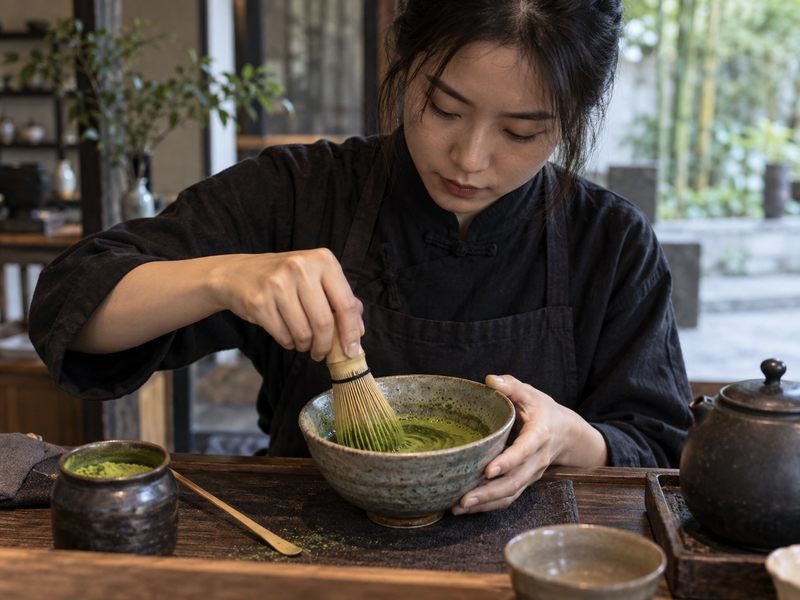
Particle size influences mouthfeel, mixing and settling behavior. A powder with coarse particles may taste gritty even when the liquid looks green. Very fine material can disperse more smoothly but can also form dry agglomerates if handled poorly. A food-science study of fine matcha for processed foods investigated suspension problems and particle-size ranges. Its findings are useful context, not a universal target size for every product.
Ask for a distribution or agreed sieving result rather than a single marketing adjective such as “ultrafine.” Check the powder in the exact liquid and mixing equipment planned for sale. A milling change may improve texture but affect cost, flow or flavor. A buyer of a dry premix should also test whether the powder separates from other ingredients during transport. Particle specifications are most valuable when linked to a practical pass/fail result.
| Powder property | Potential effect | Trial |
|---|---|---|
| Larger particles | Grit and faster settling | Mouthfeel and hold test |
| Fine particles | Smoother texture | Mixing and foam observation |
| Agglomerates | Visible lumps | Sifting and wetting test |
| Broad distribution | Inconsistent behavior | Repeat-lot comparison |
4. What Causes Matcha Clumps?
Separate storage defects from mixing defects
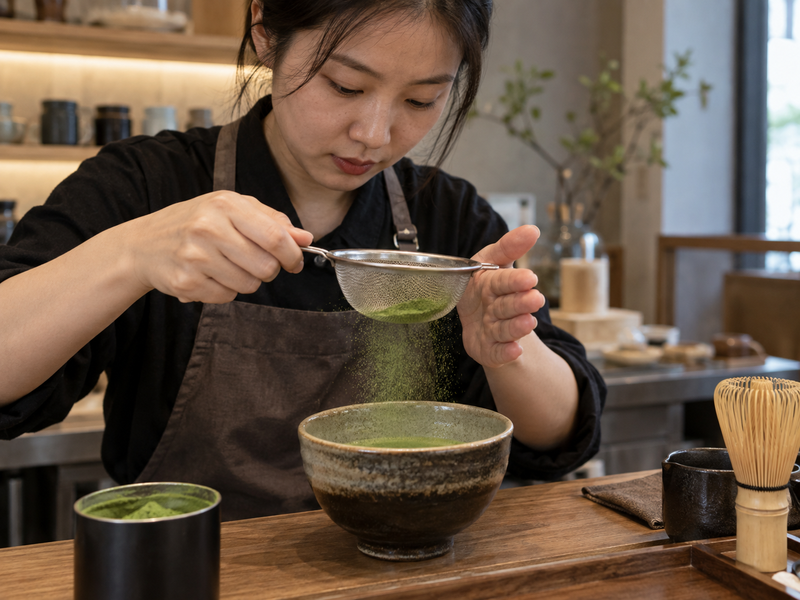
Fine dry powder can form small aggregates. Moisture exposure can make clumping worse, but a fresh, dry powder can also resist wetting when a large scoop is dropped into liquid at once. Stirring the outside of a floating mass may leave a dry core. Diagnose the issue by testing an intact fresh pack, a service pack and the actual preparation method. If only the service pack clumps, handling may be the main problem.
Sifting, pre-wetting with a small amount of liquid and adding liquid gradually can improve dispersion for freshly prepared drinks. They do not repair a powder damaged by moisture or mold, and they may not be suitable for an industrial line. Check pack seals, storage conditions and equipment before changing suppliers. Our matcha clumps guide gives a practical troubleshooting sequence for cafés and production teams.
5. Does Water Temperature Fix the Problem?
Heat helps wetting but does not turn leaf into sugar
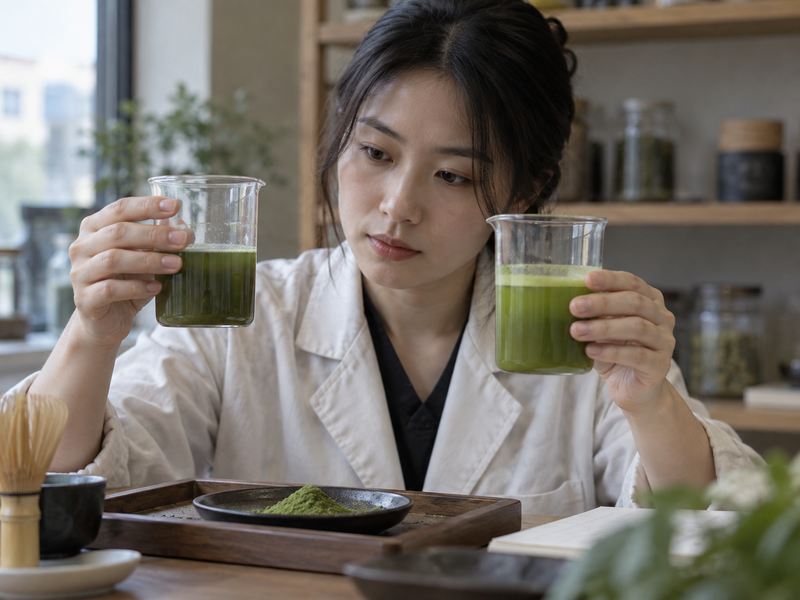
Warm water may help a barista wet and disperse matcha more easily than ice-cold liquid. It can also change extraction, aroma and flavor. It does not cause every plant particle to become soluble. A trial that looks smooth immediately after mixing should still be checked after the drink sits. For an iced beverage, a small warm concentrate may be useful before adding cold liquid, but the final temperature and holding period determine what the customer sees.
Set a temperature range that fits the recipe, staff safety and flavor target. Excessive heat can dull the sensory result. If a bottled product requires thermal processing, validate the finished formula and package; a café whisking test cannot predict its shelf stability. A research paper on green tea pastes and milling found temperature-dependent differences in measured solubility under its methods, reminding buyers to name the test conditions rather than repeat one absolute number.
6. Which Mixing Method Fits the Product?

Match the tool to the batch size
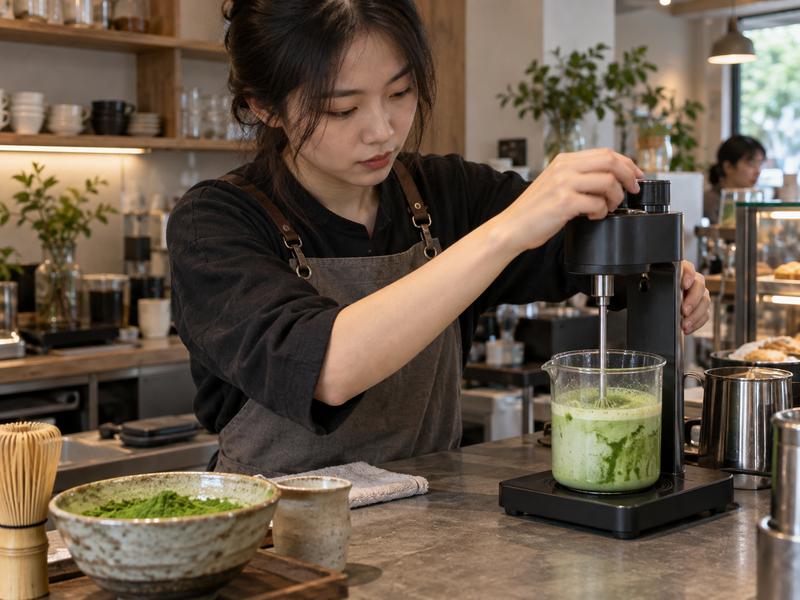
A bamboo whisk can work well for a fresh water bowl. A café preparing dozens of milk drinks may use a small electric whisk, shaker or pre-mixed concentrate. A factory may use high-shear mixing and controlled addition order. Each method introduces different air, foam, heat and holding behavior. Standardize powder dose, liquid volume, mixing speed or time and the point at which quality is assessed.
Test more than the first cup. A method that succeeds with a tiny demonstration batch may leave dry pockets in a full production tank. Conversely, an industrial high-shear process may over-aerate a delicate café beverage. Record which equipment and settings produced the approved result. If a supplier recommends a method, verify it with the actual product and staff workflow. A good instruction should be repeatable during the busiest shift, not just in a studio video.
| Use | Starting method | Critical check |
|---|---|---|
| Fresh water bowl | Sift and whisk | Smooth mouthfeel |
| Iced café drink | Pre-wet or blend | No floating clumps |
| Dry premix | Validate blend order | No segregation |
| Bottled beverage | Pilot-scale mixing | Hold-time sediment |
7. Why Do Particles Settle?

Stability is a time-based measure
Suspended particles can move downward under gravity, especially when the drink is left still. Particle size, liquid thickness, density differences and interactions with other ingredients affect the rate. A little settling after a freshly whisked bowl is not the same problem as a hard compacted layer in a retail bottle. Define the allowable appearance at the point of service and, if relevant, through the expected shelf life.
Observe samples at several times rather than recording only “looks good after mixing.” Note whether gentle stirring or shaking restores an acceptable drink. For a packaged product, evaluate whether a “shake before use” direction is sufficient and permitted; it is not a substitute for food-safety or stability validation. A bottle can also change in flavor or color before sediment becomes objectionable. Keep the entire quality profile in view.
8. What Changes in Milk or a Sweetened Mix?
The matrix changes the suspension
Milk, plant-based beverages, sugar and stabilizers can affect thickness, wetting and visual separation. A powder that disperses in warm water may make visible flecks in cold oat milk. A sweetened instant mix can appear to “dissolve” quickly because its sugar and other soluble ingredients disappear into the liquid while the tea particles remain. Evaluate the tea component and the full formula separately.
For private label, compare formulations at the actual serving weight and liquid base. Record the mixing method, then taste and inspect the drink after the intended service period. If stabilizers are considered for a bottled product, review their legal status, label impact, sensory effects and processing controls. Avoid solving sediment by adding ingredients that conflict with the brand’s stated product identity. The best formula is the one that meets the agreed appearance and taste target throughout real use.
| Formula change | Possible visual effect | Other check |
|---|---|---|
| More sugar | Faster apparent wetting | Sweetness and label |
| Different milk | Different suspension | Flavor and allergens |
| Thickener | Slower settling | Texture and legality |
| More tea | Deeper color | Sediment and bitterness |
9. How Should a Factory Test Stability?
Use the commercial process and package
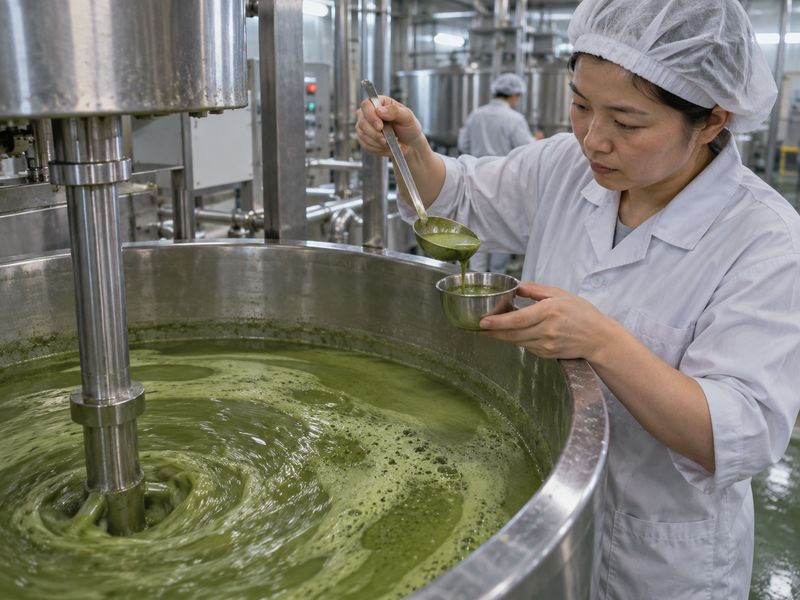
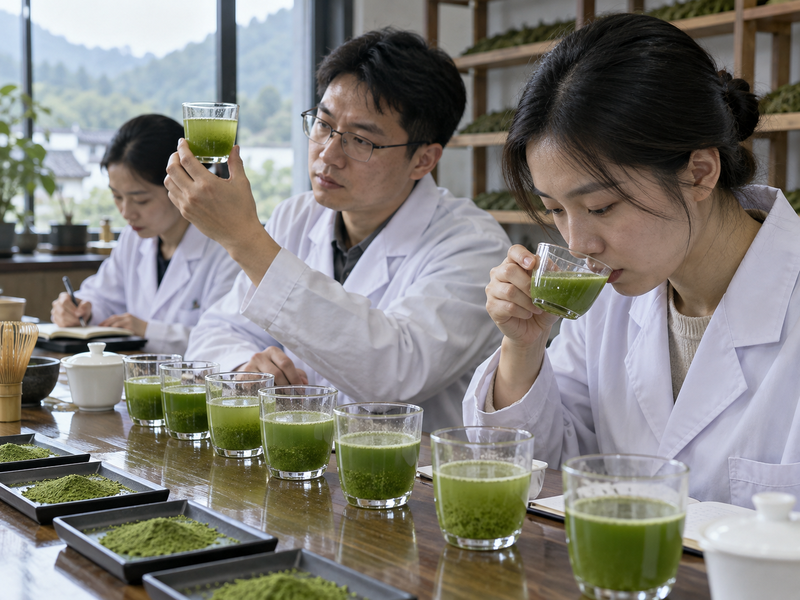
Begin at bench scale to screen powders, then run the chosen matcha through the intended production equipment. Sample from different points in the mixing tank and from the first, middle and last filled units. Compare powder distribution, texture, color and sediment over the planned shelf life and storage conditions. A laboratory beaker is useful, but it does not represent filling, transport vibration, retail light and temperature changes.
Agree on an objective assessment method: sediment height, redispersibility, particle measure or a defined visual reference. Link it to sensory acceptance. If a process change reduces sediment but produces a flat or cooked flavor, it has not solved the whole problem. Keep a retained sample from each lot and record the powder source and milling specification. That makes a later complaint easier to trace.
10. What Should a Buyer Specify?
Write performance requirements, not magical language
For a fresh café product, specify powder identity, particle behavior, maximum visible clumps after the standard method and acceptable mouthfeel. For a packaged drink, add sediment and redispersion limits at named time points, temperature and package conditions. Define who prepares the test and which equipment they use. “Instantly dissolves” is inappropriate for ordinary whole-leaf matcha unless supported by a very specific product definition.
Write down the cup or bottle geometry used in the test. A tall clear bottle makes a thin sediment layer easy to see, while an opaque cup hides it. Neither presentation changes the underlying powder, but it changes what a customer notices. Agree on the viewing condition before a supplier ships the first commercial lot. If customer complaints mention grit, include a sensory check rather than relying only on a photograph. A drink can look even and still feel rough on the tongue.
Matcha Village’s materials describe manufacturing and private-label supply. A buyer should request product-specific dispersion data and a commercial-lot trial rather than infer behavior from a sales image. A clear specification lets the supplier recommend suitable milling, packaging or mixing steps. It also gives receiving and quality teams a fair basis for accepting future lots.
| Specification field | Example of useful detail |
|---|---|
| Test recipe | Powder and liquid grams |
| Method | Tool, speed and time |
| Initial result | Clump and texture limit |
| Hold result | Sediment and redispersion limit |
| Lot control | Particle and moisture range |
Frequently Asked Questions
Q1. Does matcha dissolve completely in water?
No. Some components dissolve, but much of the ground leaf remains as fine suspended particles.
Q2. Why does matcha settle at the bottom of my cup?
The suspended particles can move downward while the cup stands. The amount depends on powder, dose, liquid and mixing method.
Q3. Does finer powder always prevent sediment?
No. Particle size matters, but agglomeration and the full beverage formulation also affect stability. Test the finished product.
Q4. Is a clump proof that the powder is old?
Not by itself. Poor wetting can cause clumps in fresh powder. Check pack condition and repeat the mixing trial before deciding.
Q5. Can a “shake before use” label solve a bottle’s stability issue?
It may help with redispersible particles, but it does not replace shelf-life, sensory and safety validation of the finished beverage.