
A traditional matcha bowl belongs to a particular way of preparing and presenting tea, not just a rustic look. A café offering seated tea service needs a bowl that can be whisked in, lifted comfortably, turned, cleaned, and described accurately. A retailer needs to distinguish a maker’s real history from borrowed imagery. These ten checks connect chawan shape and craft context with measurable service and buying decisions.
Contents
- 1. What does traditional mean in this program?
- 2. Which bowl shape fits the service?
- 3. How does the season affect selection?
- 4. What should you know about the maker?
- 5. Is the interior workable for a chasen?
- 6. How does the rim feel during drinking?
- 7. What food-contact evidence is needed?
- 8. Can the bowl be cleaned in this operation?
- 9. How should it be displayed and packaged?
- 10. What belongs in the final buying brief?
1. What does traditional mean in this program?
Define the claim before choosing a product
“Traditional” could refer to a form used in Japanese tea practice, a named ceramic tradition, a studio method, or simply a design cue. Those meanings should not be blurred in marketing. Decide whether the bowl is for a formal tea event, an informal café tasting, or a retail gift. Then ask the supplier what tradition or making process is actually documented. An item can be a good tea bowl without a claim to a particular lineage or region.
Use accurate language on the menu and shelf. If the maker identifies a specific technique or place, retain the maker’s wording and permission. If the bowl is a contemporary interpretation, say that. The Oriental Artisan overview of chawan provides a broad introduction to forms, but the product’s provenance needs first-hand documentation. Staff should be able to describe why this bowl was chosen for the tea served, without giving customers an invented historical lesson.
2. Which bowl shape fits the service?
Choose by whisking and holding, not silhouette alone
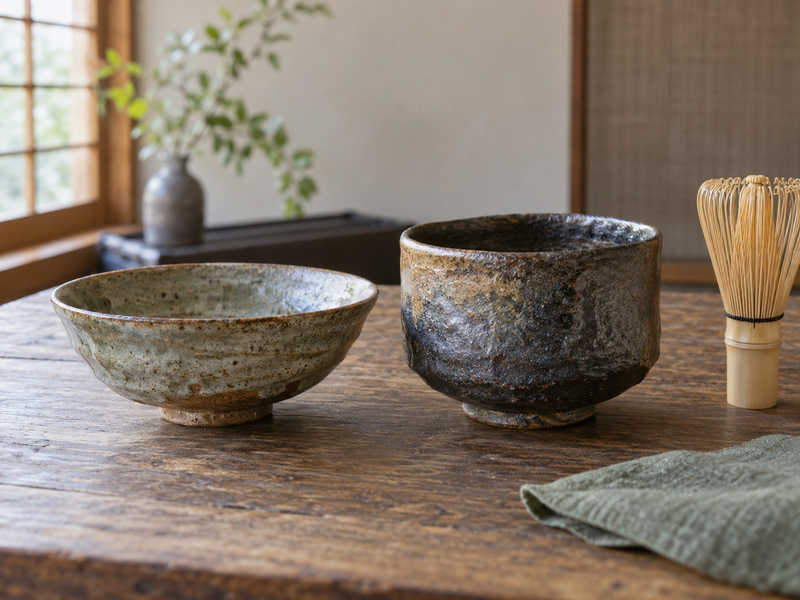
Compare the inner opening, bowl depth, curvature at the base, and position of the foot. A wide open form gives the chasen room to move and makes the tea surface visible. A taller form may feel sheltered in the hands but requires checking whisk clearance and drinking comfort. Neither is universally superior. Put the actual whisk and water volume in each sample; prepare the tea, then pass the bowl to someone unfamiliar with it and ask how it feels.
In a café, a bowl also occupies a tray and drying space. Measure its footprint with the saucer, napkin, and sweet if those are part of service. If staff whisk in a separate vessel and present tea in the bowl, make that distinction explicit: the presentation bowl may be selected for drinking feel, but customers should not be told it supports a preparation method that is performed elsewhere. Shape is a practical choice within a stated ritual.
| Shape feature | Preparation effect to test | Guest effect to test |
|---|---|---|
| Inner opening | Whisk clearance | View of tea surface |
| Wall angle | Splash and whisk contact | Hand placement |
| Depth | Foam clearance | Drinking angle |
| Foot width | Stability on tray | Lift and turn |
3. How does the season affect selection?
Use seasonal form without making rigid rules
Tea practitioners sometimes choose more open bowls in warmer periods and deeper forms in cooler periods. Treat this as a design and service consideration, not a universal law. If your venue offers seasonal tea service, test how each bowl handles the actual beverage temperature, presentation time, and guest comfort. A café with air conditioning, rapid table turnover, and a fixed tray may have different constraints from a private tea gathering.
For retail, seasonal collections can be clear and honest: show the visual qualities and explain how the customer might use the bowl. Avoid promising that one shape will keep tea hot for a fixed time unless you have measured it under defined conditions. If temperature retention matters, run a small comparison with the same volume and starting temperature, recording readings over the expected service interval. Present the result as your own trial under those conditions rather than a universal property of a named ceramic tradition.
4. What should you know about the maker?
Verify names, place, and process
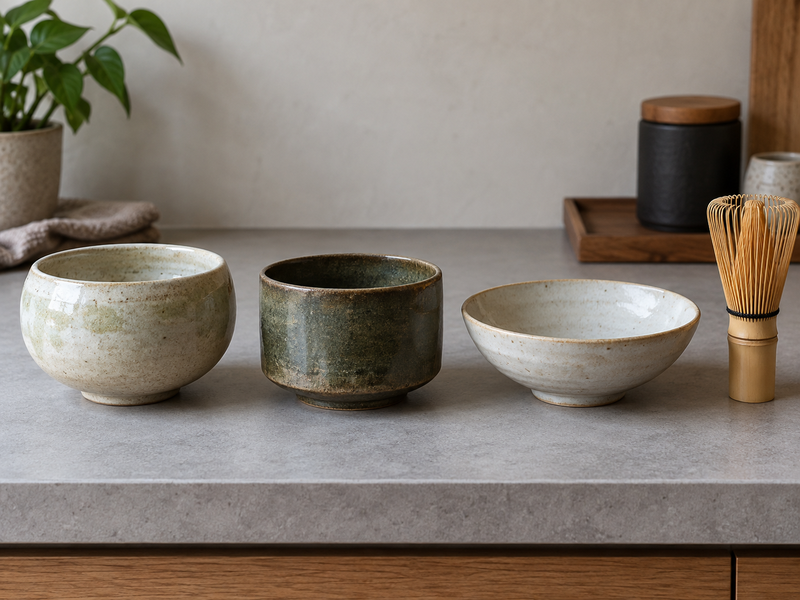
Ask who made the bowl, where it was made, and which steps were done by hand. A style name on a wholesale listing may describe an influence rather than a verified place of origin. Request a maker statement or invoice trail if the story will appear on a product card. If a piece is made in a workshop by several people, credit the workshop instead of implying a single artist touched every stage. This is a more useful distinction than arguing about whether a bowl looks sufficiently old.
For a series of retail pieces, record the batch and glaze name. Handmade variation should be described with photos of representative pieces. Ask whether a future batch can be reordered or whether each purchase will be a separate collection. A café with breakage replacements needs a continuity plan; a gallery-style retailer may prefer one-off variation. The purchase terms should follow the program rather than forcing all chawan into the same supply model.
| Provenance item | Ask the supplier for | Use in listing |
|---|---|---|
| Maker identity | Name or workshop | Credit accurately |
| Production place | Documented location | State without inference |
| Method | Specific forming and finishing steps | Explain visible variation |
| Batch | Lot or collection identifier | Trace replacement and defects |
5. Is the interior workable for a chasen?
Test the bowl with your chosen whisk
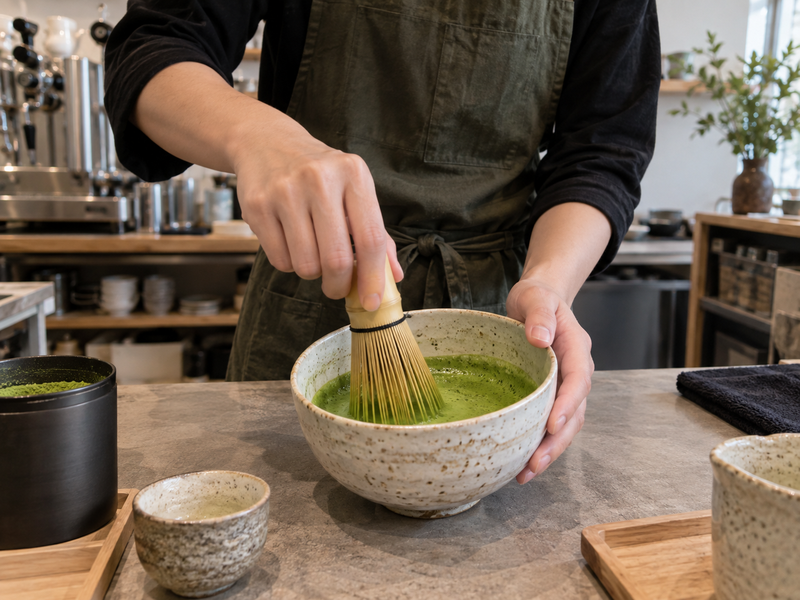
Prepare the intended serving in several samples. Notice whether the whisk tips strike a steep wall, catch in a rough surface, or leave powder in a deep corner. A hand-built texture can be beautiful on the outside while the interior still needs to be smooth enough for preparation and cleaning. Do not judge foam from one bowl alone if water temperature, powder, or operator changes during the test. Keep those inputs constant and compare the handling rather than awarding a mystical “better matcha” score.
If the bowl is to be sold with a whisk, test the pair. A wide chasen may need more room than a narrow one. The Ippodo chasen care guide also makes care part of using a bamboo whisk; a bowl that repeatedly catches tines could shorten the usable life of the set. Write a minimum inner opening into the buying brief once you find a successful sample.
6. How does the rim feel during drinking?
Observe the guest’s sequence
Pour a normal serving and ask a tester to lift, turn, drink, and set down the bowl. Note whether the rim feels comfortable, whether glaze texture catches the lips, and whether the bowl becomes awkward as liquid level falls. A bowl can be excellent for whisking yet poorly suited to drinking directly. Test with a warm serving at the intended temperature, while taking sensible handling care. Do not infer comfort from a cold empty bowl in a showroom.
Look at the rim under good light for chips, cracks, and decoration in the food-contact area. Ask the maker how the rim is finished and what counts as normal handmade variation. For a café, staff will need a quick inspection method before service. For retail, include a clear image of the rim so buyers understand the finish. A traditional shape should support the act of drinking, not merely photograph well from above.
| Rim observation | Why it matters | Action |
|---|---|---|
| Smooth contact edge | Drinking comfort | Compare several units |
| Glaze or decoration | Food-contact relevance | Check matching documentation |
| Thickness | Perceived sip and handling | Test with normal serving |
| Chips or cracks | Service condition | Set reject criterion |
7. What food-contact evidence is needed?
Treat history and safety as separate questions
A long-established style does not automatically validate the glaze on a newly made bowl. Request food-contact information for the product and destination market, including the relevant finish or decoration. If the bowl is antique or sold solely as a collectible, its use as foodware needs separate consideration. The US FDA guidance on lead-glazed traditional pottery explains potential migration from some glazes; it does not make a blanket statement about all traditional ceramics.
Ask whether the report covers the same glaze color, firing, and rim treatment as the units ordered. Keep documents linked to the SKU and batch. If the seller cannot support a food-contact claim, avoid advertising the bowl for beverage service. That is a procurement decision, not a judgment on the artistic quality of the piece. The staff member who writes the product page should work from the same documents as the buyer.
8. Can the bowl be cleaned in this operation?
Reconcile maker care with service practice
Some makers recommend hand washing and careful drying; a café may normally use commercial warewashing equipment. Ask for care instructions in writing and compare them with the operation’s approved cleaning and sanitizing process. Prepare matcha, allow a realistic delay, then wash the bowl as proposed. Inspect the inner corner, textured areas, and foot. If a surface traps residue or cannot be cleaned by an acceptable method, reserve that bowl for a different use.
The FDA Food Code provides US model requirements for food-service utensils. The exact rules for a venue depend on its location. Do not claim a handmade bowl is machine washable without maker confirmation, and do not skip sanitizing obligations because the item is artistic. A written service procedure can protect both the object and the customer experience.
| Cleaning point | Trial method | What to record |
|---|---|---|
| Interior | Normal matcha preparation and wash | Visible residue |
| Textured rim | Wipe and inspect | Trapped powder |
| Foot ring | Wash, drain, dry | Standing water |
| Repeated cycles | Approved method only | Finish change or damage |
9. How should it be displayed and packaged?
Make the shape visible and protect the edge
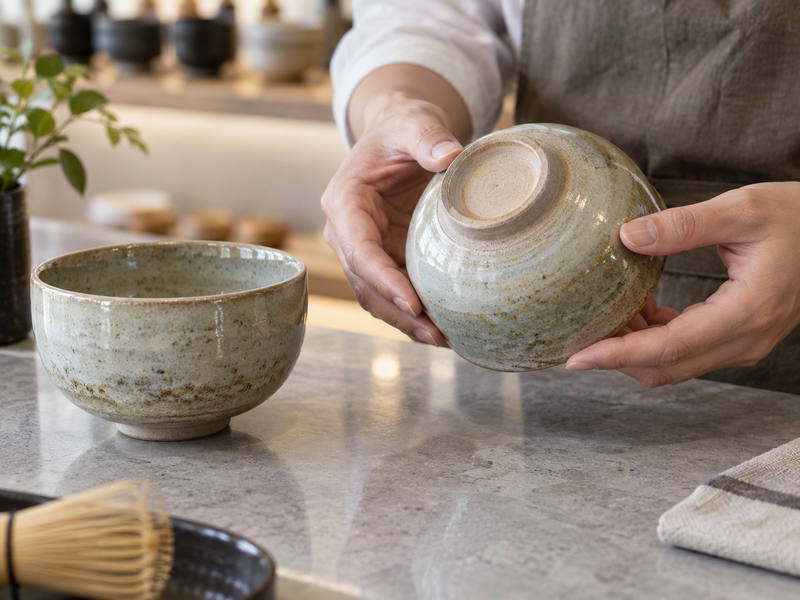
A traditional matcha bowl is often bought for its whole form, including the foot and interior. Show side, top, and base views. Include dimensions and a scale reference. If handmade pieces vary, show representative variation instead of one idealized photograph. On a retail shelf, leave enough space that customers can lift a bowl without striking the next one. For shipping, fit an insert around the largest approved unit and prevent pressure on the rim.
If the bowl comes with a whisk or scoop, separate the accessories so they do not rub the glaze. Include maker-approved care instructions and a brief explanation of the bowl’s actual provenance. Avoid presenting a generic import as a named regional tradition without documentation. A restrained card with accurate facts is more convincing than a long invented story. Test the complete package by opening it after normal warehouse handling, then inspect the bowl itself.
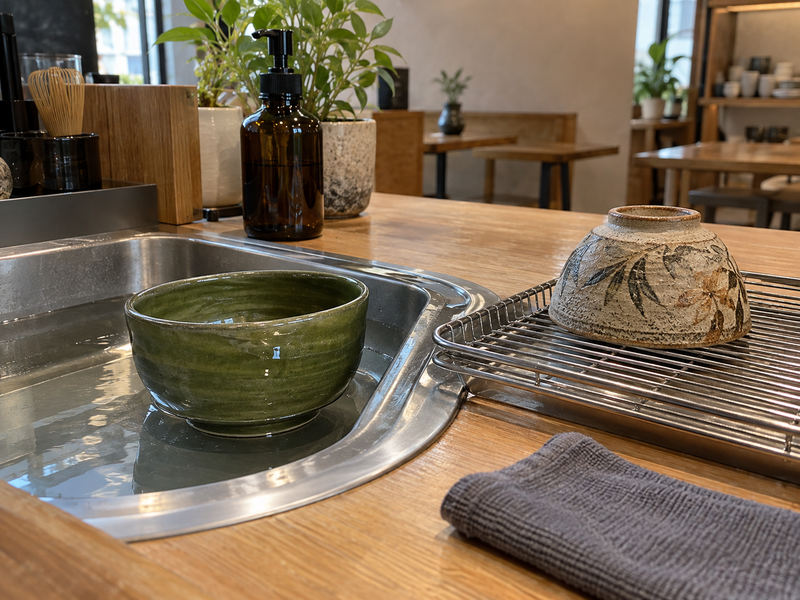
10. What belongs in the final buying brief?
Record the service and the evidence
Write the intended use, maker or workshop, form, approximate dimensions, minimum working opening, approved glaze or finish, care method, packaging, and food-contact documentation needed for the market. Keep photographs of an approved sample and examples of acceptable handmade variation. Define reject conditions such as rocking, rim chips, or a narrow interior that obstructs the whisk. If a collection is intentionally one-off, write that into the purchase and marketing plan instead of promising seamless replenishment.
Calculate cost with protective packaging, freight, inspection time, and observed replacement needs. For a café, trial the bowl with staff and guests before scaling an order. For retail, review the story card and product listing against supplier evidence. The chosen bowl should make sense both as a tea object and as a product the business can responsibly sell or serve.
| Brief field | Decision to record | Supporting material |
|---|---|---|
| Intended use | Whisk-and-drink or presentation | Service trial notes |
| Form and range | Dimensions and variation | Approved sample photos |
| Provenance | Maker, place, method | Supplier records |
| Food contact | Market-specific evidence | Product-linked documents |
| Care and packaging | Wash and transit methods | Maker instructions and pack trial |
FAQ
Q1. Is every traditional matcha bowl handmade? No. “Traditional” may describe form or style. Ask exactly how and where a particular bowl was made.
Q2. Is a wide bowl always better? A wide opening can help whisk clearance, but balance, depth, drinking feel, and the chosen whisk also matter.
Q3. Can an antique chawan be used in a café? Do not assume so. Food-contact suitability, condition, cleaning method, and local requirements need case-specific review.
Q4. Does a named ceramic style prove origin? No. Confirm the maker and production place through the supplier before publishing an origin claim.
Q5. What is the first sample test? Prepare and drink the intended serving in the bowl, then clean it by the actual service method.
Let the service define the tradition
Select a traditional matcha bowl with a clear account of its maker and a successful preparation, drinking, and cleaning trial. The best choice for a business is one whose form and story can both be supported after the first order arrives.