
Matcha leaf picking standards turn “young leaf” into a purchase condition that a garden and processor can check. Without a shared definition, a sample may contain tender shoots while a later truck brings mixed maturity, torn leaf or coarse stems. Agree on a visible shoot profile, sampling method and sorting response before volume scales up. The Japanese Ministry of Agriculture, Forestry and Fisheries (MAFF) describes hand-picked early leaves used for tencha in Uji tea, while other regions and product grades may follow different practices. This guide gives buyers a way to evaluate those differences without assuming one harvest method fits every lot.
On this page
- What is a picking standard for tencha-bound leaf?
- Which bud and leaf stages should a buyer name?
- How do hand and machine picking compare?
- What belongs in an intake sample?
- Which defects should be sorted out?
- How should acceptance limits be written?
- How do shade and picking dates connect?
- What records keep a harvest lot traceable?
- How should buyers test the resulting matcha?
- What should a purchase brief ask for?
1. What is a picking standard for tencha-bound leaf?
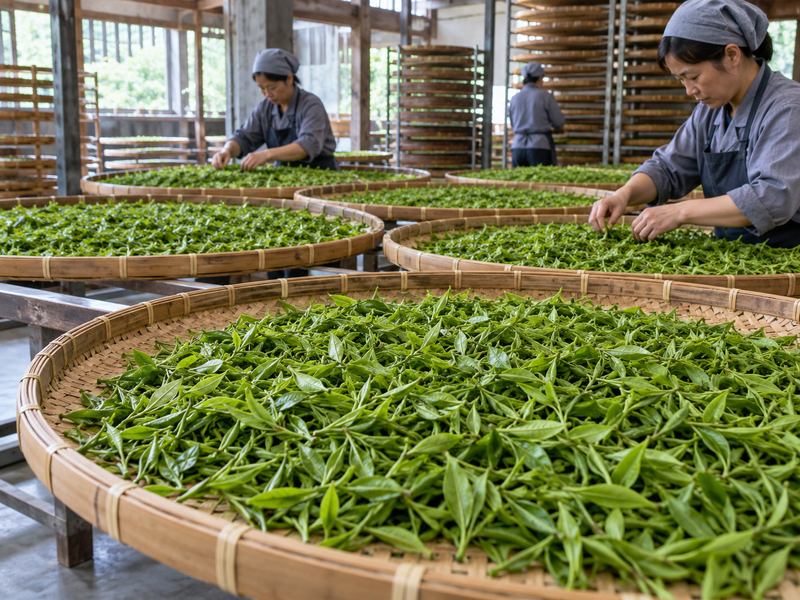
A picking standard describes which shoots enter a leaf delivery, how the crop is collected and what happens to material outside the agreed profile. For tencha-bound raw material, buyers should also know the block and shade history. MAFF’s Uji tea account describes early leaves picked by hand for tencha and gyokuro in that region. It also defines matcha there as tencha ground into powder. The description offers a real production reference, not a rule that all matcha everywhere must use the same season or labor method. A supplier specification should make the buyer’s target clear while allowing documented local practice. Ask for a representative basket or intake sample instead of judging a promotional close-up.
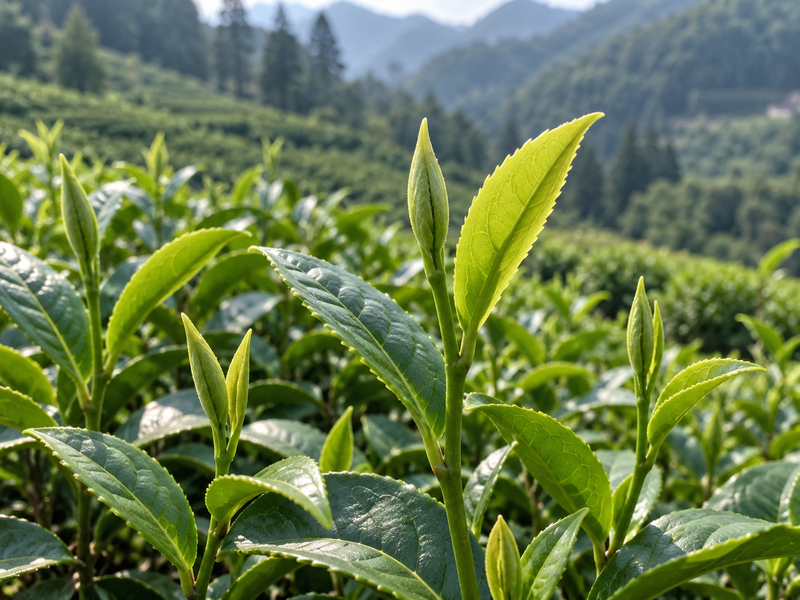
Matcha leaf picking standards start at the shoot
Use a physical reference. Photograph accepted shoots beside rejected examples from the same garden. Identify whether the target is a bud with one young leaf, two young leaves or another locally agreed stage. Define what “soft” means in a practical inspection, and ask the supplier to train pickers with the same examples. Descriptions alone can drift when crews or seasons change. Matcha Village’s harvest overview can sit beside the contract standard, but the delivered lot still needs its own evidence.
2. Which bud and leaf stages should a buyer name?
The tender upper shoot and older leaves differ in texture and composition. A buyer can specify a preferred bud-and-leaf combination, yet should allow for a measured amount of variation that fits the intended powder grade and price. The Tea Board of Kenya’s cultivation manual calls one or two leaves with a bud “fine plucking” and three or more leaves with a bud “coarse plucking” for its tea system. That terminology is useful for a conversation, but its commercial judgments cannot automatically define tencha. Ask the prospective processor to show what its own sorting and sensory trials accept. If two farms use different cultivar growth patterns, photograph each reference set rather than assuming identical leaf shape.
Translate words into examples
| Shoot in a sample | Buyer question | Possible disposition |
|---|---|---|
| Bud with young leaf | Does it match reference maturity? | Accept if sound |
| Bud with two soft leaves | Is softness within target? | Accept or grade separately |
| Older coarse leaves | Can they be removed reliably? | Sort or divert |
| Stem-heavy fragments | Was picking or handling rough? | Investigate and separate |
Keep the boundary visible. A standard works when intake staff can make the same decision on a wet, busy day. Use retained photographs, a small reference sample and written rules for borderline shoots.
3. How do hand and machine picking compare?
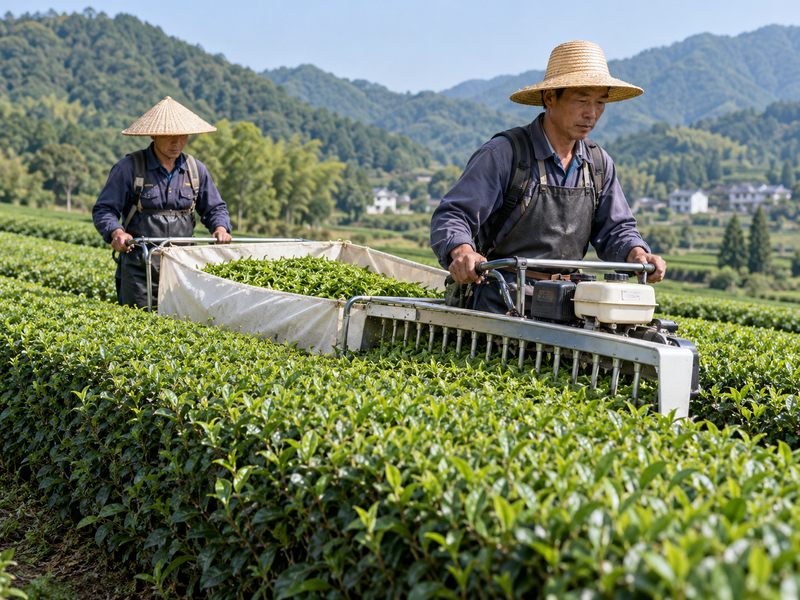
Hand picking permits workers to select shoots individually and leave immature or coarse material behind, provided training and time support that choice. Mechanical picking can cover uniform hedges efficiently, but the machine follows a cutting plane rather than inspecting every bud. That may increase the need for screening or sorting, depending on field conditions and equipment. MAFF describes hand picking for early Uji tencha leaf; it does not prove that a mechanized lot can never serve a different matcha application. The Kenyan manual warns that shear and motorized picking may lower quality in its black-tea context. Buyers should avoid transferring that outcome wholesale to tencha. Compare actual leaf deliveries and processed samples from each method.
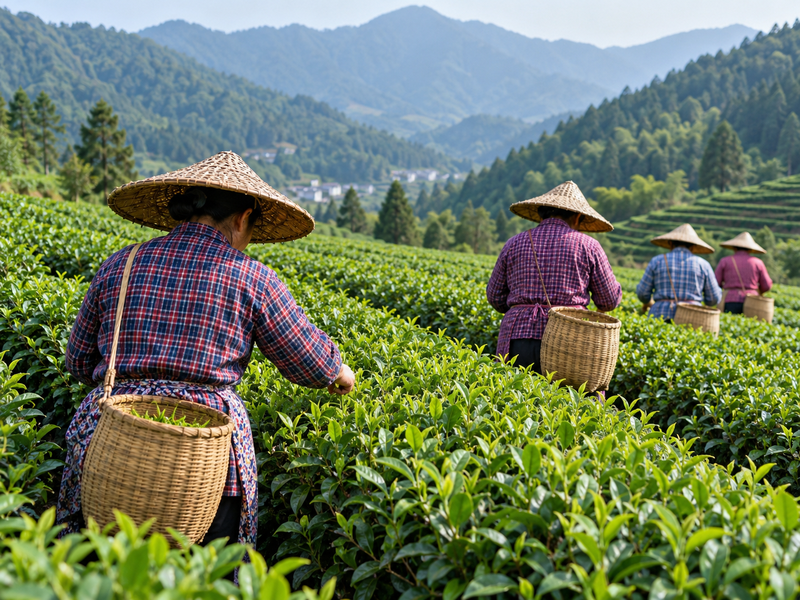
Test method against the same target
A fair comparison: use similar blocks and shoot maturity, then sample both harvest streams at intake. Count target shoots, coarse leaves, stem pieces and physical damage using the same method. Keep processing and storage conditions as similar as practical. The answer for a latte ingredient may differ from the answer for a whisked tea, because application exposes color and taste in different ways.
4. What belongs in an intake sample?
Intake sampling should represent the delivery, not the neatest handful on top. Take material from several containers or locations across a load, combine it under a documented method and retain a portion if a dispute is possible. Keep block, picking time and method with the sample. A Kenyan green-leaf quality document uses a random composite sample from a leaf delivery carrier for its own industry standard. That principle supports fair sampling even though its legal thresholds and production context differ from matcha. If rain or transport has changed leaf condition, record that before any rejection or sorting decision.
A small but useful intake sheet
| Field | Why it matters |
|---|---|
| Garden block | Connects leaf to field practice |
| Pick date and time | Shows harvest window |
| Container count | Helps plan representative sampling |
| Shoot categories | Makes maturity mix visible |
| Damage and foreign material | Directs sorting or rejection |
| Decision and reviewer | Supports later lot review |
Write down the method. A percentage has little meaning without sample size and a definition of what was counted or weighed. Train the intake team on one procedure and use it consistently across trial and commercial lots.
5. Which defects should be sorted out?
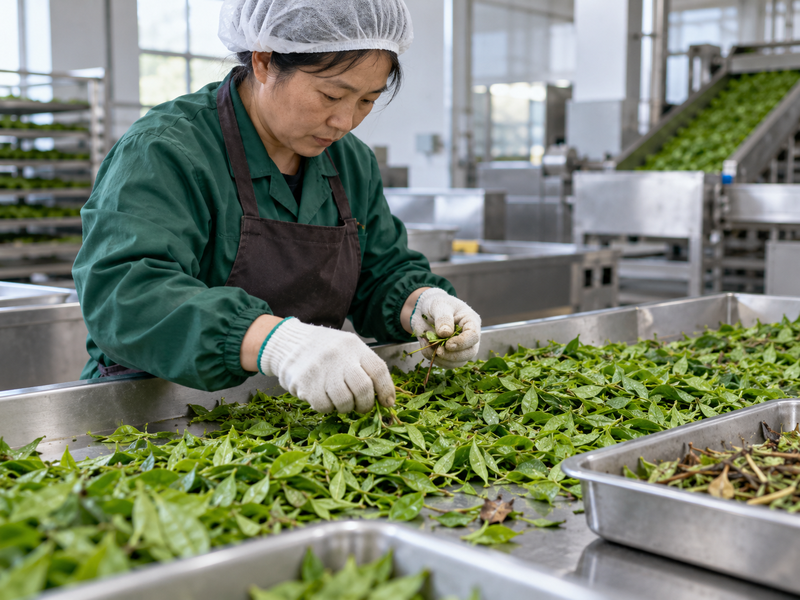
Buyers should distinguish maturity variation from material that plainly does not belong. Coarse stems, old leaves, woody fragments, severely bruised foliage and foreign matter deserve specific checks. Wet clumps and heated leaf may signal handling trouble even when shoots were picked at the right stage. Sorting can improve a lot, but it cannot restore damaged leaf or erase an unknown harvest history. Ask where rejected material goes and whether it ever re-enters another matcha grade. When a supplier claims a very low defect rate, request the inspection method and sample record. An assertion from a sales sheet is weaker than a photographed intake check tied to one delivery.
Match the defect to its cause
Trace it upstream. Long stems may point to picking height or mixed shoot length. Bruising may arise during picking, bagging or transport. An older leaf fraction might be a block maturity issue. Log the pattern and ask the garden and processor to investigate together. Correcting the origin saves more work than repeatedly relying on downstream sorting.
6. How should acceptance limits be written?
Acceptance rules need clear categories, a sampling method and a response when a lot fails. A buyer could set separate conditions for target shoots, coarse leaf, stems, damage and foreign matter after testing real supplier lots. Numeric limits should follow that validation and the finished product’s use. The Kenyan green-leaf document has a defined good-leaf proportion for its regulated tea industry; it is not a ready-made target for tencha-bound Chinese leaf. Do not borrow a percentage because it looks official. Instead, agree on whether a deviation triggers re-sorting, a different grade, an additional sample or rejection. Write who makes the final decision and how a retained sample resolves disagreement.
Turn a statement into a test
| Weak wording | Testable wording to adapt |
|---|---|
| “Only tender leaf” | Define reference shoot stages and sample method |
| “Minimal stems” | Define stem category and agreed limit |
| “Fresh delivery” | Record pick and intake times plus condition |
| “Clean leaf” | Define foreign material and rejection response |
Trial before contract. Run the proposed standard on more than one real delivery. If staff cannot classify leaves consistently, revise the definitions before attaching a price or penalty. A standard should prevent argument, not create one.
7. How do shade and picking dates connect?
For shaded tencha-bound leaf, picking date completes the field treatment record. A block covered for a planned interval may be harvested across several days; those deliveries can have different light exposure if cloth was lifted early. Ask for installation, adjustment and removal dates alongside each harvest ticket. The processor also needs the actual leaf maturity observed on the day, because the calendar does not freeze plant growth. Two adjacent blocks can develop at different rates after rain or temperature shifts. A buyer should avoid assuming the same picking standard was met simply because both were labeled “shade grown.” The links among block, cover and basket need to survive factory intake.
Keep streams identified
Follow a basket. Choose one container and trace its label through weighing, sorting and tencha processing. If material from several blocks is blended, request their proportions or another meaningful blend record. That information helps explain differences between an approved sample and a later order without blaming picking alone.
8. What records keep a harvest lot traceable?
A traceable lot needs a garden block or defined source group, harvest date, picking method, intake time, sample result, sorting outcome and tencha batch identifier. The record should follow leaf into drying and then match the ground powder lot. MAFF’s Uji tea description explains the tencha-to-matcha relationship. The NARO comparison of matcha and other powdered tea shows why similar-looking powder labels are poor substitutes for production evidence. A buyer does not need access to every internal note, but should receive enough identifiers to reconstruct a lot after a complaint. Test that trace by asking for one completed example, not a blank form.
Minimum chain for a buyer audit
| Stage | Identifier to retain |
|---|---|
| Garden | Block and cover record |
| Picking | Date, crew or method and container |
| Intake | Weighing ticket and sample result |
| Tencha | Processing batch |
| Matcha | Grinding and packing lot |
Try the reverse path. Start from a sealed matcha package and ask the supplier to identify its tencha batch and source harvest. If the chain stops at a broad farm name, the picking standard may be impossible to verify for that package.
9. How should buyers test the resulting matcha?
Inspecting fresh leaf helps explain a process, while the purchase decision usually rests on finished matcha. Request a sample that comes from the documented harvest and test it under a repeatable recipe. For a beverage, control dose, water or milk, mixing and observation time. For baked products, judge performance after the normal heat step. Compare color, aroma, taste and any specification measures across more than one lot. The published chemical study found differences among market powders, but laboratory markers alone did not always distinguish industrial matcha from other powdered green tea. A buyer should combine documents, physical assessment and application testing.
Test consistency, not a single showpiece
Keep the reference. Store an approved sample properly and compare later lots with the same preparation method. If flavor changes, review maturity mix, shade dates, leaf handling and processing before assigning a cause. A sound picking standard narrows uncertainty but does not control every step between garden and cup.
10. What should a purchase brief ask for?
The brief should name the intended application, target shoot examples, accepted picking methods, sampling procedure, defect categories, sorting response and lot records. Attach an approved finished sample and define how replacement lots are checked. Ask the supplier to disclose changes in block, harvest method or maturity target before shipment. If a supplier offers a lower-cost machine-picked option, evaluate it against the same application criteria rather than dismissing it from the label alone. Matcha Village’s tencha production overview offers process context; the negotiated brief should refer to the actual supply stream and local operation.
A concise specification outline
| Topic | Agreement to document |
|---|---|
| Shoot profile | Photos and maturity categories |
| Harvest method | Hand, machine or approved mix |
| Intake inspection | Composite sample and reviewer |
| Nonconforming leaf | Sort, divert, resample or reject |
| Traceability | Block through packed powder |
| Change notice | New source or method approval |
Start with one pilot lot. Set matcha leaf picking standards with the garden and processor, review a full intake sample and test the resulting powder in your product. Once all three agree, scale purchases against the same evidence rather than relying on a grade name.
FAQ
Q1: Must all matcha leaves be picked by hand?
No universal rule covers every market or application. Judge each method through leaf samples and finished matcha.
Q2: Is a bud with two leaves always acceptable?
It may fit some specifications. Check tenderness, processing suitability and the agreed reference sample.
Q3: Can a buyer use Kenya’s green-leaf percentage for tencha?
That rule belongs to its stated tea industry. Set tencha criteria through local trials and contract agreement.
Q4: Can sorting fix every picking defect?
No. Sorting removes some unwanted material but cannot repair bruising, heat damage or lost traceability.
Q5: What record should a buyer request before ordering?
Ask for one completed block-to-powder lot chain with intake inspection and a linked sample.