
An oat milk matcha latte combines dispersed powdered green tea with an oat-based drink. It can be creamy and approachable, but oat bases differ sharply in sweetness, fat, foam and cereal flavor. A recipe that tastes balanced hot may feel flat or overly sweet over ice. The Baker’s Almanac oat milk matcha latte shows the consumer format. A café needs a defined formula and service test that survives brand changes, barista shifts and the time between handoff and the final sip.
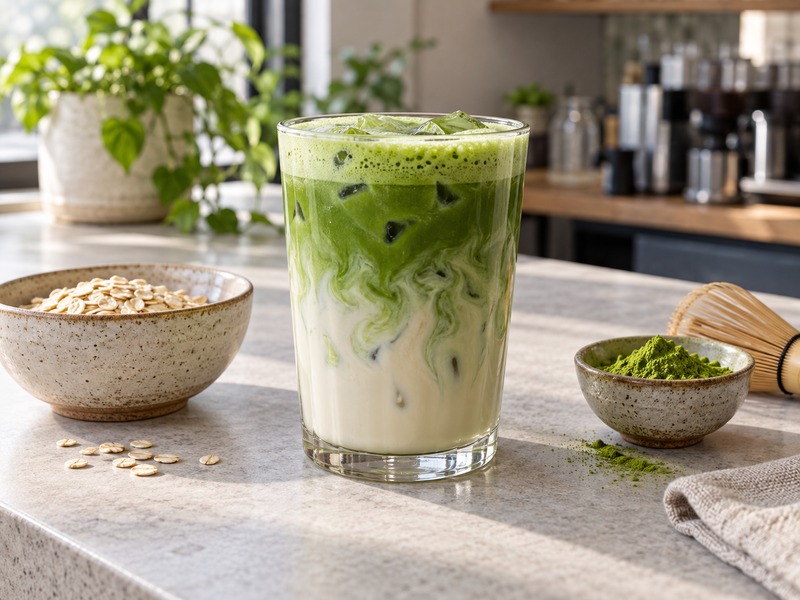
For: café operators, beverage developers and tea buyers. Decision: which oat drink and matcha pairing gives a clear tea flavor and predictable service.
1. What should the latte taste and feel like?
Set a target for each temperature
A hot latte should carry tea aroma through the oat drink without becoming thin or cereal-heavy. An iced latte needs enough tea to remain recognizable after ice begins to melt. Define the intended cup size, tea presence, sweetness, body, foam or layer, and acceptable sediment. Do not approve a sample from the first sip alone. Taste through the cup with the actual lid or straw; a layered iced build may give sweet oat drink first and a concentrated tea shot last.
Use plain language. A useful target might be “matcha on the first sip, gentle oat creaminess, no dry finish.” Ask several tasters to describe the drink without seeing its ingredient list. If they report only sweet oat milk, the matcha is visually present but not doing its job. Write a separate standard for hot and iced versions if both appear on the menu; the same ingredient masses may not give the same sensory balance.
| Format | Likely appeal | First risk |
|---|---|---|
| Hot | Aroma and smooth body | Weak tea beneath oat flavor |
| Iced | Clear layers and refreshment | Uneven sip and dilution |
| Blended | Dessert-like texture | Tea masked by sweet base |
2. Which oat drink belongs in the formula?
Compare actual brands
Barista oat drinks, sweetened retail cartons and unsweetened products can vary in sugar, fat, protein, salt and stabilizers. Prepare the same matcha dose and cup volume with two or three oat drinks the business can source reliably. Taste hot and iced. Look at tea clarity, sweetness, mouthfeel, foam behavior and any grainy or sour note. A product that foams beautifully can still mute the tea. A thinner drink may let matcha stand out while feeling less satisfying as a latte.
Read the specification. Ask suppliers for ingredient, allergen, storage and handling information and a procedure for formula changes. “Oat milk” on the menu does not identify a consistent input. If a café switches brands during a stockout, the drink may need a new syrup or matcha dose. Test the approved backup before putting it on the purchasing list, not during a busy shift.
| Oat-base trait | What to inspect | Possible effect |
|---|---|---|
| Added sweetness | Label and tasting | Masks tea |
| Fat and body | Hot and iced texture | Changes creaminess |
| Foam behavior | Steam or froth trial | Changes hot presentation |
| Stabilizers | Separation during hold | Affects cup appearance |
3. How should matcha be selected for oat milk?
Taste it in the full drink
Oat’s cereal note can work with a stronger tea and obscure a delicate one. Request identified matcha samples and prepare them at equal grams per serving in the chosen oat drink. Compare tea flavor, bitterness, green color and sediment at handoff and after a short hold. A powder that seems smooth in water may disappear in a sweetened oat base; another may taste too sharp in water yet balanced with oat. Buy for the finished latte, not a dry-powder photograph.
Keep lot evidence. Record product specification, lot identity, pack size, storage guidance and the food-safety documents required by purchasing. Retain a sample of the approved lot and a standard drink recipe. When a new lot arrives, compare it at the same dose with the same oat drink. A lower price per kilogram does not help if the cup needs much more powder to reach its flavor target.
4. How can matcha be mixed without clumps?
Make a consistent tea shot
Matcha is suspended rather than dissolved. A dry scoop added straight to cold oat milk may leave dots of powder and a bitter bottom layer. Prepare a measured tea shot using a fixed amount of water and a whisk, frother or approved shaker. Compare methods for clumps, foam, temperature and speed. A hot-water shot may disperse easily but warm an iced drink or alter tea flavor; a cold-water shot may be practical if it passes a realistic mixing test.
Check the finished cup. Pour the tea shot and oat drink in the intended order. Observe whether the drink is meant to be stirred or served layered. Taste top, middle and bottom with the planned straw. If layering gives an uneven sip, decide whether the visual is worth a staff instruction to stir or a different assembly route. During a rush, count tool rinses and remakes as well as mixing seconds.
| Defect | First check | Trial correction |
|---|---|---|
| Green dots | Tea pre-dispersion | Measured smooth shot |
| Heavy bottom layer | Mixing and hold | Change pour or stir |
| Excess foam | Frother speed | Lower agitation |
5. What matcha dose balances the oat base?
Measure both sides
Run a dose ladder at fixed oat-drink volume and cup size. Then repeat the best matcha dose with different oat brands if a backup is required. Record matcha grams, shot water, oat drink volume and any ice. Taste blind. Increasing tea can improve clarity but also raise bitterness and cost. Adding syrup may soften bitterness but make a sweet oat drink cloying. The acceptable dose is the one that meets the finished cup’s flavor target through ordinary service.
Price the drink at the accepted dose. Include the powder, oat drink, cup, lid, ice, syrup if used and process loss. A less expensive tea that needs a much larger scoop can raise cup cost. A barista-style oat drink may cost more but reduce extra sweetener or remakes. The calculation should reflect actual measured pours, not idealized menu numbers.
6. How should hot milk be heated and foamed?
Work to an agreed texture
Hot service introduces steam temperature and foam texture. Overheating can leave the oat drink tasting cooked or make its texture less pleasant; underheating can make the beverage seem thin. Use the supplier’s handling guidance as a starting point, then test the actual steaming equipment and cup. Record target pour temperature and the visual foam standard. Some oat drinks create large, unstable bubbles, while others make fine foam but taste overly sweet. Foam quality matters only if the complete drink remains balanced.
Add the tea consistently. Compare pouring steamed oat drink into a tea shot with adding a tea shot to the milk. One route may create cleaner color; the other may make a more even sip. The best choice depends on cup shape and service speed. Have more than one barista make it. A method that works only with an expert’s careful pour needs simpler written steps for daily service.
| Hot-service check | Record | Decision |
|---|---|---|
| Oat heating | Temperature and taste | Acceptable range |
| Foam | Bubble size and persistence | Menu presentation |
| Pour order | Color and sip balance | Standard method |
7. How should ice and sweetness be controlled?
Treat ice as an ingredient
The amount and shape of ice affect dilution, cup fill and the visual ratio of tea to oat drink. Measure the ice mass or a repeatable fill level during development. Taste at handoff and after the time a guest typically carries the cup. A recipe that is balanced before ice melts may become milky and weak later. Some oat drinks are already sweet, so test the drink without syrup first. If syrup is needed, define its mass or pump volume and confirm that the pump actually dispenses that amount.
Test the sale cup. A tall clear cup makes layers attractive but can exaggerate sediment. A sip lid and straw change where the guest tastes first. Prepare the same recipe in the final cup and ask tasters to drink naturally rather than stirring only because the developer tells them to. If the drink requires stirring, make that instruction simple and visible at handoff. Avoid a formula that depends on a perfect photograph but gives a poor first sip.
8. Can components be prepared ahead safely and consistently?
Separate service speed from holding claims
A measured matcha shot can shorten assembly time, but its suspended powder may settle while it waits. Test a proposed holding interval with normal equipment, then compare first and last pours for tea mass and flavor. Set a re-mix instruction and a discard rule from the observed result. Keep oat drink under the supplier’s and café’s food-safety controls. A mixed, refrigerated latte has different risks and quality changes from its separate ingredients; do not transfer component holding times to a finished bottled drink.
Label what staff use. A service bottle needs preparation time, lot or batch reference and clear use instructions. Taste samples at the end of the proposed hold as well as when fresh. If a tea concentrate becomes flat, settles irreversibly or creates more remakes, single-serve mixing may be cheaper despite the extra seconds. A retail bottled oat milk matcha latte requires its own process, shelf-life and packaging validation.
| Held component | Quality risk | Control |
|---|---|---|
| Matcha shot | Settling | Timed re-mix trial |
| Oat drink | Flavor or handling change | Supplier and café rules |
| Finished latte | Separation | Made-to-order limit |
9. How should buyers compare suppliers?
Buy for the finished cup
Tea and oat drink are both core ingredients. Ask each supplier for a specification, pack format, lead time, minimum order quantity and change-notification process. Compare matcha powders at the dose that meets tea flavor, and oat drinks at the volume that produces the desired body. Include waste from opened cartons and remake rates. A supplier discount can be erased by a sweeter product that forces a recipe change or a poor-foaming product that slows service.
Plan a backup recipe. If the primary oat drink is unavailable, decide in advance whether the backup can use the same matcha and syrup doses. Run a small comparison and document any separate build. The same applies to a new tea lot. Check any origin or certification claims against supplier evidence and the selling market’s rules. The menu can sell the flavor and format without unsupported health promises.
10. What service pilot should precede launch?
Make several cups on the real shift
Use final ingredients, tools, cups and lids. Ask multiple baristas to prepare hot and iced drinks from the written recipe during a realistic service period. Weigh or measure actual pours, count preparation time and record remakes. Taste at handoff and after a normal customer interval. Inspect sediment, temperature, foam or layers, tea clarity and sweetness. A recipe that meets the standard only when a developer watches every motion is not ready for a chain or busy café.
Release the exact method. Approve tea and oat-drink specifications, doses, water, heating and ice controls, assembly order, component holds and remake triggers. Keep a visual standard alongside the written sensory description. The useful next step is a short in-store trial with both approved ingredient lots. It will show whether the oat milk matcha latte can be ordered repeatedly with the same result.
Reference: Oat Milk Matcha Latte is a consumer recipe reference. The service controls above are independent recommendations.
FAQ
Q1: Does every oat milk work in a matcha latte? No. Sweetness, body and foam vary; test actual brands in the finished drink.
Q2: Should matcha be mixed directly into cold oat milk? A separate measured tea shot usually makes clumps easier to control; validate the chosen method.
Q3: Why is the last sip stronger than the first? Matcha may settle or a layered iced drink may be consumed unevenly.
Q4: Can the hot and iced versions use one recipe? They can share ingredients, but dose and assembly should be tested separately.
Q5: Can the café bottle this latte using the service recipe? Bottling requires separate product, packaging, safety and shelf-life validation.