
A matcha icebox cake can leave the fridge looking neat and fall apart at the counter knife. Build a fixed tray with weighed crackers, cream and fruit, then test it at several chill points before selling slices. The Well Fed Baker no-bake strawberry matcha cake layers matcha cream, strawberries and graham crackers. A café still needs its own portion, refrigeration, packaging and quality checks for the ingredients it buys.
Contents
- 1. What should a finished matcha icebox cake deliver?
- 2. Which layer structure makes sense?
- 3. How should the matcha cream be formulated?
- 4. Which cracker or biscuit should be used?
- 5. How should fruit moisture be controlled?
- 6. What chill point gives a clean slice?
- 7. How can portions be cut and packed?
- 8. What should a refrigerated display trial record?
- 9. What should a buyer ask of the tea supplier?
- 10. What belongs on the launch recipe card?
1. What should a finished matcha icebox cake deliver?
Define the fork test
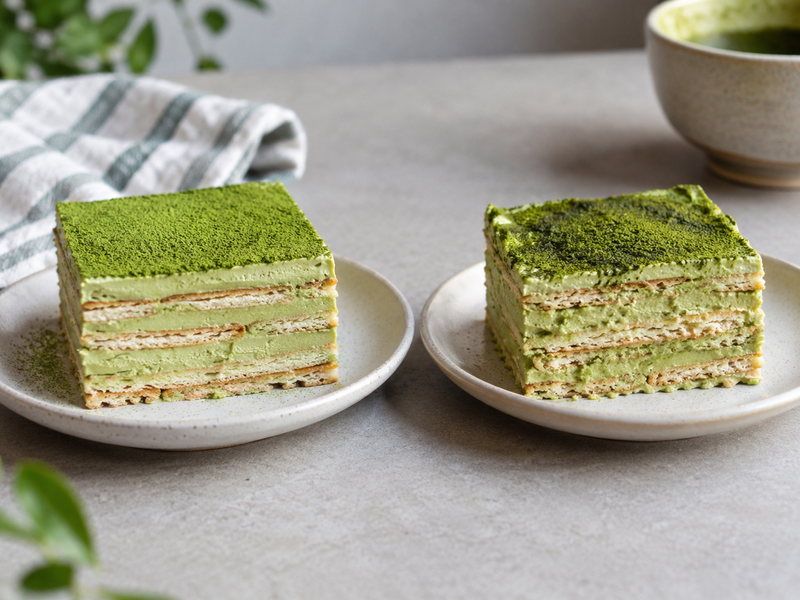
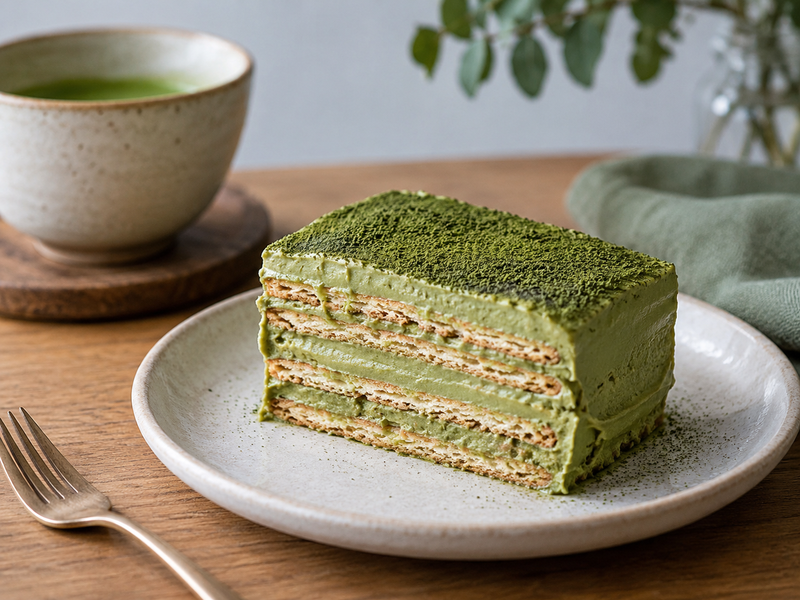
An icebox cake sets as cream and biscuit layers rest together under refrigeration. A café should decide how a finished forkful behaves: the cracker should yield without a hard snap, the cream should hold distinct layers, and matcha should remain recognizable beside any fruit. Cut a center slice and an edge slice at the intended sale point. Ask tasters to record tea flavor, sweetness, cracker texture and free liquid separately. A photogenic striped face is only one part of the product; if the fork pushes entire layers sideways, the slice needs more development.
Set a portion mass and shape before choosing a tray. A narrow tall slice may look elegant but topple in a takeaway box. Test both with the actual dessert fork or spoon. Photograph slices under display lighting. Note where the green cream touches wet fruit and where a pale cracker is still visible. The cake must be judged after its planned rest, because a fresh assembly tells little about the bite customers will receive.
| Finished attribute | Trial check | Fault to inspect |
|---|---|---|
| Layer hold | Cut center and edge | Sliding or collapse |
| Cracker bite | Fork through full slice | Hard core or paste |
| Tea flavor | Plain and fruit bite | Matcha fades behind cream |
| Pack fit | Lift and carry | Slice tips or smears |
2. Which layer structure makes sense?
Fix the stack before testing flavors
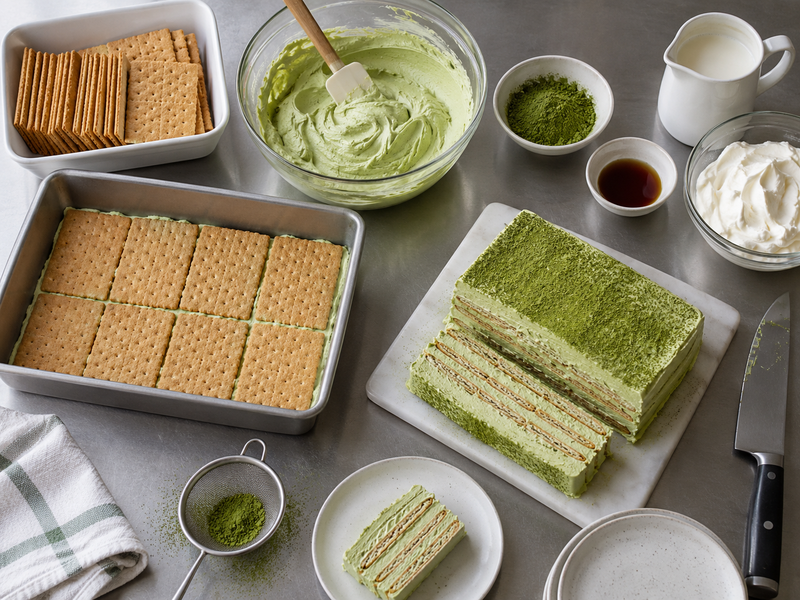
Use a written layer map: bottom biscuit, measured cream, optional fruit, then repeat to a stated height. Record gram weights and thickness for each layer. Make two test trays with the same total ingredients and different layer counts. One thick cream layer may taste rich but make the cut face unstable; many thin layers increase assembly labor and create more interfaces where fruit moisture can move. Choose a repeatable stack.
Line the tray with a release method approved for the operation and test whether the opening slice lifts intact. The end pieces often absorb moisture differently from the center because the tray walls contact the cream. If every edge slice needs trimming, include that loss in yield. Note the assembly sequence and tools. A spatula that drags crumbs through the cream can make the green layers look dirty even when the formula tastes good. Trial the same stack with another staff member. If that tray has wildly different cream thickness, add a weighed deposit or simple depth marker to the card before adjusting ingredients.
3. How should the matcha cream be formulated?
Test tea in the chilled base
Choose a cream system suited to the desired menu, such as dairy whipped cream, cream cheese, or a plant-based alternative. These are separate formulas with different flavor and structure. The reference uses a vegan matcha cream, but a bakery should not assume the same tea dose works in dairy. Weigh the powder against finished cream mass and run at least two controlled trial doses. Taste the cream cold and inside the assembled cake.
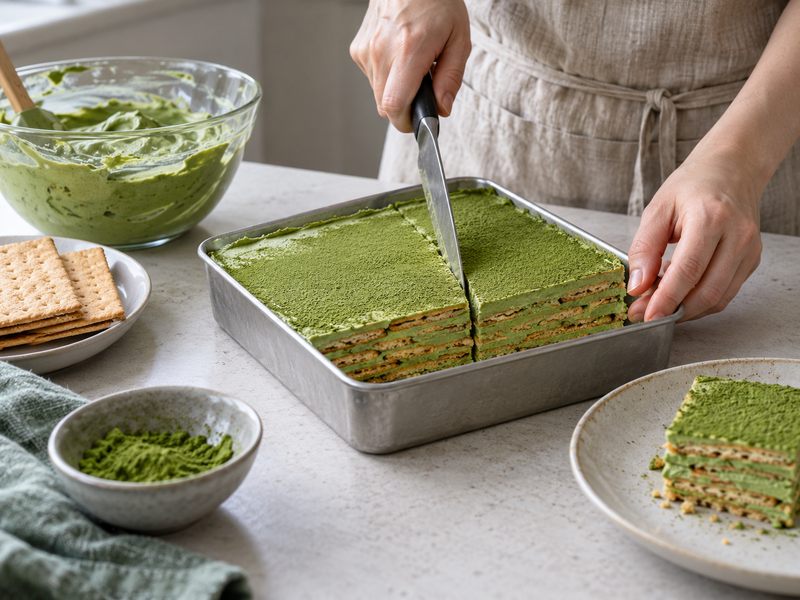
Disperse matcha before the cream becomes too stiff to mix evenly. Make a smooth paste with a measured portion of the liquid phase, then fold it through the base using a documented method. Inspect for dark flecks and trapped air. If whisking loosens the cream, change the mixing method. Note cream density or deposit weight per layer, since a visually similar spread can contain different amounts. Matcha Village’s matcha custard guide treats finished-use texture as the test; icebox cream needs its own chilled stacking and cutting standard.
| Cream trial | Keep fixed | Inspect in assembled cake |
|---|---|---|
| Tea dose A/B | Base and cracker | Flavor after rest |
| Paste method | Powder lot | Green specks or streaks |
| Cream deposit | Tray and layer count | Thickness and yield |
| Base choice | Stack geometry | Cut strength and taste |
4. Which cracker or biscuit should be used?
Judge the softened layer at sale time
The biscuit has to absorb enough moisture to cut cleanly without turning to paste. Graham crackers, tea biscuits and sponge sheets behave differently, so compare candidates in the same cream at equal layer mass and chill time. Record biscuit thickness, piece size, sugar level and whether gaps remain after lining the tray. A thicker cracker may need a longer rest but give a stronger slice. A very thin crisp wafer may soften quickly and lose all contrast. Taste a full forkful from the center, where moisture moves more slowly than at the fruit interface.
Check breakage and labor. A sheet that needs extensive trimming may waste material and leave crumbs in the cream. Note ingredient declarations, especially wheat, milk, soy or nuts. A gluten-free claim needs verified ingredients and cross-contact controls, not just the absence of wheat in one purchased box. The FDA allergen overview identifies major US allergens; the destination market and exact sale format govern labeling. The bakery should approve the biscuit as part of the finished cake, not as an isolated snack.
5. How should fruit moisture be controlled?
Weigh fruit after preparation
Strawberries add color and acidity, but their cut surfaces release liquid into nearby cream and crackers. Weigh them after washing, trimming and any draining, then spread a measured amount in a repeatable pattern. Keep slice thickness similar. Make one tray with fruit between every cream layer and another with fruit in fewer layers while holding total fruit mass constant. Cut both after the planned chill and look for wet bands, sliding layers and flavor balance. A fruit-heavy middle may look generous but leave a soaked cracker beneath it.
Fruit can also be offered as a service garnish rather than a structural layer. Compare an assembled-fruit tray with a plain cake topped at handoff; note labor, display appearance and moisture migration. Frozen or thawed fruit requires a new test because it can bring a different amount of free liquid. Solve a wet interface by measuring fruit and layer placement before thickening the entire cream, which may make clean parts of the slice heavy.
| Fruit arrangement | Measure | Evaluate |
|---|---|---|
| Thin internal slices | Prepared grams per tray | Wet bands and layer slide |
| Fewer fruit layers | Same total fruit mass | Portion consistency |
| Service garnish | Grams per plate | Labor and full-bite balance |
| Thawed fruit | Drained grams | Free liquid after chill |
6. What chill point gives a clean slice?
Test a sequence, not a guessed overnight rule
Make identical small trays and inspect them at several rest points chosen for the operation’s prep schedule. Use the same refrigerator conditions and record product temperature as required by the site’s plan. At each point, cut a center slice with the chosen knife. Note whether the cracker is still hard, whether cream holds a vertical face, and whether fruit has bled into the next layer. This trial identifies a quality window for the recipe. It cannot, by itself, establish microbial safety or a sales date.
Do not rely on “overnight” as a production specification. Write the actual start and inspection times. Compare a tray with a lid and one using the intended retail cover, since condensation and headspace may change the surface. The FDA Food Code supplies a US retail-food model for cold holding and date marking; the café’s local requirements and approved plan determine its controls. If a cake needs more time for cracker softening than its quality or safety window permits, choose a different cracker or cream structure rather than making an unsupported holding claim.
7. How can portions be cut and packed?
Count saleable slices from the whole tray
Mark a grid on the finished tray and cut with the same blade and wiping routine used in service. Weigh center, edge and corner pieces. If edge pieces are smaller or collapse, count them as rejects or plan a different cut map. Costing a tray at twelve theoretical slices is misleading when only nine match the photograph. A warm knife may give a cleaner cut in some formulas but can smear cream in others; compare methods on identical chilled samples rather than prescribing one technique.
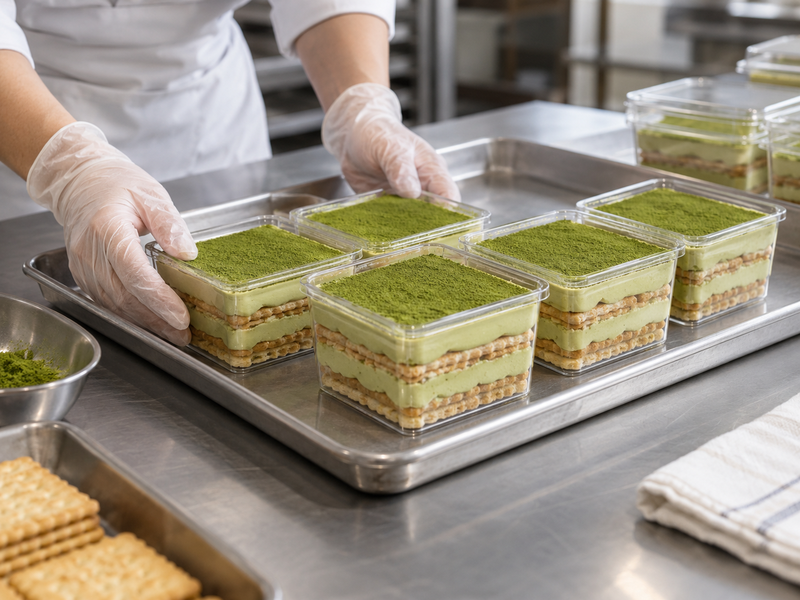
Move a slice into its planned plate or takeaway box. Check floor area, lid clearance and whether the cream touches paper. Carry it from display to pickup and along a short customer route. Photograph both ends of the route. If fruit falls from the top, reposition it or add it at service. If a tall slice tips, a wider portion or a fitted insert may work better than a heavier cream. Packaging needs accurate ingredients and allergen information for the market. Recheck the pack after any recipe or garnish change, because a small height increase can make the lid damage the surface.
| Portion measure | Record | Cost or service effect |
|---|---|---|
| Cut grid | Rows and columns | Repeats piece size |
| Accepted yield | Sellable slices | Sets price basis |
| Pack clearance | Space above topping | Prevents lid contact |
| Carry test | Shift and smear notes | Predicts handoff quality |
8. What should a refrigerated display trial record?
Observe the cake guests will see
Put slices in the real display case under approved cold-holding conditions and inspect them at planned service checkpoints. Record surface moisture, color, cracker texture, fruit liquid and whether the cut face stays straight. Photograph under case lighting, where green can appear different from prep-room light. Taste a displayed portion at the proposed last sale point. A cake that looks intact but has a pasty cracker or flat tea flavor fails the sensory target. Label each sample with its cut time and position in the case. Compare a front-row slice with one farther back; the display position can change handling exposure and how a guest sees the layers. Keep those observations beside the tasting notes.
Separate a quality trial from shelf-life validation. This no-bake product may contain ready-to-eat dairy or plant cream and fresh fruit; the operation must set safe preparation, holding and date decisions for its actual ingredients and equipment. Do not copy a refrigerator duration from a home recipe. If the slice weeps before the planned service period ends, measure fruit and cream before other changes. If it dries around the edge, review cover and airflow. Staff should have a clear reject photo and an escalation rule. Cutting away the wet part of a failed portion is not a product-control plan.
9. What should a buyer ask of the tea supplier?
Compare tea in the chilled cream
Tell suppliers the cream base, planned tea range, fruit choice, chilled service temperature and expected volume. Request lot-linked samples, ingredient identity, pack options, storage guidance and quality documents required by the buyer’s market. Compare powders at equal doses in identical assembled trays. A powder that tastes fine in a hot latte may be muted by cold cream and strawberries. Blind tasting after the intended rest gives procurement a stronger basis than loose-powder color alone.
Cost tea by accepted slice: actual grams of powder divided by sellable yield, multiplied by delivered gram price. Add crackers, cream, fruit, packaging, labor and trim. A powder with a higher purchase price may need fewer grams to meet flavor, but only the controlled cake test can show that. Ask how lots are identified and whether a repeat lot can be sampled before a larger rollout. Matcha Village’s matcha cake guide covers baked-cake powder evaluation; an icebox cake requires a separate cold-cream trial. Keep origin or grade claims tied to the purchased lot’s records.
| Tea decision | Supplier evidence | Cake test |
|---|---|---|
| Flavor | Lot-linked sample | Chilled slice tasting |
| Dispersion | Powder sample | Cut-face speck check |
| Supply | Pack and lot details | Repeat tray |
| Value | Delivered price | Cost per accepted slice |
10. What belongs on the launch recipe card?
Make the assembly and sale route repeatable
Record exact cream formula, matcha lot or specification, paste method, biscuit identity, prepared fruit weight, layer order, deposit per layer, tray dimensions, cover, approved refrigeration route and cut grid. Add a photograph of the finished center and edge slices. State the chosen garnish and pack. Link the card to the site’s safety, allergen and date records; do not turn a tasting note into a safe-holding rule. Version the card so a switch from fresh strawberries to jam does not quietly inherit old proportions and labels.
Have another employee assemble a trial tray from the card without verbal help. Compare finished height, cut yield and tea flavor with the approved reference. If the layers slide, inspect cream structure, fruit placement and chill point one at a time. If the cake cuts cleanly but tastes weak, compare powder lots or doses before raising sweetness. Record preparation minutes and rejected slices, because a no-bake dessert can still demand substantial labor. Launch when the team can make the same attractive, fork-ready portion on another shift and the quality lead has approved its actual sales conditions.
FAQ
Q1. Is an icebox cake frozen? Usually the format sets by refrigerated rest. This article’s trial concerns chilled cream and biscuit layers, not a frozen cake.
Q2. Why are crackers still hard in the center? Check biscuit thickness, cream deposit and measured rest time in the assembled tray.
Q3. Can fresh fruit be added to every layer? Test it. More cut fruit can create wet bands and uneven portions.
Q4. Can a café use any matcha powder? Screen candidate lots at equal doses in the finished chilled cream and cake, then compare flavor, texture and cost.
Q5. How long can slices remain on sale? Set a product-specific quality and safety period using the actual recipe, refrigeration, pack and local rules.