
Matcha custard is a dairy or plant-based dessert in which powdered green tea is dispersed through a cooked, thickened base. Its appeal rests on a precise balance: enough tea to taste distinct, enough sweetness to soften bitterness, and a texture that survives the intended service. A formulation that looks good in a warm saucepan can turn grainy, dull or watery after a night in the display case. The Vermicular matcha custard recipe shows the basic dessert format. A bakery or food brand needs to test that idea against its own equipment, pack and holding conditions.
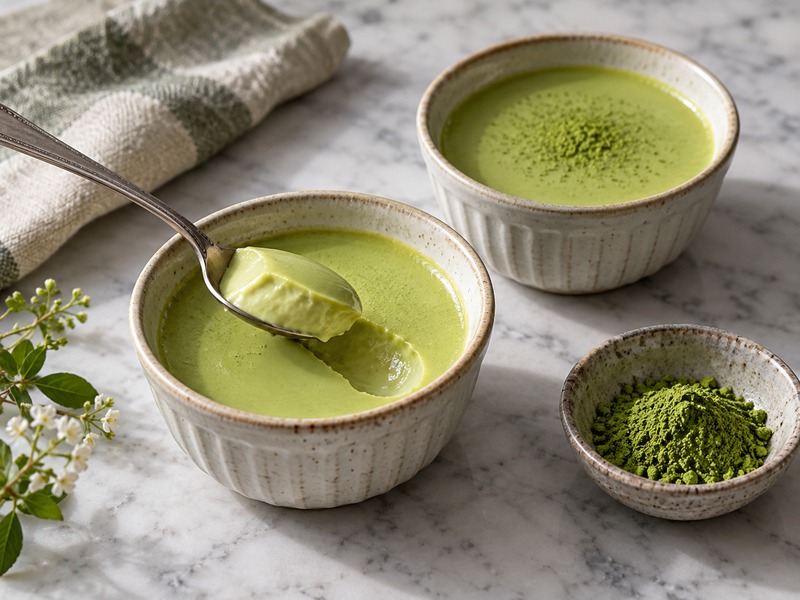
For: bakery operators, dessert developers, café teams and ingredient buyers. Decision: which base and process will deliver the agreed flavor, texture and shelf presentation consistently.
1. What defines a good matcha custard for this menu?
Start with the eating experience
A spoonable dessert, a pastry filling and a piped topping need different structures. The first should yield cleanly under a spoon. The second must stay inside the pastry without soaking it. The third needs enough body to retain shape after piping. Calling all three “custard” hides those performance differences. Write the intended use, service temperature, container and hold time before choosing an egg, starch or blended thickening system. Then set a sensory target: the matcha should be recognizable after the first bite, with no raw powder pockets, burnt milk note or lingering harshness.
Test in the real vessel. A small tasting cup cools differently from a deep pastry tray. Put trial custards in the planned pack or pastry and taste them at the actual selling temperature. Evaluate the first spoonful and the final portion, where water release or settled solids may be most obvious. Ask tasters to score tea presence, sweetness, smoothness and color separately. A single “good” score cannot tell the team what to change on the next batch.
| Intended use | Texture target | First stress test |
|---|---|---|
| Chilled dessert cup | Smooth, spoonable set | Overnight chilled hold |
| Pastry filling | Stable under a lid or shell | Cutting and leak check |
| Piped topping | Defined shape | Warm display interval |
2. Which thickening system suits the product?
Choose structure before adjusting matcha
Egg yolks give a familiar rich custard but require close heat control. Starch can create a firmer filling and tolerates some handling, although excess starch may dull the tea and leave a pasty finish. A combination can offer a middle ground. Plant-based versions require their own tests because a change in protein, fat and starch affects both flavor release and set. Do not assume that replacing milk with an oat drink at the same volume will preserve the original texture. Run one controlled base at a time, keeping tea dose and sweetener fixed.
Separate texture from color. A thicker custard may appear more opaque and therefore less bright even if the same matcha is used. Before buying a more expensive powder to solve a dull appearance, compare equal doses in bases with different fat and thickener levels. Note whether the defect is visible only while hot or remains after chilling. The approved formula should specify ingredient identities and acceptable substitutions; “use any starch” is too loose for a dessert made across shifts or sites.
| Base choice | Useful feature | Main control |
|---|---|---|
| Egg-led | Rich, delicate texture | Heating endpoint |
| Starch-led | Firmer filling | Hydration and aftertaste |
| Egg plus starch | More handling tolerance | Both set and flavor |
| Plant-based | Different menu audience | Beverage and fat stability |
3. How should matcha be selected for a cooked dairy base?
Judge the finished custard
Dry powder color is a useful inspection point, but it does not predict the finished dessert by itself. Milk fat, sugar and heat change how the tea tastes. A powder that seems too assertive in water may work in a rich custard; another that tastes pleasant as a drink can disappear under vanilla. Request samples with lot identification and prepare them at the same measured dose in the same base. Taste chilled, because a hot sample may exaggerate aroma that fades before sale. Compare after the intended holding period as well as on production day.
Buy to a specification. Ask for the product description, pack size, storage guidance, lot traceability and the food-safety documents required by your market and purchasing policy. Discuss acceptable color and sensory variation with the supplier using retained samples. If a private-label dessert is planned, include the actual packaging environment in the review. The lowest price per kilogram can become expensive if a weak powder needs more grams per cup to meet the flavor target.
| Sample check | Record | Reason |
|---|---|---|
| Tea dose per finished batch | Grams and batch mass | Makes trials comparable |
| Flavor after chilling | Tea, bitterness, off-notes | Matches sale condition |
| Color after hold | Photo under fixed light | Reveals drift |
| Supplier documents | Lot and specification | Supports repeat orders |
4. When should the matcha enter the process?
Prevent dry pockets first
Matcha is a suspended powder, so a large dry scoop dropped into hot custard can form stubborn green flecks. Prepare a smooth slurry with a measured part of the liquid before adding it to the main kettle. Sifting may help where the powder arrives compacted, but the team should verify whether it changes the finished result enough to justify the handling step. Add the slurry gradually and mix with a tool that reaches the vessel edges. A high-speed blender may remove lumps while adding excess air; that can make a filled cup look foamy or shrink as it cools.
Compare addition points. Adding tea before cooking exposes it to the whole heat cycle and can simplify batching. Adding it late may protect some aroma and color, but only if the process still disperses it safely and evenly. Make a small split trial using the same base, tea dose and final temperature. Photograph both immediately and after chilling. Taste blind if possible. Write down the chosen addition point, slurry liquid and mixing duration so operators do not improvise when the line is busy.
5. What heating endpoint protects texture and flavor?
Define an observable stop point
Custard can overcook before a busy operator notices. Egg-led systems risk curdling; starch systems need enough heat and time to hydrate. The right endpoint depends on the formula and equipment, so a single universal temperature is not a responsible specification. In a pilot, measure product temperature alongside visual and flow cues. Watch how the base coats a spoon or moves through the filling nozzle. Record heating time from the point the vessel reaches working temperature, not merely from when the burner turns on.
Control carryover. A thick batch continues to hold heat after the kettle is switched off. Decide when to transfer it, how quickly to cool it and whether stirring during cooling changes the surface or texture. Taste for cooked-milk notes and bitter tea after the full cooling route. If one batch is rough and another is smooth, inspect heat distribution and scraping before changing the matcha. A small saucepan and a large steam kettle will not reproduce each other’s hot spots without a fresh validation run.
| Heating observation | Likely question | Trial response |
|---|---|---|
| Grainy particles | Did egg set locally? | Reduce hot spots and agitation gaps |
| Thin body | Was starch fully cooked? | Check process endpoint |
| Dark or harsh tea | Was heat exposure excessive? | Compare later tea addition |
6. How can the team keep a clean green color?
Measure color at sale time
A vivid mixing bowl is a poor release standard if the custard spends two days under a lit display. Tea pigment, acidity, oxygen, heat and the pale or yellow shade of the base all affect perception. Use consistent lighting and a fixed reference card for photographs. Put equal portions in transparent and opaque packs and assess them after the proposed chilled hold. If the menu shows a striking bright green image, the real product must meet a defensible visual range; otherwise customers may read ordinary variation as staleness.
Avoid cosmetic fixes that create new problems. More matcha can deepen color while making the dessert bitter and costly. A high dose may also leave more sediment. Before changing dose, compare powder lots, heating routes and package light exposure. Record any added color or acid as a separate formulation decision with label review, rather than treating it as an invisible adjustment. A naturally muted shade can be acceptable when it matches the product’s flavor and the brand’s photography.
7. What defects appear during chilled holding?
Inspect the entire pack
Water on the surface, a skin beneath the lid, dense material at the bottom and a stale tea note are different failure modes. Fill samples at the intended mass and seal them with the planned packaging. Hold them under normal refrigerated conditions and inspect at scheduled intervals. Record product temperature, pack appearance, odor, spoon texture and any free liquid. A cup that passes at twelve hours may not pass the proposed sales period. Use actual product testing and applicable safety controls to set a shelf life; appearance alone cannot establish it.
Sample from multiple places. In a large pan, the edge cools and sets sooner than the center. In a tall cup, the bottom can become denser. Taste top, middle and bottom portions after hold. If separation occurs, check solids balance, thickener hydration, cooling rate and mixing uniformity. Do not hide a defect under whipped cream in the test; toppings can make the finished menu item attractive, but the custard itself still has to be sound.
| Defect | Check first | Evidence to keep |
|---|---|---|
| Surface water | Base and cooling route | Timed pack photos |
| Skin under lid | Fill temperature and headspace | Pack comparison |
| Powder specks | Slurry and mixing | Process observation |
| Flat tea taste | Dose, lot and storage | Blind tasting sheet |
8. Which packaging and serving format fit the formula?
Choose the pack as part of the recipe
A clear dessert cup shows color but also exposes condensation, bubbles and small surface defects. An opaque cup protects the visual impression until opening but needs accurate on-pack communication. A filled pastry adds moisture migration and mechanical handling. Trial each intended format with the same formula before finalizing the filling weight and label. Check lid clearance, headspace, stacking and the mark a spoon leaves after the first scoop. If a café pipes the custard fresh, the nozzle diameter and hold temperature become part of the approved method.
Keep toppings honest. Fruit, cream and chocolate can balance tea flavor, but they also alter water movement and shelf presentation. Test a topping in the assembled product, not just beside a fresh custard. A wet fruit layer may thin the interface; crunchy elements may soften. Document whether toppings are added in production or at service. That decision affects labor, pack height and the time at which quality should be assessed.
9. How should cost and supplier risk be evaluated?
Cost the edible portion
Calculate cost per finished cup or filled pastry, including matcha, base ingredients, packaging, topping, process loss and labor. A small change in matcha dose can matter across a large batch, but reducing dose below the flavor threshold wastes the reason for the product. Compare candidate powders by the amount needed to achieve the sensory target, not by invoice price alone. Keep a reference custard frozen only if your quality procedure shows that freezing does not distort its evaluation; otherwise use a fresh retained-standard process.
Plan a second lot. A promising sample is not proof of continuity. Ask the supplier how lots are identified, how changes are communicated and what lead time applies to the pack size you intend to buy. Run a confirmation batch with another available lot before locking menu photography and printed packaging. If a substitute powder is necessary, treat it as a new approval trial. Tea origin or grade claims also need documentary support and label review for the selling market.
10. What pilot proves the custard is ready to sell?
Run the route end to end
Make a pilot at a size that exposes the real heating, mixing, filling and chilling constraints. Record ingredients by weight, equipment, processing times, product temperatures, fill weights and rejects. Include the last cups filled from the vessel; they may contain a different solids balance if agitation fades. Put finished packs through normal handling and the planned display period. Have several tasters assess blind samples at release and at the proposed end of sale, using the same four criteria agreed at the start.
Write a release decision. Approve the formula only when the team can reproduce the result from the written method. Define who checks incoming matcha, what a passable cup looks and tastes like, and what happens to a batch that fails. If one item remains uncertain, such as longer chilled stability, run that test before setting the sale period. The useful next step is a controlled pilot with two tea lots and the real pack, not another attractive spoon photo.
Reference: Matcha Custard is a consumer recipe reference for the dessert format. The operational checks above are development recommendations, not claims about that recipe.
FAQ
Q1: Is matcha custard always made with eggs? No. Egg, starch, mixed and plant-based systems can all produce a custard-style dessert, but they need separate process and shelf tests.
Q2: Should matcha be mixed directly into hot custard? A measured slurry is usually easier to disperse. Compare early and late addition in your own formula.
Q3: How much matcha should a bakery use? Set a trial dose by finished batch weight, then adjust to a tasted target. There is no universal dose across powders and bases.
Q4: Can a dessert cup and pastry filling use the same formula? Sometimes, but the filling needs additional tests for leakage, moisture migration and handling.
Q5: How long can matcha custard be sold chilled? Set the period through the applicable food-safety program and product-specific holding tests; color and taste checks alone are insufficient.