
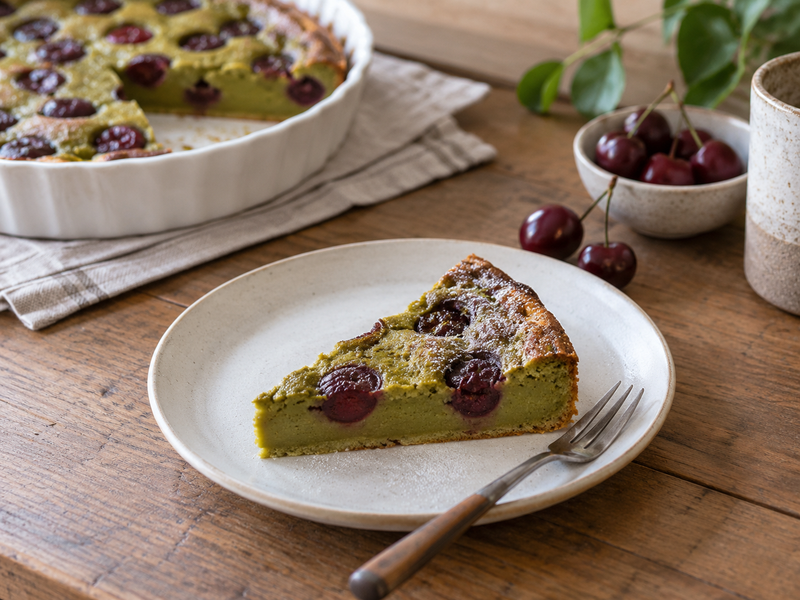
A matcha clafoutis can set at the edges and still collapse into a wet middle when a bakery cuts it for sale. Fruit size, batter depth and oven behavior all affect the portion a guest receives. Fix the pan and fruit weight, compare batter set at several bake endpoints, and taste the slice after its planned cooling route. The Olivia Pâtisse cherry matcha clafoutis uses cherries, egg, cream, milk, almond and matcha in a specified pan. That recipe provides a useful format reference; a café must test its own pan, oven, service temperature and portion size before promising a consistent dessert.
Contents
- 1. What should a café matcha clafoutis deliver?
- 2. Which fruit belongs in the trial?
- 3. How should the batter be balanced?
- 4. Where should matcha enter the batter?
- 5. How do pan size and depth change baking?
- 6. What shows the center has set?
- 7. When should the dessert be cut and served?
- 8. How should a bakery assess display quality?
- 9. What should buyers test in a matcha lot?
- 10. What belongs on the production and portion card?
1. What should a café matcha clafoutis deliver?
Define a slice that can be sold
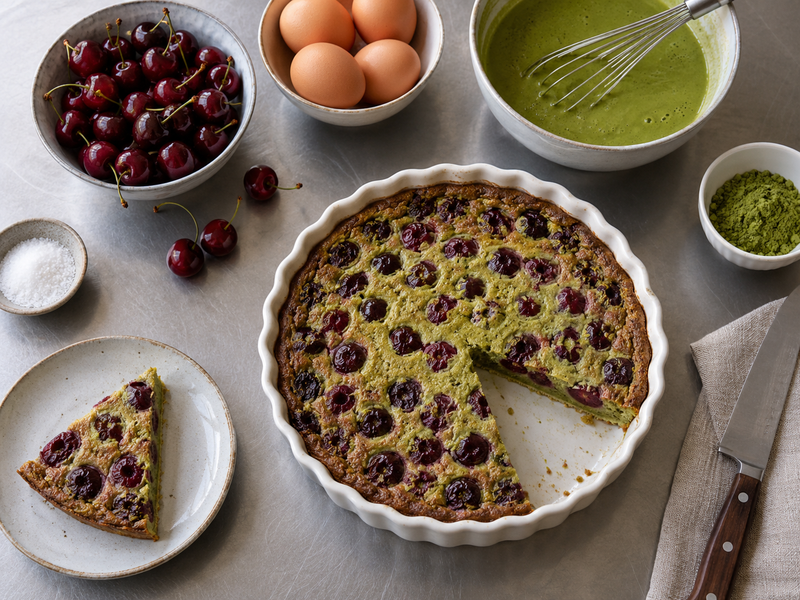
Clafoutis sits between a fruit dessert and a set baked batter. A café version needs enough structure for a clean portion without losing the soft eating texture guests expect. Describe the accepted slice by height, fruit distribution, visible matcha color, mouthfeel and tea flavor. Taste it at the planned service temperature. The reference author preferred the chilled version of a cherry clafoutis; that preference is a prompt to compare temperatures, not proof that every formula should be sold cold.
Build a trial pan, cut a corner, center and edge piece, and photograph each. If the corner is firm but the center runs, the pan does not meet a uniform portion standard. If fruit sinks into one layer, a guest may get one slice full of cherries and another mostly batter. Ask staff to score sweetness, fruit acidity and tea presence separately. An extra dusting of matcha on top can make the photo greener while leaving the baked interior bland; the interior should pass tasting on its own. Define the intended sale format now: plated warm, pre-cut chilled squares or a whole cake sliced on demand. Each format will lead to a different acceptance test.
| Finished slice | Record | Review if |
|---|---|---|
| Set | Edge and center texture | Middle runs or feels rubbery |
| Fruit | Pieces per portion | Distribution varies widely |
| Tea | Plain-bite flavor | Fruit or sugar hides matcha |
| Appearance | Cut face and top | Green differs across pan |
2. Which fruit belongs in the trial?
Record water and cut size
Cherries are the reference fruit, but a bakery might trial apricots, berries or plums. Choose one variety and preparation for the base test. Weigh the fruit after washing, pitting and draining, because purchased weight does not equal the weight that enters the pan. Keep pieces similar in size so moisture release and slice appearance can be compared. Frozen fruit needs a separate trial from fresh fruit; thawing and draining change what reaches the batter. Do not treat the two as silent substitutions when a seasonal supply changes.
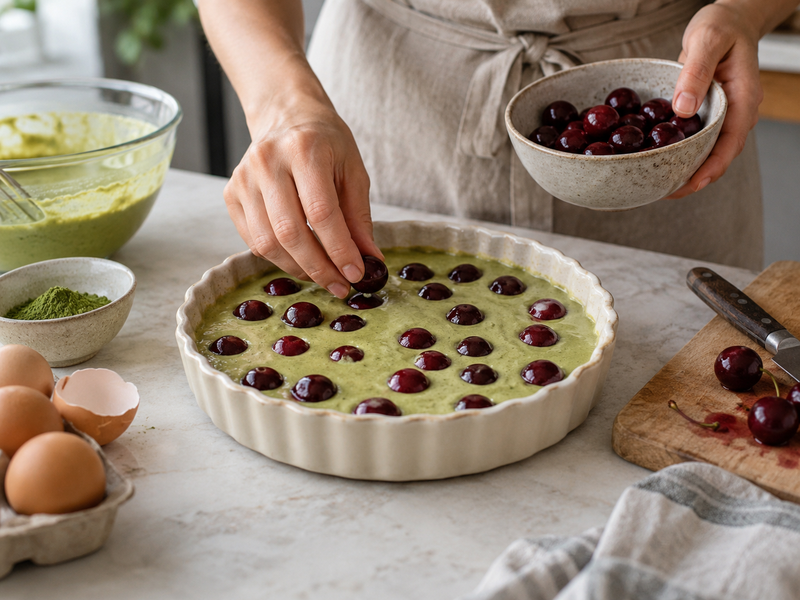
Set fruit mass per pan and map its distribution before pouring batter. Photograph the layout. After baking, cut a grid and note how many pieces land in each portion. A beautiful whole pan may hide empty corners. If fruit releases liquid around the pits or cut faces, compare a drained sample with an undrained one while leaving the batter unchanged. Avoid adding more starch immediately, since that could make the rest of the slice pasty. The fruit trial should answer whether the bakery can buy the same size and ripeness range through the menu period. If not, define an alternate fruit with its own tested weight and bake behavior.
3. How should the batter be balanced?
Keep richness, set and tea visible
The cited clafoutis uses egg, yolks, cream, milk, sugar, starch and almond powder. Each component affects the final bite, so translate any pilot into grams and preserve ingredient identities. Make a control pan before changing the matcha. If the base cannot cut cleanly without tea, a different tea grade will not repair its structure. For a café pan, note batter mass, fruit mass, fill depth and number of portions expected. Compare two sweetness levels only after a stable base has been chosen, using the same fruit and bake.
Matcha can seem weaker in a rich dairy and almond batter than it does in water. Taste a plain slice without a sweet sauce before raising the dose. Too much tea may darken the batter and add dry particles while the structural problem remains. If a plant-based or nut-free version is desired, treat it as a separate development project rather than swapping ingredients one-for-one. Egg, dairy, wheat or almond changes also affect allergen information. Matcha Village’s matcha custard guide discusses how intended use changes texture targets; a baked fruit slice needs a different set from a spoonable cup.
| Batter variable | Hold fixed during test | Decision signal |
|---|---|---|
| Sugar | Pan, fruit and tea | Balance against fruit |
| Dairy | Egg and dry ingredients | Body after cooling |
| Starch or flour | Same fruit mass | Clean slice without paste |
| Matcha | Same approved base | Tea flavor and even color |
4. Where should matcha enter the batter?
Disperse tea before the pan is filled
Matcha is finely ground tea rather than a dissolved green dye. If a scoop hits wet batter in one spot, green flecks and pale streaks can remain after baking. Weigh the powder and combine it with a measured portion of the recipe’s dry ingredients or make a smooth slurry with some recipe liquid. Test which method works with the chosen batter. Mix only as much as needed for even color, then scrape the bowl and inspect the last pour. The bottom of a bowl can hold a more concentrated green layer if mixing stops too soon.
Check powder performance in the baked slice, not just the raw batter. Bake small, equal-depth pans with two candidate tea doses and keep the oven position the same. Compare color at the surface and cut face after cooling. Taste a fruit-free corner and a fruit-rich center. If tea disappears under tart fruit, changing the fruit ratio may serve the dessert better than a large powder increase. Do not add green coloring without a separate ingredient, label and customer-expectation review. A naturally muted bake can be acceptable when the menu photograph and flavor match the product customers receive.
5. How do pan size and depth change baking?
Standardize the geometry
The reference specifies a 17 by 21 cm pan for six servings. A bakery may use a larger sheet or individual ramekins, but multiplying ingredients without matching depth changes how the center sets. Record internal pan dimensions, material, batter mass and fill height. Preheat the oven under the bakery’s normal method, then place a test pan in a documented position. If another pan is baked at the same time, note its position and whether the oven recovers heat after loading. These details help staff repeat an accepted result across shifts.
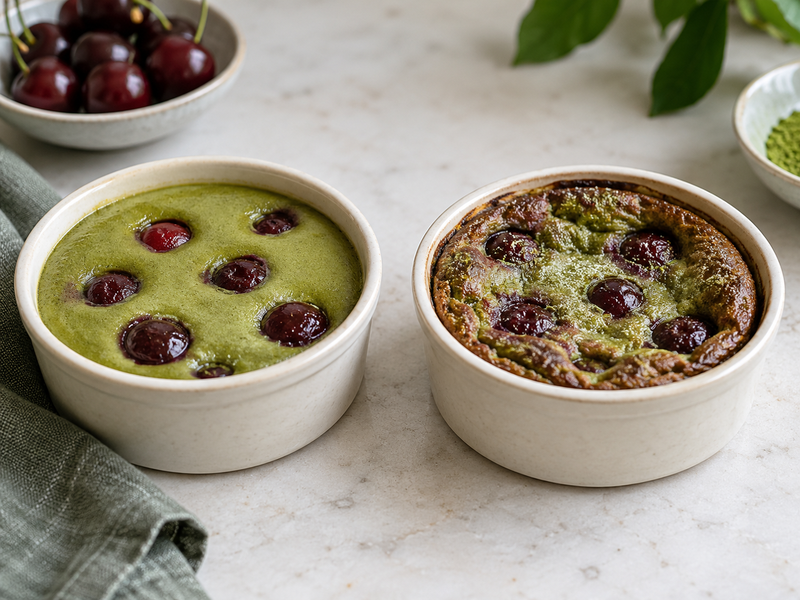
Cut equal pieces on a marked grid rather than guessing yield from the whole pan. A taller pan may look generous but produce a soft center that smears when boxed. A shallow pan may set cleanly yet dry the fruit at the edges. Compare two depths while keeping formula and fruit-to-batter ratio fixed. Photograph both after cooling and after cutting. If the bakery switches to ramekins, test the spoon experience and service time as a new format. Do not carry a bake time from a sheet pan straight to a small cup; the product geometry has changed.
| Pan record | How to capture it | Why it matters |
|---|---|---|
| Inside dimensions | Length, width, depth | Repeats batter height |
| Material | Pan model or type | Tracks heat response |
| Fill | Batter and fruit grams | Controls portion yield |
| Oven position | Rack and load | Explains uneven set |
6. What shows the center has set?
Pair observations with a validated process
Look for the same cues in every trial: edge appearance, center movement when the pan is gently shifted, product temperature where the site’s process requires it, and texture after cooling. A knife coming out dry from a fruit-rich clafoutis may be a poor single test because it can cross a cherry or syrup pocket. Cut a cooled center square from each pilot endpoint and assess whether it holds its shape without a raw batter line. Note whether the texture is tender or rubbery. A longer bake may solve a wet center while making the edges too firm; changing fill depth or oven loading may work better.
Egg and dairy desserts also need food-safety controls that a sensory cue cannot replace. The FDA Food Code gives a US retail-food model for cooking, cooling and holding. Use the local rules and the site’s approved plan for the actual production. Keep measured safety records separate from the sensory sheet. If a pan misses an approved endpoint, do not sell it because the top looks brown. A product developer can select the best flavor and texture only among batches that passed the operation’s required controls.
7. When should the dessert be cut and served?
Test warm and chilled portions separately
Cutting while warm can pull a soft center, drag fruit across the surface and leave jagged edges. Chilling may give a cleaner square but mute some tea aroma. Compare the same pan after different cooling intervals under the approved process. Use a consistent knife and wiping routine, then photograph the cut faces. If a warm plated format is preferred, test it in a ramekin or serve from a pan without promising sharp squares. The desired guest experience should determine the format rather than an attractive whole-pan image.
Measure portion weight from several positions in the pan. A cherry-heavy square may weigh more but contain less batter; a fixed grid and fruit placement can narrow variation. Test how a sauce, cream or ice cream changes the flavor. A sweet topping may hide the matcha that passed in a plain slice. Add it after the base dessert has an accepted taste and set. For takeaway, place the square in the planned container and carry it along the actual route. Inspect condensation, shifting fruit and lid contact. A cake box chosen for sponge may not support a soft custard-like slice.
| Serving format | Quality check | Operator decision |
|---|---|---|
| Warm plated | Spoon texture and shape | Pan or ramekin service |
| Chilled square | Clean cut and tea flavor | Cut timing and grid |
| Topped dessert | Flavor with garnish | Topping dose |
| Takeaway | Route and lid test | Container choice |
8. How should a bakery assess display quality?
Inspect the slice guests can buy
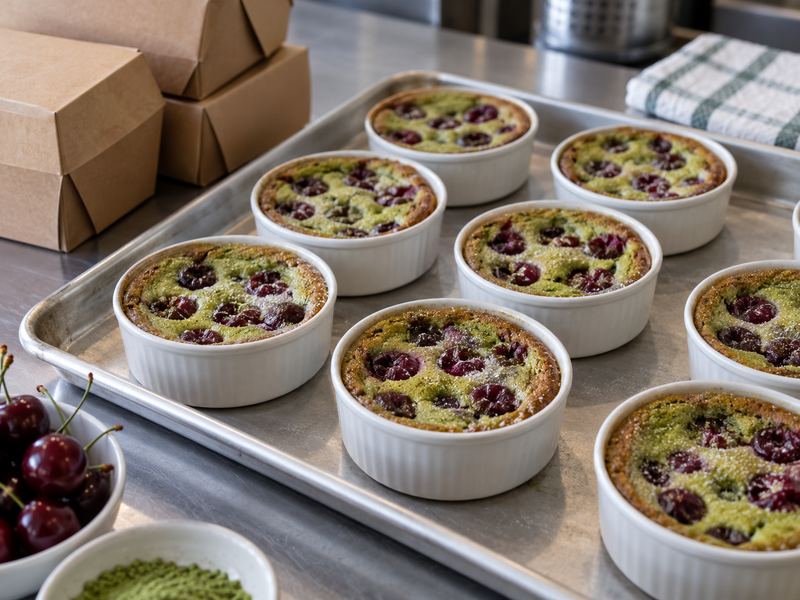
Place approved portions in the real display vessel and inspect them at intervals chosen for the proposed sale. Record surface moisture, fruit bleed, edge dryness, color and tea flavor. A slice under bright case light may look duller than a fresh pan on the bench. Photograph under the same case light at each point. If liquid pools below a cherry after rest, revisit fruit preparation and bake set before covering it with a garnish. If only the top dries, container or display airflow may be the issue.
Separate quality observations from safe-sale decisions. The recipe source cannot supply a commercial shelf life for the bakery’s ingredients, pan size, cooling route and case. Those decisions need product-specific validation and the applicable food-safety plan. The FDA allergen overview lists US major allergens including milk, egg, wheat and tree nuts; the reference’s almond powder makes ingredient review particularly relevant. Put an accurate description where staff can see it. If the bakery changes from almonds to another ingredient, rerun texture and allergen checks before selling the revised slice.
9. What should buyers test in a matcha lot?
Compare tea after baking and cooling
Request lot-linked samples, ingredient identity, pack options, storage guidance and the documents required by the destination market. Bake candidate powders at equal doses in one approved batter. A vivid loose powder may brown in a long bake or taste flat under fruit and cream. Judge the cut slice after the intended cooling route, with and without garnish. Photograph under fixed light and use blind tasting to separate price or grade reputation from the finished result. Keep the sample that met the approved flavor as a reference under the buyer’s quality procedure.
Calculate cost per accepted slice, not merely price per kilogram. Include actual tea dose, fruit trimming, batter loss, pan yield, packaging and labor. A high-dose powder may raise cost without improving flavor. Ask the supplier how it identifies lots and communicates changes that could affect the baked product. Matcha Village’s matcha cake development guide also advises judging tea after baking; clafoutis adds fruit moisture and a softer set that need their own trial. Menu claims about origin or certification require evidence for the actual purchased lot.
| Powder decision | Supplier record | Bakery proof |
|---|---|---|
| Flavor | Lot-linked sample | Blind chilled-slice tasting |
| Color | Product specification | Cut-face photo after bake |
| Repeat supply | Lot and pack details | Confirmation bake |
| Value | Delivered price | Cost per accepted portion |
10. What belongs on the production and portion card?
Capture what makes the center repeatable
The card should list ingredient identities and gram weights, fruit preparation and drained mass, matcha mixing step, batter mass, pan model, fill depth, oven load, approved process endpoint, cooling route and cut grid. Add a photograph of a center slice and an edge slice. Specify the chosen service format and topping dose. Link the card to the bakery’s safety, allergen and date-marking records rather than compressing those controls into a casual recipe note. Give the card a version number so a fruit substitution does not quietly inherit the old bake time.
Have another baker produce one pan from the card without coaching. Compare center and corner pieces against the accepted texture, fruit distribution and matcha flavor. If the center is wet, inspect fruit mass, depth and oven load before adding flour. If the slice is firm but bland, test powder dose or base sweetness in a controlled batch. A buyer can then tell a matcha supplier exactly how the tea performs in a fruit-and-egg bake. The launch decision belongs to the finished portion a guest buys, supported by a process another shift can repeat.
FAQ
Q1. Must matcha clafoutis use cherries? No. Cherries define the cited version. A different fruit needs its own moisture, set and portion trial.
Q2. Can the reference bake time be scaled to a larger pan? Do not assume so. Match fill depth, oven load and approved endpoint in a new trial.
Q3. Why is the center wet after cooling? Check fruit liquid, batter depth, oven position and bake endpoint before changing matcha.
Q4. Should a café sell it warm or chilled? Taste and portion both formats under the site’s approved process; choose the one that meets the menu brief.
Q5. How is a sale period set? Validate the finished recipe, cooling, packaging and display conditions through the bakery’s quality and food-safety program.