
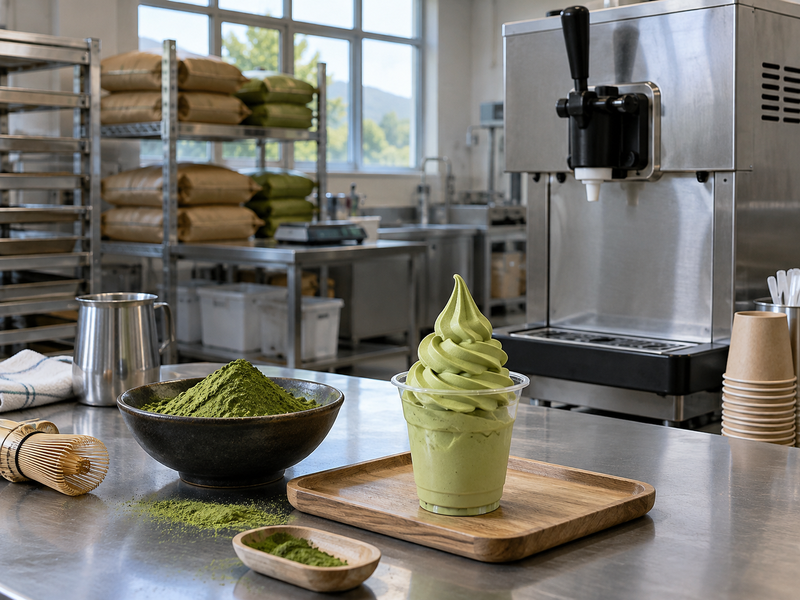
Matcha for soft serve must deliver flavor and green color after it enters a cold, sweet, aerated product. A powder that tastes elegant in hot water can disappear in dairy or plant base, while a vivid dry sample can look dull after freezing. Choose matcha through a controlled trial in the machine and formula you will use. This guide helps dessert operators and ingredient buyers compare lots, process behavior, cost and service consistency before a menu launch.
The frozen cup decides. Do not approve a powder solely from a supplier’s tasting bowl or a photograph. Bring the candidate into the intended base, run the normal process, then evaluate a fresh serving and a realistic hold. Record the full recipe so a repeat order can be checked against the same target. A good sample is one that can be supplied repeatedly with clear lot records, not just an attractive one-off demonstration.
1. What makes matcha suitable for soft serve?
Look for a tea flavor that remains noticeable in the finished base, color that fits the brand, smooth texture and reliable performance through mixing and freezing. “Ceremonial” is a commercial label, not proof that a powder will work in dessert. A culinary candidate may perform well at a lower cost if its taste remains balanced. Confirm whether the powder is pure matcha or a sweetened blend, because that changes the recipe and ingredient declaration. Ask for a product code and production-representative samples.
Evaluate more than one lot if continuity matters. Frozen dessert is often a repeat-purchase product; a noticeable green or flavor shift can disappoint regular customers. Keep an approved reference serving description and a retained powder sample under the supplier’s recommended conditions. Compare future deliveries using the same base and machine settings. If the supplier proposes a substitute during a shortage, run a short reapproval trial before adding it to the menu.
| Property | Test in finished product | Reason |
|---|---|---|
| Tea flavor | Taste fresh serving | Cold base can mute aroma |
| Color | Compare under fixed light | Dry powder color can mislead |
| Texture | Check grain and mouthfeel | Customers notice grit |
| Supply | Compare later lot | Menu needs continuity |
2. How should the base formula be defined?
Record whether the base is dairy, oat, coconut or another formulation. Note sweetness, fat level, stabilizer system and any flavor already present. Those ingredients change how matcha tastes and appears. A coconut base, for example, can contribute its own aroma; a sweet dairy base may reduce the perception of bitterness. Keep base formulation fixed while comparing powders. If you change the base and powder at the same time, you will not know which change improved the serving.
For commercial operations, involve the person responsible for food safety and allergen controls when selecting ingredients. Matcha itself does not make a mixed product free from allergens. Ask the supplier for the exact ingredient declaration and relevant production information. A premix can simplify staff work, but it may add sweetener or milk powder already present in the base. Check formula math before ordering pallets of a blend that duplicates other ingredients.
3. How much matcha should a pilot batch contain?
Use a dose ladder in the same base. Prepare small batches that differ only in matcha mass, then run each under comparable machine conditions. Rate color, tea flavor, bitterness and cost per accepted serving. Do not chase the darkest green if it brings an astringent finish that customers will not enjoy. A subtle dose may look weak beside brightly colored menu photography yet taste balanced. Ask a panel to compare the actual product without telling them which cup contains more powder.
Keep a written baseline. Record matcha grams per kilogram of base, mixing order, rest time, machine settings and serving size. Repeat the chosen dose with a production lot before launch. A powder that works at a small bench scale may behave differently in a larger tank. If a brand wants a strong tea claim on its menu, have its own legal and marketing team check the wording against the formula and destination market.
| Trial | Only changed variable | Score |
|---|---|---|
| Light matcha | Lower powder dose | Tea note, color, cost |
| Target matcha | Middle dose | Preference and finish |
| Strong matcha | Higher dose | Bitterness and texture |
4. How should matcha be dispersed into the mix?
Follow the base manufacturer’s process while testing a practical addition method. Dry matcha poured into a large cold tank may float or clump. A small premix or controlled powder addition can improve distribution, but it adds labor. Compare options using the normal equipment, not only a hand blender in the development kitchen. Check the top and bottom of the tank before freezing. Uneven distribution can create pale servings, dark streaks or a concentrated tea taste near the end of a run.
Document the amount of time operators need and whether powder sticks to walls or tools. If a supplier offers a ready-to-use matcha soft-serve blend, compare it with pure powder on the same finished-serving target. A blend may reduce preparation steps, while pure matcha gives more formula control. Include any changed ingredient declaration and storage needs in the comparison. The particle-size guide explains why powder measurements alone cannot prove dispersion in your equipment.
5. What does the freezing process do to flavor and color?
Cold temperatures can reduce aroma perception. Sweetness and fat also change what a customer tastes. A powder chosen in warm milk might seem faint when frozen. Test after the product reaches normal serving temperature, not only before the mix enters the machine. Compare color under the same lighting and cup, since a white cup or warm display light can change how green appears. Record whether a serving dulls or separates during the expected eating time.
Run any required processing or holding step exactly as planned. If the base is heat treated, confirm that the matcha addition stage follows the validated process; do not casually change a food safety step for color. Ask the formulation team to compare candidate powders under that process. If a supplier suggests adding matcha after a step, the operation must assess food safety and process controls. The goal is a safe, repeatable product, not a greener lab sample.
| Stage | Observation | Keep constant |
|---|---|---|
| Liquid base | Dispersion and color | Base formula |
| Machine output | Texture and flavor | Settings and draw |
| Held serving | Color and melt | Time and temperature |
6. Can matcha alter machine performance?
A powder can influence visible particles, deposits and cleaning needs. Test a representative run length, then inspect the hopper, feed path and dispensing head. Record whether output remains consistent through repeated servings. Do not assume every change comes from matcha; base composition, machine maintenance and operator technique can also alter draw. When comparing powders, keep those variables as stable as possible and note deviations.
Ask operators how the matcha version compares with the plain base for preparation and cleanup. Extra residue may raise labor cost. A powder that produces a beautiful first cup but slows service during a rush might be wrong for a high-volume outlet. A small chain can run a pilot at one store, track servings and complaints, then decide whether to scale. Keep a backup plan for an out-of-stock lot rather than switching powders without testing.
7. Which sensory checks should a menu team use?
Serve blind-coded samples in identical cups. Ask tasters to rate tea aroma, sweetness balance, bitterness, color, creaminess and finish. Have them take several bites as the serving warms; the first frozen spoonful can hide a lingering harsh note. If the menu will add toppings, test the matcha with those toppings, but choose the base powder on its own first. Sweet sauces can cover weak tea flavor in a tasting while regular customers may order the plain version.
Ask a buying question: which version would someone purchase again at the intended price? A technical panel can catch texture and process issues; a small customer trial can test appeal. Avoid claiming a five-person tasting proves a national preference. Use the results to narrow choices, then monitor real sales and complaints after launch. Keep the approved reference so feedback can be compared with the original target rather than memory.
| Attribute | Good question | Common mistake |
|---|---|---|
| Flavor | Does tea remain clear? | Tasting only liquid base |
| Bitterness | Does it linger? | Judging one spoonful |
| Color | Does it fit menu photos? | Changing light |
| Texture | Is any grit noticeable? | Ignoring last bites |
8. How should a buyer compare cost?
Calculate the delivered matcha cost per accepted serving. Include the tested dose, pack waste and any added preparation or cleaning time. Price per kilogram is only one input. If a powder needs more grams to remain noticeable in the frozen base, its lower quote may disappear. If a premium powder gives no perceptible benefit in the finished serving, its cost may be hard to justify. Use the same base, portion and target across all comparisons.
Also estimate the cost of holding inventory. Seasonal soft-serve menus may not use a large minimum order before quality changes in an opened pack. Smaller sealed packs can reduce waste. Compare production lead time with menu plans so purchasing does not choose a low price and then pay for emergency freight. The product’s accepted serving cost should be reviewed alongside customer preference, not after taste has already decided everything.
9. What belongs in the supplier specification?
List product code, ingredient identity, pack configuration, lot trace, storage instructions and the quality documents required for your market. Add the approved application trial and sensory reference. If color or particle behavior is critical, define how each will be measured. Request notice before relevant changes in source, blend, milling or packing. A specification cannot prevent natural variation, but it gives both parties a way to decide whether a new lot remains acceptable.
When the first commercial shipment arrives, inspect the packs and run the same soft-serve trial on a small scale. Keep lot codes connected to the outlets that receive them. The matcha COA guide shows how a lab report should match the actual cartons. A document that passes while the frozen product tastes wrong still calls for investigation against the agreed sensory target.
| Specification item | Evidence | Release check |
|---|---|---|
| Identity | Product code and declaration | Order and packs match |
| Lot quality | COA and inspection | Requirements met |
| Application | Approved trial | Frozen cup matches |
| Change control | Supplier notice | Reapprove if needed |
10. How should a business launch and monitor the product?
Launch with a controlled recipe and staff instruction. Train the mixing order, dosing and storage process, then review the first weeks of servings for color, flavor, machine issues and waste. Keep customer complaints tied to lot and location. If one shop reports a problem, compare its preparation with a site that does not. If every shop changes after a new lot arrives, escalate the supplier review. This simple evidence prevents a good powder from being blamed for a training error and prevents a true lot issue from being missed.
Matcha Village can discuss matcha samples for frozen desserts through its B2B contact page. Share the base type, planned dose range, machine process, pack size and target price. The best matcha for soft serve is the one that delivers the approved frozen serving again when the next shipment arrives. A small, documented pilot is the fastest way to find out.
FAQ
Q1. Can ceremonial matcha be used in soft serve?
Yes, but compare its frozen-product benefit with its cost. The label alone does not establish suitability.
Q2. Is pure matcha different from a soft-serve premix?
Yes. A premix may contain sugar or other ingredients that change formula and labeling.
Q3. Why does matcha taste weaker after freezing?
Cold serving temperature and the base can mute aroma; test the finished product, not only liquid mix.
Q4. Should powder be added before or after heat treatment?
Use the process approved by the product’s food safety and formulation teams. Test color within that controlled process.
Q5. What should be checked on the next lot?
Pack identity, documents, a small frozen trial and comparison with the approved sensory reference.