
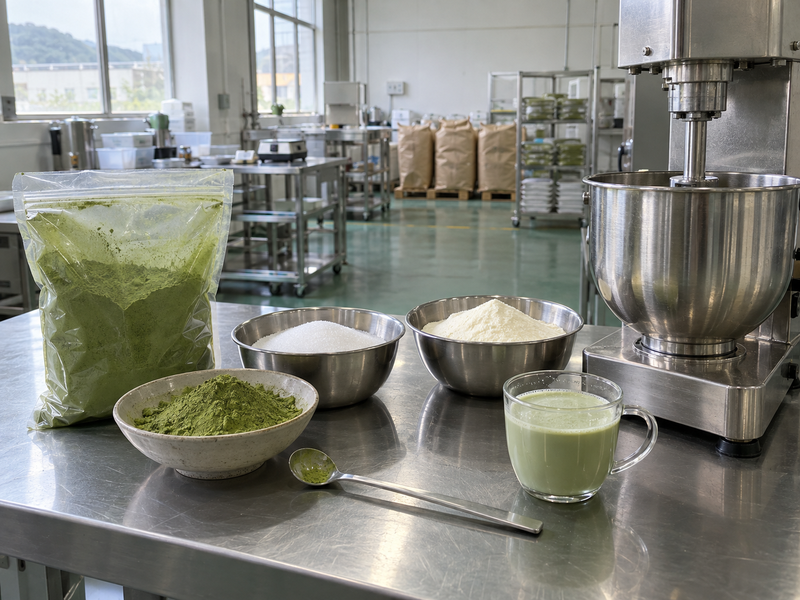
A matcha latte mix recipe for a business must survive a busy shift, changing staff and more than one production lot. A recipe that tastes excellent in one developer’s cup can fail when a barista pours cold milk over dry powder or a packet sits in storage. Start with the sold drink, then work backward to ingredient ratios, mixing instructions and a controlled supplier specification. This guide shows what a café chain or beverage brand should test before it scales a powder blend.
Make the target cup clear. State whether the drink should taste tea-forward, lightly sweet, creamy or dessert-like. Name the milk, serving size and temperature. One “best” formula cannot meet every menu position. A useful development record separates pure matcha quality from the effect of sweetener and milk powder, so a future purchasing change does not silently change the entire drink.
1. What belongs in a commercial matcha latte mix recipe?
A dry mix may contain matcha, sugar or another sweetener, milk powder or a plant-based creamer, and permitted functional ingredients where the product needs them. Another business may sell unsweetened matcha and add milk at service. Decide which work should happen in the factory and which should happen at the counter. More ingredients can simplify staff preparation but increase label, allergen, stability and supplier-control work. A pure-matcha base offers flexibility but requires a reliable drink recipe at each site.
Ask the manufacturer for a full ingredient declaration and a sample of the exact intended formula. Confirm whether “matcha” means pure ground tea or a component in a sweetened blend. Keep the product code tied to its recipe revision. If the business makes a low-sugar claim, validate the finished drink and applicable labeling rules with its own regulatory team. This article gives a development workflow, not a legal formula threshold.
| Component | Role in the cup | Buyer check |
|---|---|---|
| Matcha | Tea flavor and color | Lot performance |
| Sweetener | Sweetness and balance | Dose and label fit |
| Milk or creamer powder | Body and convenience | Allergens and solubility |
| Functional ingredient | Flow or stability | Need and permission |
2. How should the target drink be defined?
Write a one-page beverage brief before asking for samples. Include hot and iced versions, serving volume, milk choices, target sweetness, matcha intensity, color, service time and retail price. Name what the drink should not do: clump, taste grassy after a delay, leave a thick green ring or settle excessively. Use an approved reference cup or a clearly described competitor product as a sensory anchor. Avoid generic instructions such as “premium café taste,” which two developers can interpret differently.
Run the brief with operations staff. A formula that requires a long whisking step may be wrong for a drive-through service even if the cup tastes good. A premix designed for a vending machine has different flow demands from a hand-made latte. Define the service process with the taste target; both determine whether the formula succeeds. Record the cup temperature and ice level during evaluation so visual comparisons remain fair.
3. How much matcha should a pilot use?
Use a small dose ladder rather than choosing a number from another brand’s menu. Make several cups with the same milk and sweetener while changing only matcha mass. Blind-code them and ask tasters which cup reaches the intended tea note without excess bitterness. Note cost per accepted cup. The most intense sample may not be the best seller, especially for a lightly sweetened mainstream menu. A low dose can also make color appear driven mainly by additives rather than tea.
Calculate with the finished cup. If a more expensive powder reaches the target at a lower dose, it may be competitive. If a low-cost powder requires extra matcha and still tastes harsh, its price per kilogram misleads. Repeat the dose test with a production-representative lot. Keep a retained reference sample and approval record. The matcha quality grades guide explains why application testing is more useful than a grade label.
| Pilot cup | Hold constant | Record |
|---|---|---|
| Lower tea dose | Milk and sweetener | Flavor and color |
| Target dose | Mixing and volume | Preference and cost |
| Higher tea dose | Temperature and cup | Bitterness and finish |
4. Should the mix be sweetened or unsweetened?
An unsweetened base lets staff adjust drinks and can serve multiple menu items. A sweetened powder can reduce counter steps and improve consistency, but it locks sweetness into a fixed ratio with matcha. Test the expected milk and any syrups before choosing. If a chain already uses a standardized syrup system, adding sugar to powder may duplicate sweetness. For retail packets, the convenience of one scoop may outweigh that flexibility. The decision is operational as much as sensory.
Compare ingredient cost, storage and labeling for both versions. A sweetener can affect dry flow and dispersion, while a creamer adds allergen and shelf-stability questions. Do not assume a plant-based ingredient makes a product allergen-free. Confirm the actual supplier specification and finished label. Ask staff to prepare both versions under normal conditions and tally errors. A slightly more expensive blend can be worthwhile if it lowers remakes and training time.
5. How can a mix avoid clumps in hot and iced drinks?
Test powder addition order, liquid temperature and mixing tool. Some mixes disperse when first made into a small slurry, then diluted with milk. Others are designed for direct addition with a blender. Run the exact café method, including cold milk and ice. Watch for dry pockets, powder on the cup wall and sediment after the expected pickup delay. Do not solve every clump with more labor; a formula that demands a rescue step may not scale across many stores.
Record whether the product flows from a scoop or sachet after storage. A freshly blended bench sample can behave differently from packed powder that has traveled and sat in a humid back room. Check packaging seal and handling instructions. If clumps appear only after opening, the pack size may be too large for the sales rate. The bulk storage guide helps plan stock rotation and opened-bag control.
| Issue | Controlled trial | Possible response |
|---|---|---|
| Dry clumps | Same addition order | Revise process or blend |
| Iced sediment | Same hold time | Review powder and mixing |
| Slow service | Time normal preparation | Simplify steps |
| Opened-bag caking | Track humidity and days open | Smaller pack |
6. What tests belong in a sensory panel?
Use a small trained panel and a few ordinary customers or staff who know the menu. Rate tea aroma, green color, sweetness, bitterness, creaminess, aftertaste and texture separately. Ask which cup they would buy again, not only which one tastes strongest. Serve coded cups in random order. Compare hot and iced versions at the correct temperatures. A drink can look attractive on the bench yet turn dull after ice dilutes it or oat milk changes the color.
Write down the recipes exactly and save photographs under fixed light. Revisit the winning cup after the normal service delay. If the brand sells a takeaway drink, ask tasters to check it at the likely drinking time. That can expose sediment and flavor fade. Do not claim one small panel proves market demand; use it to eliminate poor formulas and decide which version deserves a broader trial.
7. How should a café test staff repeatability?
Give the draft recipe to several staff members with ordinary equipment. Measure dose variation, preparation time and visible errors. A recipe that works only when its developer weighs powder to a fraction of a gram may need a packet, calibrated scoop or automated dispenser. Observe the busiest realistic period. Staff may skip a sifting step when the queue grows, so the blend should tolerate the workflow it will actually receive.
Let the shift expose the weak point. Record whether a hot cup and iced cup require separate instructions. If training cards become complicated, simplify the formula or packaging. A chain can then judge the total cost of the mix: ingredient cost plus labor, waste and remakes. An apparently cheaper powder may cost more once those items are counted. Keep the signed recipe revision with the supplier’s product code.
| Service measure | How to collect it | Why it matters |
|---|---|---|
| Dose spread | Weigh normal scoops | Flavor variation |
| Prep time | Time typical orders | Queue speed |
| Remakes | Log cause | True cost |
| Training errors | Observe new staff | Scalability |
8. What packaging works for a latte mix?
Choose packs around usage rate and production setting. Single-serve sachets give dose control and convenience, but add packaging cost and waste. A bulk bag can be efficient for a busy café if it stays sealed between uses and staff can dose accurately. Retail tins need a consumer-facing label and repeatable scoop instructions. For each option, estimate how much powder a site uses before the pack is opened, then ask whether the opened material still performs as tested.
Review barrier properties, closure, shipping conditions and label space with the supplier. Run a small distribution trial if the product will travel far or sit in warm stockrooms. Keep the first production lot’s pack and formula aligned with the approved sample. Packaging is part of recipe performance because a blend that cakes or absorbs odor will not make the cup you approved.
9. How is a recipe costed for purchasing?
Calculate delivered cost per accepted cup. Include matcha dose, other ingredients, packaging, freight, handling loss and remakes. Compare quotes on the same serving volume and sensory target. A lower price per kilogram may reflect less matcha in a sweetened blend, so ask for the full composition and dose. If a supplier quotes a concentrated mix, normalize it to the same cup before comparing. Test at the price the chain will actually pay after the pilot order, not just the sample promotion.
For a private-label product, include development fees, minimum order quantity, artwork and shelf-life testing in the business case. Calculate how long the first order will sit before it sells. A large minimum order can look economical while tying cash in inventory and increasing aging risk. A staged launch often gives more useful demand evidence than a warehouse full of unproven packets.
| Cost item | Needed input | Unit |
|---|---|---|
| Blend | Delivered price and dose | Per cup |
| Service | Preparation time | Per cup |
| Waste | Remakes and expired stock | Per accepted cup |
| Packaging | Packet or bag cost | Per serving |
10. What should be approved before launch?
Approve the product specification, ingredient and allergen information, lot documentation, pack, service recipe and finished cup. Confirm the supplier can make the selected formula at planned volume. Run a commercial-representative trial and compare it with the development sample. Define what changes require written notification and reapproval: matcha source, sweetener, creamer, particle behavior or packaging can all shift the sold drink. Give operations a short instruction that names the dose and mixing order without relying on a developer’s memory.
Matcha Village can discuss pure matcha and formulated latte blends for business buyers. Send the intended milk, serving size, sweetness target, service method, packaging need and expected volume through its B2B contact page. A good matcha latte mix recipe is the one your staff can make consistently and your customers will order again. Prove both points in the actual cup before scaling. Keep the pilot scorecard with the purchasing file so later team members understand why the selected blend beat its alternatives.
FAQ
Q1. Can a café use pure matcha instead of a premix?
Yes. It gives recipe flexibility but requires consistent dosing and preparation at every site.
Q2. Does a sweeter mix need better matcha?
Test the finished cup. Sweetness can hide some notes but does not fix weak or harsh tea flavor.
Q3. Why does an iced latte clump when a hot one does not?
Cold liquid wets powder differently. Test addition order and mixing with the actual milk and ice.
Q4. Is a single-serve sachet always better?
No. It improves dose control but costs more in packaging; compare total service and waste costs.
Q5. What belongs in a launch specification?
Formula, ingredient declaration, pack, lot controls, finished-cup target and change-notification terms.