
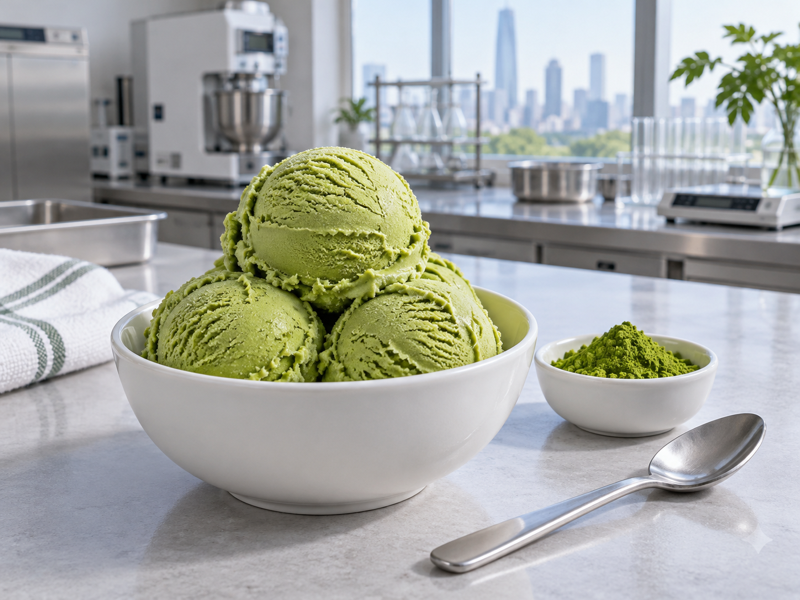
Matcha for ice cream has to work in a product that is cold, sweet and often rich in fat. A tea that tastes lively in water may fade in a frozen dairy base. A darker green powder may give the wrong flavor at the dose needed for color. Choose a candidate through controlled frozen-product trials, then set a specification that future lots can meet. This article gives commercial ice cream developers and ingredient buyers a practical route from sample bag to repeatable production.
Use the actual base. Record the formulation and processing conditions before comparing matcha samples. Taste the finished scoop at serving temperature and again as it softens. Check texture, color and ingredient cost in the same trial. Those results matter more than an isolated grade label. They also give the supplier a clear target if the first commercial lot differs from the approved sample.
1. Which matcha attributes matter in ice cream?
Look for tea flavor that remains present through dairy or plant ingredients, a green shade that fits the brand, acceptable bitterness and a smooth texture. Ask for production-representative samples with product codes and lot details. Some suppliers use “culinary” or “premium” as broad sales categories; those words do not predict performance in a frozen matrix. A powder that is subtle in a whisked cup might disappear after sweetening, while a stronger candidate may hold up in ice cream.
Assess the product at the intended serving temperature. A tasting spoon from a warm liquid base is only a screening step. Ice cream changes aroma perception and mouthfeel. Keep a reference scoop description and an unopened retained powder sample where feasible. A later lot can then be compared against an actual approval target. If the brand sells both ice cream and soft serve, test the powders in each format; the process and texture targets differ.
| Attribute | Finished-product test | Decision |
|---|---|---|
| Tea flavor | Taste at serving temperature | Clear but balanced |
| Color | Compare under fixed light | Fits visual target |
| Texture | Check grit and smoothness | Meets mouthfeel target |
| Supply | Repeat with another lot | Acceptable continuity |
2. Should the trial use dairy or plant-based base?
Use whichever base the business will sell. Milk fat, proteins, oat notes and coconut aroma can all change the perceived tea flavor. A powder that wins in dairy may rank differently in an oat base. Keep the base formula constant during the first comparison. If a brand is developing both versions, use separate panels and acceptance criteria. The same matcha may work in both, but testing must show it. Do not treat the powder’s dry appearance as a substitute for this work.
Check the ingredient declaration and allergen controls for the complete product. Pure matcha does not remove risks introduced by dairy, nuts or shared equipment. A supplier’s sweetened matcha blend may add ingredients already in your base. Ask for full composition before adjusting the recipe. If the formula changes later, repeat the flavor and color test; a new fat or sweetener system can alter the original result.
3. How should matcha dose be chosen?
Make a dose ladder in the same base. Change only the matcha mass between samples, hold mixing and freezing conditions steady, and blind-code the finished scoops. Rate tea clarity, bitterness, color and willingness to buy. A very green sample may be too harsh; a pleasant low-dose sample may be too faint once served with toppings. Choose the dose that meets the intended product description rather than the most intense sample. Record grams per batch and per accepted serving.
Compare cost at the chosen dose. A higher-priced powder may need fewer grams, or it may offer no clear benefit in a sweet, frozen base. Calculate delivered cost per accepted liter or serving after a sensory winner is selected. Repeat the test with a production lot before signing a large supply agreement. Keep the result tied to the supplier’s product code so a purchasing substitution does not silently change the recipe.
| Trial | What changes | What stays fixed |
|---|---|---|
| Low dose | Matcha mass | Base and process |
| Middle dose | Matcha mass | Serving temperature |
| High dose | Matcha mass | Panel method |
4. How can powder be incorporated evenly?
Matcha can form clumps if it is dumped into a large liquid batch. Test a mixing order that the plant can repeat. A small controlled premix may help dispersion, but it takes time and equipment. Sample the tank at more than one location before freezing. Uneven green color or specks in the first batch reveal that a bench method has not scaled. Document mixing speed, time, temperature and addition stage. If the line handles dry powder through a feeder, record flow and dust as well.
Do not change a validated heat treatment or food safety control merely to protect color. Ask the plant’s quality and process teams to approve any new addition stage. The selected formula should be tested through the process that will actually make it. A supplier can suggest a technique, but the manufacturer owns its validated production controls. The matcha particle-size guide shows why a fineness claim cannot guarantee dispersion in a particular tank. If the plant changes mixing equipment, repeat the test; a bench whisk and a production agitator may leave different dry pockets.
5. What happens to matcha during processing and freezing?
Heating, mixing, freezing and storage can alter appearance and flavor. Evaluate at the end of the full process. A vivid liquid mix may look paler once air and ice affect the frozen product. A delicate aroma may become less noticeable at low temperature. Keep process and storage conditions consistent when comparing candidates. Photograph samples under fixed neutral light, then taste them at the same serving temperature. A visual judgment from unmatched phone pictures is unreliable.
Check the product after the intended storage interval as well as immediately after production. A menu that sells tubs over weeks needs a different trial from a small café selling freshly made soft serve. The goal is not an unrealistically perfect new scoop; it is an acceptable scoop through the commercial life that the business will substantiate with its own shelf-life program. Record any color shift, off note or texture change and investigate the whole formula rather than assuming matcha caused every change.
| Stage | Check | Why |
|---|---|---|
| Liquid mix | Dispersion and baseline color | Detect clumps early |
| Fresh frozen | Tea note and texture | Approve process result |
| Stored frozen | Color, flavor, texture | Check intended sales period |
6. How can texture problems be separated from matcha problems?
Use a plain-base control made in the same run. If both plain and matcha versions are icy, review the base and freezing process. If only the matcha version has grit or green flecks, investigate powder dispersion and size distribution. Have a panel check both fresh and softened scoops. Texture defects can arise from storage temperature swings, recipe changes or mixing, so a single complaint should trigger comparison rather than a guess. Preserve samples and process records from the affected batch.
When a new powder gives grit, try a controlled comparison with the approved matcha at the same dose and mixing conditions. If the problem follows the powder, ask the supplier for particle data and a lot review. If it follows a plant shift, inspect handling and equipment. This method gives a more useful corrective action than switching grades without evidence. Keep any reformulation small enough that the cause remains visible.
7. What should a sensory panel record?
Use blind-coded scoops, the same cup and temperature, and a short scorecard. Include matcha aroma, tea flavor, sweetness balance, bitterness, color, texture and aftertaste. Ask panelists whether they would purchase another serving at the proposed price. Taste without toppings first. Then test the winning formula with typical toppings or inclusions because chocolate, fruit or syrup can shift the matcha impression. A panel should include technical staff and people closer to the target customer.
Listen to specific words. “Too bitter after it melts” is more useful than “not premium.” Record where the note occurs and whether several tasters agree. Avoid overclaiming from a tiny tasting. A small panel screens formulas; a store pilot tests the menu. Keep the selected reference and scorecard so later supplier lots can be compared with a documented target, not a memory of launch day.
| Panel item | Prompt | Record |
|---|---|---|
| Tea note | Noticeable through base? | Intensity and quality |
| Finish | Bitterness after melting? | Duration |
| Texture | Any grit or flecks? | Location in scoop |
| Purchase | Would you order again? | Preference |
8. What packaging and storage should be specified?
Buy pack sizes suited to the plant’s usage rate. A large bag may have a lower unit price but spend longer open near humidity and odors. Ask for a pack that protects color and aroma and gives clear lot identification. At receipt, inspect seals and cartons, then store according to the supplier’s instructions. Track opening dates and keep partially used bags closed. If a seasonal product uses little matcha outside peak months, consider smaller sealed packs rather than aging a large inventory.
Align inventory rotation with planned production. A matcha lot used late in its storage period may behave differently from the sample approved at launch. Run an occasional frozen-product check, particularly after an opened bag has been in use. The bulk matcha storage guide details practical receiving and opened-pack handling. Packaging performance belongs in the purchase comparison because waste erases a cheap quote.
9. How should a buyer compare suppliers and cost?
Request quotes for the same product identity, pack size, order volume and delivery basis. Compare the powder’s delivered price and its approved dose per serving. Add handling loss, storage waste and any process adjustment. A powder with a lower kilogram price may require more material to survive a rich base. A visually beautiful powder may be worth a premium for a flagship product if customers can perceive the difference. The business case should show that difference in the finished scoop.
Request lot-specific documentation and a clear change-control process. A supplier with consistent sample-to-production performance can reduce reformulation work. Ask how it handles a failed lot or shortage. Do not treat an attractive sample as evidence of future supply capacity. A small pilot order can test packing, delivery and documentation before a large seasonal commitment.
| Cost input | Basis | Hidden risk |
|---|---|---|
| Powder | Delivered cost at accepted dose | Higher dose than planned |
| Handling | Loss per batch | Clumps or dust |
| Inventory | Usable stock | Opened-bag aging |
| Supply | Normal lead time | Emergency substitute |
10. What must be approved before scaling?
Approve the formula, process record, powder specification, lot documentation, packaging and finished frozen reference. Run a representative production batch and compare it with the bench winner. Set a release check for the next matcha lot and keep lot codes linked to finished tubs. Record which changes require reapproval, including source, blend, milling or ice cream base. Monitor early customer feedback after launch and connect complaints to product and lot rather than treating each as an isolated taste preference.
Matcha Village can discuss commercial matcha samples for frozen desserts through its B2B contact page. Share the base, process, target tea flavor, pack size and forecast volume. The best matcha for ice cream is the powder that delivers an accepted scoop repeatedly at a cost the business can sustain. A controlled frozen trial makes that choice defensible.
FAQ
Q1. Is ceremonial matcha required for ice cream?
No. Compare candidates in the frozen product; a grade label does not predict the best value.
Q2. Why does matcha flavor fade in ice cream?
Cold temperature and the base can mute aroma. Test at serving temperature and adjust through trials.
Q3. Can the same powder work in dairy and plant-based bases?
Possibly, but each base needs its own finished-product trial.
Q4. Does bright powder guarantee a green scoop?
No. Formula, processing, freezing and storage affect the final color.
Q5. What should be retained for future lot checks?
An approved powder sample, frozen-product sensory record, recipe and lot-linked specification.