
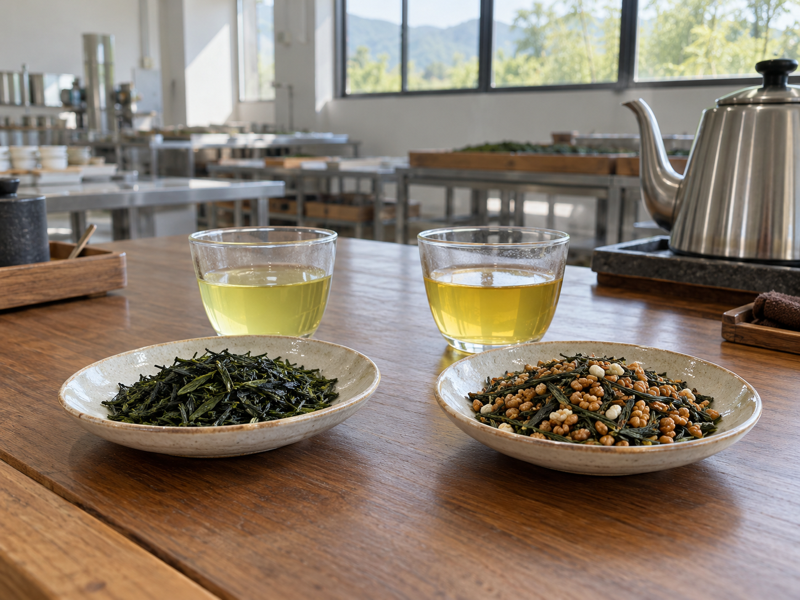
Gyokuro genmaicha pairs a shaded Japanese green tea with roasted rice. It can be an attractive premium blend, but the name alone says little about the percentage of gyokuro or how clearly its character survives the rice roast. A buyer paying a gyokuro premium needs more than a dark leaf photograph. This guide sets out the questions to ask a supplier, a practical tasting method, and the product formats where the blend may earn its cost. It treats the premium claim as something to verify in the finished cup.
Contents
- 1. What is gyokuro genmaicha?
- 2. How does gyokuro change a genmaicha blend?
- 3. What does shaded tea add to cost and sourcing?
- 4. Which rice roast works with gyokuro?
- 5. How should a buyer taste competing samples?
- 6. What documents support a gyokuro claim?
- 7. Is the blend suitable for tea bags or powder?
- 8. How should the blend be served?
- 9. When is the premium commercially justified?
- 10. What belongs in a purchase specification?
1. What is gyokuro genmaicha?
Genmaicha is green tea blended with roasted rice. Japan’s MAFF description names bancha, sencha, and gyokuro as possible tea bases. Gyokuro genmaicha uses gyokuro in that role, though commercial formulas may also include other teas. The buyer should read the ingredient statement and request the composition range before assuming that every leaf in the blend is gyokuro. “Contains gyokuro” and “made entirely with gyokuro as the tea base” describe different products.
The category is still genmaicha: the roasted rice remains a defining ingredient, not an optional decoration. In a well-designed cup, the rice brings a warm cereal aroma while the shaded tea contributes a deeper green-tea body. Whether those notes are obvious depends on leaf quality, rice level, roasting, and brewing. Ask for a product-specific sample rather than comparing the supplier’s gyokuro alone with a separate standard genmaicha. The commercial decision is about the finished blend that customers will drink.
| Claim on offer | Question to ask | Evidence |
|---|---|---|
| Gyokuro genmaicha | What portion is gyokuro? | Composition spec |
| Premium tea | Which lot and grade? | Lot traceability |
| Toasted rice | How is it roasted? | Sensory sample |
2. How does gyokuro change a genmaicha blend?
Gyokuro is produced from shaded tea leaves. That production method can create a sweeter, more umami-forward tea profile than a typical unshaded base. In a genmaicha blend, the difference may appear as a rounder body and a longer green-tea finish beneath the toasted rice. It is not automatic. A strong, dark rice roast can dominate, and a low gyokuro percentage may be hard for a tasting panel to identify. The only useful comparison is a controlled brew with a similar rice level.
Set up a triangle or paired tasting if the price premium matters. Brew the proposed gyokuro blend beside a sencha- or bancha-based control at equal leaf mass, water, temperature, and time. Ask panelists to describe body, vegetal notes, rice aroma, bitterness, and aftertaste without seeing the labels. A claim that only becomes convincing after the presenter announces “gyokuro” is weak evidence for a consumer-facing premium. The existing best genmaicha tea guide covers general selection; this test isolates the value of the tea base.
3. What does shaded tea add to cost and sourcing?
A gyokuro ingredient will usually carry a different cost and supply profile from common sencha or bancha grades. The final blend price also depends on rice cost, blending loss, packaging, testing, and order volume. Request a cost breakdown or at least a clear explanation of which component drives the premium. If the buyer plans to sell the tea in individual sachets, the extra ingredient cost must be assessed per cup, not only per kilogram. A premium leaf that produces no perceptible difference in a small sachet may be poor value.
Check availability across the planned selling period. A limited tea lot can make a launch sample exceptional but hard to repeat. Ask whether the supplier can reserve raw material, qualify an alternate lot, and provide notice before a material change. The purchase team should understand whether “gyokuro” refers to a stable grade specification or a one-time lot story. Both models can work, but they require different marketing and inventory plans.
| Cost driver | Buyer question | Trial implication |
|---|---|---|
| Gyokuro share | Is the percentage fixed? | Compare price per cup |
| Leaf lot | Is supply repeatable? | Test next lot |
| Rice roast | Can roast be controlled? | Compare aroma |
| Pack format | How much tea per serving? | Model menu margin |
4. Which rice roast works with gyokuro?
Rice should be roasted enough to read as genmaicha without erasing the tea base. A lighter roast may let the shaded leaf show more clearly; a darker roast can make the cup smell attractive but generic. A buyer can ask the supplier for two or three roast variants with the same tea base. Brew them blind and note whether the extra depth from gyokuro remains identifiable. Do not choose from the dry aroma alone. Hot water can bring out different parts of the rice and leaf.
The ratio also affects the cup. More rice may soften perceived bitterness and lift cereal aroma, but it reduces the amount of tea leaf per gram of blend. A cheaper, rice-heavy blend can look generous in a clear pouch while tasting thin. Compare grams of tea leaf and finished brew performance, not just total grams in the bag. Keep an approved reference sample of the winning ratio and photograph the dry blend to help receiving teams spot large shifts. Sensory approval remains the final check.
5. How should a buyer taste competing samples?
Use a written brew method before the samples arrive. Measure blend mass, water volume, temperature, time, vessel, and filtration. If suppliers give different recommended methods, first test each as intended, then run a common-method comparison. The common method shows material differences; the intended method shows the best customer experience each supplier can support. Blind-code samples and serve them at the same drinking temperature. The rice note can change as the cup cools, so record first aroma and finish separately.
Score the dimensions that matter to the planned SKU. A specialty loose-leaf line may reward a soft texture and distinctive umami; a café menu may need the roast to remain clear after milk or ice. Run at least two lots when possible. A beautiful first sample is not enough if the second lot tastes different. Note whether the rice settles in bulk packs and whether a scoop from the top and bottom produces the same cup. The tasting should end with an acceptance range, not an adjective alone.
| Sensory dimension | Control question | Possible rejection |
|---|---|---|
| Rice aroma | Recognizable but balanced? | Burnt or absent |
| Tea body | Does gyokuro register? | Thin finish |
| Astringency | Clean at intended brew? | Harsh aftertaste |
| Consistency | Similar across portions? | Blend segregation |
6. What documents support a gyokuro claim?
Request the ingredient list, product specification, tea-origin records appropriate to the claim, lot identification, and any relevant supplier quality documents. If artwork says “gyokuro genmaicha,” the regulatory reviewer needs to know what the phrase means in the target market and whether the supplier’s formula supports it. A sample label or marketing sheet should not be the only evidence. The buyer should also know whether the product includes matcha, flavoring, or a second leaf grade.
Keep records linked to the approved lot and artwork revision. If the supplier changes tea grade to manage cost, the front-label story and tasting profile may change even though the finished product still looks like genmaicha. Build a change-notification clause into the purchase agreement where practical. The exact legal wording is a market-specific matter; the operational principle is simple: claims must follow the material actually packed. A good supplier can explain the composition without asking the buyer to accept a poetic description in place of a specification.
7. Is the blend suitable for tea bags or powder?
A gyokuro blend can be sold loose, in a tea bag, or in another format, but the economics and sensory results change. A fine tea bag cut may brew quickly yet hide leaf appearance and release a different bitterness profile. A powder delivers solids rather than a filtered infusion, so it needs its own particle-size and dispersion trials. Roasted rice particles may settle or feel gritty. The purchase team should not assume that a premium loose-leaf approval transfers directly to a powdered latte mix.
Build the pack around the intended service. For a premium retail sachet, test the chosen bag material, fill weight, and cup size. For foodservice loose leaf, test the dosing scoop and whether rice and leaf remain mixed during daily use. For powder, check texture in the final beverage or dessert and label the form accurately. Each format needs a separate finished-product reference. A supplier may use the same blend name across formats, but the buyer needs separate specifications and shelf-life evidence.
| Format | Strength | Main risk |
|---|---|---|
| Loose leaf | Visible materials | Portion segregation |
| Tea bag | Consistent unit dose | Leaf grade hidden |
| Powder | Direct flavor in food | Grit and settling |
8. How should the blend be served?
Start with the supplier’s brew range and adjust through tasting. Gyokuro on its own is often prepared differently from everyday genmaicha, but the blended product needs a method that releases rice aroma and tea body together. Avoid importing a gyokuro-only recipe without testing. A cooler, longer brew may favor the leaf and soften roast; a hotter, shorter brew can lift toasted notes. Decide with the finished cup, not category lore. Publish one clear recipe for retail users or café staff.
If the product is sold as a premium tasting tea, serve it plain first. Milk, syrup, and strong food can hide the reason for choosing gyokuro. That does not ban creative applications, but the business case must be tested in the actual drink. For iced service, compare hot-brew-and-chill with cold infusion because the roast and leaf may express differently. Measure waste, service time, and customer preference. A more expensive ingredient earns a place on the menu only if the cup and margin justify it.
9. When is the premium commercially justified?
The premium is justified when customers can perceive a desirable difference, the supply can be repeated, and the price fits the channel. A specialty tea retailer may sell the story of shaded leaf and let customers inspect the blend. A café that serves tea in opaque milk drinks may have less room to explain or deliver that nuance. Use a blinded sensory test and a simple cost-per-serving model. If the preferred blend costs more, ask what menu price or repeat purchase would support it.
Avoid claiming that gyokuro automatically makes the blend healthier or “higher quality” in every dimension. Quality is tied to the target: a bright, rice-forward genmaicha may be better for a toasted dessert, while a deeper tea finish may suit a premium brewed cup. Tell the supplier which use case you are buying for. If the company wants both, consider separate SKUs rather than forcing one compromise blend into every application. The premium should describe a real, repeatable sensory choice.
| Channel | Likely value | Proof needed |
|---|---|---|
| Specialty retail | Distinct tea story | Cup and leaf quality |
| Café brewed tea | Differentiated menu | Staff recipe and margin |
| Milk beverage | Roast may dominate | Finished-drink test |
| Ingredient use | Flavor and texture | Pilot trial |
10. What belongs in a purchase specification?
Record the approved blend name, ingredient order, tea-base definition, gyokuro share or agreed range, rice specification, physical form, pack format, lot coding, storage conditions, and sensory reference. Add testing and documentation requirements appropriate to the buyer’s market. Define what changes require written approval, especially tea grade, rice roast, ratio, and packaging. The spec should be detailed enough that a new procurement colleague can order the same product without relying on the original salesperson’s memory.
Attach a brew protocol and a retained sample to the approval file. If a later lot differs, compare it under that method before debating subjective descriptions. Review cost per serving whenever the formula or pack changes. A supplier who can state what is in the blend and show it in the cup gives the brand a safer basis for a premium story than a supplier offering a beautiful label and an unclear recipe.
FAQ
Q1. Is gyokuro genmaicha always made only from gyokuro? No. Ask for the full composition and the percentage or range of gyokuro in the tea portion.
Q2. Does gyokuro make genmaicha more caffeinated? It may change caffeine, but a blend-level number needs measurement for the actual serving and brew.
Q3. Does a darker rice roast mean better quality? No. The roast should support the target flavor without masking the tea or tasting burnt.
Q4. Can the blend work in milk tea? It can, but test the finished drink. Milk and sugar may obscure the premium tea difference.
Q5. What should a buyer request first? A current specification, a traceable sample, and a recommended brew method.
Before committing to a premium claim, compare the proposed gyokuro blend blind against a well-made standard genmaicha. Keep the premium only if the cup earns it.