
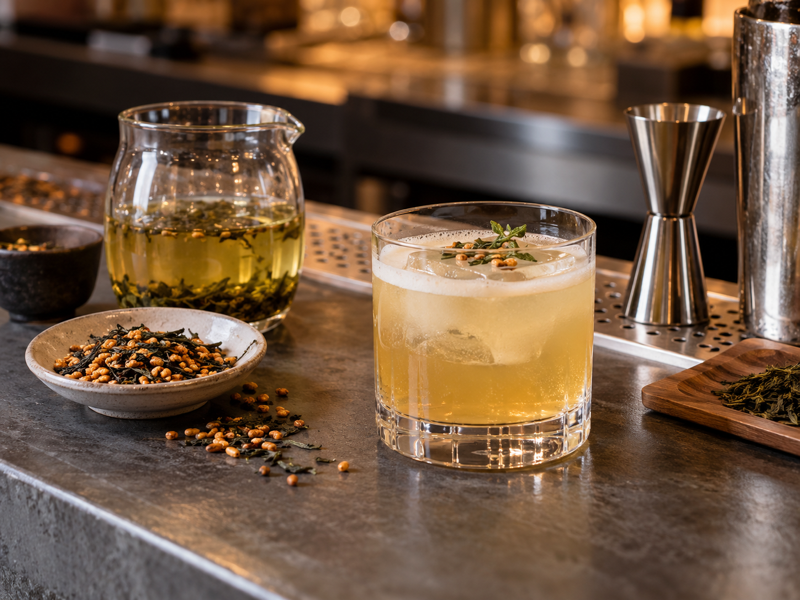
Genmaicha can give a cocktail a toasted-rice aroma that syrup alone cannot reproduce. It can also disappear behind spirits, citrus, and ice. A bar needs to decide whether tea is the base, an infusion in the spirit, or a small aromatic accent, then control extraction and dilution. This guide is for beverage developers and hospitality buyers testing an alcoholic genmaicha tea cocktail. It focuses on repeatable flavor and service, with responsible menu wording and no claim that tea changes the effects of alcohol.
Contents
- 1. What role should genmaicha play in a cocktail?
- 2. Which tea blend suits the drink?
- 3. Should the bar brew tea or infuse a spirit?
- 4. How can extraction be controlled?
- 5. Which spirits and mixers leave room for the tea?
- 6. How should dilution be measured?
- 7. What garnish helps without crowding the glass?
- 8. Can components be batched for service?
- 9. What should the menu and staff disclose?
- 10. How can a bar approve the final recipe?
1. What role should genmaicha play in a cocktail?
Decide whether the customer should smell roasted rice before tasting alcohol, find it in the middle of the sip, or notice it as a finish. That choice determines how much tea to use and where to put it. A tea-forward highball needs a different base from a spirit-forward stirred drink. Start with a brewed genmaicha control and a plain cocktail control. The final glass should offer a reason for the word “genmaicha” on the menu.
A genmaicha mule recipe is one example of the category; the bar’s own recipe still needs tasting with its tea, spirit, ice, and glass. A strong roasted-rice note can complement citrus or ginger. A delicate green-tea finish can be lost under too much ginger beer. Blind tasting can reveal whether guests identify the tea or only a generic toasted flavor. If the tea vanishes, simplify the mixer before doubling the dose.
The site's genmaicha tea recipe can anchor the plain-tea control before the bar changes extraction for a cocktail.
| Tea role | Possible format | Main risk |
|---|---|---|
| Base | Tea highball | Dilution |
| Spirit infusion | Stirred drink | Over-extraction |
| Syrup | Sweet cocktail | Sugar masks tea |
| Garnish | Aromatic finish | Decorative only |
2. Which tea blend suits the drink?
Genmaicha blends vary in leaf grade, rice roast, ratio, and additions such as matcha. A dark rice roast may hold up beside spirits but taste burnt in a delicate sour. A leaf-forward blend may work in a lighter drink but become bitter during a long infusion. Ask the supplier for composition and sample several lots or grades. Taste each as tea first, then in the exact cocktail. A buyer should not approve a blend solely from the dry-bag aroma.
If matcha is present, the drink may become cloudy or leave sediment. That may suit the concept, but it should be intentional. A coarse blend can be easy to strain after a short brew; a fine powder may need another handling method. Cost the tea per finished serving and include infusion loss. A premium tea is only useful if the customer can perceive it through the cocktail. The approved product specification should name the blend and its sensory target, not just “roasted rice tea.”
3. Should the bar brew tea or infuse a spirit?
Brewed tea gives the bar a familiar way to control extraction, then it can be chilled and mixed. It also adds water, which affects the final drink’s strength and dilution. A spirit infusion can capture aroma without adding as much water, but alcohol extracts and holds flavors differently from hot water and can pull harsh notes if contact runs long. A tea syrup combines flavor and sugar, which narrows how the bar can balance the drink. Test each route separately.
For the first pilot, choose one extraction method and hold the rest of the cocktail constant. Compare a fresh tea version with a spirit-infused version at similar perceived tea strength. Record ingredient weights, contact time, filtration, yield, and loss. The winner should taste good after the normal service delay, not only at the mixing bench. The bar’s safety and alcohol-handling rules apply to every preparation. A kitchen-style infusion jar should not bypass the venue’s inventory and service controls.
| Method | Main advantage | Main control |
|---|---|---|
| Brewed tea | Clear extraction recipe | Water dilution |
| Spirit infusion | Integrated aroma | Contact time |
| Tea syrup | Fast service | Sugar level |
| Extract | Consistent dose | Label/flavor profile |
4. How can extraction be controlled?
Measure tea mass against the liquid used and time the contact. Strain completely at the chosen endpoint. A vessel left with leaf and rice inside will keep extracting during service, so early and late drinks can differ. For brewed tea, water temperature matters; for spirit infusions, proof and time matter. Do not reuse a hot-water recipe as an alcohol-infusion instruction. Set a sensory rejection point for bitterness, flat roast, and cloudiness.
Trial small batches before making a week’s supply. Taste at the start, at the proposed endpoint, and after the planned hold. Record color and aroma as well as taste. If a blend changes lot, recheck the extraction, especially if particle size or roast shifts. Keep a retained reference of the approved tea ingredient and a written recipe. A bartender’s memory of “a handful for a few hours” cannot support consistent service across shifts.
5. Which spirits and mixers leave room for the tea?
A clean spirit can give genmaicha room; a heavily flavored spirit may require a stronger rice note. Citrus can lift the green tea, ginger can echo spice, and a small amount of sweetener can soften astringency. Each addition should earn its place in the glass. Compare versions with one mixer change at a time. A complex drink with several liqueurs may taste good but no longer justify the tea ingredient in its name.
Food pairing can also guide the menu. A dry tea highball may suit savory snacks, while a sweeter cocktail may sit beside dessert. Taste with the bar’s actual food rather than an imagined pairing. The customer’s first sip matters more than the development team’s elaborate explanation. If staff need a paragraph to locate the roasted rice, the drink likely needs a clearer formula or a different name. Keep the recipe intelligible and the service fast enough for the venue.
| Mixer | Possible effect | Watch point |
|---|---|---|
| Citrus | Brightens tea | Excess acid |
| Ginger | Warm spice | Masks rice |
| Soda | Lightens drink | Dilution |
| Sweetener | Rounds bitterness | Generic sweetness |
6. How should dilution be measured?
Ice, shaking, stirring, brewed tea, and soda all add water to the final glass. Measure the drink after the normal preparation and after a realistic hold. A strong tea concentrate may be balanced at the bar but harsh before ice melts; a weak base may taste thin after five minutes. Use the actual glass and ice form in testing. Standardize the size or weight of ice and the preparation time. A recipe with exact spirit measures but vague ice directions is still incomplete.
Check the finished drink’s volume and, where the venue needs it, the alcohol content calculation under its procedures. Tea does not neutralize alcohol. A highball with tea can taste light while still containing the stated spirit portion. Menu copy and staff training should avoid implying a functional benefit or safer drinking because green tea is present. The bar’s job is to make and describe the drink accurately and serve it within applicable rules.
| Variable | Set in recipe | Verify |
|---|---|---|
| Ice | Form and quantity | Melt rate |
| Tea base | Volume/strength | Flavor |
| Shake/stir | Method and time | Dilution |
| Soda | Pour volume | Final balance |
7. What garnish helps without crowding the glass?
A citrus peel may bring aroma to the rim; a small herb sprig may add freshness. Both can cover the tea if heavy-handed. Loose roasted-rice grains in a drink may be hard or messy. Test the cocktail without garnish, then add one choice. The garnish should match the normal service process and survive a few minutes at the table. A dramatic photo garnish that staff cannot repeat at peak service is not part of a reliable recipe.
If the tea’s dry aroma is central, a tiny dish of the blend for a tasting flight may be better than floating grains in the glass. For a busy bar, that extra dish may be too much labor. Make the decision from the venue’s format. Keep garnishes and syrups in the allergen and ingredient review. The menu line should name the major flavors accurately; it should not rely on an invisible garnish to make a weak tea infusion seem authentic.
8. Can components be batched for service?
A tea base, infusion, or syrup can be batched if its quality and safety hold through the planned period. Document batch size, date and time, storage, filtration, label, and discard rule. Taste a fresh reference against held components. Roasted-rice aroma may fade before the liquid looks different. A batched spirit infusion should be controlled under the bar’s alcohol inventory and local requirements; staff should not improvise untracked jars.
Choose the smallest practical batch for demand. A drink that sells twice a night may not justify a large infusion that sits for days. A busy venue may benefit from a measured pre-batch with final soda and ice added to order. Run a service trial with bartenders who did not develop the recipe. If they cannot reproduce the approved glass, simplify or clarify the station card. A recipe is only commercially useful when the normal team can make it.
9. What should the menu and staff disclose?
Name the tea and the actual alcoholic components. A line such as “genmaicha, citrus, ginger, and [spirit]” tells customers what they are ordering. Staff should know that the tea contains caffeine and that the drink contains alcohol. Avoid health claims or suggestions that tea offsets alcohol. If the product uses a matcha-added blend, say so when relevant to appearance and ingredients. Allergens and local disclosure rules need review for any syrup, liqueur, or garnish.
A bar may also offer a nonalcoholic version, but it should be developed separately. Removing spirit can change body and balance, so a simple omission may produce a flat drink. The genmaicha mocktail guide gives that separate design route. On printed menus, keep the two versions distinct and price them based on their actual ingredients and service. Staff should never make an unrequested substitution that changes alcohol or caffeine status.
| Menu item | Confirm | Avoid |
|---|---|---|
| Tea name | Actual blend | Generic flavor claim |
| Spirit | Type and pour | Hidden alcohol |
| Caffeine | Tea ingredient | “Caffeine-free” |
| Mocktail option | Separate formula | Spirit omission only |
10. How can a bar approve the final recipe?
Approve a finished glass at normal service temperature with a written recipe, measured yield, and sensory reference. Run the recipe across several shifts and at least two tea lots if supply allows. Record preparation time, waste, cost per drink, and whether the tea remains perceptible after a realistic hold. A cocktail that tastes elegant for its inventor but inconsistent for the team needs further work. The bar should be able to trace a complaint to the tea batch, infusion, mixer, or service step.
Update the recipe when a supplier changes tea grade, rice roast, spirit, or syrup. Retaste the entire drink rather than assuming one substitution is harmless. Keep menu copy and staff information tied to the recipe revision. A clear genmaicha cocktail should not require a speech: customers should smell or taste the roasted-rice tea in a balanced glass, and staff should be able to make that glass again tomorrow.
FAQ
Q1. Can genmaicha be infused directly in spirits? It can be tested, but contact time and filtration need control because extraction differs from hot water.
Q2. Does tea make an alcoholic drink safer? No. Genmaicha does not neutralize alcohol.
Q3. Is the cocktail caffeine-free? Standard genmaicha contains green tea and caffeine.
Q4. Why does the tea vanish in a highball? Soda, ice, citrus, or strongly flavored spirits may mask or dilute it.
Q5. What should be tasted first? The tea base and a plain cocktail control, then measured variations of one mixer at a time.
The approved drink is the glass a bartender makes during ordinary service, after normal ice dilution and without an explanation from the developer.