
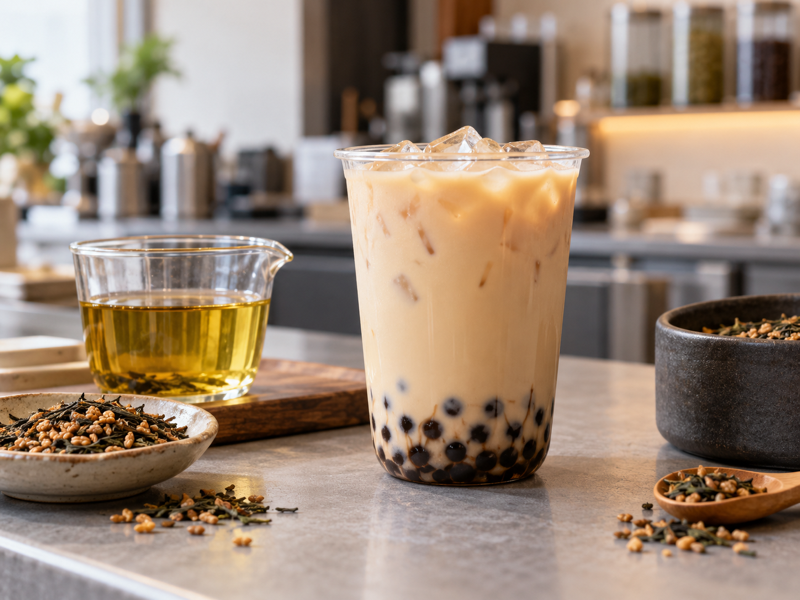
Genmaicha bubble tea often fails in one of two ways: the pearls and syrup overwhelm the roasted-rice tea, or the café over-brews the tea to compensate and makes the finish bitter. A good menu item keeps the tea recognizable while giving customers the chewy texture they expect from bubble tea. This guide focuses on the pearl, sweetness, dilution, and service decisions that distinguish the drink from a plain genmaicha milk tea. It is written for café operators and beverage developers who need a repeatable cup and margin.
Contents
- 1. What defines genmaicha bubble tea?
- 2. Which genmaicha base stands up to pearls?
- 3. Should the drink use milk?
- 4. How should pearl texture be tested?
- 5. How much sweetness should be added?
- 6. What does ice do to the finished cup?
- 7. Can the tea and pearls be prepared ahead?
- 8. How should the café cost each serving?
- 9. What belongs on the menu and allergen sheet?
- 10. How can several stores repeat the same drink?
1. What defines genmaicha bubble tea?
Bubble tea is a drink built around tea or another base plus chewy toppings, commonly tapioca pearls. For a genmaicha version, the green tea and roasted-rice blend should remain more than a background color. The first sip may include pearl syrup, but the aftertaste should still reveal tea. Decide whether the menu item is milk-based, clear, or fruit-accented before choosing the tea dose. A genmaicha bubble tea recipe offers one model; a commercial café needs a recipe tied to its own tea, pearls, cup, and service time.
Run a plain tea control beside the proposed bubble tea. If a blind panel cannot distinguish the finished drink from generic brown-sugar milk tea, the genmaicha ingredient is not carrying its cost or menu promise. Watch the drink through the straw, not only by sipping from the top: pearls, syrup, and ice may be unevenly distributed. A customer experiences several phases of the cup. The flavor target should hold from first sip to last.
| Component | Role | Failure mode |
|---|---|---|
| Genmaicha | Tea and roast | Hidden by syrup |
| Pearls | Chewy texture | Hard or mushy |
| Milk/alternative | Body | Tea muted |
| Ice | Temperature | Dilution |
2. Which genmaicha base stands up to pearls?
A hot-brewed concentrate can keep roasted-rice aroma after milk and ice are added, but over-extraction may add bitterness. A cold infusion may taste smoother but can be too light in a large cup. Tea powder can speed service yet may settle or feel gritty. Compare bases in the finished drink at the actual tea-to-milk or tea-to-water ratio. Record grams of blend, water, temperature, contact time, straining yield, and how long the base sits before use.
The supplier’s leaf grade and rice ratio affect the outcome. A rice-forward blend may be pleasant in a clear tea but become cereal-like after milk; a leaf-forward blend may give more tea finish. Ask for consistent lots and brew recommendations. When an ingredient changes, retest sweetness rather than asking staff to “make it stronger” by eye. A café chain can use a small incoming cup test to catch a roast shift before hundreds of drinks are made.
3. Should the drink use milk?
Milk can turn genmaicha into a dessert-like drink, but fat and sweetness can mask the green-tea component. A clear version may show tea better and cost less, while a milk-based version may fit customer expectations for bubble tea. Test both with the same pearls and cup size. If using plant-based alternatives, compare flavor and stability; some bring cereal or vanilla notes that compete with roasted rice. Review allergens and ingredient declarations for every version.
Do not assume the milk-tea recipe already approved for the menu can simply receive pearls. Pearls bring syrup, volume, and texture, changing the balance. Start with the existing genmaicha milk tea as a reference, then reduce or rework sweetness as needed. The bubble-tea version needs its own recipe card and cost sheet. If the café sells both, customers should be able to tell what each item includes.
| Base | Advantage | Check |
|---|---|---|
| Clear tea | Roast clarity | Body with pearls |
| Dairy milk | Creamy familiar cup | Tea masking/allergen |
| Oat beverage | Cereal harmony | Sweetness and allergen |
| Other plant base | Dietary option | Flavor and stability |
4. How should pearl texture be tested?
Pearls should be chewy at the time customers drink them, not only when they leave the cooker. Cooking, syrup holding, cooling, and ice exposure can change texture. Follow the pearl supplier’s safe preparation instructions, then test at the café’s expected service window. A pearl that is pleasant immediately may harden in a cold drink or become mushy after a long hold. Weigh the portion and note how much syrup comes with it. That syrup affects sweetness and tea flavor.
Compare several pearl types in the same tea base. Dark brown-sugar pearls may add a strong caramel note; lighter pearls can leave more room for genmaicha. Popping pearls or jelly create a different product and should be evaluated separately. The topping should make the drink more enjoyable without becoming the only flavor customers remember. Set a discard period and handling rule under the café’s food-safety plan. Do not rescue old pearls by adding more syrup.
5. How much sweetness should be added?
Pearls often carry syrup, so start with the sweetness already entering the cup. Build trials with no extra syrup, a moderate addition, and a higher level if the menu calls for it. Keep tea, milk, pearls, ice, and cup size constant. Blind tasters should score tea clarity, roasted-rice aroma, perceived sweetness, and aftertaste. A drink can taste balanced without pearls, then become too sweet after the customer starts drawing them through the straw.
If the café offers sweetness levels, specify what changes in each level and whether the pearl syrup remains fixed. “Zero sugar” can be misleading when sweetened pearls are still included. Train staff to explain the option accurately. Measure syrup pumps, because a different pump can change the drink even when the recipe says “two pumps.” A tea-forward bubble tea usually needs more discipline in sweetness than a heavily flavored milk tea.
| Sweetness source | Can staff control it? | Record |
|---|---|---|
| Pearl syrup | Sometimes | Portion/drain |
| Added syrup | Yes | Pump volume |
| Milk alternative | Product dependent | Brand/spec |
| Flavor sauce | Yes | Dose |
6. What does ice do to the finished cup?
Ice cools the drink and dilutes it as it melts. Tapioca pearls can also change texture when held against ice. Test the actual cup with standard ice mass and a realistic take-away delay. A drink balanced at the sealing station may be watery after a walk or overly sweet at the bottom. Measure final liquid volume and have tasters drink it through the intended straw. The straw’s diameter and the pearl size are part of the customer experience.
If the café uses shaken tea, note how shaking changes dilution and foam. If staff top up with water to fill the cup, include that volume in the formula. Avoid compensating for dilution by over-brewing until the tea turns bitter. A better solution may be a properly developed concentrate and a fixed ice level. Use the same approach at every store, then check random cups during normal service.
| Variable | Set point | Test |
|---|---|---|
| Ice mass | Standard scoop | Melt after hold |
| Tea base | Measured volume | First/last sip |
| Cup size | Fixed | Visual fill |
| Straw | Fits pearl | Drinking experience |
7. Can the tea and pearls be prepared ahead?
Both can be batched, but they have different quality and safety limits. Brewed tea should be strained and held under an approved plan. Pearls need a separate cook, hold, and discard process tied to the supplier’s instructions and local rules. Do not use a tea batch date to set pearl life or vice versa. Label containers clearly and record preparation time. Taste held tea for aroma and held pearls for texture at planned intervals.
Small batches can reduce waste at low-volume stores. A busy store may need a larger batch, but it should be sized from sales data and validated holding performance. During a service trial, watch whether staff choose old pearls to avoid waste or overfill cups to use a batch. The recipe card should state the portion and discard rule plainly. A perfect laboratory drink is not a viable menu item if normal operations cannot keep its ingredients within their quality windows.
8. How should the café cost each serving?
Calculate tea, pearls, syrup, milk or alternative, ice, cup, lid, straw, labor, and normal waste. Tea can look cheap per kilogram but cost more per cup when a strong concentrate is needed. Pearls may have cooking yield and end-of-day waste. Model the full served cup at the promised size. If the brand sells a premium tea story, the price should reflect a difference customers can actually taste.
Run margin scenarios for slow and busy days. A low-volume store may discard more pearls and tea base than a central forecast assumes. Consider whether a smaller pearl batch or a limited menu window improves consistency and cost. The purchasing team should compare suppliers on usable yield and cup quality, not only list price. A cheaper tea that needs a much higher dose or loses its roast after batching can be more expensive in practice.
| Cost line | Measure | Common omission |
|---|---|---|
| Tea | Grams per cup | Infusion loss |
| Pearls | Cooked portion | Waste |
| Syrup | Milliliters | Pearl carryover |
| Packaging | Cup/lid/straw | Delivery leakage |
9. What belongs on the menu and allergen sheet?
The menu should make the version clear: “Genmaicha bubble tea with tapioca pearls” plus milk or non-dairy base if used. State sweetness options accurately. Standard genmaicha contains green tea and caffeine, so avoid “caffeine-free.” Check dairy, soy, nuts, or other allergens in toppings, premixes, and plant-based milks. The full finished recipe, not the tea ingredient alone, controls what staff can tell customers.
If the café uses matcha-iri genmaicha, mention matcha when it affects color and taste. Avoid claiming health benefits because a drink includes green tea. Nutrition and claim rules vary by market, so regulatory staff should review packaged or printed statements. Keep menu and order-system names aligned with recipe cards. A customer ordering “genmaicha milk tea” should not receive pearls unless the menu says so, and a customer ordering bubble tea should know what topping is included.
10. How can several stores repeat the same drink?
Give stores a measured tea brew or concentrate instruction, pearl preparation rule, cup build order, ice quantity, syrup dose, and visual reference. Train staff to taste a finished cup, not only to read the card. Run the drink at a second store before launch and compare it with the development reference. Check preparation time at peak service. If the drink requires unusually careful steps, simplify them before rollout.
Track complaints by store and ingredient lot. “Weak tea” may be a brew issue, a syrup issue, or a cup overfilled with ice. Keep a short troubleshooting chart and a change-notification process for tea and pearl suppliers. Recheck the finished cup whenever either ingredient changes. The menu item is ready when a normal barista can produce the same tea-forward drink after an ordinary rush, not only during a training session.
FAQ
Q1. Is genmaicha bubble tea the same as genmaicha milk tea? No. Bubble tea includes a chewy topping, usually pearls, which changes sweetness, texture, cost, and service.
Q2. Can a clear tea base work? Yes. It may show genmaicha more clearly than milk, but test body and pearl balance.
Q3. Why does the tea taste weak? Syrup, milk, and ice may mask or dilute it. Check the whole cup before increasing tea dose.
Q4. Are tapioca pearls caffeine-free? Pearls do not define the tea’s caffeine. Standard genmaicha base contains caffeine.
Q5. What should be tested first? The tea base with the intended pearl portion, at normal cold service and after a take-away delay.
The best cup still tastes of roasted-rice green tea after the pearls have become part of the sip.