
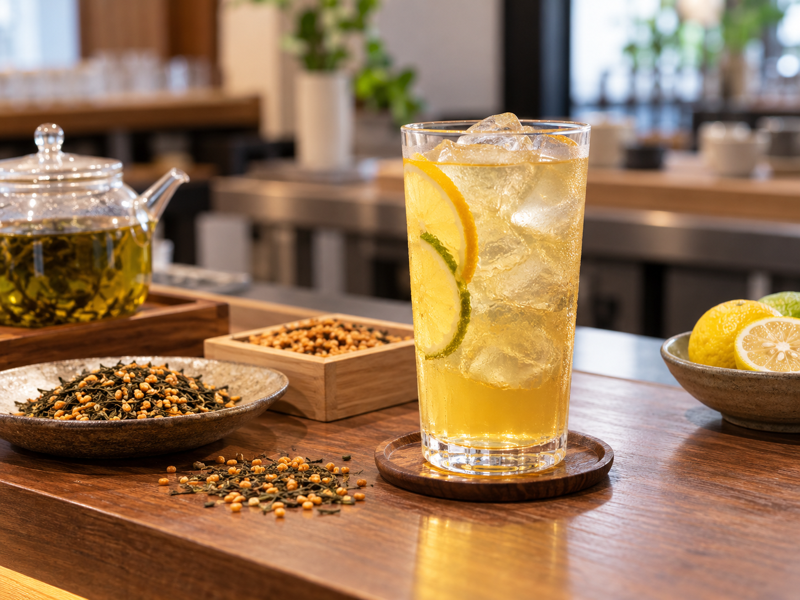
A genmaicha mocktail can be more than iced tea with a decorative sprig. Roasted rice gives the drink a warm cereal note; green tea gives it structure. Citrus, fruit, soda, and syrup can brighten the cup, but they can also erase the reason for using genmaicha. A café developing a nonalcoholic menu item needs a recipe that keeps tea clear through dilution and busy service. This guide covers that development work, from the first base brew to a repeatable glass.
Contents
- 1. What makes a genmaicha mocktail distinct?
- 2. Which genmaicha base should a café use?
- 3. How should acid and sweetness be balanced?
- 4. What should a first recipe trial compare?
- 5. Does sparkling water help the tea?
- 6. Which garnish belongs in the glass?
- 7. How should a café control ice and dilution?
- 8. Can the tea base be batched ahead?
- 9. What should the menu and label say?
- 10. How can a chain repeat the drink?
1. What makes a genmaicha mocktail distinct?
A mocktail uses deliberate flavor balance and presentation without alcohol. For this one, the tea should remain identifiable after acid, sweetener, ice, and garnish. The roasted-rice aroma can give depth that plain green tea lacks; the leafy note can keep the drink from tasting like a sweet cereal soda. Set a target such as “citrus first, toasted rice in the middle, clean green-tea finish.” Taste the finished drink without telling panelists its name. If nobody detects tea, the menu may be promising the wrong thing.
Start with a plain iced genmaicha control. Then add one accent at a time. A genmaicha mojito recipe shows one possible direction, but a commercial café should develop its own recipe around its blend and equipment. Mint can freshen the glass but may dominate a soft tea. The existing cold-brew genmaicha guide provides one base method; a mocktail needs its own finished-drink tasting after dilution.
| Element | Possible contribution | Risk |
|---|---|---|
| Genmaicha | Roast and tea structure | Too weak |
| Citrus | Brightness | Masks roast |
| Sweetener | Rounds acid | Becomes soda-like |
| Carbonation | Lift | Dilutes tea |
2. Which genmaicha base should a café use?
A hot-brewed concentrate can give a clear roast aroma and be chilled for service. A cold infusion may be smoother but can express the rice and leaf differently. A powder or extract can speed service yet may settle or taste unlike brewed tea. Test the base in the finished drink, not only in a tasting cup. A base that seems strong alone may disappear once ice melts and citrus is added. Record tea mass, water, temperature, contact time, yield, and hold conditions for every candidate.
Choose a base that fits the café’s pace. Brew-to-order may be attractive for a specialty bar but slow for a lunch rush. A small batch can help, provided quality and safe handling hold for the planned period. The supplier should provide a consistent tea blend with lot traceability. If a new lot has a darker rice roast, the balance with citrus may change. A simple incoming taste test and a measured base recipe prevent staff from chasing that change with extra syrup.
3. How should acid and sweetness be balanced?
Acid can sharpen green tea and lift the roasted-rice note, but too much lemon or yuzu will make a tea mocktail taste like lemonade. Sweetness can soften astringency, yet a heavy syrup can flatten the finish. Work from the unsweetened tea base and add acid in small measured steps. Then add sweetener only to the level needed for balance. Taste at the drink’s normal cold temperature; a room-temperature trial exaggerates aroma and changes perceived sweetness.
If using fruit purée, account for its pulp and natural sugar. A citrus cordial may already contain sweetener, so a separate syrup can quickly overshoot. Keep ingredient specifications and measure the dose in milliliters or grams. Make a low-sugar version only after the main balance is understood, and describe it accurately. “Less sweet” is a sensory and formulation choice; it should not be presented as a health claim without the relevant evidence and labeling review.
| Trial variable | Hold constant | Observe |
|---|---|---|
| Acid dose | Tea and ice | Tea clarity |
| Sweetener dose | Acid and tea | Finish |
| Fruit form | Total liquid | Pulp/settling |
| Serving temp | Glass and ice | Aroma |
4. What should a first recipe trial compare?
Make a small matrix: plain iced tea, tea plus acid, tea plus acid and sweetener, and a version with carbonation if desired. Use the same glass, ice weight, and final liquid volume. Blind tasters should score roasted-rice aroma, green-tea clarity, acid balance, sweetness, and finish. Taste immediately and after the longest likely customer hold, such as the time it takes to walk a take-away drink back to an office. A great first sip can become watery after fifteen minutes.
Record cost per serving and preparation time alongside flavor. A recipe with three house-made components may be hard to deliver at a busy café. Identify the few ingredients that actually improve the cup. Keep one approved reference drink and a photograph at normal ice level. If a garnish is removed in the final cost model, retaste the drink. A good development process does not assume every decorative element is harmless to flavor or service.
5. Does sparkling water help the tea?
Carbonation can make citrus and tea feel lively, but it also dilutes the brew and can reduce the impression of roasted rice. Compare still and sparkling versions at the same final volume and tea input. Add sparkling water last to preserve bubbles, then taste immediately and after a few minutes. If the drink needs a very strong tea concentrate to remain recognizable, check whether that concentrate becomes bitter or expensive. Sparkling is a menu choice, not an automatic upgrade.
A pre-batched carbonated drink has different stability and packaging questions from a made-to-order mocktail. The café should not assume a service recipe is ready for a bottle or can. For on-site service, the simpler control is to keep tea base, acid, syrup, and carbonation separate until the order. Define pour volumes and glass size. A line cook or barista should be able to build the same drink without guessing how much soda “looks right.”
| Service style | Advantage | Control |
|---|---|---|
| Still | Clear tea expression | Ice dilution |
| Sparkling | Lively mouthfeel | Tea concentration |
| Shaken | Integrated cold drink | Aeration/foam |
| Bottled | Convenient | Separate validation |
6. Which garnish belongs in the glass?
A small citrus peel, mint leaf, or edible flower can make the drink appealing, but garnish should support aroma and fit the café’s preparation time. Mint may dominate genmaicha. A charred citrus peel may echo roast but can add bitterness or look overworked. Serve a plain glass and each garnished version blind. If the garnish changes only the photograph and not the taste, decide whether its labor and waste are justified.
Avoid loose roasted-rice grains floating in the glass merely as proof of the ingredient. They can feel hard or be mistaken for debris. If the concept needs a visible tea cue, use a clear glass that shows the brew and describe the tea on the menu. Keep garnish food-safety and allergen handling within the café’s normal procedures. A clean, repeatable presentation usually beats a complicated glass that slows service.
7. How should a café control ice and dilution?
Ice is an ingredient in the finished drink. Weigh or standardize it during development, then specify cup size, fill level, tea concentrate volume, and any top-up. Different ice shapes melt at different rates. A barista who fills a cup with crushed ice and another who uses large cubes can produce different tea strengths from the same liquid recipe. Test the drink at the counter and after a realistic take-away delay. The roast note should survive both.
If the café wants a strong visual fill without too much liquid, avoid making the tea so concentrated that the first sip is harsh. Adjust ice and base together. A syrup pump must be calibrated; “two pumps” only works if every station uses the same pump and syrup viscosity. Record the finished drink’s volume and cost, then train staff against that standard. Complaints about weak flavor may be dilution defects rather than tea quality problems.
| Control | Why it matters | Check |
|---|---|---|
| Cup volume | Sets dilution | Same glass |
| Ice mass | Controls melt | Portion standard |
| Tea concentrate | Flavor strength | Batch log |
| Syrup pump | Sweetness | Calibration |
8. Can the tea base be batched ahead?
Yes, if the café validates flavor and safe holding for the actual process. Brew, strain, cool, and store the base under an approved procedure. Taste it at planned intervals against a fresh reference. The roasted-rice aroma may fade before the base looks different. Do not use a loose-leaf tea best-before date as a holding rule for a prepared liquid. The café’s food-safety lead should set storage, labeling, and discard times under local requirements.
Small batches may protect flavor better than a large morning brew that sits through a slow afternoon. Track waste and labor. If the base is mixed with citrus or fruit before holding, test that mixture separately; acid and pulp can change flavor and appearance. A chain should specify whether stores brew locally or receive a prepared base. Each route needs its own quality controls and cost model. The best method is the one staff can repeat without sacrificing the tea note.
9. What should the menu and label say?
Describe the actual drink: “Genmaicha green tea, citrus, and soda” if those are the ingredients. State that it is nonalcoholic without implying caffeine-free. Standard genmaicha contains green tea and therefore caffeine. If the café uses a decaf blend, verify and name that SKU. Avoid “detox,” “calming,” or other functional claims based solely on the presence of tea. A flavor description such as “toasted rice and bright citrus” is more useful to a customer.
For a packaged version, review ingredient order, nutrition, claims, shelf life, and market rules with qualified staff. A made-to-order mocktail can change quickly, but a printed bottle label is hard to correct after production. Keep menu copy linked to the recipe revision. If a fruit supplier changes sweetness, adjust the recipe and recheck the description. The name should help customers choose, not hide a sugary soft drink behind a tea word.
| Copy element | Verify against | Common error |
|---|---|---|
| Tea name | Ingredient spec | Generic “green tea” |
| Alcohol status | Full recipe | Hidden mixer |
| Caffeine | Tea ingredient | “Caffeine-free” |
| Flavor note | Finished glass | Tea masked |
10. How can a chain repeat the drink?
Write a station card with the tea base recipe, batch yield, storage rule, cup size, ice mass, acid dose, sweetener dose, carbonation step, and garnish. Ask staff at another store to make it from the card and compare their glass with the approved reference. Watch the time per drink at peak service. If one step routinely gets skipped, simplify the recipe or redesign the station. A consistent mocktail is a production system in a glass.
Sample new tea lots in the finished recipe. A blend with more roasted rice or a different leaf grade may need a formulation review, not an unrecorded syrup adjustment at each store. Track customer feedback on sweetness and tea strength separately. If the café later bottles the drink, start a separate product development and shelf-life program. The made-to-order recipe is a valuable prototype, but its safety and sensory behavior do not automatically transfer to a sealed package.
FAQ
Q1. Is a genmaicha mocktail caffeine-free? No. A standard genmaicha base contains green tea and caffeine.
Q2. Is cold brew required? No. Test hot-brewed concentrate and cold infusion in the finished drink.
Q3. Why does the tea vanish after ice melts? The base may be too weak for the final volume, or the drink may contain too much acid or syrup.
Q4. Can the tea base be made in the morning? Only within a validated quality and safe-holding plan for that café.
Q5. What should a café test first? A plain iced tea control and measured variations of acid and sweetness.
The final recipe should taste like genmaicha after the customer has carried it away from the counter.