
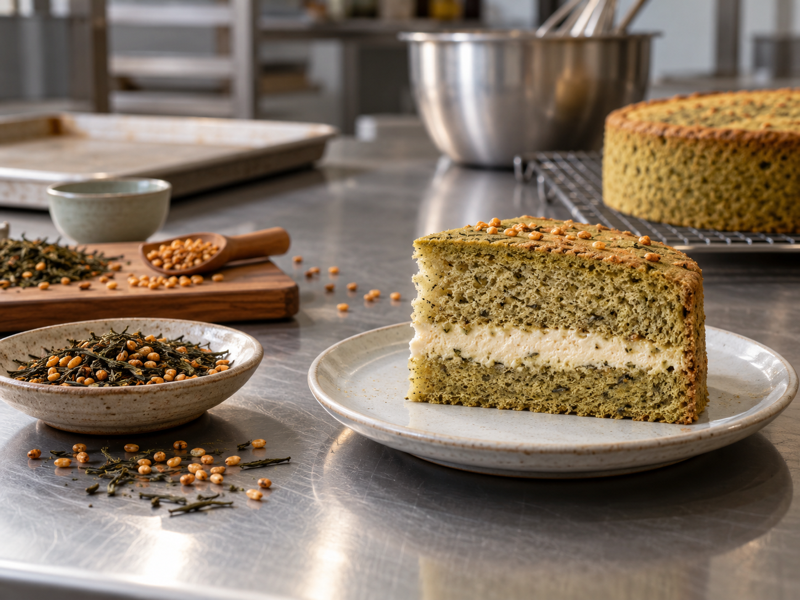
A genmaicha cake recipe for a bakery is more than a list of ingredients. The tea must remain recognizable after mixing, baking, filling, and display. A recipe that works as one home sponge may dry out on a production line or lose its rice aroma under a thick cream layer. This guide gives bakeries a tested-development path: choose a cake style, run controlled dose trials, and set release checks for the finished slice. It leaves exact percentages to the bakery’s base formula, equipment, and approved tea ingredient.
Contents
- 1. What cake style suits genmaicha?
- 2. What flavor should the finished cake deliver?
- 3. Which tea ingredient should go into the batter?
- 4. How can a bakery run the first recipe trial?
- 5. How does genmaicha affect crumb and rise?
- 6. Where should the roasted-rice note sit?
- 7. Which fillings and toppings belong?
- 8. How should the baked cake be assessed?
- 9. What happens during storage and display?
- 10. What turns a trial into a production recipe?
1. What cake style suits genmaicha?
A light sponge can show tea aroma clearly, but it may dry out if tea powder disrupts the batter or the cake sits in a display case. A pound cake offers fat and shelf stability but may mute delicate green-tea notes. A chiffon cake can feel light and aromatic, though its structure needs careful handling. Start with a cake style the bakery already makes consistently. A stable control formula makes it easier to see what genmaicha changes.
The desired channel also matters. A café slice, a boxed loaf, and a layered celebration cake have different handling and flavor demands. A thin layer of tea sponge under cream may vanish, while a plain loaf slice can give the tea more room. Make a small set of style trials before spending weeks optimizing a single powder dose. The existing genmaicha yuzu cake has a specific citrus direction; this framework starts with the tea-forward base cake and adds other flavors only after that works.
| Cake style | Possible strength | Trial risk |
|---|---|---|
| Sponge | Clear tea aroma | Drying |
| Pound cake | Familiar production | Fat masks tea |
| Chiffon | Light crumb | Powder affects lift |
| Layer cake | Menu appeal | Filling dominates |
2. What flavor should the finished cake deliver?
The dry genmaicha blend smells of roasted rice and green tea, but a baked cake makes its own browned flavors. A product developer should decide whether the customer should notice rice toast first, a leafy tea note second, or a balanced impression. Write that target in plain words and give tasters a reference brewed cup. A cake called genmaicha should not depend on packaging copy to make the flavor identifiable. If the tea is intentionally subtle, the menu should describe it honestly.
Taste the cake without frosting first. Compare a plain control and tea variants after cooling, then again after the normal display period. Record aroma, sweetness, bitterness, crumb, and finish. A hot slice can smell stronger than a retail slice, so do not approve a formula at the oven door. Use blind coding to reduce the effect of green color or visible rice specks. The final flavor target should be one the bakery can measure through a simple sensory scorecard.
3. Which tea ingredient should go into the batter?
A fine powder is convenient for a sponge or loaf, but its leaf and rice particles can affect texture. Brewed tea adds liquid and may make the aroma softer after baking. An extract can deliver a compact flavor but may differ from whole genmaicha. Request a specification and sample for each form, including composition, physical form, and storage guidance. The supplier should explain whether “genmaicha powder” contains both milled tea and rice or only one component with a separate flavor note.
Sift a powder into a small dry mix and examine its distribution before scaling. If it clumps, adjust mixing order and hydration rather than increasing speed without a plan. For an infusion, record the brew strength and substitute the liquid deliberately in the formula. Do not pour extra tea into a proven sponge and expect the same rise. Choose the form that gives a recognizable finished cake at an acceptable crumb and cost, not the one that makes the dry sample smell strongest.
| Ingredient form | Formula effect | Check |
|---|---|---|
| Fine powder | Adds dry solids | Crumb and grit |
| Brewed infusion | Adds water | Rise and set |
| Extract | Low solids | Label and flavor |
| Rice pieces | Visible texture | Hard bite |
4. How can a bakery run the first recipe trial?
Use one base formula and prepare a plain control plus several tea levels. Hold flour, sugar, fat, egg or leavening, batter weight, pan, oven, and cooling method constant. Weigh every ingredient and record batter temperature. If the tea changes viscosity, write it down before adjusting liquid or mixing. Bake samples in comparable oven positions or rotate according to the bakery’s normal method. A trial that changes both the tea dose and bake time cannot show which variable caused an improvement.
After cooling, cut normal-sized slices and taste them blind. Measure cake height, crumb uniformity, moisture impression, flavor strength, and bitter finish. Repeat the preferred condition with another tea lot. Then test the planned filling or glaze as a separate stage. The first round should answer whether the base cake can carry genmaicha at all. A staged trial costs less and teaches more than a fully decorated showpiece made from an untested sponge.
5. How does genmaicha affect crumb and rise?
Powder adds particles that can interrupt a delicate foam and absorb liquid. Depending on the recipe, the result may be a tighter crumb, lower rise, specks, or a dry finish. An infusion can alter hydration and batter density. Test cake height and slice structure beside the plain control. If the tea variant is short and dense, identify whether the cause is dose, ingredient fineness, mixing sequence, or a liquid change. Do not assume every defect needs more leavening.
The cake should also cut and eat cleanly. Coarse roasted-rice bits can feel hard in a soft crumb, especially after a day of storage. A fine powder may avoid that bite but can make the cake look muddy. If visual rice is desired, a controlled crumb or topping may be better than scattering grains through the batter. Agree on an acceptable texture before marketing chooses photography; otherwise the bakery may be pressured to reproduce a look that weakens the eating quality.
| Defect | Possible cause | First check |
|---|---|---|
| Low rise | Powder load or mixing | Batter and control |
| Dry crumb | Solids and bake | Moisture and time |
| Hard bits | Rice particle size | Sieve and bite |
| Uneven color | Poor dispersion | Mixing sequence |
6. Where should the roasted-rice note sit?
The cake can carry roast in the sponge, filling, glaze, or garnish. Begin with the sponge to establish a real tea base. A rice-forward cream can reinforce aroma but may make the cake heavy; a top dusting gives immediate smell yet can clump or blow off in packaging. A syrup soak can add tea but may make the crumb wet. Compare these routes in normal portions and after storage. The best placement is the one that survives the bakery’s actual service path.
Separate the roast note from generic caramel or browned sugar. A cake can taste delicious and toasty without tasting like genmaicha. Ask tasters to identify green-tea character and rice aroma independently. If only the topping delivers genmaicha, the product may still be honest, but the recipe and label should reflect that design. A buyer choosing an ingredient should specify which layer uses it and how much is required per finished slice.
7. Which fillings and toppings belong?
Cream, white chocolate, sesame, citrus, and caramel can pair with roasted tea, but each changes the flavor hierarchy. Start with a plain slice, then add one component. A thin unsweetened cream may make the tea more accessible; a thick, sweet filling may bury it. Citrus can brighten the finish, yet it can also move the product toward a yuzu cake concept already covered separately. Avoid creating several near-identical menu items that compete for the same customer and search intent.
Toppings also affect operations. A delicate tea dusting may look good for ten minutes, then darken in a moist display case. Rice pieces can soften or become hard. A glaze can protect the crumb but change shelf-life and allergen requirements. Test the assembled slice after the planned display period, not only immediately after decoration. The pastry team should choose a garnish it can repeat in peak service without a specialist standing over each plate.
| Addition | Potential benefit | Risk |
|---|---|---|
| Light cream | Softens tea edge | Masks weak tea |
| Citrus | Lifts aroma | Dominates concept |
| Sesame | Echoes toast | Allergen and masking |
| Tea dust | First aroma | Moisture clumping |
8. How should the baked cake be assessed?
Use a release sheet with batter weight, finished height, crumb photograph, slice weight, sensory score, and any relevant moisture measure. Sample from the start and end of a production run and from different oven positions. A tea powder may settle in batter held too long, or the oven may bake one tray more aggressively. Taste at the same temperature each time. A warm cake and a chilled retail cake should not share one sensory score without context.
Make the sensory test specific. “Good” is not a useful release criterion. Ask whether roasted rice is recognizable, whether green tea remains clean, whether bitterness is acceptable, and whether the crumb feels soft at the end of display. Keep an approved sample or documented profile. If a new tea lot fails, compare it with the retained ingredient and cake reference before changing the recipe. The goal is to find the cause, not to compensate with extra flavoring by instinct.
9. What happens during storage and display?
Cake can dry out, absorb odors, or lose tea aroma. A cream-filled version adds chilled storage and safety requirements. Test the finished product in its actual box or display wrap under the planned conditions. Taste at several time points and examine the cut surface, color, filling stability, and aroma. The tea supplier’s shelf-life date does not validate the cake. If the bakery sells individual slices, exposed edges may fail before whole cakes do.
A boxed loaf and a café slice need separate assumptions. The former may travel and sit unopened; the latter may be plated after a day in a case. Check shipping damage, condensation, and how the garnish survives. Set a use period supported by a qualified finished-product study and local rules. If the product loses its genmaicha identity long before it becomes unsafe, the quality date still needs to reflect that sensory failure.
| Stage | Main risk | Test |
|---|---|---|
| Cooling | Condensation | Pack timing |
| Transport | Cracks and drying | Route trial |
| Display | Aroma loss | Timed tasting |
| End of life | Quality/safety | Finished-product study |
10. What turns a trial into a production recipe?
Write a formula by weight with ingredient SKUs, approved tea lot criteria, mixing sequence, batter temperature, fill weight, oven settings, cooling endpoint, and finishing steps. Add a visual and sensory reference. Train a second shift to make it without the developer’s help; their result is the real test of the instructions. A recipe that depends on “until it feels right” will drift across bakers and sites.
Confirm supply and economics before launch. Ask the tea supplier about lot consistency and change notice. Calculate ingredient cost, yield, rejected slices, labor for finishing, packaging, and display waste. Run a production-equivalent batch and taste it after normal storage. The cake should taste of genmaicha in a purchased slice, not only in the pilot baker’s first warm cut.
FAQ
Q1. Can loose-leaf genmaicha be baked into cake? It can be tested, but coarse leaf and rice may make the crumb rough. A suitable powder or infusion may work better.
Q2. Why does the tea taste weak after baking? Heat and the cake’s own browned flavors can mask it. Evaluate the cooled, stored slice.
Q3. Should the cake be bright green? No. Roasted rice and baking can give a muted color.
Q4. Is a genmaicha cake the same as a matcha cake? No. Genmaicha combines green tea with roasted rice, giving a different flavor target.
Q5. What should be tested before a filling is added? The plain tea cake’s flavor, rise, crumb, and storage behavior.
The production recipe is ready when a normal shift can make a normal slice that matches the approved reference.