
Matcha latte powder is a dry ingredient or premix intended to make a matcha latte quickly and consistently. That label can describe very different products: pure matcha for use with milk, a blend with sugar and milk powder, or a plant-based instant mix. A buyer who compares only pack price may end up with a product that needs more powder than expected, tastes too sweet, or leaves sediment in a cup. Proportional Plate’s guide to matcha powders for lattes shows the range of consumer choices. For a café or packaged drink brand, the useful comparison is a controlled prepared-cup trial backed by a clear ingredient and supply specification.
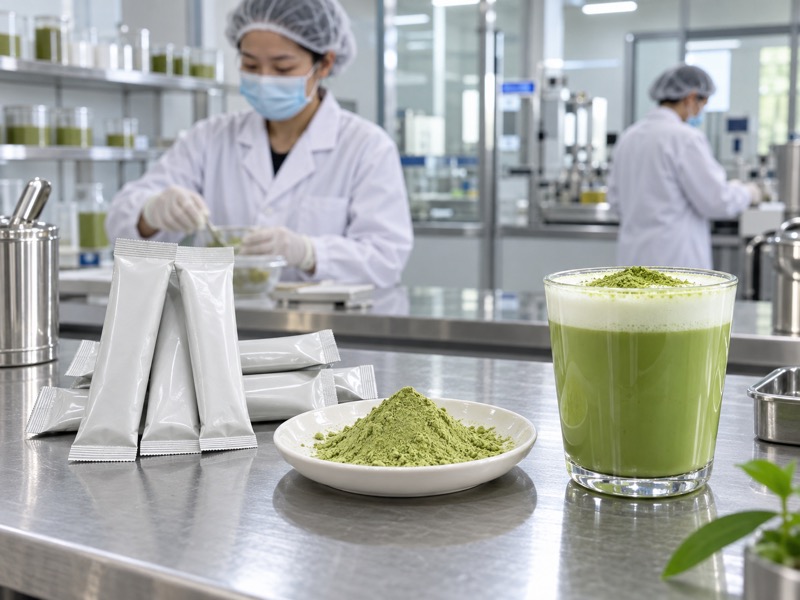
For: café buyers, beverage developers, foodservice distributors and private-label teams. Decision: which powder makes the intended latte at a repeatable dose and a defensible cost.
1. What exactly is in the bag?
Separate pure tea from premix
Ask the supplier for the complete ingredient statement before tasting. Pure matcha contains ground tea and leaves the café to choose milk and sweetener. A latte premix may include sugar, dairy ingredients, plant creamer, flavorings, stabilizers or other components. Neither format is automatically better. They solve different operating problems. A shop that already makes custom milk drinks may want control over each component; a high-volume kiosk may value a measured blend that shortens preparation.
Check the denominator. A claim such as “contains matcha” says little about how much tea reaches the cup. Request the supplier’s recommended grams of powder per serving, the tea fraction where available, and the finished cup volume. Prepare each candidate to a common serving volume, then adjust within the supplier’s safe instructions until taste is acceptable. Compare the actual grams used. A sweet mix may look inexpensive by the bag but require a high dose to deliver clear tea flavor.
| Product format | Buyer controls | Main question |
|---|---|---|
| Pure matcha | Milk, sugar, tea dose | Can staff disperse it well? |
| Sweetened blend | Usually milk and dose | Is sweetness fixed too high? |
| Complete instant mix | Mainly water and dose | Does it taste like the menu promise? |
2. How should tea quality be judged in a latte?
Taste in the intended milk
Dry-powder color and a grade name do not predict the finished latte. Milk, plant drink, sugar and serving temperature all change how tea is perceived. Make equal-volume cups with the milk the menu will use, and compare tea presence, bitterness, aroma, color and mouthfeel. Include both hot and iced trials if both appear on the menu. A powder that tastes smooth hot may leave visible particles or weak flavor after ice dilution. Conversely, a very delicate tea can be wasted in a strongly sweetened mix.
Keep the test blind. Label cups with sample codes and use a short score sheet. Taste at the point of handoff and after a realistic wait. Record the accepted prepared-cup recipe, not merely the winning sample name. If the business offers several milks, test the most common choices separately. One supplier may perform well in dairy and poorly in a plant base. Approve what the menu actually sells, then use the same method when a new tea or blend lot arrives.
3. What sweetness level belongs in the formula?
Match the customer choice
Sweetness is a product decision, not an afterthought. A premix with sugar may save a step, but it can make “less sweet” orders difficult. A pure matcha powder allows the bar to add sweetener separately, yet that flexibility costs time and demands a good preparation method. Compare at least a standard-sweetness cup and a reduced-sweetness cup. Taste both after the same dilution. If reducing premix dose also removes too much tea, the blend offers little room for customization.
Read the label and the recipe together. The ingredient order and nutrition declaration must reflect the actual supplied product and selling market. Do not infer grams of sugar from marketing phrases such as “lightly sweet.” Ask for a specification or verified nutrition data. When developing a private-label blend, state the target sweetness and tea intensity in the prepared serving. Pilot with real milk and ice, because perceived sweetness changes with temperature and drink size. A comparison should not use one sample at the supplier’s suggested recipe and another at an arbitrary dilution.
| Trial cup | Keep constant | Record |
|---|---|---|
| Standard hot | Cup volume, milk, temperature | Tea and sweet balance |
| Reduced sweet | Cup volume, tea target | Whether flavor remains |
| Iced | Final volume including ice | Dilution and sediment |
4. Will the powder disperse in real service?
Watch staff prepare it
Matcha is suspended tea powder, so pure matcha does not dissolve like sugar. Some premixes contain ingredients that disperse more readily, but that still needs a cup test. Give trained staff the proposed method and time them making several drinks. Inspect the bottom of the cup, the sidewalls, and the last sip. A smooth sample prepared by a developer with a blender may not represent a café using a shaker or handheld whisk. Also check whether hot water is needed before cold milk; that extra step affects equipment and service time.
Define the mixing route. If a pre-slurry is required, specify powder weight, liquid volume, temperature, and mixing time. Test the method at the busiest expected pace. A powder that needs repeated rework or leaves clumps costs more than its invoice suggests. If the product is sold as “instant,” ask what that means in the chosen milk and temperature. The prepared cup, not the word on the bag, decides whether the claim is useful.
5. Which milk or plant drink should be tested?
Use the actual menu base
Milk choice changes taste, body, foam and color. Dairy can soften tea bitterness. Some plant drinks bring their own sweetness or grain note. A blend containing milk powder may not suit a vegan menu regardless of the liquid added at service. Check full ingredients and allergen statements before making any menu promise. Then test the candidate in the shop’s normal milk and the leading alternative. Use identical volumes and temperatures so differences can be attributed to the powder and base, not to sloppy preparation.
Taste the full cup. The desired latte may need a different tea dose in oat drink than in dairy. Do not assume a single recipe will make equal flavor in both. If multiple recipes are needed, document each separately and calculate its cost. Foam behavior also matters for a hot drink: a mix that looks attractive when stirred may make unstable foam under the café’s steaming routine. Record those results during a real shift trial rather than treating them as aesthetic details.
| Base | Potential effect | Check |
|---|---|---|
| Dairy milk | Softens sharp tea notes | Tea clarity and allergens |
| Oat drink | Adds body and own sweetness | Sugar balance and foam |
| Soy drink | Changes flavor and protein behavior | Mixing and allergen controls |
| Water only | Tests complete premix claim | Body and full flavor |
6. What should a supplier specification include?
Ask for the items that affect the cup
Record product name, ingredient statement, allergens, recommended preparation, pack size, shelf and storage guidance, lot code, lead time, and the documents required by the purchasing program. If the product is private label, agree which party owns the final formula and how ingredient or process changes will be communicated. For pure matcha, a sample and a repeatable sensory standard matter as much as a general grade description. For a premix, a consistent tea fraction and sweetener system matter too.
Retain an approved reference. Keep a sealed sample from the accepted lot and a photograph of the prepared cup under fixed lighting. When a new lot arrives, make the same recipe and compare color, aroma, taste, clumping and final sediment. This does not replace formal quality checks, but it connects procurement to the customer’s experience. A supplier may change packaging or a minor component without intending to change flavor; the buyer should still know before the menu cup shifts.
7. How should packs be chosen for the operation?
Match size to use rate
Large bags lower the price per kilogram but can remain open too long in a small café. Single-serve sachets help portion control and portability but add material and packing cost. Choose based on daily cup volume, storage, staff skill, and the required shelf life after opening. Follow supplier guidance for closure and conditions; do not leave a bag next to steam or moisture because it is convenient. If a package is repacked in the shop, check the applicable labeling and food-safety requirements.
Calculate opened-pack turnover. Estimate servings per pack using the accepted dose, then compare with realistic weekly sales. An oversized bag may create stale flavor or waste before it is empty. If the brand sells consumer pouches as well as café cups, treat those as separate packaging and label decisions. The same powder might work in both channels, but each pack must support its own handling and claim requirements.
8. What does the finished cup actually cost?
Use the accepted recipe
Calculate powder grams per cup at the dose that passes taste, then add milk, sweetener if separate, cup, lid, labor, and normal losses. Compare formats on cost per sellable cup. A premium pure tea can be economical if a modest dose works. A cheap complete mix can be expensive if staff use a heavy scoop to reach the desired flavor. Include seasonal iced drinks, because ice dilution may change the required powder dose and waste. Record actual scoop variation before assuming the recipe is being followed.
Price the service route. A sachet may save measurement time. A bulk bag may be cheaper but require weighing, pre-mixing, or more training. Time the drink on the existing equipment and include cleaning. A purchase decision should account for the operating model, not simply a quote sheet. If the powder is also sold wholesale, calculate the distributor’s pack and shipping economics separately from the café’s cup margin.
| Cost item | Measure | Avoid this mistake |
|---|---|---|
| Powder | Accepted grams per cup | Comparing bag prices only |
| Milk | Actual serving volume | Ignoring alternative milk cost |
| Labor | Timed preparation | Assuming mixing is free |
| Loss | Rejected or stale packs | Using theoretical yield |
9. How should label and menu claims be checked?
Make claims from documents
“Organic,” origin, dairy-free, vegan, sugar-free, and other claims depend on the exact product, process, and selling market. Obtain documents for the specific supplied material and have the responsible regulatory team review the proposed label. A pure matcha powder and a flavored premix can need different declarations. Do not carry over a claim from the tea component to a finished blend without checking every other ingredient and the manufacturing route.
Keep the menu accurate. If staff add milk and sweetener to a pure powder, those ingredients belong in allergen and nutrition decisions for the finished drink. If a premix contains milk powder, offering it with oat drink does not make it dairy-free. Use plain wording that helps customers order correctly. A strong label is one a buyer, manager, and barista can all explain in the same way. Claims can be a selling point, but only when the underlying records support them.
10. What pilot should approve a powder?
Let ordinary staff run it
Shortlist two or three powders that meet the ingredient and supply requirements. Make coded cups at the accepted dose in the actual hot and iced formats. Let several trained employees prepare them during a normal shift. Record preparation time, clumps, sediment, tea flavor, sweetness, color, customer feedback, and unused powder at the end of the test. Keep other ingredients and cup size constant. A sample that wins a quiet tasting but slows a busy bar needs a different decision.
Sign off the recipe and the supply. Approve the product code, lot standard, recipe per menu format, pack size, opening and storage routine, supplier documents, and retest triggers. The next step is a small operational pilot with the real milk and equipment. That is the fastest way to learn whether matcha latte powder saves work while still making a drink customers want to order again.
| Approval gate | Required evidence | Decision owner |
|---|---|---|
| Prepared cup | Blind taste and sediment check | Beverage lead |
| Service | Timed staff trial | Store manager |
| Supply | Specification and lot plan | Buyer |
| Claims | Exact product documents | Regulatory lead |
Buyers weighing premixes against plain tea can also review sweet matcha powder.
Reference: Best Matcha Powders for Smooth Lattes provides consumer product context. The sourcing and service framework above is independent.
FAQ
Q1: Is matcha latte powder always sweetened? No. The term can mean pure tea or a sweetened premix; read the ingredient statement.
Q2: Can one powder make both hot and iced drinks? It may, but test dispersion, flavor and sediment in each serving format.
Q3: Does “latte grade” guarantee a good café cup? No. Compare identified samples in the actual milk and recipe.
Q4: How should buyers compare quotes? Calculate cost per accepted, sellable cup, including dose, milk, labor and waste.
Q5: What should be kept after approval? The supplier specification, accepted lot sample, prepared-cup recipe and retest rules.