
A supplier offers “white matcha” for a pale latte, but the product sheet says little about the leaf. A café buyer then faces a practical question: will the ingredient taste, brew, and label like matcha? This guide separates a marketing name from an ingredient specification. We write from a matcha supplier’s application perspective: the useful test is a documented sample in the drink or food you plan to sell, followed by a label review for your market.
1. What does “white matcha” mean in a product offer?
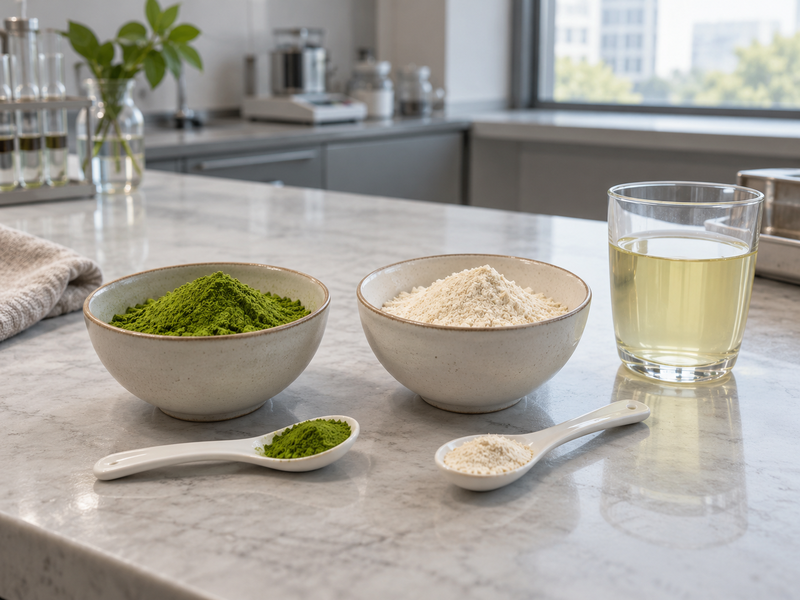
There is no single ingredient you can identify from that phrase alone. Matcha ordinarily refers to finely milled green tea made from processed tea leaves. Its color comes from the leaf, so a pale white powder deserves a closer look. “White matcha” may describe powdered white tea, a light-colored blend, or a drink concept that pairs matcha with milk or white chocolate. Those are different products with different tastes, preparation methods, and ingredient declarations.
Start by asking the seller for the exact botanical ingredient, processing description, and complete formula. Do not let a sample name do the work of a specification. A powdered white tea could be a legitimate tea ingredient, but that does not automatically make it green-tea matcha. A pre-sweetened latte mix may contain genuine matcha and still look pale because milk solids dominate. The menu team needs to know which case it has before setting price, serving size, or claims. Keep the question open until a document and a sample tell the same story.
2. Which ingredients might sit behind white matcha?
Ask for a breakdown by ingredient, not a poetic product description. If the powder consists of a white-tea leaf ground fine, test how it disperses and whether its taste is strong enough for your application. If it is a blend, the percentage and grade of matcha matter more than the blend’s headline color. Milk powder, sugar, creamer, white chocolate, and flavor can make an otherwise green ingredient appear ivory. A finished iced latte can look almost white after dilution, while its matcha concentrate remains green.
The table gives buyers a fast way to separate these possibilities. It does not replace a supplier specification or a local label review. Request the full ingredient list and sample lot before making a purchasing decision; two products sold under the same informal name may behave differently in hot water, a dairy base, or a baked filling.
| Offer description | Question for supplier | Likely application issue |
|---|---|---|
| Powdered white tea | Which tea material and processing method? | Tea note may be faint in milk. |
| Matcha latte blend | What percentage is matcha? | Sweetness limits recipe control. |
| White chocolate matcha mix | What are the milk and cocoa ingredients? | Allergens and heat behavior differ. |
| Pale finished drink | What is the concentrate recipe? | Color changes with dilution. |
3. What evidence should a buyer request before testing?
For a bulk ingredient, request a current specification, ingredient statement, lot code, country of origin, storage guidance, and certificate of analysis for the sample lot. The certificate should identify the tested item and its batch rather than offer a generic company document. Ask about the supplier’s method for foreign material control, microbiological testing, and any contaminants relevant to your market and application. Requirements differ by destination and product type, so your regulatory or quality team should set the acceptance limits.
Read documents against the sample. If a sales sheet calls the material pure tea but the pack lists sugar and dairy solids, stop and reconcile that difference. If a supplier says “single ingredient,” ask for confirmation that there is no carrier or anti-caking agent. A traceable sample does not prove every future lot will match, yet it gives the team a reference. Keep a sealed retain sample and record the supplier’s lot number beside your trial results. That small step prevents arguments later about whether a changed drink came from a new recipe or a new ingredient lot.
4. How can the team compare it with green matcha?
Run a side-by-side bench test at the same powder concentration, water temperature, mixing method, and serving time. One cup should use the proposed pale ingredient; the other should use a specified green matcha. Assess color immediately and after a normal service interval. Note aroma, tea character, bitterness, sweetness, sediment, and any gritty mouthfeel. If the product is sold as a latte ingredient, repeat the comparison in your actual milk or plant-based base. Water-only tasting often misses how a mild ingredient disappears in dairy.
Use a simple scoring sheet with comments rather than a single “good/bad” vote. A pale ingredient may be suitable for a dessert glaze even if it cannot carry a matcha latte. Conversely, a green matcha with a pronounced vegetal note can be an asset where tea identity is the selling point. Have at least two trained colleagues taste blind so the commercial name does not steer the result.
| Check | Prepare | Record |
|---|---|---|
| Dry powder | Same light and white background | Color, aroma, clumps |
| Water dispersion | Same dose and mixing time | Foam, specks, sediment |
| Milk trial | Same base and sweetness | Tea strength, appearance |
| Service hold | Photograph at fixed intervals | Separation and color drift |
5. Where could a pale tea ingredient earn a place?
A mild powdered tea can work in a white glaze, cream filling, or delicate beverage where a dark green color would disrupt the design. The product needs a reason to be there beyond an attractive name. In a white chocolate shell, test whether tea flavor survives sweetness. For cold foam, check whether powder disperses without visible flecks. For bottled drinks, examine sediment over the intended shelf life using your normal development process. Each application asks a different question of the same powder.
For another explanation of the term, see Matcha.com’s discussion of white matcha. Check its claims against the ingredient specification for your own product.
For café service, evaluate speed and repeatability. A powder that needs a long whisking step can bottleneck a busy bar, even if a development chef loves the flavor. For manufacturing, ask whether the ingredient can be metered reliably and whether the grind causes dust or clumping. Do not assume that an attractive tabletop sample will behave in production equipment. Give your supplier an application brief: base, dosage range, process temperature, target color, sensory target, and packaging format. That lets them recommend a suitable tea grade or blend rather than send the most expensive sample by default.
6. How should a recipe trial be designed?
Choose a baseline recipe before changing ingredients. Set a powder dose per serving or per kilogram of finished product and keep sweetness, milk, acid, and mixing sequence fixed. Test a low, middle, and high dose; record both flavor and cost per serving. If the pale ingredient contains sugar or milk solids, adjust the rest of the formula by composition rather than adding it on top. Otherwise you may praise a sweet sample for “smoothness” when the extra sugar did the work.
For cold drinks, disperse the powder in a small measured portion of water before adding ice and milk, then test a direct-to-cold method separately if speed matters. For a glaze or sauce, run the normal heating and cooling cycle. Record the temperature where you added the powder and the appearance after one day in the intended pack. These are development starting points, not shelf-life claims. A longer hold or retail product needs its own validated stability and food safety work.
| Trial | Change one variable | Decision it answers |
|---|---|---|
| A | Powder dose | Minimum tea impact |
| B | Mixing sequence | Service speed and clumps |
| C | Milk base | Flavor visibility in menu base |
| D | Hold condition | Short-term appearance |
7. Can the menu or pack safely call it “white matcha”?
Treat “white matcha” as a phrase that needs review, not as an automatic ingredient name. If the product contains powdered white tea but no green-tea matcha, calling it matcha without explanation could mislead a customer who expects the green tea product. If it is a sweetened blend, the principal display and ingredient list should describe what is actually in the pack. A café can give a drink a creative name, but its menu description should still tell customers whether they are buying green matcha, white tea, milk, or flavoring.
Ask your label specialist to review the exact wording for the sales market. The United States, Europe, and other destinations can apply different labeling rules, especially for allergens, nutrition, and claims. Keep the supplier’s ingredient statement, approved copy, and final recipe version together. If the formula changes, review the copy again. A sensible description might say “powdered white tea latte” or “white chocolate matcha latte,” depending on the actual ingredients. The right name begins with the formula, not with search volume.
8. How should buyers compare quotes for different offers?
Price per kilogram alone is a poor comparator here. A pure tea powder, a sweetened latte blend, and a white chocolate premix have different use rates. Calculate ingredient cost at the accepted serving dose. Include the cost of milk, sugar, labor, and any extra preparation step. A cheap powder that requires twice the dose or long rework at the bar may cost more in the finished drink. Compare pack size and expected open-pack usage against your actual weekly throughput.
Set minimum documentation and sensory gates before negotiating volume. Then ask for quote validity, lead time, minimum order, packaging options, and the process for approving a substitute lot. If the proposed product is sold under a private label, confirm who owns the formula and how changes are communicated. Matcha Village can discuss bulk matcha and custom blend formats, but the requested sample should be specified against your application. A quotation becomes useful only when everyone is pricing the same tested product.
| Input | Why it matters | Buyer calculation |
|---|---|---|
| Ingredient price and dose | Defines powder cost | Price/kg × grams/1,000 |
| Added sugar or dairy | Changes the base recipe | Subtract displaced ingredients |
| Preparation time | Changes café labor | Time per serving × labor rate |
| Pack size | Changes waste risk | Open packs versus weekly use |
9. What storage and consistency issues deserve attention?
Tea powders are sensitive to moisture, odors, heat, and light. Keep samples sealed in their specified packaging and compare them at the same age after opening. Use a clean dry scoop; a wet spoon can create clumps that make a powder appear defective. Ask for the supplier’s recommended unopened and opened storage conditions, then test them against your store or factory reality. A small café can often control a tightly closed pouch; a busy commissary may need a different dispense format.
Look at color and flavor from more than one lot before committing to a signature menu item. Some natural variation is normal, but the acceptable range should be agreed in practical terms: photographs under consistent light, sensory notes, and any measurable color or particle-size target your team can maintain. Ask how the supplier handles out-of-spec lots and what notice you receive if raw material or formula changes. For a pale blend containing dairy or other allergens, the packaging and segregation controls also need review. Store the finished product according to its own validated instructions, not generic advice for dry matcha.
10. What decision makes a white matcha concept launch-ready?
Approve the concept only after three things align: the ingredient identity is documented, the recipe works at real service conditions, and customer-facing language describes the actual contents. A sample that tastes good but lacks a clear ingredient statement is not ready for a purchase order. A perfectly documented product that fails in your milk base is not ready either. Use a small pilot to catch separation, slow preparation, or customer confusion before committing to printed packs and menu boards.
Write one approved specification for the product and one approved recipe for staff or production. Include dose, mixing sequence, acceptable appearance, supplier lot traceability, and a process for reporting a deviation. If the pilot succeeds, confirm your supply plan and re-order point with the chosen supplier. This is the point where a playful “white matcha” idea becomes an ingredient-backed offer that a buyer, operator, and customer can understand.
| Gate | Evidence to retain | Owner |
|---|---|---|
| Identity | Specification and ingredient statement | Quality / regulatory |
| Application | Approved bench and service trial | R&D / operations |
| Language | Approved menu or pack copy | Brand / regulatory |
| Supply | Quoted tested lot and change process | Purchasing |
Frequently asked questions
Q1: Is white matcha always powdered white tea?
No. Sellers use the phrase for different powders and pale drinks. Request the ingredient statement.
Q2: Can white tea powder replace green matcha gram for gram?
Do a new sensory and dispersion trial. Color, flavor, and use rate can differ.
Q3: Why can a matcha latte look nearly white?
Milk, sweetener, and serving ratio can dilute the visible green color.
Q4: What should I ask for with a bulk sample?
Request a specification, full ingredient list, lot identification, storage guidance, and relevant test documents.
Q5: Can I use “white matcha” on a retail label?
Have a qualified label reviewer assess the exact formula and destination market before printing.
For a pale tea concept or a matcha blend, send the intended recipe and target market to Matcha Village. Ask for a documented sample that your team can test and name accurately.