
White chocolate can make a matcha latte feel generous, but it asks the café to solve a practical problem. The chocolate brings sugar, milk solids, and fat into a drink whose best feature is still the tea. Pour in too much sauce and the matcha becomes green decoration. Melt chocolate carelessly and the iced cup develops flakes or a sweet plug at the bottom. A menu recipe has to be pleasant after stirring, easy to explain, and repeatable by every shift.
White Chocolate Matcha Iced Latte from Broma Bakery is a recipe article visible in the top organic results for this search. Here the focus is café service: component choice, a measured hot and iced trial, the full ingredient declaration, and the cost of a drink that people actually reorder.
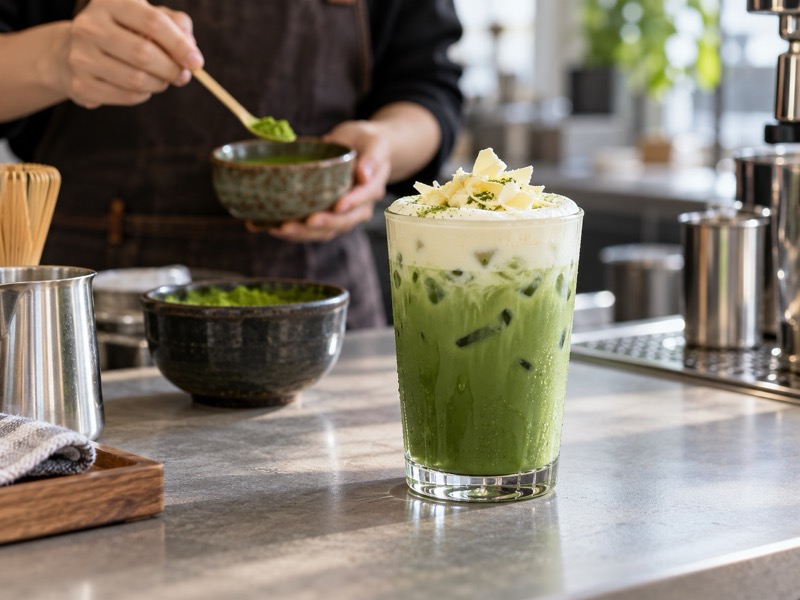
1. What should a white chocolate matcha latte taste like?
Define the cup before changing the recipe. The first sip should be creamy and recognizably matcha, with white chocolate rounding the finish. It should not taste like plain sweet milk followed by a mouthful of matcha powder. Write that target on the test sheet and compare every prototype with the house matcha latte. A drink that needs more sugar to hide a rough powder will disappoint when served without the new topping.
“White chocolate” can mean melted couverture, a café sauce, a syrup, or a whipped cream made with white chocolate. Those choices give different textures and levels of sweetness. Name the one your café uses in the recipe record and describe the guest-facing result accurately. A syrup with a white-chocolate flavor is not the same process as melting chocolate, though either may work if its flavor and label meet your brief.
| Concept | White chocolate role | Best service use |
|---|---|---|
| Lightly sweetened latte | Small sauce dose in milk | Fast daily menu item |
| Layered iced special | Sauce at base with matcha above | Visual launch, must stir cleanly |
| Dessert-style cup | Measured cream or foam cap | Higher price, more prep and waste |
2. Which white chocolate format works at a busy café?
Trial the products you can buy consistently. A pumpable sauce is quick to portion and usually designed for drinks, but brands vary in cocoa-butter character and sugar. A true white chocolate can taste richer, yet it needs controlled melting and may harden when it hits ice. Chips are convenient to store but still need a workable mixing route. The cheapest product per kilogram may not be the cheapest finished cup if it takes more to make the flavor clear.
Make three identical lattes using a sauce, a melted chocolate preparation, and any existing white-chocolate syrup on your bar. Keep matcha, milk, and cup size constant. Taste blind for tea clarity, sweetness, and the texture left at the bottom after five minutes. Do not judge only the product from a spoon; the milk and matcha will change what the team perceives.
If using melted chocolate, establish a small-batch method and record the liquid and temperature used to disperse it. Avoid dropping hard pieces directly into a cold cup. If using a sauce, calibrate the pump and weigh a few dispenses; nominal pumps can differ across bottle designs. Keep the product label and allergen statement with the bar recipe, especially when a supplier changes the formula.
| Format | Why a café might choose it | Main test |
|---|---|---|
| Beverage sauce | Fast, repeatable service | Sweetness and pump weight |
| Melted white chocolate | Richer confectionery note | Smooth mixing and cold texture |
| Flavored syrup | Simple storage and pouring | Does it taste like chocolate? |
| White chocolate cream | Visible premium finish | Cold holding and service time |
3. Which matcha base should lead the drink?
Start with the powder used in your plain latte. If it already performs well in milk, it is a sensible base for a white-chocolate special. Test different matcha lots only after you have a consistent control cup. A very mild tea may vanish under chocolate; a harsh one may leave bitterness when the sugar fades. Compare candidates in the finished drink at the same dose, not from their dry color or grade name alone.
For a 16 oz iced trial, start around 3 g matcha dispersed in 40 ml water, then use your house milk and ice line. Adjust after tasting the assembled cup. Make a low and high matcha version with exactly the same chocolate dose. Staff should taste the cup right away and after it sits on ice. The tea should be clear without needing a thick powder layer at the bottom.
Whisk or mix matcha before adding it to milk. A sauce can make the cup seem smooth while dry green specks remain below. If the bar uses a machine, compare its output with the whisked control; the method matters more than the equipment’s name. For high-volume service, see the existing matcha latte machine guide when evaluating whether an automated process produces the same taste and dose.
4. How can the bar control sweetness without hiding matcha?
Count every sweet component in the finished cup. A white-chocolate sauce, sweetened milk, cream cap, and garnish can each contribute sugar. If the house matcha latte already contains syrup, begin by removing it before adding chocolate. Taste the white-chocolate version beside the plain latte rather than adjusting each one independently. The goal is balance, not a fixed sweetness number borrowed from another café.
Make a three-point chocolate-dose trial and have staff mark tea clarity, sweetness, mouthfeel, and aftertaste separately. The middle dose may taste less exciting in a tiny tasting cup yet work better over a whole 16 oz drink. Check the last third of each serving. A dense chocolate layer can make the first part plain and the end too sweet unless the guest stirs thoroughly.
Milk choice changes the result. Whole dairy milk, oat milk, and other alternatives bring different sweetness and texture. If a guest can substitute milk, test the most common substitutions in the finished recipe. A drink with plant milk may still contain dairy if the white-chocolate sauce or topping has milk ingredients, so staff should not make a dairy-free claim from the milk choice alone.
5. How should an iced white chocolate matcha latte be built?
Choose one mixing route and put it on a short card. For a sauce version, weigh the sauce into the cup, add a measured amount of milk, and stir until no thick streak remains. Add ice and the rest of the milk to the usual fill line. Prepare a smooth matcha slurry separately and pour it over the drink. If the café wants a layered look, photograph it at handoff and after several minutes; visual separation is useful only if the cup still drinks well.
Use about 3 g matcha and 40 ml water as an initial 16 oz trial, then set the sauce and milk dose by tasting and cup yield. The recipe cannot be finalized from these starting numbers alone because sauces vary widely. Record ice weight or scoop size, not “fill with ice.” If the white-chocolate component is melted chocolate rather than sauce, test whether it remains fluid after it reaches the cold milk.
Serve the cup with the actual takeaway lid and straw. White-chocolate curls or thick whipped cream can look good in a glass and fail under a lid. Taste the cup from the rim and through a straw, stirred and unstirred. Then make it during a simulated rush. The approved build is the one staff can repeat under normal conditions.
| Trial step | Starting point | Release check |
|---|---|---|
| White chocolate | Weighed sauce or dispersed chocolate | No cold lumps or bottom plug |
| Matcha | About 3 g with 40 ml water | Smooth and identifiable |
| Milk and ice | House 16 oz fill standard | Same yield every shift |
| Finish | Optional modest garnish | Lid and straw still work |
6. What changes for a hot white chocolate matcha latte?
Heat makes white chocolate easier to disperse but can make its sweetness feel stronger. Build a separate hot trial instead of deleting the ice from the iced recipe. Warm milk and chocolate together by a process your equipment can handle, make a smooth matcha slurry, and combine them in the serving cup. Judge it at the temperature a guest will drink it, not only as soon as it leaves the steamer.
Do not put solid chocolate or a thick sauce into shared steaming equipment without confirming manufacturer guidance and a cleaning method. A small separate mixing vessel may be simpler. Record the chocolate preparation step, since “melt it” leaves too much variation in texture and temperature. If a sauce tastes artificial when warmed, try a different product before increasing its dose.
Compare a hot plain matcha latte with the chocolate version. If the chocolate masks tea completely, reduce chocolate or change the powder dose in a controlled test. Do not solve every flavor problem by adding more matcha; that can raise cost and bring a dry finish. The hot menu line should state the actual topping and milk choices offered.
7. Does the drink need white-chocolate whipped cream?
A foam or cream top can justify a seasonal special, but it is optional. Test the drink without it first. If the latte already tastes complete, a topping may add cost and work without improving repeat orders. If a top note makes the cup distinctive, keep the portion thin enough that matcha remains present from the first sip.
Measure the topping in grams. A tall cap fills the photograph but may make a takeaway lid impossible to fit. Test the mixture on the finished iced cup, then after a realistic waiting period. Some bases separate, stiffen, or sink when white chocolate is added. Use the cold-holding procedure appropriate to the exact dairy or plant ingredients in your operation.
8. Which ingredient and handling checks need a written record?
Keep ingredient labels for matcha, white chocolate or sauce, milk, topping, and garnish. White chocolate usually contains milk ingredients, but the precise allergen and other label details depend on the product you buy. Plant milk under a dairy-containing chocolate sauce is not a dairy-free drink. Train staff to answer from the approved recipe and current labels rather than from a generic online recipe.
House-made chocolate cream needs a documented preparation, chilling, labeling, and discard process under your café’s food-safety plan. Bought-in sauces have their own opened-container instructions. Do not assign a universal shelf life to a mixture just because a plain chocolate bar can sit on a shelf. A ready-to-serve beverage component is a different product.
Record supplier and lot changes. A new sauce with a stronger vanilla note can change both taste and sugar use; a different matcha lot can alter the green color. Retest the whole cup when a component changes. The ingredient record should also say whether any espresso is added, since some guests use “latte” to mean coffee even when your drink contains only matcha.
| Record | Question it answers | Owner |
|---|---|---|
| Chocolate product label | Ingredients and allergens | Purchasing and bar lead |
| Recipe card | Exact dose and build order | Bar lead |
| House topping prep sheet | Batch, holding, discard | Food-safety lead |
| Lot comparison | Did a supplier change alter the cup? | Menu developer |
9. What does a white chocolate matcha latte really cost?
Cost by sale unit from real invoices. Include matcha, sauce or chocolate, milk, topping, garnish, cup, lid, and expected waste. Weigh the actual sauce dispensed by your pump, and count chocolate lost to the mixing vessel. A more expensive but easy-to-use sauce may cost less per consistent cup than melted chocolate that creates rework or a long cleaning step.
Time several staff members making the drink during a normal workflow. A recipe that takes an extra minute may be viable as a premium special, but the menu price must support it and the bar layout must allow it. Compare its margin and service time with your plain matcha latte and existing sweet specials. Set a price for your market, not from a competitor’s menu without knowing its portions.
10. What makes the menu trial worth keeping?
Test it across regular days and a busier shift. Count orders, repeat orders where possible, remakes, service time, topping waste, and customer comments about sweetness. Keep those notes beside the ingredient cost. A launch photograph can bring attention; it does not tell you whether the drink works at the stated price for several weeks.
Act on the specific failure. If guests say “too sweet,” first check hidden sweeteners in milk and topping. If chocolate sits at the bottom, change dispersion. If the drink tastes mostly like white chocolate, reduce the dose or reconsider the matcha base. If the bar struggles with a melted-chocolate step, test a sauce before abandoning the concept.
Save the approved recipe with a finished-cup photograph, current labels, supplier details, and a retained tasting note. When the café switches powder, sauce, or milk, repeat a short side-by-side test. The reliable version is the one a new barista can make from the card without chasing the person who developed it.
| Trial signal | Likely cause | Next controlled test |
|---|---|---|
| High first orders, few repeats | Sweetness or expectation mismatch | Taste whole cup and revise description |
| Chocolate at bottom | Poor dispersion | Change mixing route |
| Slow service | Chocolate prep or topping | Test a sauce or remove cap |
| Repeat orders and sound margin | Drink fits the menu | Document supply and training |
Frequently Asked Questions
Q1: Is a white chocolate matcha latte coffee?
It can be a matcha-and-milk drink without espresso. State clearly if your café adds coffee to its own recipe.
Q2: Can I stir white chocolate chips directly into an iced latte?
That often leaves hard pieces. Melt and disperse them through an approved preparation, or use a tested beverage sauce.
Q3: Is the drink dairy-free with oat milk?
Only if every ingredient is dairy-free and the café’s cross-contact controls support the claim. Many white-chocolate products contain milk.
Q4: Why does the matcha disappear under white chocolate?
The chocolate dose, sweetness, or milk may be masking the tea. Compare measured versions before changing the powder.
Q5: Does the drink need whipped cream?
No. A balanced latte can stand alone. Add cream only when it improves the full cup enough to justify cost and service work.