
Caramel can give matcha a soft toffee finish, but it can also turn a good latte into a cup of sweet milk with a green top. The decision is more practical than choosing a drizzle pattern. A café needs a caramel component that mixes cleanly, a tea base that remains recognizable, a measured build for hot and iced orders, and a price that covers the extra sauce and labor.
Iced Caramel Matcha Latte from Jade Leaf Matcha is a recipe article in the first page of search results. The guide below uses a classic caramel note without adding salt as a defining flavor. If your menu is built around a salty finish, use the separate salted caramel matcha latte guide instead. The two drinks deserve different tasting briefs and menu descriptions.
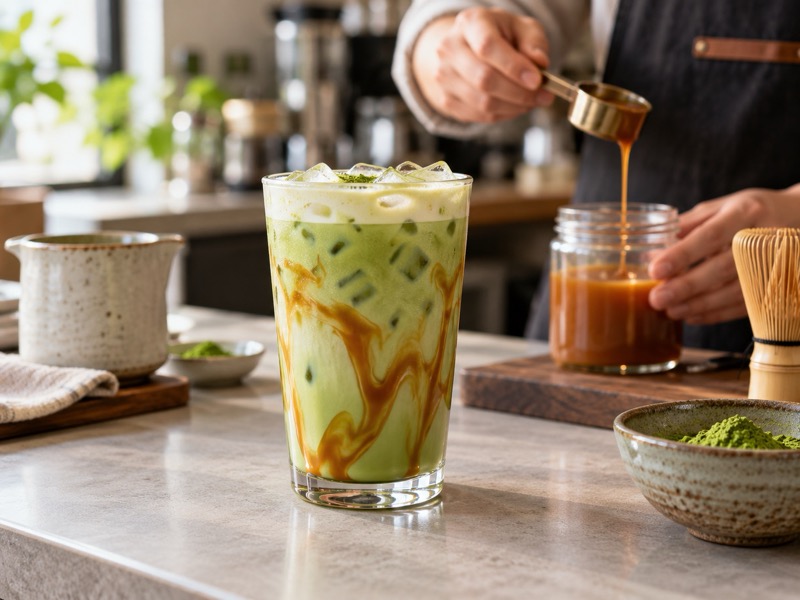
1. What should caramel do for a matcha latte?
Give caramel a supporting role. The first impression should still say matcha, while the caramel rounds the finish with cooked-sugar warmth. Taste the proposed drink beside your plain house latte. If staff can identify only caramel, lower the caramel dose before changing the tea. If they notice matcha only after reading the menu, the balance is not ready.
Decide what the word “caramel” means in your recipe. A café sauce can bring a richer, thicker note. A clear syrup may be easier to mix, but some products taste more like vanilla and sugar. A dark caramel can introduce bitter notes that some matcha powders amplify. Write the sensory target in plain language, such as “matcha first, light toffee finish, no sticky aftertaste.” This helps different staff evaluate the same cup.
Keep the menu description accurate. “Matcha, milk, and caramel sauce” is more useful than a promise of dessert without ingredient detail. If there is no coffee, staff should say so when guests ask. If the drink includes dairy caramel over a plant milk base, do not present it as dairy-free.
| Caramel style | Likely cup effect | Best check |
|---|---|---|
| Light caramel syrup | Quick sweetness and aroma | Does matcha stay clear? |
| Thick caramel sauce | Richer, longer finish | Does it mix when cold? |
| Dark caramel | More toasted, possibly bitter | Does it clash with tea? |
| Salted caramel | Distinct salty finish | Use a separate menu brief |
2. Which caramel component belongs on a busy bar?
Start with a product you can reorder consistently. Ask for its ingredient label, opened-container handling instructions, pack size, and a sample from the supply route you would actually use. A sauce that is excellent in a warm tasting cup may cling to the bottom of an iced latte. Run the test in your standard cup with your standard ice and milk.
Compare syrup and sauce at equal perceived caramel strength, not equal milliliters. The sauce may need less by weight and can be more expensive per kilogram yet still be reasonable per cup. Weigh several pump dispenses; a pump number on a recipe card is only repeatable if the pump and product viscosity stay the same. For a house caramel, document the formula and cleaning process rather than letting each shift make its own shade of brown.
Caramel components may contain dairy or other ingredients depending on the product. Keep current labels accessible to the team. A supplier change can alter sweetness, color, and allergens even when the product name stays “caramel.” Retest the complete drink before changing the approved item.
| Format | Service benefit | Risk to test |
|---|---|---|
| Commercial syrup | Fast mixing and portioning | Thin or artificial flavor |
| Commercial sauce | Fuller cooked-sugar note | Cold settling and pump drift |
| House sauce | Control of flavor | Labor, consistency, holding |
| Drizzle only | Visible finish | Flavor may stay on cup wall |
3. How strong should the matcha base be?
Use the house latte as the control. Measure matcha, water, milk, and ice, then taste it before caramel is added. A poor plain base does not become a good caramel latte simply because it is sweeter. If the drink will be sold in volume, choose a matcha lot that gives consistent color and flavor in milk, and keep a retained sample when supplier lots change.
For a 16 oz iced development cup, begin around 3 g matcha dispersed in 40 ml water with 150–170 ml milk, then use your normal ice line. Those are trial quantities. Your matcha, milk, caramel product, and cup shape can change the best dose. Make two cups with the same caramel measure and different matcha weights. Taste blind immediately and after the ice has diluted the drink slightly.
Mix the powder into a smooth slurry before assembling the cup. Caramel can disguise small clumps until a customer reaches the bottom. If a machine or shaker makes your regular latte, test that exact process with the caramel component. A quick workflow is useful only if it produces the same cup across staff and shifts.
4. How much caramel sweetness is enough?
Count the sweeteners already in the latte. Many cafés add syrup to a plain matcha latte; leaving that dose in place and adding caramel on top can make the new drink much sweeter than intended. Start by removing or reducing the existing syrup. Build low, medium, and high caramel doses with the same matcha and milk. Ask tasters to rate tea clarity, caramel character, sweetness, and the final sip separately.
The most dramatic first sip may not be the cup guests finish. Drink an entire serving after it has stood on ice for several minutes. A thick sauce layer can sit at the bottom, making the top taste weak and the last sip too sweet. If that happens, change the mixing sequence before simply using less sauce. The target is an even drink, not a uniform photograph.
Milk choice also affects balance. Some oat milks add noticeable sweetness while dairy milk can make a caramel sauce feel richer. Test the substitutions you plan to offer, and decide whether each needs a separate caramel dose. Staff should not improvise a double shot of syrup because a guest selects a different milk.
5. How do you build an iced caramel matcha latte consistently?
Set a sequence that prevents a sticky bottom. If using sauce, weigh it into a small amount of milk and stir until smooth before it meets ice. Add the remaining milk and ice to the cup, then pour the whisked matcha. If using a syrup designed to mix cold, it may go directly into the cup, but still test the result after stirring and after a short wait. Keep the chosen route on one concise bar card.
Specify grams of matcha, water volume, caramel weight, milk volume, ice scoop or weight, and cup size. A 16 oz trial can start with roughly 3 g matcha and 40 ml water, then be adjusted after tasting. Do not finalize a caramel number from someone else’s recipe; products differ. The correct portion is the one your staff can repeat and your customers can finish.
Use the actual takeaway lid and straw. A heavy rim drizzle can smear into the lid and waste sauce without changing flavor. Photograph the cup at handoff and after five minutes, then taste both stirred and unstirred. If the visual layer disappears after a minute but the mixed drink tastes better, choose flavor over a fragile photo effect.
| Step | Trial starting point | Pass question |
|---|---|---|
| Matcha slurry | About 3 g powder, 40 ml water | Any dry specks? |
| Caramel component | Weighed, product-specific dose | Any sticky layer? |
| Milk and ice | House 16 oz standard | Repeatable yield? |
| Finish | Optional modest drizzle | Does lid fit cleanly? |
6. What changes in a hot caramel matcha latte?
Heat can make a sauce easier to mix but can also make the drink feel sweeter. Do not use the iced recipe without retesting. Disperse caramel in warm milk through a process compatible with your equipment, prepare the matcha separately, and combine them in the serving cup. Judge the drink at a comfortable drinking temperature rather than only at the steamer.
Some cafés mix sauce into milk before steaming; others add it to the cup to avoid coating shared equipment. Follow the steamer manufacturer’s guidance and your cleaning process. A house caramel that becomes too thick in a bottle may require a different preparation method than a commercial syrup. Write the method staff must use rather than a vague instruction to “add caramel.”
Taste a hot plain latte next to the caramel version. If a dark caramel makes the tea finish harsh, try a lighter caramel rather than adding extra milk and sugar. If matcha vanishes, reduce caramel first. Approve the hot drink as its own recipe only when staff can reproduce it during ordinary service.
7. Does the drink need foam or a caramel drizzle?
It may need neither. Test a well-mixed latte without a topping before adding a second component. A thin caramel line can tell the guest what flavor to expect, but it should not be the only place caramel appears. A thick cream cap adds visual appeal and cost; it can also cover the matcha for the first several sips.
If you use foam, measure it in grams and check the full ingredient label. A dairy cream cap changes the allergen description even when the latte below uses oat milk. Test foam stability on an iced cup with the lid in place and after a realistic carry time. The topping should make the entire drink better, not simply survive for a launch photo.
Keep garnish decisions separate from the base recipe. Staff can learn a consistent latte first, then add a measured finish if it earns its place in tasting and cost. A cleaner drink is often easier to reproduce on a busy bar.
8. What can staff prepare ahead without losing control?
Prepare ingredients and tools, not finished matcha lattes. Keep a labeled bottle of the approved caramel component, calibrate its pump, and record its opened-container handling requirements. If your café makes sauce in-house, use a documented batch recipe, label it, and apply the food-safety plan appropriate to its actual ingredients. A caramel made with dairy needs a different evaluation from a shelf-stable purchased syrup.
Pre-portion dry matcha where your system allows it, keep the powder dry, and store the whisk or machine equipment so it can be cleaned between orders. Do not prepare a large sweetened matcha base merely to save seconds if it settles or drifts in flavor. Time real orders through the full queue before deciding which step is worth preparing ahead.
Track product waste. A sauce bottle that cannot dispense its last portion, a topping batch that expires before it sells, or a cup remade because the caramel settled all belong in the true cost. Start with a small trial batch, then scale only after demand is visible.
| Component | Useful advance preparation | Control |
|---|---|---|
| Dry matcha | Approved pre-weighed portion | Weight and dry storage |
| Commercial caramel | Ready in calibrated bottle | Label, opened date, pump weight |
| House caramel | Small labeled batch | Formula, holding, discard |
| Foam | Only under approved process | Portion and temperature |
9. How do you price and train a caramel matcha latte?
Cost the full cup from actual invoices: matcha, milk, caramel, optional topping, cup, lid, and expected waste. Weigh the amount a pump dispenses rather than trusting its label. Divide the unit ingredient cost by your target food-cost ratio for a first price, then check what your customers will pay for a flavored matcha latte in your market. Do not copy a competitor’s price without knowing their portion.
Have two or three staff make the drink from the written bar card. Time them, weigh the cup, and taste blind. If sweetness varies, look at the pump or mixing step. If one person adds a tall drizzle and another barely a line, specify the finish or remove it. A drink developed by one barista becomes a menu item only when the next shift can make it.
Train one-sentence answers to common questions: whether coffee is present, which milk is used, whether the caramel contains dairy, and how sweet the drink is compared with the regular matcha latte. Accurate answers prevent remakes and help guests choose the drink they expect.
10. What proves the caramel matcha latte belongs on the menu?
Run the special through quiet and busy shifts. Count orders, repeat purchases where possible, remakes, time per order, caramel use, and waste. Ask customers whether they could taste matcha throughout the cup. A strong first-day response to a photograph is useful, but repeat orders at the posted price matter more.
Compare the drink against the house matcha latte and the separate salted caramel option. If both caramel drinks attract the same orders, choose the one with better repeat response and operational fit. If the classic caramel version serves a different guest who prefers a soft, unsalted finish, keep the menu descriptions distinct. Avoid making staff explain two nearly identical names without a clear taste difference.
Save the approved recipe, ingredient labels, supplier details, and a photograph of a normal service cup. When caramel or matcha suppliers change, repeat a side-by-side tasting. The goal is a dependable order, not a one-time experiment that only the developer can reproduce.
| Trial result | What it may mean | Next action |
|---|---|---|
| High first orders, few repeats | Too sweet or weak tea | Recheck full-cup balance |
| Sticky bottom | Sauce not dispersed | Change mixing sequence |
| Slow handoff | Extra finish step | Simplify topping |
| Repeat orders with sound margin | Good menu fit | Document and secure supply |
Frequently Asked Questions
Q1: Does a caramel matcha latte contain coffee?
It does not need to. Matcha and milk are enough for a latte-style drink; state clearly if your café adds espresso.
Q2: Is caramel syrup or sauce better?
Syrup usually mixes faster, while sauce may give a fuller caramel note. Compare them in the finished cup at equivalent flavor strength.
Q3: Why does the caramel settle at the bottom?
A thick sauce may not have been dispersed before the ice was added. Test a measured pre-mix with milk and taste after the drink sits.
Q4: Is it the same as salted caramel matcha?
No. A salted caramel drink has a deliberate salty finish. Keep that version’s recipe and menu description separate.
Q5: Can the drink be dairy-free?
Only if every selected ingredient, including caramel and any topping, supports the claim under your café’s ingredient and cross-contact controls.