
A cookie butter matcha latte is easy to recognize in a photograph: green tea, a beige cream top, and a biscuit crumb. It is harder to make well during service. Cookie spread can settle at the bottom, the topping can turn the first sip into pure sugar, and the matcha can disappear. The recipe has to work after the customer carries it away, not only while the barista holds the glass.
Cookie Butter Matcha Latte from Dining with Diana is a recipe article that appears in the first organic web result for this search. This guide takes a café operator’s view: how to choose a spread, measure a repeatable recipe, handle its ingredients, train the bar, and decide whether the drink deserves menu space.
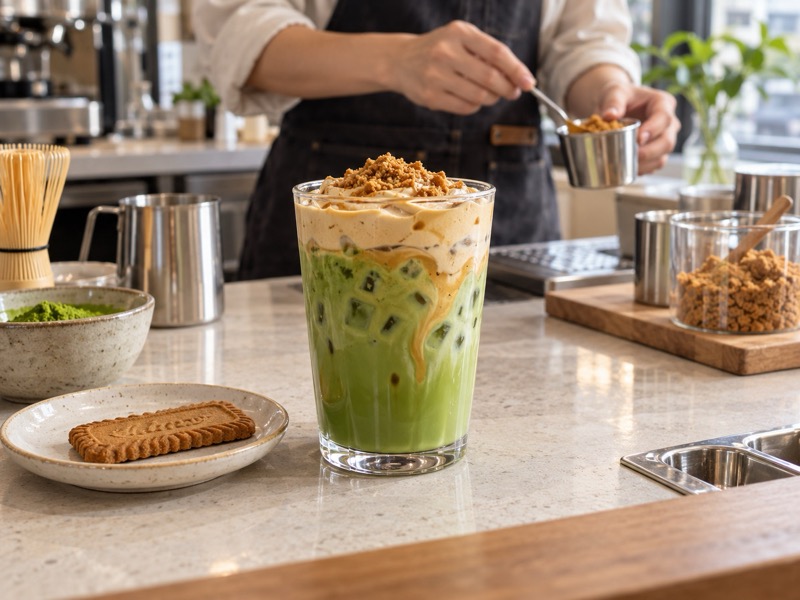
1. What should your cookie butter matcha latte promise?
Start with the experience you want a guest to remember. A good version has a clear matcha base and a warm biscuit-spice note, with enough cookie flavor to justify the name. It need not be a dessert in a glass. A thick cap and heavy crumb layer may bring first-time orders, but they can make the last half of the cup cloying. Taste every prototype from first sip to last before settling on a menu description.
Write the description using real components: “iced matcha latte with cookie butter cream and a light biscuit crumb,” for example. If your version uses a cookie butter syrup in the milk instead, say that. Guests may know a branded cookie spread and assume you use that exact product; avoid implying a brand unless it is the one you actually buy and are allowed to name. Staff should also know whether the recipe contains coffee. A matcha latte normally does not require espresso, but a café can choose to add it if the menu clearly says so.
| Menu style | Cookie flavor source | What the guest should expect |
|---|---|---|
| Lightly flavored latte | Measured cookie butter syrup | Matcha forward, no thick top |
| Cream-top special | Cookie butter blended into cold foam | Sweet opening, tea underneath |
| Layered dessert cup | Spread at base plus cream top | Rich, stirred flavor; more prep |
2. Which cookie butter can the bar use consistently?
Evaluate the actual spread or syrup you can source repeatedly. Cookie butter brands differ in sweetness, spice, fat content, and how easily they loosen in milk. A jar that tastes good on a spoon may form stubborn streaks in a cold drink. Order samples, record lot and ingredient details, then run a small mixing test at the bar. Try the component cold, warm, and in your planned cream mixture.
For a spread, weigh a portion and loosen it with a measured amount of warm liquid before it goes near ice. Do not assume that stirring a spoonful into cold milk will distribute it. A pumpable commercial syrup may be easier in a fast café, but taste it beside the spread: some syrups deliver cinnamon and sugar without much baked-cookie character. The best choice is the one the team can portion quickly while still making a drink people recognize.
Check the full label every time you change product. Many cookie spreads and biscuit crumbs contain wheat; formulations can also include soy or other allergens. Your café’s actual ingredients, not a generic recipe online, determine what you tell customers. Keep a copy of the current label with the bar card so staff do not have to guess.
| Component | Operational advantage | Test before approval |
|---|---|---|
| Jarred spread | Recognizable cookie character | Mixing, weighed dose, label |
| Commercial syrup | Fast and pumpable | Flavor, sugar, pump calibration |
| House cookie cream | Distinctive presentation | Cold holding, texture, waste |
| Crumb garnish | Clear visual cue | Allergens, sogginess, lid fit |
3. How do you keep the matcha recognizable?
Use the bulk matcha already approved for your house latte as the first test. A flavored drink should not become a way to hide powder that fails in a plain latte. Prepare the base with a measured matcha dose, measured water, and your standard milk. Taste it before cookie butter is added. If the base is weak or clumpy, fix that recipe first; the sweet topping will make those flaws harder to diagnose.
For a 16 oz iced trial, 3 g matcha whisked with about 40 ml water and 150–170 ml milk is a practical starting point. Your powder, cup size, and ice line may call for a different balance. Build two cups that differ only in matcha dose. Taste them with the same cookie component after a few minutes on ice. The winning dose should still taste like tea at the end of the cup without becoming dry or bitter.
Matcha slurry and cookie butter mixture should be smooth before assembly. If the bar uses a shaker, test its actual output and cleaning time against a whisked version. A visual layer is useful for a photograph, but a drink that forms a thick paste at the bottom needs a different method. Ask tasters to stir the cup and drink through a straw as a customer might.
4. How much cookie butter belongs in one serving?
Start small and measure in grams. “One spoon” changes with the person, the jar temperature, and how full the spoon is. Too much spread adds fat and sweetness and can mute the tea. Make a three-cup comparison: low, middle, and high cookie dose, all with the same matcha, milk, and ice. Have staff rank aroma, sweetness, tea clarity, and how much remains at the bottom after drinking.
If the drink has both spread in the base and cookie cream on top, count them as one flavor system. Two unmeasured sources of sugar make a cup difficult to price or correct. Often a modest amount in one place is enough: either a lightly flavored milk or a thin top. A crumb garnish should confirm the idea, not supply all the flavor.
Record what a customer will actually receive. Some spreads become firmer when chilled; a dose that blends well during testing may settle after several minutes. Repeat the tasting at the time customers are likely to drink takeaway orders. If the bottom becomes a sweet plug, loosen the spread differently or switch to a component that mixes more cleanly.
5. What is a reliable iced cookie butter matcha latte build?
Use your normal 16 oz iced latte workflow as the frame. Whisk a smooth matcha slurry. If using spread in the base, blend its weighed portion with a small amount of warm milk or approved liquid, then add it to the cup. Add ice and the remaining milk to the usual fill line. Pour the matcha, then add a measured topping only if that is part of the approved recipe. The order can change for your cup shape, but everyone on the bar should follow the same card.
Check the finished drink with the lid and straw your café actually uses. A tall foam cap that looks generous in an open glass may touch the lid and collapse. Crumbs can block the straw or become wet against the lid. Photograph the cup at handoff and after five minutes. Both views matter more than an overhead shot arranged for social media.
A short bar card is enough: matcha weight, water volume, milk measure, cookie component weight, ice line, and garnish. Do not write “to taste” on a production card. Reserve experiments for controlled trials and document any recipe change before the next shift.
| Step | 16 oz trial starting point | Pass check |
|---|---|---|
| Matcha | About 3 g with 40 ml water | Smooth and present after mixing |
| Cookie component | Weighed sample dose | No paste left at bottom |
| Milk | 150–170 ml | Balanced sweetness and tea |
| Ice and finish | House fill line; light garnish | Lid fits, straw works |
6. Should the drink have cookie butter cold foam?
Cold foam gives the special an obvious identity, but it also adds a preparation station, cold-held ingredient, and another chance for the drink to become too sweet. Test a plain cookie-flavored latte against a foam-top version at the price you plan to charge. If the foam adds only a photograph, remove it. If it adds a distinct first sip while the matcha stays clear, keep it thin and measured.
Choose a foam base that works with your equipment and recipe. A dairy cream, a plant-based product, and a commercial cold-foam base will behave differently when cookie spread is mixed in. Some mixtures thicken in the bottle and become difficult to dispense. Make the test batch at the same scale and temperature you would use in service. Ask staff to pour identical portions and compare cups made at the beginning and end of the intended holding period.
Do not call a drink dairy-free because the milk layer is oat if the foam contains cream. Keep the ingredient record for the whole cup. If the garnish includes biscuit crumbs, check those labels too. A guest should be able to learn what is in the drink without the barista having to search a supplier website during a queue.
7. Can you offer a hot cookie butter matcha latte?
Yes, though it needs a separate tasting. Heat makes sweet and spice notes feel different, and a cold foam recipe may split on a hot cup. Begin with a smooth matcha slurry and warm milk that contains a fully dispersed, measured cookie component. Taste at normal drinking temperature. The hot version should not rely on a thick layer of spread stuck to the cup wall.
A syrup may be easier for hot service than a jarred spread. If you steam milk with a flavored component, confirm that your equipment maker permits it and that the cleaning process remains manageable. Otherwise mix the component separately and combine it in the cup. Train staff to make the hot recipe from its own card; an instruction to “make the iced drink without ice” leaves too much unresolved.
8. What ingredient and holding checks matter most?
Keep current labels for the spread, syrup, milk, foam base, and cookie garnish. Read the ingredient statements instead of inferring allergens from the name. Recipes and suppliers can change. If your café makes its own cream mixture, write down who prepares it, how it is labeled, where it is held, and when it is discarded under your food-safety plan. Do not copy a storage duration from another café’s recipe.
Prepare small batches until you know demand. A large foam batch can be wasted after a slow day, and a jar left open at the bar can create portion and cleanliness problems. Assign one scoop or squeeze bottle method and clean it as your operation requires. If a purchased component has specific opened-container instructions, follow those in addition to local rules.
Give the register team a compact answer to three common questions: Does it contain wheat? Does it contain dairy? Does it contain coffee? The first two depend on the selected ingredients; the last depends on your recipe. An accurate answer is better than a confident guess.
| Item to check | Why it matters | Where to record it |
|---|---|---|
| Cookie spread label | Ingredients and allergens | Supplier file and bar card |
| Crumb garnish label | May differ from spread | Ingredient record |
| Foam recipe | Cold holding and portion | Prep sheet |
| Purchased syrup | Opened-container handling | Station label |
9. How should you price and train the recipe?
Cost the drink from actual invoices and measured servings: matcha, milk, spread or syrup, foam, crumb, cup, lid, and expected waste. A small-looking cookie cream cap can be one of the most expensive parts. Compare the completed cost with your standard matcha latte, then choose a price that fits your menu and target margin. Avoid copying a competitor’s price without knowing its portion or local costs.
Have at least two team members make the drink without the developer standing beside them. Weigh the outputs, time the work, and taste them blind. If one cup has a thick layer of cookie paste and another barely tastes of the spread, fix the mixing instruction or tool. Staff training should include the menu description and ingredient questions as well as the pour order.
10. When has the cookie butter matcha latte earned menu space?
Run a trial through regular shifts and a busy period. Count orders, repeat orders when possible, remakes, preparation time, and component waste. Ask guests whether the matcha still came through and whether the cookie flavor matched the menu line. Those answers are more informative than how often someone photographed the drink.
Compare its sales and margin with the house matcha latte and other seasonal specials. If the drink draws interest but slows a small bar, test a simpler syrup version. If customers leave a sweet cream layer behind, reduce the cap. If repeat orders are strong but cookie spread supply is erratic, approve a second source through a taste test before committing to a permanent menu slot.
Save the final recipe with the chosen supplier, ingredient labels, training photo, and measured portions. When a component changes, taste the whole drink again. The value of a seasonal idea is a cup the next shift can make as well as the first one.
| Trial result | What it suggests | Next action |
|---|---|---|
| Strong first orders, few returns | Expectation or balance problem | Review description and sweetness |
| High foam waste | Batch is too large | Make less or simplify topping |
| Long handoff time | Mixing step is awkward | Test a prepared syrup |
| Repeat orders at target margin | Recipe may fit the menu | Document and secure supply |
Frequently Asked Questions
Q1: Does cookie butter matcha latte contain coffee?
It does not need to. Some cafés may add espresso, so the menu and barista should describe the actual recipe rather than assume.
Q2: Can cookie butter spread go straight into cold milk?
It may form lumps or settle. Test a measured portion loosened with a little warm liquid before building the iced drink.
Q3: Is a cookie butter matcha latte gluten-free?
Do not make that claim without checking every selected ingredient and your cross-contact controls. Many cookie spreads and crumbs contain wheat.
Q4: Is cold foam necessary?
No. It can add a useful first sip and visual cue, but a well-balanced latte with a measured cookie component may work better for a busy café.
Q5: Why is there paste at the bottom of the cup?
The spread was not fully dispersed or the portion was too large. Adjust the mixing method and retest the finished cup after it sits on ice.