
What is matcha when a buyer must put it in a specification? It is a finely ground tea powder, commonly made from processed, shade-grown tea leaf called tencha. Consumer introductions often move from that definition straight to health claims. A food brand or café group needs a different next step: identify the exact powder, test it in the intended recipe and connect it to supplier records. Our matcha manufacturing process guide shows where those records arise.
Contents
- 1. What makes matcha different from brewed green tea?
- 2. Which tea material becomes matcha?
- 3. How do leaves become a powder?
- 4. Does every green tea powder count as matcha?
- 5. What do grade descriptions actually tell buyers?
- 6. How should buyers describe flavor and appearance?
- 7. Which claims need separate evidence?
- 8. What belongs in a usable specification?
- 9. How should a sample be tested?
- 10. What makes the next shipment the same product?
1. What makes matcha different from brewed green tea?
Define the ingredient before making claims
Matcha is consumed as a suspension of finely ground tea powder. Brewed green tea is usually an infusion from leaves that are removed after steeping. That distinction changes recipe development: a matcha drink needs mixing, and insoluble leaf material can settle during service. It also changes buying questions. A tea buyer who normally judges an infusion should assess powder texture, dose, dispersion and finished-drink behavior. The Clemson Extension guide to matcha describes the tencha-to-powder route in accessible terms.
Write a one-sentence internal definition for the item you want. Include whether it is pure tea powder or a formulation containing sugar, milk powder or flavors. Those products may share a green appearance but they require different ingredient declarations and trials. If the buying brief says only “matcha,” a supplier can send several legitimate products that cannot be compared fairly. Decide whether customers will whisk it, drink it with milk or eat it in a finished food before selecting a grade.
2. Which tea material becomes matcha?
Ask for the material route, not a scenic origin story
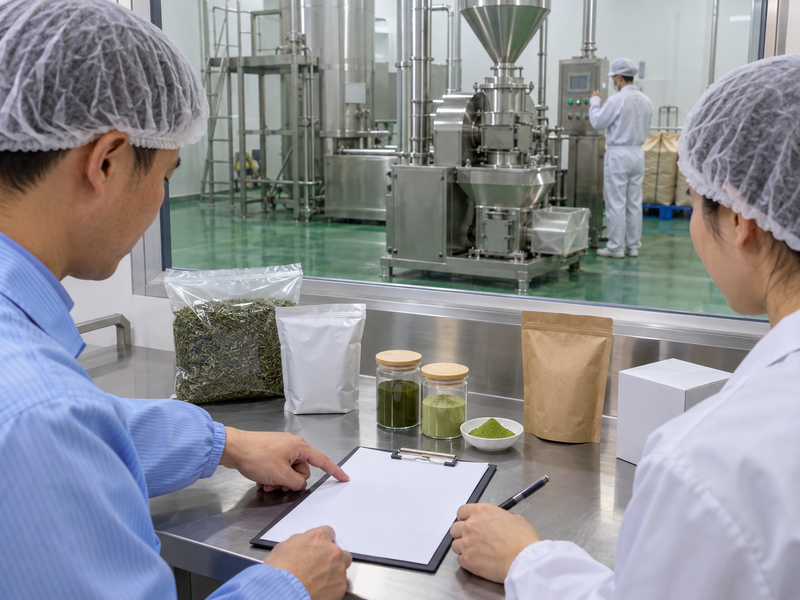
Tea comes from Camellia sinensis. In the common matcha production route, growers shade tea before harvest and processors prepare the leaf as tencha for grinding. Exact field and processing practices vary. Ask the supplier to describe the material it uses for the proposed SKU: source, intake code, processing site and whether several lots are blended. A growing-region photograph cannot tell you what entered a particular bag. If origin matters to a label, request lot-level records that support the wording.
Prepared leaf quality influences the powder, yet a buyer need not prescribe every farm method. Set the outcome your product needs and ask how the supplier controls inputs to meet it. For example, a straight-tea brand may place more weight on clean aroma and a smooth finish than a bakery purchasing a powder that will be heated. Both should know when source material can change. The tea material definition belongs beside sample identity so a good trial can be repeated using a controlled supply route.
| Input question | Useful supplier answer | Buyer decision |
|---|---|---|
| What leaf enters? | Material type and code | Fit with product definition |
| Where from? | Supported source description | Label wording |
| Can sources change? | Approved range and notice | Retest trigger |
3. How do leaves become a powder?
Follow the steps that create your sample
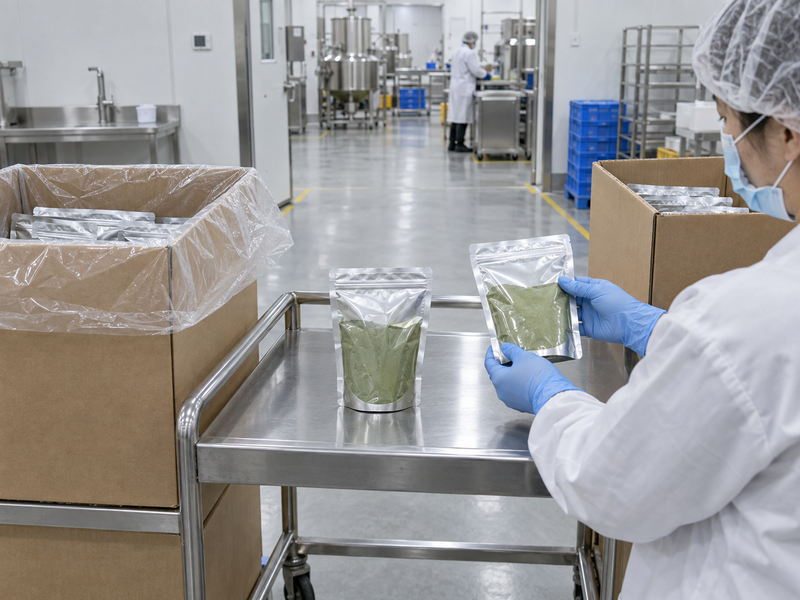
A broad route includes cultivation, harvest, heat treatment, drying, sorting and grinding. Many descriptions focus on steaming and tencha preparation, but your supplier should show the actual route for its item rather than repeat a textbook diagram. Ask where prepared leaf is made, where milling occurs and who packs the finished product. If one stage is outsourced, identify the operator and the lot link between sites. This helps quality review and gives purchasing a route for questions after delivery.
At the mill, ask how operators manage incoming identity, equipment setup, in-process checks and changeovers. A photograph of a stone mill does not show how a production lot was released. Request a redacted batch record and a coded sample from the intended route. The point is not to make every buyer a tea engineer. It is to connect the powder’s flavor and texture with a process that can produce them again. When a supplier changes material or milling site, that connection tells you what should be retested.
4. Does every green tea powder count as matcha?
Read the product description closely
Green tea can be milled into powder through routes that differ from a tencha-based matcha process. A buyer should ask how the proposed item is made rather than assume that any finely ground green leaf has the same flavor, texture or claim basis. This is especially useful when comparing low-priced offers. A powder may perform acceptably in a sweet bakery recipe while failing a straight drink, and a supplier’s name for the product may not settle the difference.
Ask for the ingredient statement, production description and a labeled sample. Check whether the item contains only tea or is a blend. If your brand promises traditional tencha-based matcha, make that a written requirement with a verification route. If the customer only needs a tea powder for a particular application, describe that use accurately and select on performance. Avoid forcing a premium-sounding name onto a material whose records do not support it. Product identity should be clear enough for quality, artwork and receiving staff to recognize the same SKU.
| Product offered | Confirm | Trial priority |
|---|---|---|
| Pure matcha | Tea source and process | Flavor and powder behavior |
| Other green tea powder | Actual leaf and processing route | Fitness for intended use |
| Matcha blend | Full ingredient statement | Recipe and label review |
5. What do grade descriptions actually tell buyers?
Translate a label into a testable use
Terms such as ceremonial, premium and culinary can help a supplier organize its range, but they are not a complete, universal purchasing specification. Ask what each grade means within that supplier’s own catalogue and whether the offered code is intended for straight tea, milk drinks or food processing. Request samples from the grades that fit your application. A high-priced powder may disappear behind sweetener or heat, while a lower-priced one may taste harsh when whisked with water. Neither price nor grade name answers your recipe question.
Write a short acceptance plan before tasting. For a café, include the actual milk, serving temperature and preparation time. For bakery use, assess the baked product after cooling. Keep a reference sample and record dose, color, aroma, taste and texture. Ask whether the commercial lot will follow the same material and milling route. This turns grade language into a comparison your team can repeat and explain, even when two suppliers use different naming systems.
6. How should buyers describe flavor and appearance?
Replace vague praise with observations
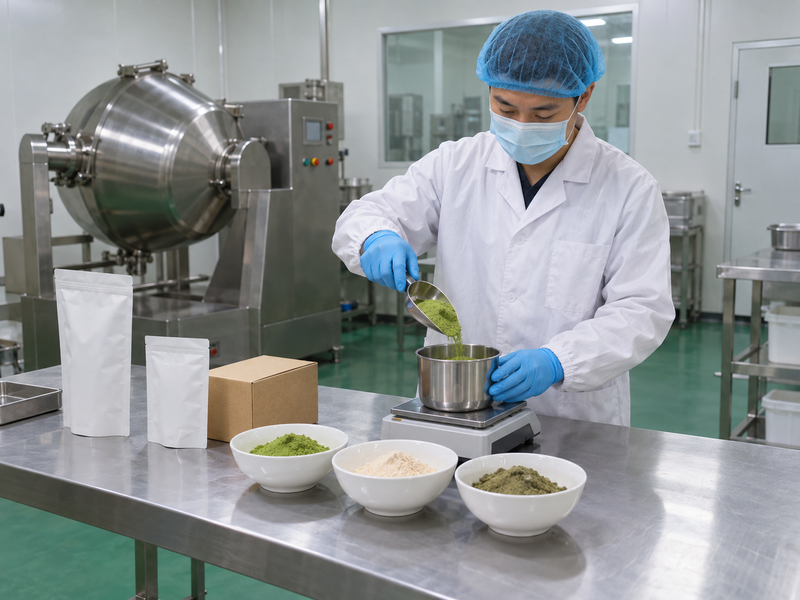
Matcha can present vegetal, savory and sometimes sweet notes, plus bitterness or astringency that vary by product and preparation. Record what your team actually perceives under fixed conditions. “Smooth in oat milk after five minutes” is more useful than “excellent quality.” Prepare samples at the same dose and temperature, blind-code them when practical and let reviewers write comments before they see the price. A powder that looks bright dry may behave differently in a dark chocolate filling or a cold drink.
Visual checks need the same discipline. Use stable lighting, background and observation time; retain the physical sample behind any photograph. Ask whether a color measurement or visual reference should sit in your specification. Natural agricultural variation calls for a reasonable approved range rather than a promise of an exact shade. When a later lot falls outside the range, your team can compare it against a real reference and investigate leaf, process and storage factors instead of debating an old sales image.
| Attribute | Fixed condition | Useful comment |
|---|---|---|
| Aroma | Opened sample and timing | Fresh, toasted or stale note |
| Flavor | Dose and recipe | Balanced or harsh finish |
| Color | Light and background | Within approved range |
7. Which claims need separate evidence?
Keep product facts apart from marketing language
Origin, organic status, named cultivar and specific production methods each require their own evidence. Ask which claim applies to the offered item and which document supports it. A certificate may cover one operator and activity without covering every product in a catalogue. A farm story can be accurate for some input material but not for a blended lot. If the brand plans to print a claim, have its qualified market reviewer check the wording and the supplied records before artwork approval.
Avoid repeating general wellness promises from consumer articles. What is matcha as an ingredient is a separate question from whether a finished product may make a health claim in a particular market. For a B2B purchase, prioritize composition, traceability, test results and application performance. If a seller offers a nutrient or caffeine value, request the method and product basis before using the number. The buyer’s file should show where each claim came from and which version of the SKU it describes.

8. What belongs in a usable specification?
Write for production and receiving staff
Include seller and product code, composition, intended application, sensory reference, physical characteristics, packaging, lot marking and agreed release limits. Name the document revision and approvers. If a test limit matters, state the method and units. If an attribute is judged in a recipe, attach the preparation instructions. A specification should let the factory make the item and let your warehouse identify it without needing to reread a sales exchange.
Ask quality to separate lot-specific reports from standing documents. A specification defines acceptance; a certificate of analysis reports the results for a particular lot; a facility certificate addresses its stated scope. Each answers a different question. If the business is importing into the United States, FDA’s foreign supplier verification guidance describes responsibilities for covered importers. Let a qualified team select the records needed for its actual route.
| Specification field | Example decision | Evidence |
|---|---|---|
| Product identity | Pure powder or blend | Ingredient statement |
| Performance | Approved latte result | Coded trial sheet |
| Release | Agreed test limits | Lot report |
9. How should a sample be tested?
Treat tasting as an approval experiment
Request a coded sample with product name, lot, pack date and current specification. Keep one unit sealed. Write a test method that reflects how customers will use the item, then apply it to every candidate. For a drink, record liquid, dose, mixing tool, temperature and the time you observe sediment or color. For food, include the full heat, freezing or storage step. If the recipe changes during testing, start a new comparison rather than assigning all effects to the powder.
Ask whether the sample came from routine production. If it was specially prepared, request a production-lot bridge before a large launch. Compare a second lot when supply consistency matters. A good sample should lead to a defined item code and acceptance range, not a verbal assurance that later batches will be similar. After the trial, product development, quality and purchasing should each record their decision. That makes the handoff to the first order much less fragile.
10. What makes the next shipment the same product?
Keep an approval chain for repeat buying
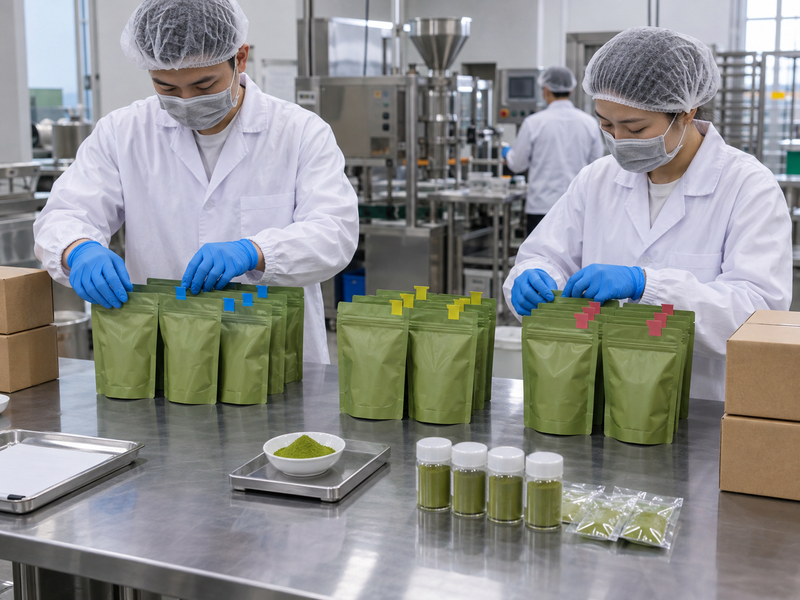
The purchase order should cite the approved item, specification revision, pack and destination. The supplier should send lot identification and agreed reports before or with each shipment. At receipt, compare the pack code, quantity and seal condition with the order and documents. If a later powder tastes different, a retained sample and batch record help both parties investigate. Without those links, “same grade” is a weak basis for deciding whether the shipment matches your trial.
Agree which changes require notice: leaf source, blend, mill, production site, test method or packaging. Your team can then choose a document review or fresh application test. Matcha Village’s supplied materials describe several matcha products and support for application selection; request a coded sample and current file for the one you plan to buy. The useful definition of matcha in a purchasing program is the one that tells everyone what product was approved and how to recognize it again.
| Repeat-order item | Check | Owner |
|---|---|---|
| Item and specification | Same approved revision | Quality |
| Pack and lot | Readable, reconcilable codes | Receiving |
| Change notice | Source or process updates | Supplier and buyer |
FAQ
Q1. Is matcha the same as brewed green tea? Both come from tea, but matcha is consumed as powder while a typical green tea infusion leaves the leaf behind.
Q2. Is every green tea powder matcha? No. Ask for the leaf and processing route behind the offered item.
Q3. Does “ceremonial grade” define a legal specification? Treat it as a supplier descriptor and agree measurable or observable acceptance criteria.
Q4. Can a bright sample establish origin? No. Origin needs material and batch records tied to the shipped lot.
Q5. What should an ingredient buyer request first? Ask for a coded sample, current specification, composition and the proposed production route.
Start with one use and one proposed SKU. Test that powder in the finished product, approve a written specification and keep the sample code. When the next shipment arrives, those simple records will answer the question that matters most: whether the product in the warehouse is the one your team chose.