
The matcha manufacturing process spans growing and prepared leaf, grinding, testing and packing. Buyers often receive an elegant process diagram without learning which controls apply to their order. Follow each stage as a decision gate: identify the input, see what the operator records and connect the output with your approved powder. Tezumi’s process overview describes the broad cultivation, crude-production and finishing phases while noting that individual routes vary. Ask your supplier for its actual route. Our matcha manufacturer guide helps identify who controls each production stage.
Contents
- 1. What growing information belongs in the product file?
- 2. How are harvested leaves received and identified?
- 3. What should buyers ask about heat treatment?
- 4. How is prepared tea dried and sorted?
- 5. When do blending decisions occur?
- 6. What controls the grinding stage?
- 7. How is powder handled before packing?
- 8. Which tests determine lot release?
- 9. What does finished-pack verification include?
- 10. How can buyers approve the whole route?
1. What growing information belongs in the product file?
Define the claim you plan to make
Growing conditions affect the input a manufacturer receives, but your buying file need not become a farm brochure. Ask for the source area, material category and cultivation claims relevant to the item. Shading is commonly discussed in matcha production; record how the supplier describes its actual practice and which incoming lots it covers. If your label promises a specific origin or production method, request evidence before using that wording. Avoid copying another producer’s cultivar, shading period or harvest claim onto your SKU.
Matcha Village’s supplied company material describes tea gardens near Hangzhou and roughly 15–20 days of shade management. Treat those as company-level statements until the offered product and its source records are confirmed. A buyer may decide that flavor consistency matters more than a farm story. In that case, ask how the supplier manages source changes while maintaining the approved sensory range. Write this decision down, because the material specification at the next stage depends on it.
2. How are harvested leaves received and identified?
Put a code on every intake decision
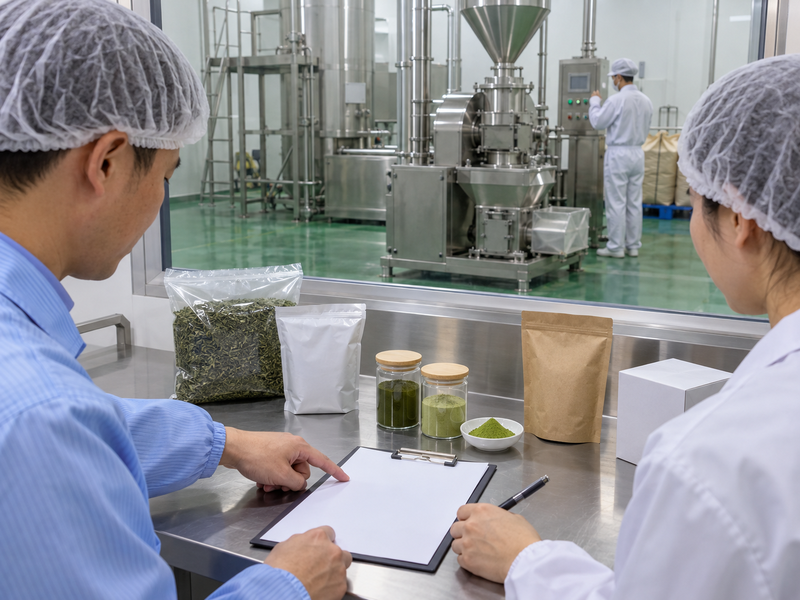
Ask what document accompanies harvested or prepared leaf into the plant. A useful intake record connects source, receipt date, material code, quantity and acceptance status. When material comes from several gardens or processors, each input should retain an identifier until a controlled blend is created. Ask who checks condition at arrival and what happens to an unaccepted lot. The answer should include a physical segregation method, not only a note in software.
Trace one actual input code into the next processing record. Can staff show where it was stored, when it moved and which finished products eventually contained it? If a supplier uses a different term for its prepared tea, have it describe the process rather than forcing a label. A buyer cannot verify consistency from a generic statement that all leaves are inspected. The useful evidence is a specific record with a disposition, linked to a specific production path.
| Intake field | Question | Decision use |
|---|---|---|
| Material code | Which source and type? | Match approved input |
| Receipt status | Who accepted it? | Prevent unapproved use |
| Storage location | Where was it held? | Support trace exercise |
3. What should buyers ask about heat treatment?
Understand the local route rather than assume one recipe
Steaming appears in many descriptions of tencha preparation, including the cited process overview. Ask your supplier which heat-treatment route the proposed powder follows and where that stage occurs. The buyer should know how the operation is instructed, monitored and recorded. Do not demand a single universal temperature or duration based on a public article; the plant must show a validated method for its own material and equipment.
Ask how an operator recognizes a deviation and keeps affected material from moving forward without review. Heat treatment can influence later color and aroma, so compare production samples against your approved product in the intended application. If a supplier buys prepared leaf instead of processing fresh leaf, request the prepared-leaf specification and supplier-control records. The relevant question becomes how the milling plant verifies its input, not whether it owns every upstream machine. Map the boundary honestly so each party’s responsibility remains clear.
4. How is prepared tea dried and sorted?
Follow the product after heat treatment
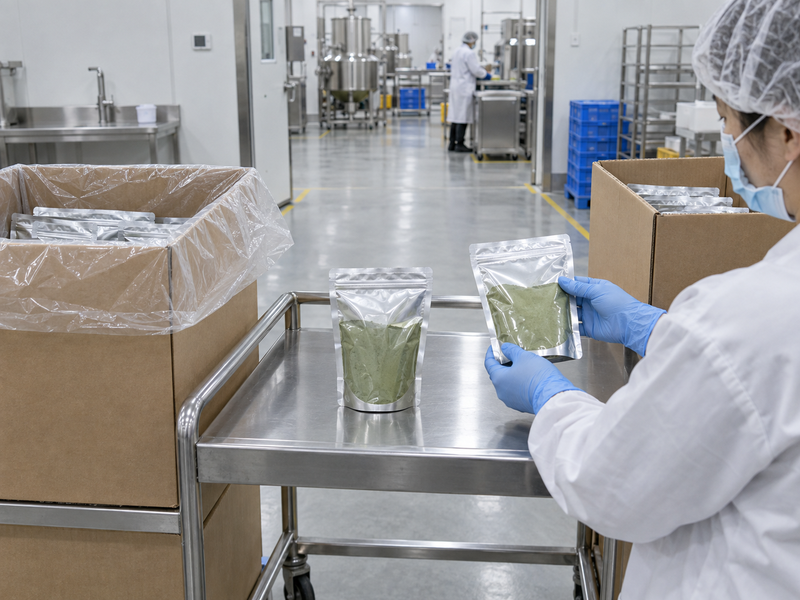
Prepared tea must reach a condition suitable for storage and grinding. Ask how drying completion is determined for the proposed material and whether measurements appear in the batch record. Discuss how tea is kept separate from moisture, odors and unrelated grades after drying. Request the limits used by that facility rather than borrowing a number from a different producer. If material is held before finishing, ask how containers are closed, labeled and dated.
Sorting and removal of unwanted parts influence powder character. Ask which sorting steps occur, what is rejected and whether any material is returned to the process. A claim of “carefully sorted” gives no basis for a purchasing decision. Look for a documented instruction and an example of operator checks. If the factory sources already sorted tea, ask the upstream processor for evidence through the contracting supplier. Your quality team can decide whether it needs direct access or a documented supplier-verification summary.
| Stage | Evidence to review | Buyer concern |
|---|---|---|
| Drying | Batch result and approved limit | Stable input condition |
| Holding | Container identity and location | No mix-up or odor pickup |
| Sorting | Check record and disposition | Controlled powder character |
5. When do blending decisions occur?
Know what “same grade” can contain
A supplier may blend prepared teas to hit a target sensory profile before grinding, or combine powders later under another instruction. Ask which route applies to your SKU. If the formula uses multiple inputs, the record should identify each component lot and authorized proportion. Request the approval range for color, aroma and taste. A blend can be consistent without being single origin, but your label and marketing claims must match the actual composition.
Take a representative sample from a documented blend and test it in the finished product. For a café, evaluate it in the milk and sweetener used at stores. For a food brand, test after the full process, not only in water. Ask how the blend is adjusted when seasonal inputs change and what triggers buyer notice. Matcha Village’s supplied portfolio includes several grades and application blends; that is a reason to request a code and formula scope, not a reason to assume two powders behave alike.
6. What controls the grinding stage?
Link machine settings with powder behavior
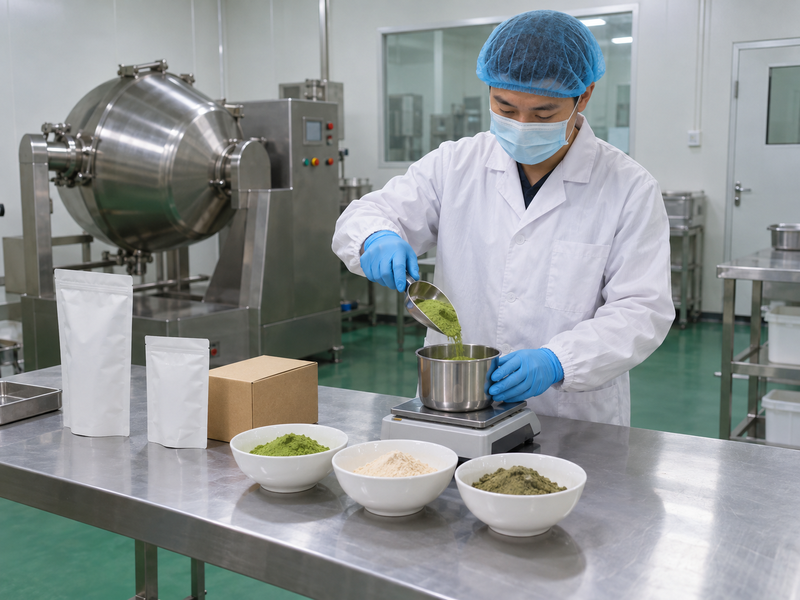
Grinding converts prepared tea to powder, but the buyer needs an outcome rather than a machine name. Ask which settings and in-process checks are controlled for the proposed product. Discuss what the factory measures for particle behavior, appearance and temperature exposure, using its actual procedure. A fine powder can still perform poorly in a particular recipe if mixing or packing conditions differ. Request evidence that the plant can reproduce the approved sensory and physical range.
Ask what happens at startup, changeover and shutdown. Identify how equipment is cleaned and how a run is kept separate from another grade. If several grinding lines are approved for your SKU, request a comparison sample or bridging evidence when production shifts between them. Review a batch record that shows operator checks and holds. The Codex General Principles of Food Hygiene provide a broad framework for hygiene controls; the factory’s records must show what it actually does on its line.
| Grinding question | Useful answer | Buyer test |
|---|---|---|
| Which line ran? | Line and batch identifier | Compare coded samples |
| Which range applied? | Approved instruction version | Check texture in recipe |
| What if a check fails? | Hold and review path | Review deviation example |
7. How is powder handled before packing?
Watch the transfers between operations
Ground powder may be sieved, blended, held or moved before packing. Ask for the transfer route and the maximum holding condition for your item. Intermediate containers should carry product and lot identity. Confirm how exposed powder is protected from moisture and unrelated ingredients. Where a sieve or foreign-material control is used, ask for inspection and exception records. The plant should be able to explain what each step controls, rather than offering an equipment catalogue.
If powder from multiple grinding runs enters one finished lot, request reconciliation of inputs and finished yield. That makes a backward trace possible if a later complaint concerns only part of the production period. Ask who authorizes rework and whether it changes lot identity. A buyer should decide ahead of time which material handling changes require notice. That agreement is especially useful when a product will be sold under your own brand and complaints will reach you before the factory.
8. Which tests determine lot release?
Choose tests from product risk and use
Agree a finished-product specification for the exact SKU, including physical or sensory properties and tests your quality team needs for the destination market. Ask where samples are taken, how many units they represent and how they are labeled. A report should state the method, result, unit, limit and lot. A line reading only “pass” may be hard to review if the buyer does not know which limit applied.
Clarify whether the factory uses an internal laboratory, an external laboratory or both. Determine who reviews results and whether dispatch remains blocked until approval. If a test is out of limit, request the hold, investigation and disposition procedure. A retest should not erase the original result from the file. For U.S. buyers, FDA’s FSVP guidance describes covered importers’ risk-based verification duties. Use supplier records to support your own qualified review.
| Release record | Minimum link | Review question |
|---|---|---|
| Sample log | Finished lot | Where was it taken? |
| Test report | Method and limit | Does result meet agreed spec? |
| Approval | Named reviewer | Was any hold unresolved? |
9. What does finished-pack verification include?
Inspect the unit your warehouse will receive
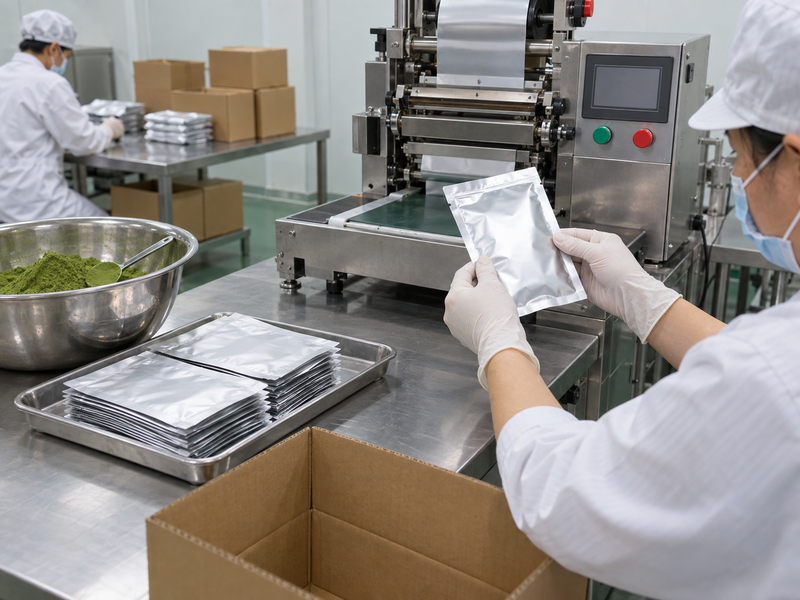
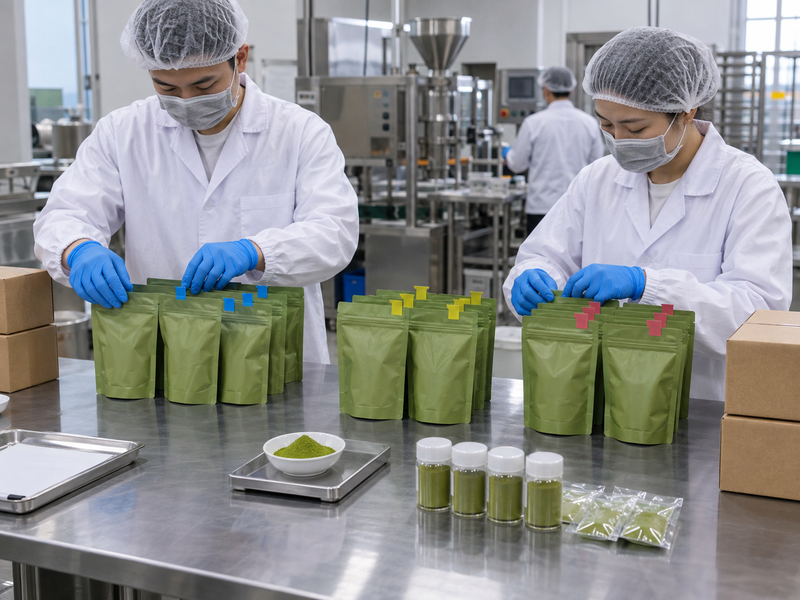
Packing review should cover inner material, seal, net weight, lot print, outer carton and quantity reconciliation. Ask for the approved pack specification and a real packed sample. Check whether lot codes stay readable through normal shipping and whether cartons identify mixed lots. For private label packs, have the brand and importer approve artwork before printing. A production team should not choose label claims on the buyer’s behalf.
Ask how the factory checks seal failures, wrong artwork and damaged cartons during a run. Set a clear response for any units held back or repacked. Match the finished-pack lot against the batch and test report. If your warehouse scans a barcode, verify it corresponds to the human-readable product and lot information. These steps sound ordinary, which is exactly why they can be missed when a process discussion concentrates on tea cultivation. A finished powder matters only if it reaches your site with usable identity and protection.
10. How can buyers approve the whole route?
Close the stage gates in order
Create a short route approval sheet for one proposed product. Attach its material definition, process map, coded sample, application trial, specification, release document format and pack version. Mark each item accepted or open. A missing answer should have an owner and target date. Do not convert a visually pleasing trial into a purchase order while the lot reporting or packaging decision remains unresolved.
Agree how the supplier will notify you of source, site, grinding, formulation or packaging changes. Your team can then decide whether a fresh trial is needed. Confirm production scheduling and document handoff for the first commercial lot. Ask Matcha Village or any other candidate to walk one actual lot through these gates. The point of reviewing the matcha manufacturing process is to establish a repeatable approval route, not to collect a longer description of equipment.
| Stage gate | Approval evidence | If still open |
|---|---|---|
| Input | Material identity and claim support | Limit label wording |
| Powder | Coded sample and trial record | Repeat application test |
| Shipment | Lot release and pack list | Hold dispatch approval |
FAQ
Q1. Is every matcha process identical? No. The broad stages help frame questions, while the supplier must show its actual route for the SKU.
Q2. Must the grinding site also grow the tea? No. Ask how it qualifies and traces upstream material when another party supplies it.
Q3. Does a fine grind prove good application performance? No. Test the coded powder under your recipe and equipment conditions.
Q4. Can one certificate replace batch records? No. Site or system scope and a finished lot’s results answer different questions.
Q5. What should trigger a new buyer review? Changes to material source, formula, process site, grinding route or pack may require one under your agreement.
Start with one pack in hand and work backward through its code, release record, grinding batch and material intake. Where a link fails, request a correction before ordering. That exercise turns a process story into a purchasing decision your team can defend.