
What is a matcha latte in a café? It is a drink built from matcha and milk, usually with water used first to disperse the powder. That broad definition leaves the decisions that matter to operators: powder dose, milk volume, sweetness, cup size, and whether the iced version still tastes like the hot one. A clear recipe makes those choices visible to guests and repeatable for staff. For related product selection, see our matcha latte wholesale supplier guide.
Contents
- 1. What makes a drink a matcha latte?
- 2. Which matcha belongs in the latte?
- 3. How should milk be selected?
- 4. Where does sweetness belong?
- 5. How do you build a hot latte?
- 6. How do you build an iced latte?
- 7. Why do lumps appear in the cup?
- 8. How much does one latte really cost?
- 9. What should the menu tell customers?
- 10. How do you keep the latte consistent?
1. What makes a drink a matcha latte?
Define the product your guests will receive
The useful café definition names the base and the balance. A matcha latte combines dispersed matcha with milk or a clearly identified milk alternative. Ippodo’s matcha latte method follows that basic sequence of whisking tea before adding milk. The drink may be served hot or iced, sweetened or unsweetened. It does not require espresso, and the green color alone is not proof that a drink has enough matcha to deliver a recognizable tea flavor. Write a sentence for staff that describes your house version and the allowed changes.
Decide what “unsweetened” means in your shop. A plain matcha powder and milk can be ordered without added sugar, while a premixed latte powder may already contain sweetener. If you use a blend, read its ingredient statement and explain the menu accordingly. The terminology should match the actual recipe. A clear definition also helps purchasing: the buyer can test matcha in the intended milk drink instead of selecting solely by its straight-tea taste.
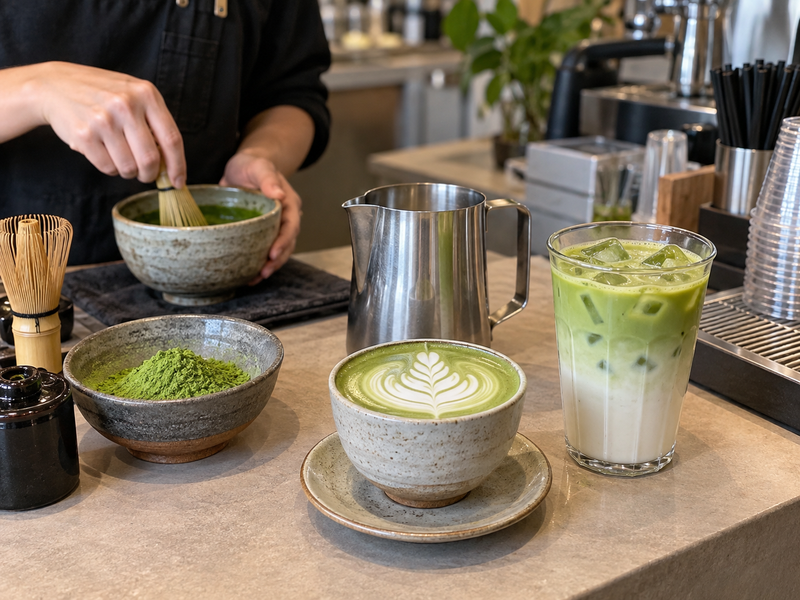
2. Which matcha belongs in the latte?
Test the ingredient inside milk
Matcha that performs well in water may fade under a large volume of milk. Prepare candidate powders with the same dose and milk, then compare the finished drinks blind. Record tea flavor, astringency, aroma, color, dispersion, and price per serving. A familiar grade label does not replace that test. Request a representative sample from the supplier and ask how the proposed product is packed and stored. Evaluate a new lot against the approved cup before changing suppliers or menu copy.
There are two workable purchasing routes: plain matcha with separate sweetener, or a formulated latte blend. Plain matcha allows the café to control sweetness. A blend can simplify service but its serving mass is not the same as pure matcha mass; read the ingredient list and calculate cost on the full portion. Build one approved recipe for each route instead of swapping them ticket by ticket. The table is a decision aid, not a quality ranking.
| Product route | Main advantage | Recipe check |
|---|---|---|
| Plain matcha | Separate control of tea and sugar | Dose and dispersion in milk |
| Latte blend | Fewer assembly steps | Ingredient list and blend dose |
| Alternate matcha lot | Supply flexibility | Side-by-side cup comparison |
3. How should milk be selected?
Taste the full cup, not the carton
Milk brings texture, sweetness, and its own flavor. Test dairy and the plant-based options you intend to sell at the same total beverage volume. Some alternatives change the way matcha tastes; others produce a different foam or separate in a hot drink. The best choice for a specific menu may differ from the team’s preferred milk on its own. Use the same matcha base in every trial and record the final texture after the drink has sat long enough for a customer to take it to a table.
Ask whether the menu promises a default milk or a choice. If alternatives incur a price change, cost the actual portion and make the add-on clear. Staff also need a clean method for handling allergens and customer requests within local food-service rules. A plant-based option may still share equipment with dairy unless your operation has a controlled separate process. Make only the claims your process supports, and tell guests when a requested substitution will change sweetness or texture.
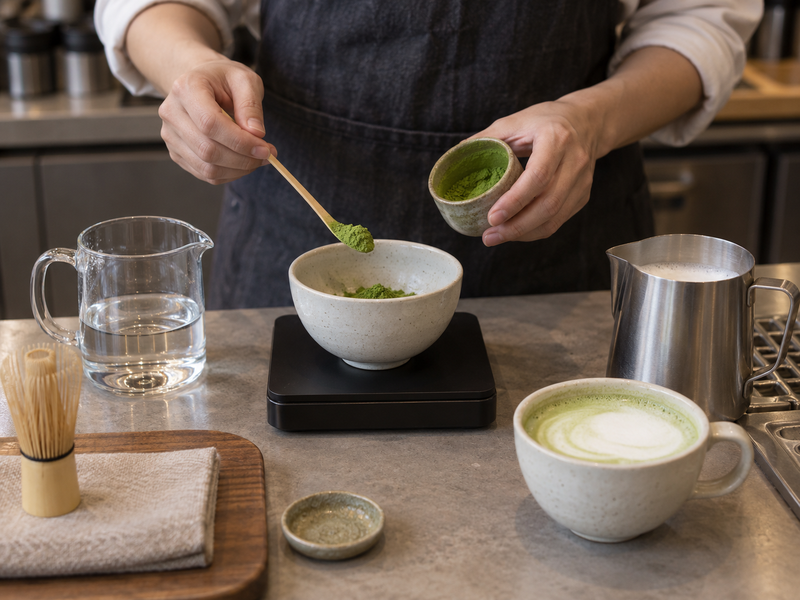
4. Where does sweetness belong?
Choose a default and a measurable adjustment
A sweetener can hide a harsh powder, but it can also erase the tea flavor that motivated the order. Establish an unsweetened test cup first, then add sweetener in measured increments and taste again. If the intended audience expects a dessert-like drink, make that a deliberate menu choice. Do not rely on “one pump” unless the pump output is stable and the syrup concentration is known. A house-made syrup needs a written recipe and a handling plan.
Hot and iced drinks may seem differently sweet at the same syrup dose because temperature, dilution, and cup volume change the experience. Test both. A sweetened latte blend complicates modifications, so the menu should not offer “no sugar” when sugar is already in the base. Staff can offer an alternative recipe if one exists. The order screen and recipe card should use the same terms; otherwise, a guest’s “less sweet” request can produce an improvised cup that is impossible to cost or repeat.
| Menu option | Record on recipe card | Guest-facing note |
|---|---|---|
| No added sweetener | Base contains plain matcha | Milk may have its own sweetness |
| House sweetness | Syrup or sugar amount | Standard flavor balance |
| Less sweet | Defined reduced amount | Matcha tastes more prominent |
5. How do you build a hot latte?
Keep matcha and milk steps separate
Begin with the weighed matcha dose. Sift if the selected powder clumps in service, wet it with a measured amount of water, and mix until no dry material remains. Separately heat or steam the milk to the shop’s normal service standard. Pour or combine in the order that gives the desired surface and integration. There is no benefit in a decorative top if the lower half of the cup holds a pocket of concentrated matcha. Taste the drink after a gentle stir as well as before it.
Write the final cup volume, not just the matcha-to-water ratio. Foam volume can make a cup look full while leaving the liquid short; the recipe should describe both appearance and fill. Train staff on a practical pause between steaming milk and serving so the drink does not sit while another order is finished. If a syrup is included, specify when it is added and how it is mixed. A hot latte should be as reproducible as any espresso-menu item.
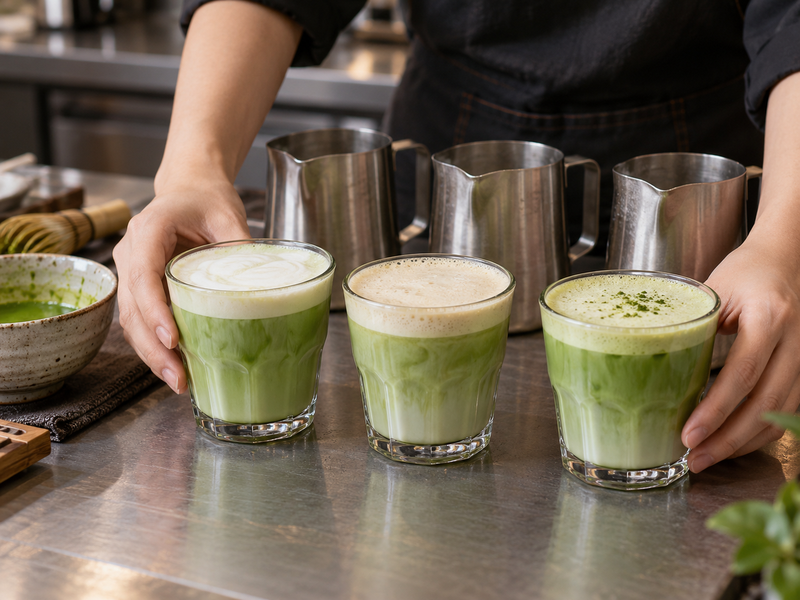
6. How do you build an iced latte?
Account for ice and melt
Make a smooth matcha base before it meets cold milk and ice. Dry powder tipped into a finished iced cup frequently floats or sticks to the wall. Use the recorded base water volume; too much hot water warms the cup and melts ice quickly, while too little may leave a dense paste. Assemble in the saleable cup with a measured ice fill and milk volume. If the drink is intentionally layered for presentation, check its flavor after the customer stirs it.
The iced specification needs its own cost and taste test. A larger cup can use more milk and ice than the hot version but may need a different matcha dose to hold the same flavor. Let a test drink stand several minutes, then taste it again. If it becomes weak before a normal customer finishes it, revise the ice or liquid amounts rather than writing a vague instruction to “add more matcha.” This keeps the cup balanced and its ingredient cost visible.
| Iced-latte variable | What to measure | What failure looks like |
|---|---|---|
| Matcha base | Powder and water | Specks or weak tea flavor |
| Milk | Actual poured volume | Inconsistent color and balance |
| Ice | Fill or weighed amount | Fast dilution or underfilled cup |
7. Why do lumps appear in the cup?
Find the point where powder stopped dispersing
Matcha can form small dry clumps when liquid wets its outer surface without reaching the center. Inspect the base before adding milk: a smooth base means the problem is more likely later in assembly; visible specks mean the mixing step needs work. Sifting a portion and adding water gradually can help. A whisk, frother, or covered shaker can all work if the equipment is used consistently and cleaned properly. Test the tool under busy conditions, not just during a quiet training hour.
Hard, persistent clumps deserve a different response. Check whether the container was left open near steam or whether the powder’s packaging was damaged. Do not treat a questionable ingredient as a problem to solve with a longer whisking time. Set a standard for the appearance of the base and authorize staff to remake a failing drink. The cost of a remake is easier to control than repeated complaints about gritty lattes.
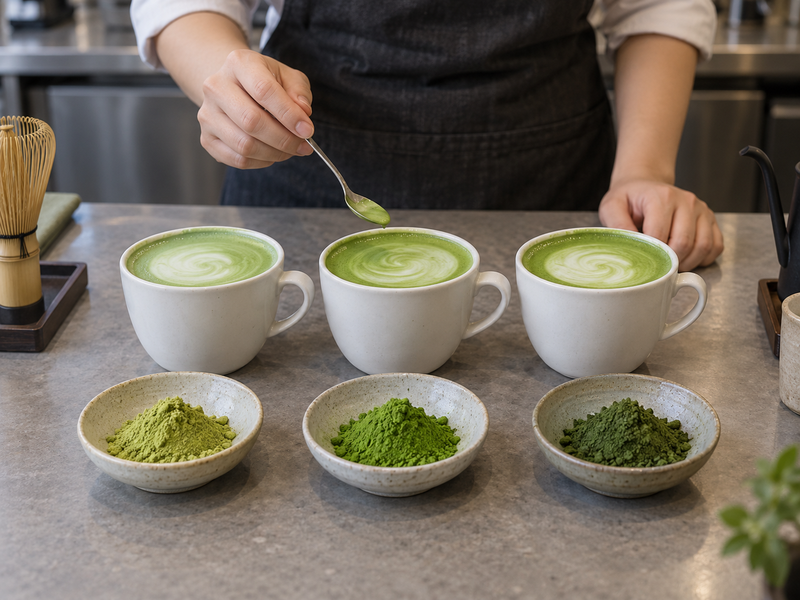
8. How much does one latte really cost?
Cost the order as it is served
Start with the actual powder or blend mass per cup and its purchase cost per gram. Add the measured milk, sweetener, cup, lid, sleeve, and expected waste. For a plant-based substitution, use that ingredient’s portion cost rather than treating all milks as interchangeable. A drink that appears profitable on powder alone may lose its margin through a large cup, premium milk, or frequent remakes. The spreadsheet should show hot and iced builds separately.
Use a recipe-cost worksheet with a date and supplier price source. When the matcha cost changes, update one input and review all menu sizes. If the business offers add-ons, make their portions and prices explicit. Do not pick a selling price from a generic target percentage without considering labor, rent, and local demand. The useful calculation is a repeatable ingredient cost for the cup you actually sell; management can then apply its pricing policy.
| Cost line | Calculation | Review trigger |
|---|---|---|
| Matcha | Portion grams × cost per gram | New lot price or dose |
| Milk and syrup | Served volume × unit cost | Menu or supplier change |
| Packaging and waste | Per-cup allowance | Cup size or remake trend |
9. What should the menu tell customers?
Describe the recipe without overclaiming
The menu should say whether the drink contains matcha and milk, identify a sweetened default where relevant, and name the available milk choices. If a premix already contains sugar, do not describe it as unsweetened merely because staff add no syrup. State size and hot or iced availability clearly. Avoid promising health effects or a precise caffeine number unless the business has product-specific evidence and a controlled dose. Tea-based drinks contain caffeine, but a generic internet figure cannot certify your serving.
Keep descriptions short enough to be read at the counter. A phrase such as “matcha with steamed milk; lightly sweetened” gives staff and guests a shared expectation. Train the team to answer common questions about bitterness and sweetness using the actual recipe. If your supplier, powder, or serving size changes, review the menu language as part of the recipe update. Accurate copy lowers remake risk because customers order the drink they meant to order.
10. How do you keep the latte consistent?
Tie the recipe to a service check
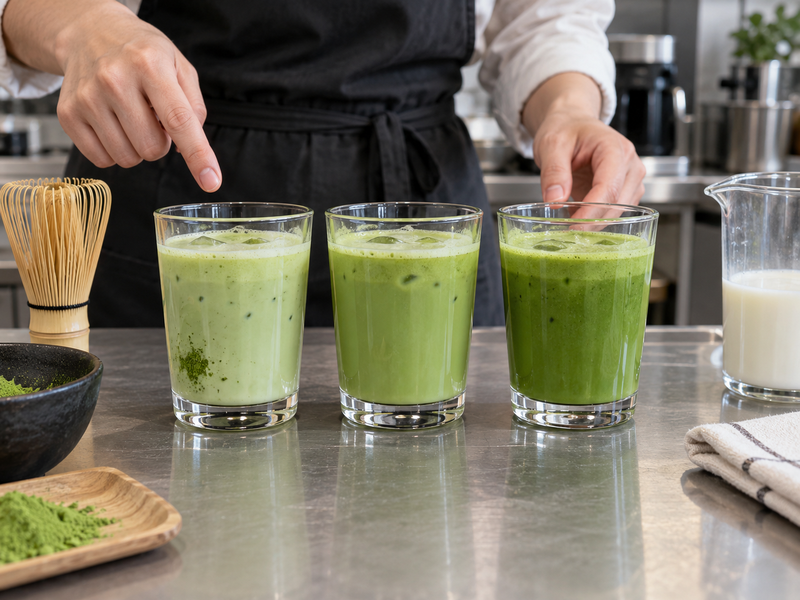
Post a one-page card with the matcha mass, base water, milk amount, sweetener amount, cup size, assembly order, and a picture of the finished drink. Staff should practice both hot and iced builds and demonstrate the passing base texture. At shift start, check the scales, syrups, and milk stocked at the station. During a rush, the layout should make the approved sequence easier than an improvised shortcut. If a step is regularly missed, look at the workflow before rewriting the recipe.
Log remakes and comments with enough detail to trace them to a size, shift, or ingredient lot. Revisit the specification when the powder, milk, cup, or equipment changes. Run a side-by-side taste test rather than changing several ingredients at once. The aim is recognizable flavor across visits, with choices the guest can understand. A documented recipe also gives purchasing a practical standard when comparing supply offers.
| Control point | Owner | Evidence |
|---|---|---|
| Approved ingredient | Buyer | Product and lot record |
| Recipe execution | Shift lead | Training and check cup |
| Customer response | Manager | Remake and comment log |
FAQ
Q1. Is a matcha latte the same as a green tea latte? Menus vary. State whether your drink uses matcha powder and what else is in the base so guests know what they are ordering.
Q2. Does a matcha latte contain coffee? The standard definition here does not include espresso. A café may offer an espresso add-on, but it should be named as a separate variation.
Q3. Can a matcha latte be unsweetened? Yes, when plain matcha and unsweetened added ingredients are used. Check milk and premix ingredients before making that claim.
Q4. Why does an iced matcha latte taste weaker? A larger milk volume and melting ice can dilute the tea flavor. Test the iced recipe in its actual cup over normal drinking time.
Q5. Which matcha grade is best for lattes? Select by blind tasting and dispersion in your finished drink, then compare serving cost and supply details. Grade names alone do not settle the choice.
Give the guest a cup they can recognize
A good matcha latte is a clear product, not just a color. Define the house balance, measure the ingredients, and test hot and iced drinks separately. When the menu, cost sheet, and bar recipe describe the same cup, both staff and guests know what to expect.