
Knowing how to make matcha once is easy; teaching a team to make the same cup on a busy Saturday is harder. The useful recipe is a short set of measurements and observable checks, not a ceremonial script. Start with one approved powder, a weighed dose, a defined water volume, and a serving standard that staff can recognize. Then test the method at the actual bar with the cups and equipment you use. Our matcha water temperature guide provides a related purchasing and preparation reference.
Contents
- 1. What cup are you trying to serve?
- 2. Which matcha should the recipe use?
- 3. How should staff measure the powder?
- 4. Why sift before adding water?
- 5. What water temperature works for your bar?
- 6. How should the whisking step be taught?
- 7. How do hot and iced orders differ?
- 8. What checks catch a poor cup early?
- 9. How can the team hold the recipe steady?
- 10. When should the recipe be changed?
1. What cup are you trying to serve?
Write the finished drink before the method
Decide whether the default order is a small straight matcha, a larger diluted tea, or a latte base. Those drinks can begin with the same powder but need different water and milk volumes. Put the serving vessel beside the recipe card and mark the target fill level. A small tea made with a generous amount of water may taste thin; a latte made with a tiny matcha base can lose its tea character under milk. Staff need a visual reference for both.
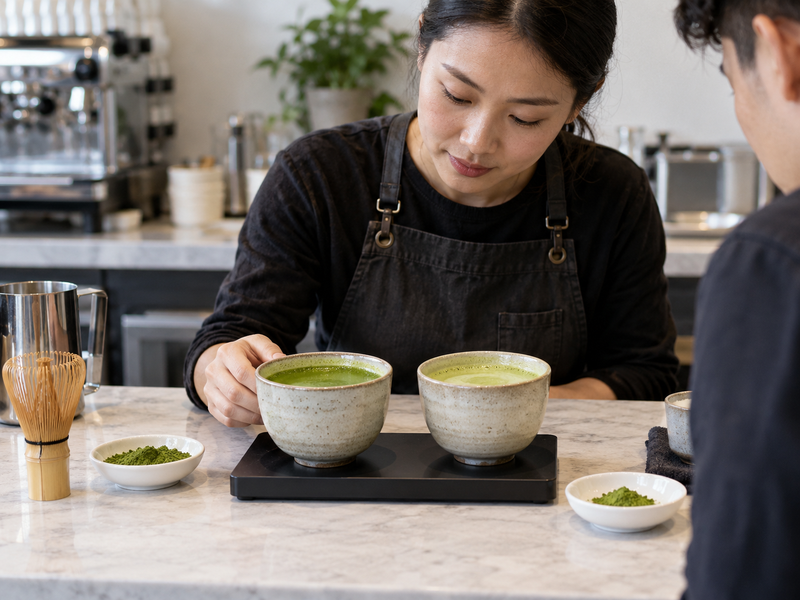
Record the target flavor in plain language: clean tea aroma, modest bitterness, and no dry lumps are more actionable than “premium.” Run a blind comparison of two or three candidate preparations in the actual cup. If the team likes different strengths, choose one standard and offer a defined stronger option. This turns individual preference into an orderable variation instead of a different recipe at every shift.
2. Which matcha should the recipe use?
Compare performance in the finished drink
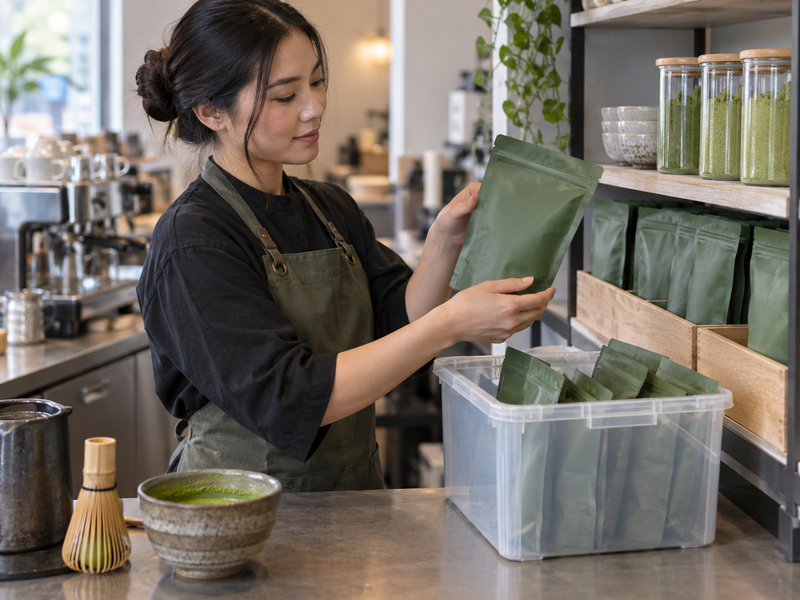
Buyers often ask for a grade name first. For a café, the more useful question is how a particular lot tastes after it meets the bar’s water, milk, and sweetener. Make test drinks using the same dose and method. A powder that tastes pleasant as straight tea may disappear in a large iced latte; one that works in milk may taste too assertive in a small unflavored serving. Ask the supplier for product information, storage guidance, and a sample representative of the proposed order.
Keep evaluation sheets simple enough that more than one person will complete them. Include dry aroma, dispersion, flavor in the finished drink, color after service, and price per weighed serving. Document the selected product and an approved substitute. If a new shipment tastes different, test it against the same recipe before quietly changing the dose. A standard is only useful when the ingredient behind it is identified.
| Trial cup | What to hold constant | What to record |
|---|---|---|
| Straight matcha | Powder dose, water and cup | Tea flavor, texture and color |
| Hot latte | Matcha base, milk volume | Balance after steaming |
| Iced latte | Matcha base, ice and milk | Balance after ice begins to melt |
3. How should staff measure the powder?
Weigh the working dose
Use a small scale when building and validating the recipe. A scoop’s apparent volume changes with the powder’s packing, the scoop shape, and the person’s technique. Weigh several typical scoops and see how much they vary before deciding whether a scoop is acceptable for service. If the bar eventually uses a pre-portioned sachet or calibrated measure, check that it delivers the same amount during a rush. Record powder in grams on the recipe card, even if the operational tool is a scoop.
A café can start with a modest test dose and adjust from tasting rather than copying someone else’s ratio. The chosen dose also drives caffeine information and drink cost, so keep one master value across the menu, training sheet, and purchasing spreadsheet. If customers can order “extra matcha,” specify exactly what that adds. A vague extra scoop creates an inconsistent drink and makes any per-serving information unreliable.
4. Why sift before adding water?
Make the first contact with water predictable
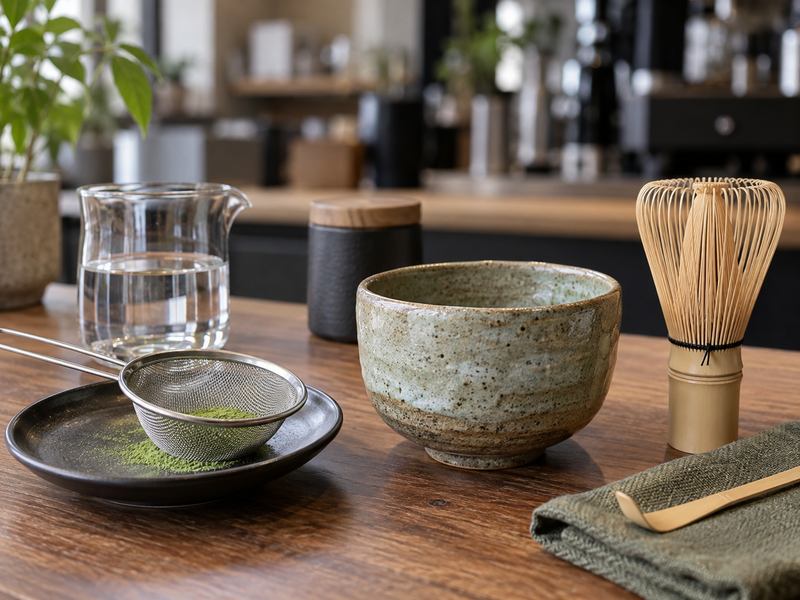
Matcha is fine powder and can form dry pockets when water hits a compacted mound. Passing a portion through a small clean sieve breaks up visible clumps before whisking. This step is especially helpful with a hand whisk and with powder that has sat in a container during service. It is a texture control, not a way to fix a stale or poorly stored ingredient. If a shipment repeatedly forms hard clumps, inspect its packaging and handling history.
The service decision is whether sifting belongs on every ticket or only in batch preparation. Test both methods at the speed of your bar. A narrow sieve that spills powder can cost more time and material than it saves. Keep the sieve dry, assign a cleaning method, and avoid returning stray powder from the counter to the container. For a high-volume station, pre-weighed portions in closed containers may simplify this step while keeping the powder protected.
| Observed problem | First check | Practical adjustment |
|---|---|---|
| Dry specks in cup | Powder added in a mound | Sift and wet evenly |
| Powder lost on counter | Sieve too small or awkward | Change tool or portion setup |
| Persistent hard clumps | Storage and packaging | Review handling before service |
5. What water temperature works for your bar?
Choose by taste and repeatability
Boiling water straight onto matcha can produce a harsher cup than many cafés want, but a universal temperature would ignore the powder and recipe. Test a few controlled water temperatures with the same dose and volume, then taste the drinks side by side. Include the temperature the station can actually reproduce. If the kettle has no temperature control, document a practical procedure and measure the resulting water with a thermometer during training.
Use potable water and a clean vessel. A large pitcher of water left cooling on the counter introduces another variable and may complicate handling. The bar should know whether the recipe calls for a small concentrated base or a ready-to-drink tea; the water volume changes how easily the powder wets and how strong the final cup tastes. Record the measured water volume as well as the temperature range. Recheck both when cups, kettles, or powder change. The reference preparation guide offers a home method; adapt it to your service test rather than importing its ratios unchanged.
6. How should the whisking step be taught?
Show the motion and the stopping point
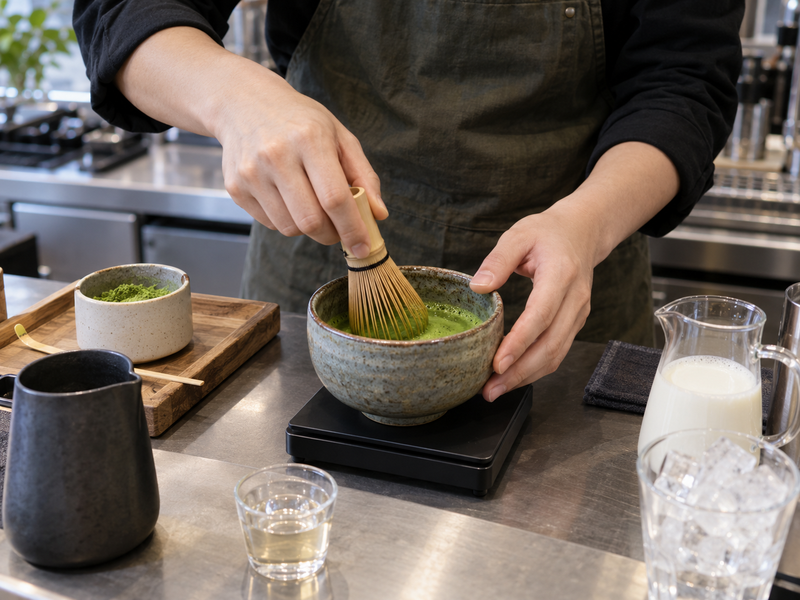
For a hand-whisked cup, first mix the powder with enough water to wet it fully, then whisk briskly to disperse it. Demonstrate the whisk motion in a shallow bowl rather than describing it as “whisk until done.” Staff should see the target surface, the absence of dry material on the side, and the approximate time under normal service conditions. Avoid pressing a bamboo whisk hard against the bottom; that can damage the whisk and leave fragments or an uneven mix.
Equipment choices change the training. A handheld frother can be fast, but it can splash a small portion or add more foam than the menu promises. A shaker needs a sealed container and a documented cleaning step. Test the same powder in each tool before adopting one. The chosen tool should deliver the target cup repeatedly, fit the station, and be easy to clean between orders. This is an operational decision, not a claim that one style is inherently authentic or superior.
| Tool | Useful when | Check during trial |
|---|---|---|
| Bamboo whisk | Small tea service | Consistent dispersion and whisk care |
| Electric frother | Fast base preparation | Splashing and excess aeration |
| Covered shaker | Iced drinks | Seal, cleaning and texture |
7. How do hot and iced orders differ?
Keep the matcha base controlled
A hot order can be served as tea or combined with warmed milk. An iced order needs a base that disperses before it meets cold milk and ice. Adding dry powder directly to a full cold cup often leaves floating specks and a ring of undissolved material. Build the matcha base separately using the recorded water amount, then assemble the drink in the chosen order. Compare flavor immediately and after several minutes; ice melt can make a once-balanced drink taste weak.
Do not assume one base dose works equally well in every cup size. Write the final liquid and ice amounts for each menu size and test them in their saleable cups. If a layered appearance is important, check whether staff can create it during peak service without sacrificing mixing. Customers should still be able to stir the drink and taste the intended balance. Photograph the finished hot and iced standards for training, but let a measured recipe govern the cup.
8. What checks catch a poor cup early?
Inspect before the drink leaves the bar
The fastest quality check is visual: look for dry powder, unusual color, a low fill line, or a lid that will crush a carefully made foam surface. A quick taste during recipe development establishes what a good cup should be; staff cannot taste every saleable drink. During training, prepare one check cup at shift start and compare it with the written standard. If it fails, inspect the scale, water, powder lot, and assembly order in that sequence before changing the recipe.
Note errors in categories rather than blaming a person. “Powder was not fully dispersed” can be corrected with a tool or step; “barista made it badly” cannot. Record remakes and customer comments with the drink size and time. This reveals whether trouble follows a particular shift, a high-volume period, or a new ingredient lot. A few consistent observations are more useful than an elaborate scorecard that nobody fills out.
| Checkpoint | Pass looks like | If it fails |
|---|---|---|
| Before milk or ice | Smooth base, no dry pockets | Re-mix or remake |
| Finished cup | Target fill and color | Check volumes and dose |
| Guest feedback | Flavor matches menu | Log recipe and lot details |
9. How can the team hold the recipe steady?
Put the instructions at the point of work
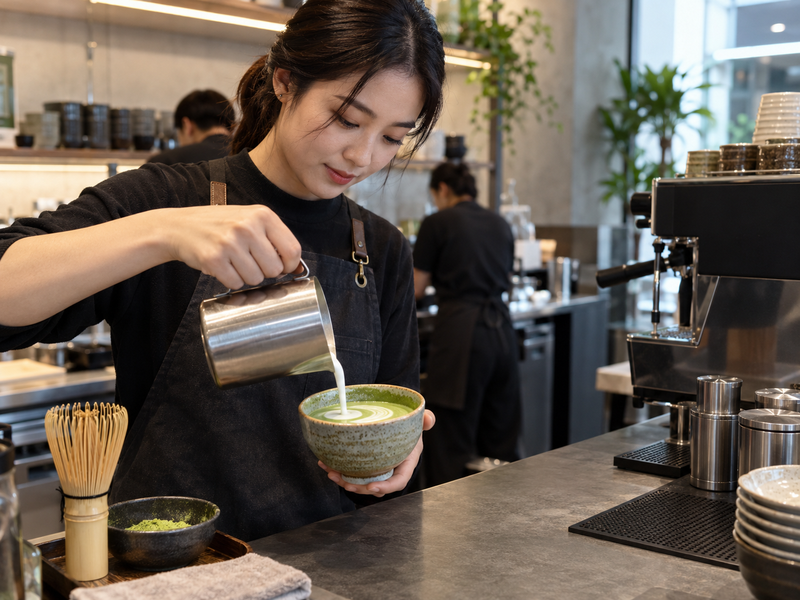
A recipe hidden in a training binder will lose to habit. Put a one-page card near the matcha station with powder mass, water volume, equipment, assembly order, and photo of the finished cup. Keep the card legible at service speed. The supervisor should observe a few real tickets after training, especially iced drinks and modified orders, and correct deviations while the method is still new. Staff should know which adjustments are allowed and which require a recipe update.
Design the station so the correct action is easy: a clean scale, the right bowl, water within reach, labeled powder, and the correct cup sizes. If staff routinely skip a step, inspect whether the layout or ticket timing makes that step difficult. The goal is a drink the customer recognizes across shifts, not a performance with identical hand movements. Record the effective date and recipe owner so an old card does not resurface later.
10. When should the recipe be changed?
Retest when an input changes
Powder, milk, cup size, sweetener, and equipment can all change the result. Treat any supplier substitution or new lot with a noticeable flavor shift as a reason to run a controlled tasting. Change one factor at a time and write down the result. If sales suggest customers want a stronger matcha flavor, try a tested dose adjustment and calculate the new cost and caffeine information before launching it. A barista’s successful one-off fix is a useful lead, but it is not yet a new standard.
Keep a short version record: what changed, why, who approved it, and when staff were retrained. This protects repeatability when the menu expands or the team turns over. Revisit the recipe after launch using waste, remake, and customer feedback, but avoid weekly tweaks based on isolated comments. Once the drink works, preserve the method until evidence gives you a reason to revise it.
| Change trigger | Retest required | Record to update |
|---|---|---|
| New matcha lot or supplier | Flavor and dispersion | Product and recipe sheet |
| New milk or cup | Balance and fill | Assembly and costing |
| New equipment | Texture and speed | Training and cleaning steps |
FAQ
Q1. Can a café use teaspoons instead of a scale? A calibrated scoop may work in service after several weighed trials show it delivers the intended dose. Keep the mass in the master recipe and recheck when powder or scoop changes.
Q2. Is a bamboo whisk required? No. Choose a tool that disperses the selected powder consistently and can be cleaned within the bar’s workflow. Test the finished drink rather than judging the tool alone.
Q3. Why does iced matcha show green specks? Dry powder may have gone straight into cold liquid, or the base may not have been fully mixed. Prepare a smooth base first and check the assembly order.
Q4. Should every matcha drink use the same dose? Only if the finished cups taste balanced at that dose. Different sizes and milk volumes may need separately tested specifications.
Q5. What belongs on a staff recipe card? Powder mass, water amount and temperature procedure, tool, assembly order, cup size, allowed modifications, and a photo or description of the passing cup.
Make the method easy to repeat
A café recipe succeeds when a new employee can produce the approved drink during an ordinary shift. Test the powder in the actual menu cup, write down the few measurements that matter, and make the station support them. Then keep the recipe stable until a documented ingredient or service change calls for another trial.