
A matcha latte wholesale supplier recipe brief defines what support your menu needs and who approves the instructions. A powder recommended for milk drinks still leaves equipment, substitutions and staff methods unresolved. Build a documented recipe handoff. UnD’s own journal assigns several products to milk drinks, but recipe-support availability must be confirmed with the proposed supplier.
Contents
- 1. What should a matcha latte wholesale supplier recipe brief cover?
- 2. Which supplier recommendation fits the named milk drink?
- 3. What equipment assumptions belong in the handoff?
- 4. How should the hot recipe be documented?
- 5. Why should the iced recipe have a separate instruction?
- 6. How should milk substitutions be reviewed?
- 7. What should staff training receive from the recipe handoff?
- 8. Who handles recipe questions after service starts?
- 9. How should powder or recipe changes reach branches?
- 10. What makes the recipe handoff ready for routine buying?
1. What should a matcha latte wholesale supplier recipe brief cover?
Name the supported menu items
List the hot and iced drinks your team intends to serve with the proposed powder. Include cup format, milk choices and whether staff add other ingredients. State which menu items already have a house recipe and which need development. The supplier can then respond to an actual service request rather than a general question about latte quality.
Give every menu item an instruction owner. Ask what recipe help the supplier offers for the named product, such as preparation notes or application discussion. Do not assume those services are included because a product page mentions lattes. Our beverage formulation guide can support the separate recipe record. Your supplier brief should identify the proposed SKU and what information your team needs to finish that record. Keep ingredient approval, recipe approval and staff training as distinct decisions. Purchasing can then request the powder while operations controls how the approved drink reaches service.

2. Which supplier recommendation fits the named milk drink?
Ask about the proposed SKU
Send the supplier your menu formats and request a product-specific recommendation. Ask which intended uses it assigns to each proposed powder and what preparation conditions accompany those uses. Keep the response as supplier guidance until your team has reviewed it under the planned method. A product described for milk drinks may still need a different recipe from the one staff currently use.
Request guidance for the actual drink. UnD’s wholesale journal lists Daily Matcha for lattes and food uses, and names Kirica, Rikou, Shiun and Yame Matcha among milk-drink options. Those assignments describe UnD’s own range. Your matcha latte wholesale supplier may offer different products or support. Ask which proposed SKU fits each menu request and which questions remain open. Keep the accepted recommendation beside the recipe revision. Avoid importing another supplier’s product ladder into your own approval system or presenting catalogue positioning as proof of performance in every milk recipe.
| Menu request | Supplier question | Buyer review |
|---|---|---|
| Hot latte | Which SKU and method are proposed? | Recorded hot preparation |
| Iced latte | Which preparation guidance applies? | Recorded iced preparation |
| Milk alternative | What support can be provided? | Separate recipe check |
| Mixed menu | Which uses remain outside guidance? | Open application questions |
3. What equipment assumptions belong in the handoff?
Describe the tools staff will use
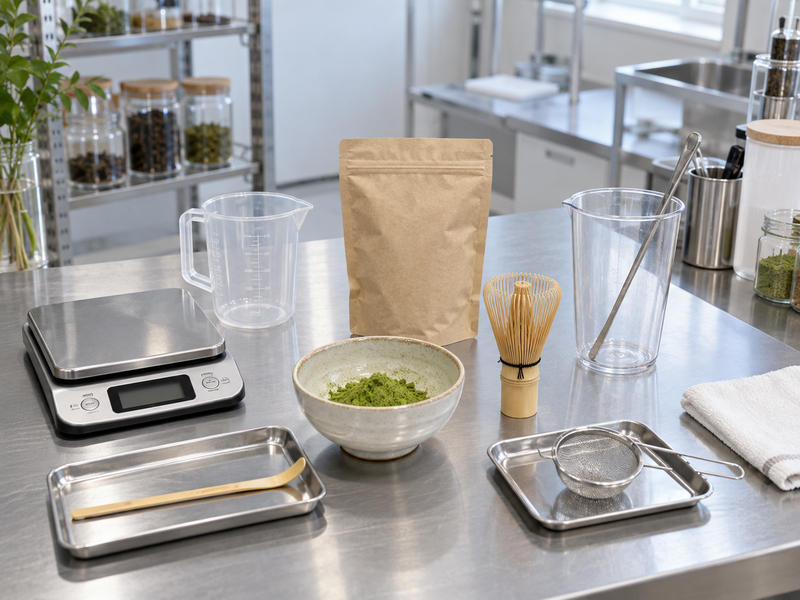
Record how staff weigh powder, prepare the initial mixture and finish each drink. Name the equipment and its relevant operating method. A supplier’s demonstration may use tools your branches do not have. Send a photograph or description if the equipment name leaves uncertainty. Ask whether the proposed preparation guidance assumes a particular tool or sequence.
Match instructions with the available equipment. Your matcha latte wholesale supplier brief should state whether all locations use the same setup. If branches differ, decide whether operations will standardize their tools or approve separate methods. A supplier can flag questions, but your service owner must choose the accepted staff instruction. Keep an equipment change visible in the recipe record. Do not evaluate a new method as if only the powder changed. When a tool requires its own operating guidance, retain that guidance separately so the drink instruction can remain readable for staff preparing orders during service.
4. How should the hot recipe be documented?
Record a complete staff method
Write the hot recipe as a staff instruction with product code, ingredient quantities, equipment and sequence. Use your team’s accepted values rather than inserting a generic recipe into the purchasing brief. Ask the supplier to identify any conditions attached to its recommendation. Operations should review the preparation and decide what belongs in the final service sheet.
Keep the hot recipe as its own revision. Include the preparation steps staff actually perform, from portioning powder through finishing the drink. Record any approved ingredient option and where staff obtain it. A matcha latte wholesale supplier handoff should identify which parts came from supplier guidance and which your team developed. Record house-developed steps so operations can review them when a branch asks a preparation question. Check that a trained staff member can follow the sheet using the listed equipment. If they need an unwritten step, add it through the recipe owner’s review instead of allowing branches to create separate informal versions.
| Hot recipe field | Information to record | Approver |
|---|---|---|
| Powder | Accepted product code and portion | Menu owner |
| Ingredients | Accepted quantities and options | Recipe owner |
| Equipment | Available tools and method | Operations |
| Service steps | Reviewed sequence | Training lead |
5. Why should the iced recipe have a separate instruction?
Document the method staff will repeat
An iced menu item should have its own recorded method, including how staff prepare the powder mixture and add other ingredients. Write the sequence your team has accepted rather than asking staff to infer it from the hot recipe. Include the served format and any preparation made before an order arrives. Your operations owner should decide which details are needed for service.
Approve the iced method independently. Ask the matcha latte wholesale supplier which guidance it offers for the selected product in your proposed iced drink. Record that response beside the house instruction. If staff change mixing equipment or ingredients during development, identify the changed conditions in their notes. Keep a defined handoff from recipe development to service training. The iced recipe should identify the same accepted powder that purchasing will order, while preserving the method approved for that menu item. This gives staff a complete instruction and gives the supplier a precise application record when your team needs further support.

6. How should milk substitutions be reviewed?
Name each proposed ingredient option
List the milk products your menu intends to use and ask what support the supplier can provide for those applications. A substitution changes the recipe inputs even when the drink keeps the same menu name. Development and operations should review the named alternative within its own recorded method. Quality should review relevant ingredient information through your internal process.
Keep approved substitutions visible. The matcha latte wholesale supplier should receive the actual ingredient request rather than a general instruction to support every milk. Ask whether its recommendation has limits or unanswered questions. Do not infer composition or allergen information from the term plant milk or latte mix. Your staff instruction should name the accepted options and the owner who can approve another one. If a branch cannot obtain an approved product, require a recorded decision before changing its recipe. Purchasing and service staff then know which substitutions have been reviewed and which remain proposals for the menu owner.
| Substitution field | Record needed | Buyer decision |
|---|---|---|
| Named milk option | Product identity | Application review |
| Recipe adjustment | Proposed preparation change | Recipe owner approval |
| Ingredient information | Accepted product record | Quality review |
| Branch exception | Unavailable item and proposal | Authorized menu decision |
7. What should staff training receive from the recipe handoff?
Issue usable preparation materials
Training staff need the accepted recipe, powder identity and equipment method, not the entire development correspondence. Ask the recipe owner to issue a clear service sheet for each menu item. Include where staff can ask questions and which choices require approval. If the supplier offers preparation materials, review them against your house method before using them during training.
Train from the accepted recipe revision. A matcha latte wholesale supplier may support product understanding without controlling your branch training. Ask what help is available and keep its scope explicit. Your training lead should check that staff can identify the approved powder, portion it using the accepted method and follow the drink sequence. Record questions that reveal an incomplete instruction. Avoid filling those gaps through a different method at every branch. Once the owner resolves them, update the service sheet and replace outdated copies. Staff should be able to find the current instruction without remembering which training session included a later correction.

8. Who handles recipe questions after service starts?
Set the support route
Give branch staff a route for reporting a preparation problem, with the menu item, powder code and recipe revision. Operations should review whether staff followed the accepted method before requesting supplier support. Where a product-specific question remains, send the supplier the relevant conditions and observations. Keep a technical question separate from a complaint about an order or delivery.
Send support requests with the preparation record. Your matcha latte wholesale supplier can provide a more relevant reply when it knows which product and method the branch used. Ask who handles application questions and who can review proposed changes. Your internal owner should decide whether the reply changes staff instructions. For a wider purchasing discussion, our cafe supply guide provides a separate record of menu and ordering considerations. The recipe-support route should leave staff with a named contact and a current action, rather than an open request passed repeatedly between purchasing and operations.
| Service question | Staff supplies | Response owner |
|---|---|---|
| Preparation difficulty | Menu and method used | Operations |
| Product guidance | Powder code and conditions | Supplier application contact |
| Proposed recipe edit | Change and reason | Recipe owner |
| Training gap | Unclear step | Training lead |
9. How should powder or recipe changes reach branches?
Update linked service records
A changed powder SKU should prompt review of the recipes that use it. Ask the supplier to describe the new product and any changed preparation guidance. Your menu owner should decide which trials or staff updates are required. Keep the proposed change separate from the active recipe until the authorized review has finished.
Release the powder and recipe changes together. Purchasing needs the accepted product code and operations needs the associated instruction. If only one branch changes equipment, record whether that branch uses a separate accepted method. Give training staff the revised materials and remove obsolete copies from routine service access. Record the date and owner of the release. A supplier recommendation can support review, but it should not silently replace the house recipe. Keep previous revisions available for investigating an earlier service question, while presenting staff with one current method for each active menu item.
10. What makes the recipe handoff ready for routine buying?
Check the active menu package
Before routine buying, confirm that each active drink points to an approved powder, recipe and staff instruction. Ask the supplier to confirm the proposed product reference and the support scope you have discussed. Keep open application questions with named owners. If the team has approved only one milk option or one preparation, state that boundary in the menu record.
Release the accepted service package. A matcha latte wholesale supplier brief should give purchasing a product to order and give operations a method to train. Check that branch staff can find the current hot and iced instructions and report a question through the agreed route. Ask Matcha Village about latte and blend products with application support; buyers should request details for their proposed menu. Keep those service claims separate from your trial decisions. Send the accepted package to the account contact and retain its acknowledgment beside the active recipes before launching the supported drinks.
| Ready-for-service item | Accepted evidence | Owner |
|---|---|---|
| Powder identity | Active supplier code | Purchasing |
| Drink method | Approved recipe revision | Recipe owner |
| Staff instruction | Current training material | Operations |
| Support route | Named contact and scope | Account coordinator |
FAQ
Q1: Does a latte product description include recipe support?
Ask the proposed supplier what support it offers for the named product and menu. Catalogue positioning cannot settle service scope.
Q2: What should a matcha latte wholesale supplier brief contain?
Include menu formats, named powder, equipment, milk options, approval owners and the application questions needing supplier input.
Q3: Can staff infer an iced method from the hot recipe?
Issue a separate accepted instruction for the iced drink, including its actual ingredient sequence and equipment.
Q4: Who approves another milk option?
Your recipe and product owners should review the named ingredient and any method changes under your internal process.
Q5: When should recipe instructions change?
Review them when powder, ingredients, equipment or the accepted service method changes, then issue the current revision to branches.
Send the supplier your active menu formats and equipment assumptions. Confirm the available recipe-support scope, approve hot and iced instructions and record milk options. Give purchasing the accepted product codes and give training staff the current recipes, with one contact route for product questions that arise during service.